
Vanguard

Search documents
Real estate investor Grant Cardone says these 3 money lessons will bring you real wealth. Which ones do you follow?
Yahoo Finance· 2025-12-23 10:25
Core Insights - The article emphasizes the importance of networking in financial success, highlighting that "money's a people game" and that expanding one's social circle can lead to better financial opportunities [3]. Group 1: Financial Advice - Grant Cardone's primary lesson for financial success is the significance of building relationships with successful individuals, as this can enhance opportunities for wealth generation [3]. - The article suggests that even if one cannot connect with billionaires, they can still seek relationships with financially knowledgeable individuals, such as financial advisors [4]. - Research from Vanguard indicates that working with a financial advisor can potentially increase net returns by about 3% over time, which could lead to significant growth in a portfolio, exemplified by a potential increase of over $1.3 million on a $50,000 investment over 30 years [5]. Group 2: Financial Advisory Services - Advisor.com is presented as a platform that connects individuals with licensed financial professionals, offering personalized guidance to help grow wealth [6]. - The article mentions that a professional advisor can assist in determining investment timelines before retirement and evaluating comfort levels with market fluctuations, which are crucial for building an appropriate asset mix [6]. - A free consultation is available through Advisor.com to discuss retirement goals and long-term financial planning [7].
Janus Henderson Group Plc (NYSE:JHG) Acquisition and Stock Performance Insights
Financial Modeling Prep· 2025-12-23 01:05
Core Insights - Janus Henderson Group Plc (NYSE:JHG) is a significant player in the asset management industry, competing with firms like BlackRock and Vanguard [1] - The company is currently valued at approximately $7.4 billion following its acquisition by Trian Fund Management and General Catalyst, structured as an all-cash transaction with shareholders receiving $49 per share [2] - Following the acquisition announcement, JHG's stock price increased to $47.53, reflecting a rise of about 3.29% [3][5] Market Performance - JHG's market capitalization is approximately $7.34 billion, with a trading volume of 11.77 million shares today, indicating strong investor interest [4] - The stock has fluctuated between a low of $47.50 and a high of $47.86 on the day of the announcement, with a yearly high of $49.42 and a low of $28.26 [3][4] Analyst Insights - Evercore ISI has set a price target of $49 for JHG, suggesting a potential upside of 3.09% from its current trading price [1][5]


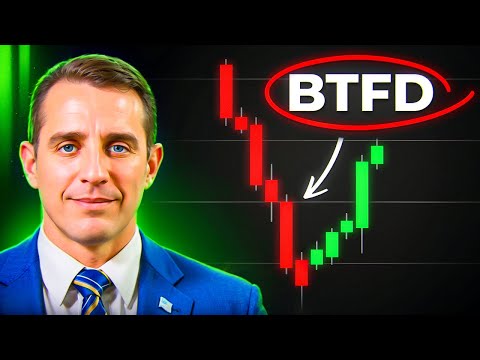
"Buying The Dip" Isn’t A Meme, It’s Outperforming Wall Street
From The Desk Of Anthony Pompliano· 2025-12-22 22:00
Hello everyone. Retail investors can't stop buying the dip and they are making money. A guy in San Francisco just proved how pervasive AI is going to be. An open door CEO, he just pulled back the curtain and revealed how big companies are becoming more efficient. We're live today from the desk of Anthony Pompiano. Before we get into today's episode, I need your help. We currently have 41,431 subscribers on this channel. My goal is to get to a million. Maybe we're going to do it in 2026, but it all starts to ...
CA homeowner stuck with $50K bill after neighbor's tree crashes into her house but insurer denies 'unforeseeable' claim
Yahoo Finance· 2025-12-22 21:30
Core Insights - Increasing frequency of extreme weather events is leading homeowners to rely more on property insurance as a crucial safety net [1] - Complications can arise in insurance claims when damage involves property located on neighboring land, as illustrated by a recent case in Castro Valley [2][3] Group 1: Case Study of Angela Bereola - Angela Bereola faced a significant financial burden after a tree from a neighboring property fell on her house, resulting in a total damage estimate of $70,600.83 [4] - The insurance adjuster only offered $19,200.86 due to the tree's location, leaving Bereola responsible for the remaining $51,399.97 [4] - After prolonged negotiations and media intervention, Bereola received a supplemental payment, highlighting the challenges homeowners face in insurance disputes [5] Group 2: Industry Trends and Statistics - In 2024, a significant percentage (40% to 51%) of homeowner claims were denied by 14 of the largest property insurers in the U.S., indicating a troubling trend in the industry [6] - The denial of claims is becoming increasingly common, emphasizing the need for homeowners to be aware of their rights and the complexities involved in property insurance [6]
LQD vs. VCLT: Choosing Between Stability and Long-Rate Exposure
Yahoo Finance· 2025-12-22 20:36
Core Insights - The iShares iBoxx Investment Grade Corporate Bond ETF (LQD) and the Vanguard Long-Term Corporate Bond ETF (VCLT) differ significantly in cost, yield, sector exposure, and risk profile, with LQD providing broader diversification while VCLT focuses on higher yield and an ESG screen [2][3] Cost & Size Comparison - LQD has an expense ratio of 0.14% and AUM of $33 billion, while VCLT has a lower expense ratio of 0.03% and AUM of $9 billion [4][5] - As of December 16, 2025, LQD's 1-year return is 5.38% and dividend yield is 4.4%, compared to VCLT's 3.51% return and 5.38% yield [4][5] Performance & Risk Comparison - Over the past five years, LQD experienced a maximum drawdown of 24.95%, while VCLT had a larger drawdown of 34.31% [6] - The growth of $1,000 over five years is $805 for LQD and $690 for VCLT, indicating LQD's better performance [6] Portfolio Composition - VCLT primarily invests in high-quality corporate bonds with maturities between 10 and 25 years, holding 257 bonds with significant sector exposure in cash and others (15%), healthcare (14%), and financial services (13%) [7] - LQD, in contrast, has over 3,000 holdings, with a concentration in cash and equivalents, and does not apply any ESG screening [8] Investment Implications - Both LQD and VCLT provide exposure to investment-grade corporate bonds but react differently to interest rate changes, with LQD spreading risk across a larger number of bonds and a wider maturity range [11]


Retirees, This End of Year Error Could Cost You Big, Says Vanguard Study
Investopedia· 2025-12-22 17:00
Core Insights - The end of the year is approaching, and retirees need to be aware of the requirement to take required minimum distributions (RMDs) from their retirement accounts, as missed RMDs could cost them up to $1.7 billion annually according to Vanguard [1][6] Group 1: RMD Requirements - Investors aged 73 and older must take RMDs from accounts like 401(k)s and traditional IRAs, with exceptions for those still working with a 401(k) through their employer [2] - For retirees aged 74 and older, RMDs must be taken by December 31 each year, while those turning 73 in the current year have until April 1 of the following year to take their first RMD [4][6] Group 2: Impact of Missed RMDs - Vanguard's research indicates that 6.7% of RMD-eligible investors missed their RMDs in 2024, with an average RMD amount of $11,600, leading to potential penalties of $1,160 or $2,900 depending on the penalty rate [2][3] - The estimated number of IRA holders missing their RMDs annually is around 585,000, resulting in total potential tax penalties ranging from $678 million to $1.7 billion each year [3] Group 3: Behavioral Insights - Reducing the rate of missed RMDs, even slightly, could save retirees hundreds of millions of dollars annually, highlighting the importance of awareness and compliance with RMD rules [5]

Tech ETF Faceoff: FTEC Vs. XLK (The Winner May Surprise You)
Seeking Alpha· 2025-12-22 16:26
分组1 - The article emphasizes the importance of building a well-diversified portfolio, recommending a high-quality, low-cost S&P 500 ETF as a foundational investment [1] - It suggests an overweight position in the technology sector, which is believed to be in the early stages of a long-term secular bull market [1] - For dividend income, the article advises considering large oil and gas companies that offer strong dividend income and growth [1] 分组2 - The author promotes a top-down capital allocation approach tailored to individual investor circumstances, including factors like age, risk tolerance, and financial goals [1] - Suggested investment categories include S&P 500, technology, dividend income, sector ETFs, growth, speculative growth, gold, and cash [1]

3 Ways to Actively Get More Fixed Income in 2026
Etftrends· 2025-12-22 14:43
Core Insights - Record demand and new launches have characterized a strong year for fixed income in 2025, with expectations for continued growth into 2026 as the Federal Reserve eases monetary policy [1] - The recent rate-cutting cycle suggests that investors should optimize their portfolios for income extraction, with active management being a key strategy [2] Active vs. Passive Management - Active ETFs provide flexibility compared to passive ETFs, allowing portfolio managers to adjust holdings based on market conditions, making them suitable for various investment objectives [3] - Active management is particularly beneficial in the complex bond market, enabling tailored strategies for core exposure and maximum income [3] Investment Options - Vanguard offers two core exposure options: the Vanguard Core-Plus Bond ETF (VPLS) and the Vanguard Core Tax-Exempt Bond ETF (VCRM), which provide diverse exposure to U.S. Treasuries, mortgage-backed securities, and municipal debt [4][5] - The Vanguard High-Yield Active ETF (VGHY) is introduced as a high-yield muni solution, allowing investors to access high yields without resorting to risky corporate bonds [6][7] Fund Characteristics - VGHY is noted for its active strategy in the high-yield muni market, addressing the complexities and risks associated with municipal bonds [7] - All mentioned active funds feature low expense ratios and are supported by the Vanguard Fixed Income Group, which has expertise in navigating bond markets [7]
This Underrated Value ETF Could Turn Long-Term Investors Into Millionaires
Yahoo Finance· 2025-12-22 14:35
Core Insights - The Vanguard Value ETF is highlighted as a strong investment option for those looking to potentially earn $1 million or more in the stock market with minimal effort [2][4] - Value ETFs are characterized by stocks deemed undervalued, making them suitable for risk-averse investors due to their solid fundamentals and stability compared to growth ETFs [3] Investment Strategy - The Vanguard Value ETF includes 315 large-cap stocks across various sectors, providing significant diversification and reducing risk from sector-specific downturns [5] - The ETF features a low expense ratio of 0.04%, which can lead to substantial savings over time compared to other ETFs with higher fees [6] Historical Performance - Since its inception in 2004, the Vanguard Value ETF has achieved an average annual return of 9.09%, with projections indicating the amount needed to invest monthly to reach $1 million based on different investment horizons [7][8] - Investment amounts required to reach $1 million vary based on the number of years invested, with examples showing that investing $1,000 per month for 25 years could yield over $1 million [8] Long-term Perspective - The future performance of the ETF is uncertain, and value stocks may take time to realize their potential, emphasizing the importance of a long-term investment strategy [9] - Starting investments sooner can significantly reduce the monthly contribution needed to achieve financial goals, highlighting the benefits of compounding over time [10] Conclusion - Investing in a value ETF like the Vanguard Value ETF offers exposure to undervalued stocks with diversification benefits, potentially leading to substantial wealth accumulation over decades with consistent, modest investments [11]
The Simple Dividend Strategy Helping Retirees Avoid Selling in Down Markets
Yahoo Finance· 2025-12-22 14:02
Core Investment Strategy - The primary focus for retirees should be on generating reliable cash flow through dividends rather than on fluctuating portfolio values, which can lead to panic during market downturns [3][4][5] - An income-first approach is becoming increasingly popular among retirees, allowing them to maintain a stable financial lifestyle and cover living expenses without frequent principal withdrawals [4][5] Benefits of Dividend Income - Dividend income helps retirees avoid the pitfalls of traditional withdrawal strategies, which can force them to sell assets at lower prices during market declines [7][9] - This strategy allows retirees to keep their principal intact while still receiving cash distributions to cover expenses, thus positioning their investments for recovery when markets stabilize [9] Recommended Dividend Stocks and Funds - Procter & Gamble (NYSE:PG) is highlighted for its stability, with an annual dividend payment of approximately $4.23 and a history of 69 years of dividend growth [11] - Enterprise Product Partners (NYSE:EPD) offers a high yield of 6.81% with an annual dividend payout of $2.18, benefiting from its energy infrastructure operations [12] - Rexford Industrial Realty (NYSE:REXR) combines income and capital appreciation with a dividend yield of 4.18% and a strong growth record [13] - The Vanguard International High Dividend Yield ETF (NASDAQ:VYMI) provides international exposure with a yield of 3.75%, capturing income from global markets [14] Cash as a Safety Net - Maintaining liquid cash reserves is essential for retirees, serving as a safety net for unexpected expenses while allowing investments to grow or recover during market fluctuations [15]