BP

Search documents
Why I Keep Buying More Shares of This Amazing High-Yield Dividend Stock for 2026
Yahoo Finance· 2026-01-28 16:20
TotalEnergies (NYSE: TTE) is a proven survivor in the oil patch. It is also an innovator that has started to include electricity production in its energy portfolio. The current geopolitical tension in Venezuela and elsewhere could cause some disruption to the energy market, but it won't stop me from continuing to buy TotalEnergies' stock. Energy prices have always been volatile While some theorists claim that Wall Street is efficient, the truth is that it can be highly emotional over short periods. That' ...

Got $500? 2 No-Brainer Energy Dividend Stocks to Buy Right Now
Yahoo Finance· 2026-01-28 15:05
Core Viewpoint - The energy sector, typically known for volatility, can still provide reliable dividends, as demonstrated by ExxonMobil and Chevron, which have successfully navigated the energy commodity cycle while rewarding investors with consistent dividend growth [1]. Company Overview - ExxonMobil and Chevron are integrated energy companies operating across upstream (energy production), midstream (pipelines), and downstream (chemicals and refining) segments, which helps mitigate the impact of oil and natural gas price fluctuations [3]. Dividend Performance - ExxonMobil has increased its dividend annually for over 40 years, while Chevron has maintained its dividend growth for more than 30 years, showcasing a level of consistency unmatched by peers like Shell, BP, and TotalEnergies, which have faced dividend cuts [4]. Dividend Yields - ExxonMobil offers a dividend yield of 3%, and Chevron provides a higher yield of 4.1%, significantly above the S&P 500 index's yield of 1.1%, making them attractive options for dividend investors [5]. Financial Strength - Both companies have strong balance sheets, with ExxonMobil's debt-to-equity ratio at 0.16 and Chevron's at 0.22, the lowest among their peers, allowing them to manage debt effectively during downturns and support dividends [6]. Investment Recommendation - Given their financial stability and dividend performance, ExxonMobil and Chevron are considered strong investment choices, with Chevron currently offering a better income opportunity for conservative investors [7].


Shell and BP seek US licenses for shared Trinidad-Venezuela gas fields
Invezz· 2026-01-28 11:24
Shell and BP are actively pursuing US licenses to begin extracting natural gas from shared fields in Trinidad and Tobago and Venezuela, the Caribbean country's energy minister Roodal Moonilal announce... ...


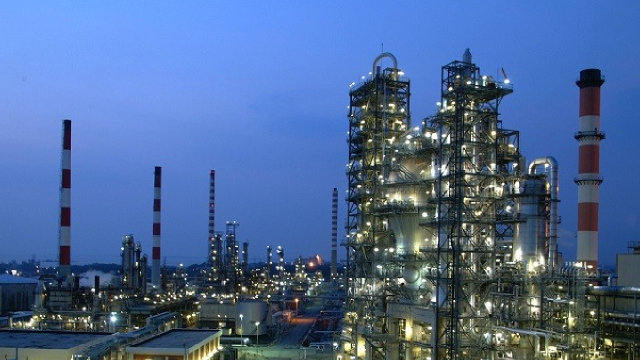
BP, Shell seeking US licenses for gas fields shared with Venezuela, Trinidad minister says
Reuters· 2026-01-28 09:33
Core Viewpoint - Shell and BP are pursuing licenses from the U.S. Office of Foreign Assets Control to extract natural gas from fields in Trinidad and Tobago and Venezuela [1] Company Actions - Shell and BP are actively seeking regulatory approval to operate in specific regions, indicating a strategic move to enhance their natural gas production capabilities [1] Industry Context - The interest in natural gas extraction in Trinidad and Tobago and Venezuela highlights the ongoing demand for energy resources in the Caribbean region, reflecting broader trends in the global energy market [1]

U.S. LNG Exports Surge Despite 4Q25 Headwinds
Etftrends· 2026-01-27 12:33
Core Insights - U.S. LNG exports surged 24% to a record 14.6 Bcf/d in 2025, driven by new capacity and infrastructure projects, despite facing headwinds in 4Q25 due to tightening spreads between global LNG prices and U.S. benchmarks [1][2] U.S. LNG Capacity Expansion - 2025 marked a historic year for U.S. LNG, with exports reaching new highs and approximately 9 Bcf/d of new capacity beginning construction, including major projects from Venture Global, Woodside Energy, and Sempra Infrastructure [1] - LNG exports increased by 26% year-over-year, primarily due to the ramp-up of Venture Global's Plaquemines facility and the completion of Cheniere Energy's Corpus Christi Stage 3 [1] - An additional ~2.4 Bcf/d of capacity is expected to come online in 2026, driven by expansions from VG and Exxon [1] - The only Final Investment Decision (FID) in 4Q25 was for NextDecade's Rio Grande Train 5, while Energy Transfer suspended its Lake Charles LNG project [1] Global Market Headwinds - LNG-related stocks faced pressure in 4Q25, with liquefaction being the worst-performing subsector in the Alerian Midstream Energy Select Index [1] - The spread between European and Asian LNG markers and the U.S. Henry Hub benchmark compressed to multi-year lows of $4-$6 per million British thermal unit (MMBtu) by December [1] - Cheniere Energy, with over 90% of its production contracted long-term, remained insulated from spot price volatility, while Venture Global faced challenges due to its strategy of delaying commercial operations [1] - Cold weather forecasts and declining gas inventories in early 2026 have led to a rebound in global benchmarks, improving margins for LNG exporters [1] Potential Near-Term FIDs - Three LNG projects that were expected to reach FID by the end of 2025 have now pushed their targets into the first half of 2026, including Delfin FLNG, Commonwealth LNG, and Texas LNG [2] - Glenfarne signed a definitive sales and purchase agreement for its Texas LNG project, fully subscribing the project and targeting completion of financing and FID in early 2026 [2] Bottom Line - LNG export projects under construction are set to double U.S. export capacity by 2031, with more projects potentially starting construction soon [2] - While oversupply concerns impacted the market in 4Q25, fundamentals have shown improvement heading into 2026 [2]


BP interested in cross-border opportunities with Venezuela, its Trinidad country head says
Reuters· 2026-01-26 15:06
BP's head of Trinidad and Tobago said the oil and gas major is still interested in cross-border opportunities with Venezuela, despite the government in Caracas suspending all bilateral energy agreemen... ...

Poland's PKO BP fined over loan terms, consumer watchdog says
Reuters· 2026-01-26 07:40
Core Viewpoint - Poland's largest lender PKO BP has been fined over 79 million zlotys (approximately $22 million) for including prohibited clauses in consumer loan agreements as stated by the competition and consumer protection office UOKiK [1] Group 1 - The fine imposed on PKO BP amounts to more than 79 million zlotys [1] - The penalty is a result of the bank's use of prohibited clauses in its consumer loan agreements [1] - The regulatory body involved in this action is the competition and consumer protection office UOKiK [1]

中国主题:能源上行周期中被低估的标的-China Thematics_ APAC Focus_ Underappreciated names amid energy upcycle
2026-01-26 02:50
Summary of Key Points from the Conference Call Industry Overview - The focus is on the energy sector, particularly natural gas and nuclear power, amid a global CAPEX upcycle driven by increasing electricity demand from AI, multi-shoring, and electrification [1][2][3][8]. Core Insights - **Electricity Demand Growth**: Global electricity demand is expected to rise significantly, with projections indicating it will exceed 32% of final energy consumption by 2050, up from 20% in 2023 [8]. - **CAPEX Projections**: A bottom-up analysis estimates a total of US$1,800 billion in global CAPEX from 2025 to 2030, focusing on offshore oil and gas exploration and production (E&P), LNG terminals, and gas-fired and nuclear power plants [2][7]. - **Industry Trends**: Four key trends identified include: 1. Consolidation in the oil and gas EPC and service market, leading to concentration among upstream equipment and parts manufacturers. 2. Outsourcing of production processes by EPC and service providers to suppliers. 3. Demand for higher quality advanced metal parts due to rising applications in deep-sea oil and gas, LNG terminals, and nuclear power plants. 4. Increased global competitiveness of Chinese equipment and parts suppliers [3][7][88]. Investment Opportunities - **Recommended Stocks**: The report initiates coverage on Neway and Develop with Buy ratings, and also recommends Yingliu, Jereh, and Sinoseal as potential beneficiaries of the CAPEX upcycle [1][3][7]. - **Market Mispricing**: The market may be underestimating the investment implications of the current natural gas and nuclear upcycle for China's upstream equipment and component manufacturers [7]. Financial Metrics of Recommended Stocks - **Neway Valve (603699.SH)**: Market cap of US$6.276 billion, expected PE of 22, with 61% overseas sales and a projected EPS CAGR of 28% from 2025 to 2027 [4]. - **Develop (688377.SH)**: Market cap of US$1.126 billion, expected PE of 37, with 62% overseas sales and a projected EPS CAGR of 51% [4]. - **Yingliu (603308.SH)**: Market cap of US$5.317 billion, expected PE of 54, with 47% overseas sales and a projected EPS CAGR of 54% [4]. - **Jereh Oil Field (002353.SZ)**: Market cap of US$12.801 billion, expected PE of 24, with 45% overseas sales and a projected EPS CAGR of 21% [4]. - **Sinoseal (300470.SZ)**: Market cap of US$5.337 billion, expected PE of 31, with 10% overseas sales and a projected EPS CAGR of 33% [4]. Additional Insights - **Natural Gas and Nuclear Power**: Both sectors are expected to benefit from stable electricity generation capabilities, with natural gas producing countries ramping up exploration and production, particularly offshore [2][20]. - **Technological Advancements**: The report highlights advancements in production technology that have significantly lowered the break-even costs for offshore oil E&P, enhancing the attractiveness of investments in this area [36][49]. - **Nuclear Power Renaissance**: There is a noted global renaissance in nuclear fission power, particularly in China, with expectations of accelerated approvals and construction of nuclear projects [65][66]. Conclusion - The energy sector, particularly natural gas and nuclear power, presents substantial investment opportunities driven by increasing electricity demand and significant CAPEX growth. Chinese manufacturers with strong overseas exposure and advanced manufacturing capabilities are well-positioned to benefit from these trends [1][7][8].


地缘政治成焦点之际,原油库存增加-Bernstein Energy_ Oil inventories build while geopolitics take centre stage
2026-01-26 02:49
Summary of the Conference Call on Oil & Gas Industry Industry Overview - The conference call focused on the **Asia-Pacific Oil & Gas** industry, particularly discussing oil inventories and geopolitical factors affecting the market [1][7]. Key Points and Arguments 1. **OECD Inventories**: - OECD commercial inventories increased by **7 million barrels (MMbls)** in November, reaching **2,838 MMbls**, which provides a **60 days demand cover** [2][37]. - A net draw of **23 MMbls** was observed in 4Q, contrasting with IEA's estimates of a **2.7 MMbls/d** oversupply [2]. 2. **Global Inventory Trends**: - Global inventories rose by **66 MMbls month-over-month**, totaling **6,449 MMbls** in November, with non-OECD inventories contributing significantly [3]. - China’s inventories increased by **3 MMbls** in November, indicating ongoing stockpiling [3]. 3. **Supply and Demand Forecast**: - Global oil demand is projected to grow by nearly **1.0 MMbls/d** to **105 MMbls/d**, with non-OECD Asia being the largest contributor [4]. - Non-OPEC supply growth is expected to outpace demand growth, leading to continued inventory builds through **2026** [4][7]. 4. **OPEC Production Dynamics**: - Despite increased OPEC supply, the call on OPEC crude is anticipated to decline to **25.8 MMbls** in 2026, suggesting a need for production cuts rather than increases [5]. - The unwinding of OPEC production cuts is expected to exacerbate market oversupply, particularly in the first half of the year [5]. 5. **Investment Implications**: - The IEA report indicates an oversupplied oil market, with non-OPEC supply growth outpacing demand, leading to significant inventory gains [7]. - The risk-reward scenario for investors is shifting favorably as oil prices are currently below the marginal cost of **$70/bbl**, suggesting potential for price recovery [7]. 6. **Valuation Comparisons**: - A comparison of major oil companies shows varying P/E ratios, with PetroChina at **8.8**, Sinopec at **11.4**, and CNOOC at **7.2** for 2026 metrics [8]. Additional Important Insights - **Geopolitical Risks**: The potential for geopolitical disruptions, particularly involving Venezuela, Iran, and Russia, could impact supply dynamics unexpectedly [7]. - **Long-term Price Outlook**: Oil prices are expected to average just below **$65/bbl** in 2026 based on inventory forecasts, indicating a challenging environment for producers [25]. This summary encapsulates the critical insights from the conference call, highlighting the current state and future outlook of the oil and gas industry, particularly in the Asia-Pacific region.


BP (BP) Surpasses Market Returns: Some Facts Worth Knowing
ZACKS· 2026-01-22 00:16
Company Performance - BP's stock closed at $35.92, reflecting a gain of +2.19% from the previous trading session, outperforming the S&P 500's gain of 1.16% [1] - Over the past month, BP's stock has risen by 1.65%, which is below the Oils-Energy sector's gain of 5.62% and above the S&P 500's loss of 0.42% [1] Upcoming Financial Results - BP is set to announce its earnings on February 10, 2026, with an anticipated EPS of $0.57, representing a 29.55% increase compared to the same quarter last year [2] - The consensus estimate for quarterly revenue is $60.29 billion, up 25.38% from the year-ago period [2] Annual Forecast - Zacks Consensus Estimates project earnings of $2.85 per share and revenue of $205.1 billion for the entire year, indicating a decrease of -12.58% in earnings and no change in revenue compared to the previous year [3] Analyst Estimates - Recent changes to analyst estimates for BP reflect evolving short-term business trends, with upward revisions indicating analysts' positivity towards the company's operations [4] - The Zacks Rank system, which incorporates these estimate changes, currently ranks BP as 3 (Hold) [6] Valuation Metrics - BP is trading with a Forward P/E ratio of 13.34, which is a premium compared to the industry average Forward P/E of 11.84 [7] - The company has a PEG ratio of 1.91, compared to the average PEG ratio of 2.1 for the Oil and Gas - Integrated - International industry [8] Industry Context - The Oil and Gas - Integrated - International industry, which includes BP, ranks in the bottom 5% of all industries according to the Zacks Industry Rank [9]