HP

Search documents
HPQ Silicon Increases Equity Stake in Novacium SAS, Strengthening Global Exposure and Short and Medium-Term Value Creation
Globenewswire· 2026-02-03 12:30
Core Viewpoint - HPQ Silicon Inc. has increased its equity interest in Novacium SAS from 28.4% to 36.8%, reflecting a strategic move to enhance value participation as Novacium's technologies progress towards commercialization [1][5][11]. Transaction Details - The transaction involves HPQ acquiring an additional 8.4% interest in Novacium for a total consideration of C$4,033,425 (€2,500,000) through the issuance of common shares at a deemed price of C$0.18 per share [2][3]. - HPQ will issue a total of 22,407,916 common shares to three shareholders as part of this transaction [3]. Strategic Implications - The increased ownership is seen as a way to enhance HPQ's economic exposure to future upside while maintaining a disciplined investment approach [6][9]. - This move strengthens HPQ's participation in international revenues and royalty flows, particularly important given Novacium's portfolio of interdependent process technologies [7][8]. - The transaction is expected to improve alignment around intellectual property stewardship and commercialization strategy, reducing exposure to fragmented licensing and competing regional priorities [8][9]. Corporate Development Perspective - The increased stake enhances HPQ's flexibility regarding future strategic partnerships and value-realization paths while maintaining a disciplined capital deployment strategy [9]. - Management believes this transaction reduces execution risk by aligning HPQ more closely with Novacium's founders and technical leadership [9]. Technology Portfolio Expansion - Novacium represents a strategically important extension of HPQ's technology portfolio, focusing on multiple high-value platforms including battery materials, hydrogen systems, and circular-economy solutions [10][14]. - The company is developing silicon-based high-performance battery materials and hydrogen generation systems, which align with HPQ's broader energy-transition focus [15][16]. Execution Capabilities - Novacium's technical leadership and execution capabilities are considered key differentiators, allowing HPQ to extend its technical reach without duplicating infrastructure [18][19]. - The collaboration is expected to support execution across battery and hydrogen initiatives, reinforcing a partnership built around shared objectives and long-term value creation [20].



X @Bloomberg
Bloomberg· 2026-02-03 12:08
PayPal said CEO Alex Chriss will be replaced by HP CEO Enrique Lores https://t.co/aTh9Dbu7C1 ...
HP appoints Bruce Broussard as interim CEO
Reuters· 2026-02-03 12:08
HP Inc on Tuesday named Bruce Broussard as the company's interim chief executive officer effective immediately. ...
HP Inc. to Announce First Quarter Fiscal 2026 Earnings on Feb 24, 2026
Globenewswire· 2026-02-03 12:00
Group 1 - HP Inc. will host a live audio webcast on February 24, 2026, at 5:00 p.m. ET to review its financial results for the first fiscal quarter ended January 31, 2026 [1] - The webcast will be accessible on HP's investor relations website and a replay will be available shortly after the call for approximately one year [1] Group 2 - HP Inc. is a global technology leader operating in over 170 countries, providing a variety of innovative and sustainable solutions for personal computing, printing, 3D printing, hybrid work, and gaming [2] - The company focuses on enabling individuals to bring their ideas to life and connect with important aspects of their lives [2]

HP Inc. Announces Leadership Transition
Globenewswire· 2026-02-03 11:59
Core Viewpoint - HP Inc. has appointed Bruce Broussard as Interim CEO following the resignation of Enrique Lores, who is leaving to pursue other opportunities. The company is reaffirming its financial outlook for the first quarter and fiscal year 2026 [1][4]. Leadership Transition - Bruce Broussard, a Board member since 2021, will leverage his extensive experience in operational and financial management to advance HP's strategic priorities [2]. - Enrique Lores has served as CEO for the past seven years and has been instrumental in guiding HP through its transformation into an AI-driven technology company [3]. Strategic Direction - The company aims to lead the Future of Work, focusing on operational excellence and shareholder value creation [3]. - Broussard expressed commitment to driving strategic progress and maintaining stability during the CEO search process [3]. Financial Outlook - For the first quarter of fiscal 2026, HP expects GAAP diluted net EPS to be in the range of $0.58 to $0.66 and non-GAAP diluted net EPS to be between $0.73 and $0.81 [4]. - For the full fiscal year 2026, HP anticipates GAAP diluted net EPS between $2.47 and $2.77, and non-GAAP diluted net EPS in the range of $2.90 to $3.20 [5][6]. - The company projects free cash flow for fiscal 2026 to be between $2.8 billion and $3.0 billion, reflecting the impact of U.S. trade-related regulations [6]. Upcoming Events - HP will hold a live audio webcast on February 24, 2026, to review financial results for the first fiscal quarter ended January 31, 2026 [7]. Company Overview - HP Inc. operates in over 180 countries, delivering innovative and AI-powered devices, software, services, and subscriptions aimed at driving business growth and professional fulfillment [8].
HP Inc.: A Share Cannibal Trading At Cycle Lows
Seeking Alpha· 2026-02-03 11:44
Core Viewpoint - HP Inc. (HPQ) stock has experienced significant pressure, declining approximately 40% from its peak due to weak PC demand, fears of ongoing printer market decline, and general multiple compression linked to rising interest rates [1] Company Performance - The stock has been under pressure for the past year, reflecting a combination of market concerns regarding demand and valuation [1] Market Conditions - The decline in HPQ's stock price is attributed to broader market trends, including weak demand for personal computers and fears surrounding the printer market's long-term viability [1]
America's 50 most iconic brands, from Main Street to Silicon Valley
Yahoo Finance· 2026-02-02 17:43
Core Insights - The article highlights the significant American companies that have shaped the nation's identity and economy as it approaches its 250th birthday, emphasizing their cultural and historical impact rather than just financial metrics [1][2]. Group 1: Visa - Visa was established in 1958 as BankAmericard, launching the first consumer credit card in the U.S. [3][6] - The company rebranded as Visa in 1976 and went public in 2008, currently holding a market cap of $632 billion [4][6]. - Visa operates in over 220 countries and territories, accepted at more than 175 million merchants [7]. Group 2: Meta (Facebook) - Facebook was founded in 2004 by Mark Zuckerberg and quickly grew to 1 billion users by 2012, later rebranding to Meta in 2021 [9][13][14]. - The platform has faced controversies regarding user data and misinformation but remains a dominant social media service with over 3 billion regular users [15]. Group 3: Boeing - Boeing, established in 1916, is a leading aerospace company known for producing commercial jets and military aircraft [15][16]. - The company has faced challenges in recent years, including safety allegations and COVID-19 impacts, but continues to be a major player in the industry with a market cap of $185 billion [20][21]. Group 4: Tesla - Tesla was founded in 2003, with Elon Musk joining in 2004, and has become synonymous with electric vehicles, launching the Model 3 in 2017 as the best-selling electric car [23][27]. - The company has a market cap of $1.4 trillion and is recognized for driving electric vehicles into the mainstream [28]. Group 5: Patagonia - Patagonia was founded in 1973 by Yvon Chouinard, known for its commitment to sustainability and donating 1% of sales to environmental causes [30][33]. - The company has expanded from climbing gear to a wide range of outdoor apparel and is estimated to have a market cap of $3 billion [33]. Group 6: Intel - Intel was founded in 1968 and became a leader in semiconductor technology, introducing the first programmable microprocessor in 1971 [34][35]. - The company has maintained a significant market presence, controlling approximately 75% of the CPU market as of 2025 [38]. Group 7: HP - HP was established in 1939, initially focusing on sound equipment and later becoming a leader in personal computers and printers [40][42]. - The company split into HP Inc. and Hewlett Packard Enterprises in 2015, with HP Inc. having a market cap of $18 billion [45]. Group 8: Nike - Nike was founded in 1964 as Blue Ribbon Sports and rebranded in 1971, becoming a dominant player in the sportswear market with a 14% share in 2024 [46][50]. - The company gained fame through its endorsement deal with Michael Jordan, significantly boosting its brand recognition [48]. Group 9: Kodak - Kodak was founded in 1888 and became a pioneer in photography, introducing innovations like roll film and the first digital camera [51][54]. - The company filed for bankruptcy in 2012 and now focuses primarily on commercial printing and imaging [56]. Group 10: IBM - IBM was established in 1911 and became synonymous with computing, initially focusing on tabulating machines and later dominating the PC market [59][62]. - The company has shifted its focus to consulting, software, and cloud computing, with a market cap of $291 billion [67]. Group 11: Paramount Pictures - Paramount Pictures, founded in 1912, is recognized as the longest-operating major studio in Hollywood, producing numerous iconic films [68][70]. - The studio has undergone various mergers and continues to be a significant player in the entertainment industry with a market cap of $12 billion [74]. Group 12: Netflix - Netflix was founded in 1997 as a DVD rental service and transitioned to streaming in 2007, becoming a leader in the industry [77][80]. - The company has a market cap of $351 billion and announced plans to acquire Warner Bros. Discovery in 2025 [81]. Group 13: FedEx - FedEx was founded in 1971, revolutionizing overnight delivery with a centralized hub model [83][84]. - The company has introduced several innovations in the shipping industry and has a market cap of $74 billion [88]. Group 14: Motown - Motown Records, established in 1959, played a crucial role in integrating Black artists into mainstream pop music [91][92]. - The label produced numerous hits and helped launch the careers of many iconic artists, although it faded in prominence during the 1970s [94][96]. Group 15: PepsiCo - PepsiCo was formed in 1965 through the merger of the Pepsi-Cola Company and Frito-Lay, becoming a leading global food and beverage brand [99][100]. - The company is known for its innovative marketing strategies and has a significant rivalry with Coca-Cola [101]. Group 16: Levi Strauss - Levi Strauss, founded in 1853, is known for creating the first riveted blue jeans, which have become a cultural staple [104][106]. - The company continues to sell a wide range of apparel and remains a significant player in the fashion industry [106]. Group 17: Microsoft - Microsoft was founded in 1975 and became a leader in software development, particularly with its Windows operating system [109][110]. - The company has expanded into gaming, cloud services, and AI, with a market cap of $7.8 billion [112]. Group 18: The Home Depot - The Home Depot was established in 1978, focusing on providing a wide range of building supplies and home improvement products [115][116]. - The company has a strong commitment to community initiatives, particularly supporting veterans, and has a market cap of $3.2 trillion [118]. Group 19: WK Kellogg Company - WK Kellogg Company was formed from the original Kellogg's brand, known for its iconic cereals and snacks [121][123]. - The company underwent a reorganization in 2023, with its cereal business spun off into a new entity [123].
Is ‘AI-washing’ behind new wave of tech layoffs?
The Economic Times· 2026-01-31 18:33
Group 1 - Executives are anticipating significant changes due to AI technology, leading to job cuts, with over 50,000 layoffs expected in 2025 attributed to AI [1][3] - Amazon announced it would cut 16,000 corporate jobs, in addition to 14,000 previously announced layoffs, with the CEO indicating that generative AI will change work processes, although the company later clarified that the primary reason for cuts was to reduce bureaucracy [3] - Pinterest plans to cut about 15% of its workforce to reallocate resources towards AI-focused roles [3] Group 2 - HP Inc's CEO stated that embedding AI into the company could result in up to 6,000 job cuts in the coming years, which may be viewed positively by investors [3] - Some skeptics argue that companies are using AI as a pretext for layoffs, a phenomenon referred to as "AI-washing," where layoffs are attributed to future AI implementation despite a lack of mature AI applications [3]


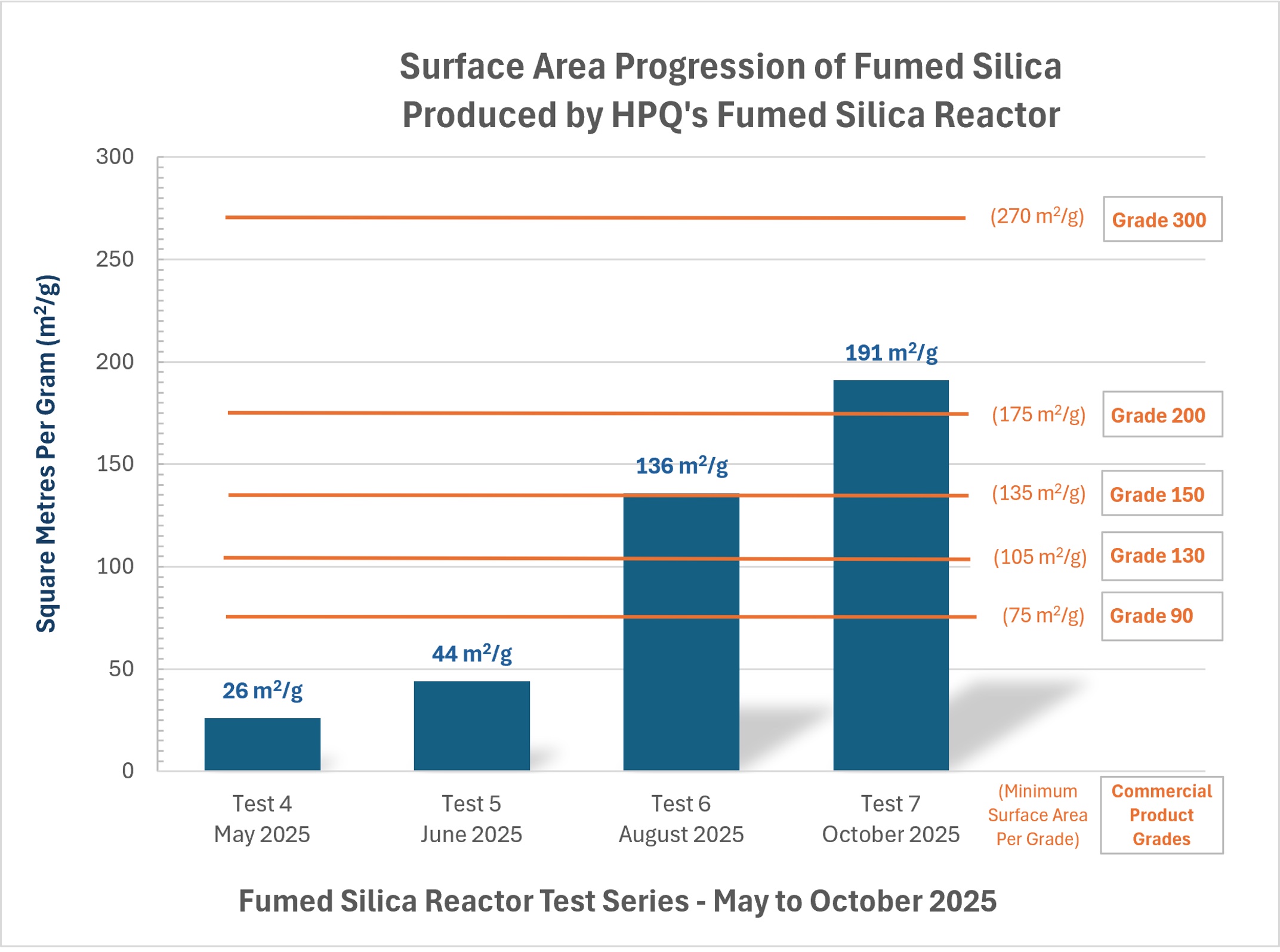
HPQ Confirms Fumed Silica Produced With Pilot Scale Reactor is Independently Verified as Meeting Commercial Grade “150”
Globenewswire· 2026-01-30 12:30
New commercial milestone reached, lab scale results fully replicatedMONTREAL, Jan. 30, 2026 (GLOBE NEWSWIRE) -- HPQ Silicon Inc. (“HPQ” or the “Company”) (“HPQ” or the “Company”) (TSX-V: HPQ, OTCQB: HPQFF, FRA: O08), a technology company driving innovation in advanced materials and critical process development, is pleased to announce that it has recently received independent verification of its most recent test results from a potential customer, under LOI [1]. These results confirmed that the fumed silica p ...