Walmart

Search documents
Beyond Meat shares sizzle on Walmart deal and meme stock interest
Yahoo Finance· 2025-10-22 15:32
Core Viewpoint - Beyond Meat's shares have experienced a significant surge, more than doubling in value and increasing over 1,000% in the last four trading days, following a period of all-time lows [1][2]. Group 1: Stock Performance - Beyond Meat's shares rose more than 92% early Wednesday, marking a dramatic recovery from a low of 52 cents per share on October 16 [1]. - The stock's recent rally is attributed to its inclusion in Roundhill Investments' Meme Stock ETF, which focuses on stocks driven by social media hype rather than financial performance [3]. Group 2: Product Availability and Strategy - The company announced an increase in product availability at over 2,000 Walmart stores, including chicken pieces, Korean BBQ-style steak, and burger six-packs [2]. - Beyond Meat launched a direct-to-consumer website to generate interest through limited releases of new products [2]. Group 3: Market Context - Investors have been seeking out meme stocks in 2025 as a strategy to find bargains in a high-priced stock market, with Beyond Meat previously being a popular choice since its IPO in 2019 [4]. - The company has faced challenges with weak demand for its products, reporting a 15% decline in net revenue during the first half of the year [5]. Group 4: Recent Challenges - The stock price fell sharply last week due to the expiration of lock-up restrictions on 326 million shares, allowing shareholders to sell their stock as part of a debt reduction strategy [6].
Walmart pauses H-1B visas for job candidates as Trump hikes fees
CNBC· 2025-10-22 14:56
Core Points - Walmart is pausing the hiring of job candidates requiring H-1B visas, reflecting the impact of the Trump administration's immigration policies on corporate strategies [1][2] - The decision follows President Trump's announcement of increased fees for H-1B visas, which are now set at $100,000 per application, aimed at protecting American jobs and preventing visa abuse [2][6] - Walmart's corporate workforce primarily operates from its headquarters in Bentonville, Arkansas, and major U.S. cities, with H-1B visa holders representing a small fraction of its total workforce [4][5] Company Specifics - Walmart is the largest employer in the U.S., with approximately 1.6 million employees, most of whom work in retail and warehouse positions [4] - As of June 30, Walmart employed 2,390 individuals on H-1B visas, ranking it as the ninth largest U.S. employer utilizing this visa category [5] - The company has stated its commitment to hiring top talent while being cautious about its H-1B hiring approach, with potential exceptions to the hiring pause [3][4] Industry Context - The U.S. Chamber of Commerce has filed a lawsuit against the new H-1B visa fee, arguing it could hinder U.S. employers, particularly startups and small to midsize businesses, from accessing global talent [6] - The H-1B visa program was established to help American businesses of all sizes recruit necessary global talent for growth [6]


Beyond Meat Surges on Expanded Distribution at Walmart
Yahoo Finance· 2025-10-22 13:19
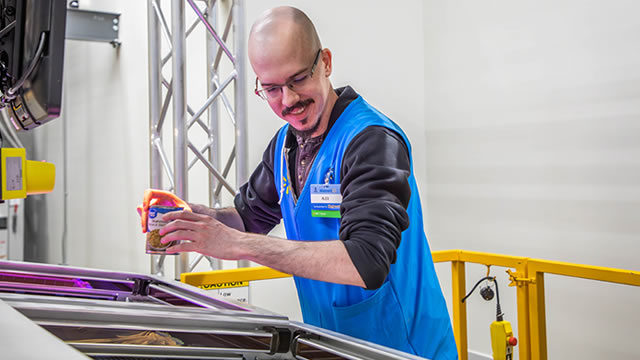
Group 1 - Beyond Meat's stock surged nearly 70% following the announcement of increased product availability at Walmart stores [1][4] - The products will be available in over 2,000 Walmart locations, including a six-pack of burgers, chicken pieces, and Korean barbecue products [2] - The new burger value pack is priced lower, addressing the company's challenge of appealing to non-vegetarians due to previously higher costs [3] Group 2 - The stock has shown significant volatility, particularly after a debt swap announcement that may result in bondholders gaining control of the company [4]
InnerScope Hearing Technologies Forms Strategic Alliance in Ainnova Tech's Acquisition of OTCHealth Inc., Unlocking National Retail Reach and Accelerating Global Hearing Innovation
Prnewswire· 2025-10-22 12:01
Core Insights - InnerScope Hearing Technologies Inc. plays a pivotal role in the acquisition of OTCHealth Inc. by Ainnova Tech Inc., marking a significant milestone for the company in leveraging its retail distribution agreements and technology pipeline for growth in healthcare markets [1][2][3] Company Strategy and Operations - InnerScope will transition the majority of its sales operations, including retail agreements with major U.S. retailers like Walmart, CVS, and Walgreens, to OTCHealth, allowing OTCHealth to maximize these partnerships [2][4] - The company aims to focus on advancing its proprietary hearing technologies and integrating these innovations into OTCHealth's offerings, enhancing the overall value proposition [5][6] Market and Industry Context - The partnership recognizes that hearing loss affects 1.5 billion people globally and is linked to chronic diseases, emphasizing the need for integrated healthcare solutions [6] - Ainnova Tech's AI-driven diagnostics platform will complement InnerScope's hearing technology, creating a comprehensive healthcare ecosystem for early disease detection [3][6] Shareholder Benefits - InnerScope will receive equity and profit participation in both OTCHealth and Ainnova Tech post-acquisition, positioning shareholders to benefit from anticipated growth and expanded market reach [4][8]
5 Things To Know: October 22, 2025
CNBC Television· 2025-10-22 11:06
Hiring & Visa Policy - Walmart is pausing hiring of candidates requiring H-1B worker visas [1] - Walmart was the ninth largest corporate recipient of H-1Bs in America in fiscal year 2025 [1] - President Trump imposed a new $100,000 fee on H-1B applications last month [2] Financial Performance & Shareholder Value - Barclays is raising guidance and announcing a 500 million pound share buyback, stock up by 45% [2] - Western Alliance reported a more than 27% increase in profits year-over-year [2] - Western Alliance reassured investors that an alleged fraud tied to a real estate investor group did not hurt the bank's overall performance, stock is up by 28% [3] Executive Compensation - Microsoft CEO Satya Nadella's pay for fiscal year 2025 climbed 22% to more than $96 million, including more than $84 million in stock awards [4] Mergers & Acquisitions/Investment - LVMH is exploring a sale of its 50% stake in Fenty Beauty, which it co-owns with Rihanna [3]

H‑1B visa fee hike impact? US largest private employer Walmart pauses job offers for work visa candidates
MINT· 2025-10-22 02:43
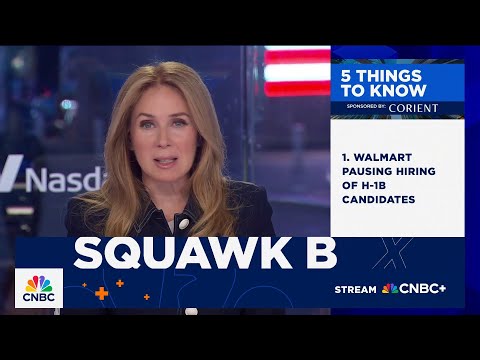
Core Points - Walmart Inc., the largest private employer in the US, has stopped making offers to candidates requiring H-1B visas due to the recent $100,000 visa fee imposed by the US administration [1][2] - The new fee primarily affects Walmart's corporate staff and is part of a broader effort to reform the H-1B visa program [2][5] - Walmart employs approximately 2,390 H-1B visa holders, which is a small fraction of its total US workforce of around 1.6 million [2][3] Impact of H-1B Visa Fee - The $100,000 visa fee is expected to deter US employers, particularly startups and small to midsize businesses, from utilizing the H-1B program, which was designed to help businesses access global talent [5] - The White House claims that the changes to the visa program are legal and represent necessary reforms, while critics argue that the program undermines job opportunities for skilled US workers [6]
Beyond Meat Soars After MEME ETF Inclusion Sparks Short Squeeze
Benzinga· 2025-10-21 21:54
Core Insights - Beyond Meat Inc's stock experienced a significant rally, driven by its inclusion in the Roundhill Meme Stock ETF, highlighting the influence of thematic ETFs on market movements, particularly when retail sentiment aligns with ETF flows [1][2][3] Group 1: Stock Performance - Beyond Meat shares surged 127% on Monday and 146% on Tuesday following the announcement of its inclusion in the Roundhill Meme Stock ETF, which led to a substantial short squeeze as over 63% of its tradable shares were shorted prior to the announcement [2][4] - The stock price jumped from approximately $0.65 to about $3.60 within two days, indicating a dramatic shift from penny-stock status [4] Group 2: ETF Dynamics - The re-launch of the MEME ETF in early October coincided with a resurgence of speculative trading, reflecting a trend similar to the 2021 meme stock frenzy, with Beyond Meat becoming a focal point of this activity [3][6] - ETF inclusion typically increases market volatility, especially for smaller stocks with high short interest, as the liquidity influx from ETF purchases can trigger additional buying from retail investors and momentum funds [4][5] Group 3: Company Developments - Beyond Meat's rally was also supported by positive company news, specifically an extended distribution agreement with Walmart, which may have contributed to investor interest [5]

Beyond Meat, Walmart and a MEME ETF
Fox Business· 2025-10-21 21:41
Core Insights - Beyond Meat shares surged over 146% after hitting a record low earlier this month, indicating a volatile trading environment for investors [1] - The company announced an expansion of its distribution deal with Walmart, which is expected to enhance its market presence [1][3] - Beyond Meat introduced a new value pack for its Beyond Burger, aimed at providing a more affordable option amidst rising food prices, containing 21g of protein and low saturated fat [3] Financial Developments - Recently, Beyond Meat executed a debt swap deal that reduced its overall debt but resulted in share dilution, highlighting ongoing financial challenges [4] - The company's shares had previously traded below $1.00, reflecting significant market pressure [4] Market Dynamics - Beyond Meat was added to the Roundhill Investments' MEME ETF, which tracks stocks that may experience heavy trading from retail investors, indicating a shift in investor sentiment [5][6] - The MEME ETF includes a variety of speculative stocks, suggesting a broader trend of retail investor interest in high-volatility stocks [8]
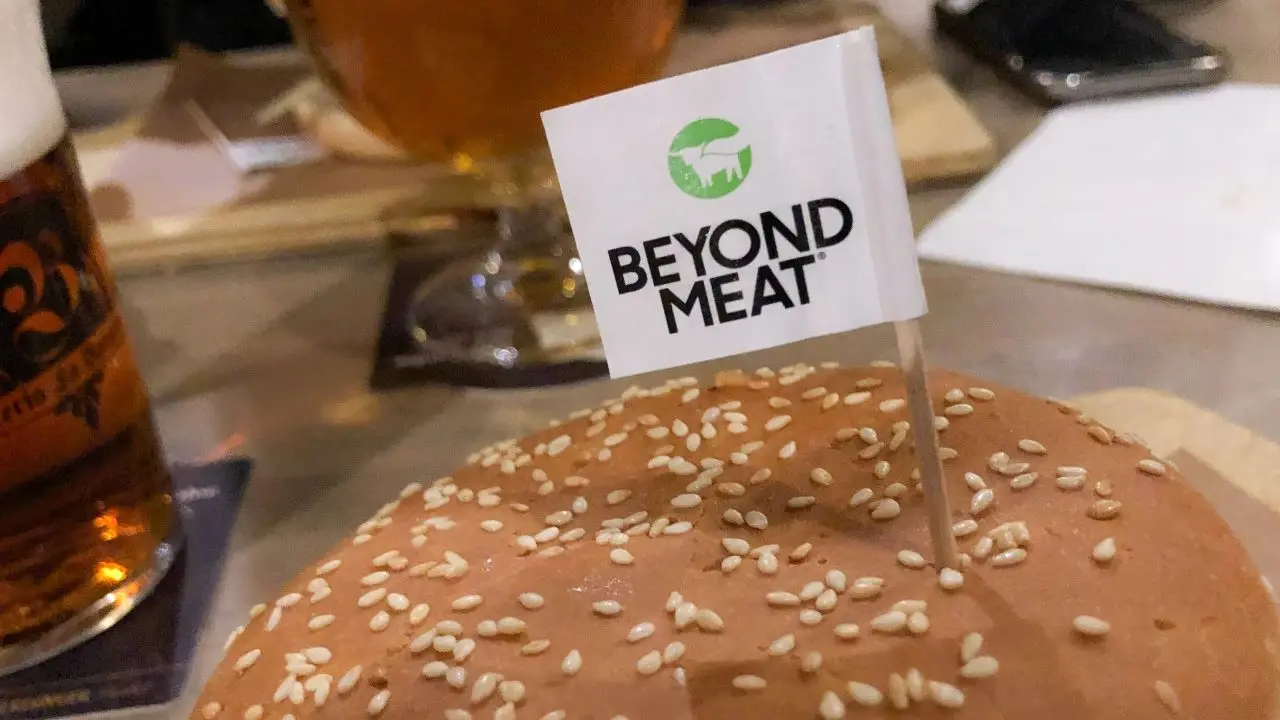
Beyond Meat shares skyrocket over 90% on Walmart plans to expand distribution
New York Post· 2025-10-21 19:15
Core Points - Beyond Meat's shares surged over 90% after announcing distribution expansion into Walmart stores [1] - The stock reached a high of $2.98, resulting in a market value of approximately $1.5 billion, marking a fivefold increase from the previous close of $0.52 [2] - Over 1.2 billion shares of Beyond Meat were traded, making it a popular stock among amateur traders on Stocktwits [3] Company Performance - The stock price had previously fallen below $1 last week, indicating significant volatility [4] - Analysts show a mixed outlook, with five out of eight rating the stock as "sell" or "strong sell," while three recommend holding, with a median price target of $2.42 per share [3]
Walmart (NYSE:WMT) Maintains Strong Position in Retail Sector
Financial Modeling Prep· 2025-10-21 17:13
Core Insights - Walmart is a leading global retailer with a diverse product range and a strong e-commerce presence, competing with major players like Amazon and Target [1] - Evercore ISI has maintained an "Outperform" rating for Walmart, raising the price target to $111 from $110, reflecting confidence in the company's growth prospects [1][5] Financial Performance - The current stock price of Walmart is $107.05, showing a slight decrease of 0.63%, with a trading range between $106.61 and $108.25 for the day [3] - The stock's 52-week range indicates volatility, with a high of $109.58 and a low of $79.81 [3] - Walmart's market capitalization is approximately $853.49 billion, highlighting its significant presence in the retail sector [4] Strategic Initiatives - Walmart has partnered with Abbott Laboratories to offer the Lingo continuous glucose monitor over-the-counter, available in over 3,500 locations and online, enhancing accessibility to medical devices [2] - This partnership aligns with Walmart's strategy to expand its healthcare offerings, demonstrating its commitment to innovation in the retail space [2]