
Fannie Mae

Search documents
Mortgage and refinance interest rates today, January 26, 2026: A step higher from recent lows
Yahoo Finance· 2026-01-26 11:00
Core Insights - Mortgage rates have increased slightly from recent lows, with the average 30-year fixed rate at 6.00% and the 15-year fixed rate at 5.50% [1][18] Current Mortgage Rates - The current national average mortgage rates are as follows: - 30-year fixed: 6.00% - 20-year fixed: 5.98% - 15-year fixed: 5.50% - 5/1 ARM: 6.15% - 7/1 ARM: 6.35% - 30-year VA: 5.54% - 15-year VA: 5.14% - 5/1 VA: 5.18% [5] Refinance Rates - Today's average refinance rates are generally higher than purchase rates, with the following averages: - 30-year fixed: 6.12% - 20-year fixed: 6.09% - 15-year fixed: 5.60% - 5/1 ARM: 6.39% - 7/1 ARM: 6.88% - 30-year VA: 5.59% - 15-year VA: 5.35% - 5/1 VA: 5.31% [6] Monthly Payment Calculations - For a $300,000 mortgage at a 30-year term with a 6.00% rate, the monthly payment would be approximately $1,799, resulting in $347,515 in interest over the loan's life [8] - For the same mortgage amount at a 15-year term with a 5.50% rate, the monthly payment would increase to $2,451, with total interest paid being $141,225 [10] Adjustable-Rate Mortgages (ARMs) - ARMs typically start with lower rates than fixed-rate mortgages but can increase after the initial fixed period. For example, a 5/1 ARM has a fixed rate for the first five years [11][12] - Recently, ARM rates have been comparable to or higher than fixed rates, indicating the need for careful comparison when selecting mortgage types [13] Factors for Lower Mortgage Rates - Lenders offer lower rates to borrowers with higher down payments, excellent credit scores, and low debt-to-income ratios. Strategies to secure lower rates include saving more, improving credit scores, and reducing debt [14] - Borrowers can also consider buying down their interest rate through discount points at closing, which can affect long-term savings [15][16] Future Rate Predictions - The Mortgage Bankers Association (MBA) forecasts that the 30-year mortgage rate will remain near 6.4% through 2026, while Fannie Mae predicts rates above 6% for the next year, potentially dipping to 5.9% in Q4 2026 [20]
Trump 'Not A Huge Fan' Of Kevin Hassett's Proposal Of Using 401(k) For Home Buying, Citing Strong Retirement Accounts
Benzinga· 2026-01-26 10:10
Group 1: Trump's Opposition to 401(k) Proposal - President Trump opposes the use of 401(k) retirement funds for home purchases, despite the proposal from his chief economic adviser, Kevin Hassett [1][2] - Trump believes 401(k)s are performing well, citing an increase of 80-90% in some cases, and prefers to keep them separate from housing market transactions [1] Group 2: Housing Market Context - Rising housing costs have significantly increased typical monthly mortgage payments and down payment requirements, with down payments rising from about $15,000 to $32,000 [2] - Trump's administration is implementing policies to improve housing affordability, including allowing 401(k) withdrawals for home down payments [2] Group 3: Policy Moves to Boost Housing Market - Trump's directive for Fannie Mae and Freddie Mac to purchase $200 billion in mortgage-backed securities has led to a decrease in the average 30-year fixed mortgage rate below 6% for the first time since 2022 [3] - An executive order was signed to limit Wall Street institutions from buying single-family homes, aiming to enhance affordability for first-time buyers and young families [4] Group 4: Current Housing Market Challenges - The housing market is increasingly unaffordable, with analysts estimating that home prices would need to drop by about 24% to match rental affordability, which is considered unlikely [5] - The apartment REIT sector is experiencing a surge in demand, with expectations of significant investment opportunities as the gap between buying and renting widens [5]


US Government Struggles to Keep a Lid on 10-Year Treasury Yield and Mortgage Rates
Wolfstreet· 2026-01-25 16:07
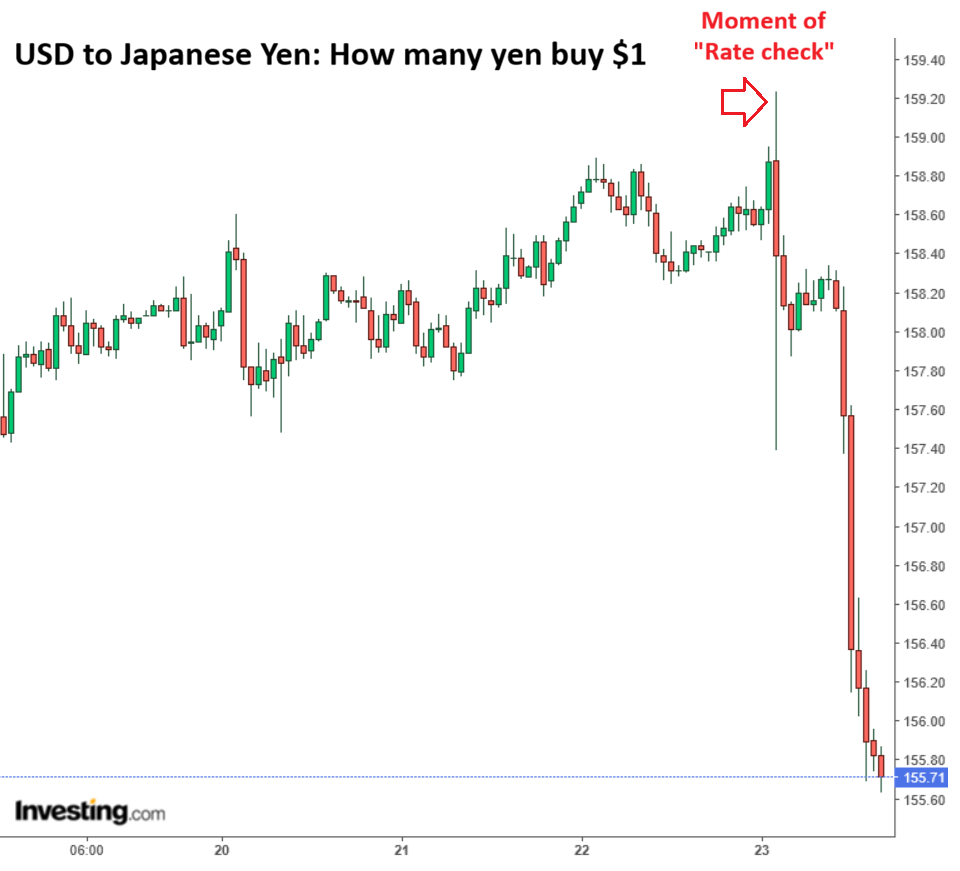
Core Viewpoint - The U.S. government is prepared to intervene in the currency market to support the yen against the dollar, following significant fluctuations in the Japanese bond market and the yen's depreciation [2][5]. Group 1: Currency Market Intervention - A "rate check" was conducted by Treasury Secretary Scott Bessent to stabilize the yen, which had fallen sharply against the dollar [1][2]. - Following the "rate check," the yen appreciated from 159.2 to 155.7 yen per USD within hours [3]. Group 2: Bond Market Dynamics - The Japanese bond market experienced a meltdown, with the 30-year Japanese Government Bond yield rising by 42 basis points to 3.91%, the highest since its introduction in 1999 [5]. - The 10-year U.S. Treasury yield increased to 4.30%, up 17 basis points in a week, impacting mortgage rates which rose to 6.20% from 6.01% [6]. Group 3: Government Actions and Market Reactions - Bessent communicated with Japanese officials to address market concerns, leading to a decrease in the 10-year yield from 4.30% to 4.23% after the "rate check" [7]. - The U.S. government-sponsored enterprises, Fannie Mae and Freddie Mac, initiated buybacks of mortgage-backed securities (MBS) to help lower mortgage rates, with a directive to buy back $200 billion in MBS [9][10].
Trump 2026: Housing Market Changes To Expect in Trump’s Second Year of His Second Term
Yahoo Finance· 2026-01-25 14:20
Core Insights - U.S. home prices have decreased from their previous highs but remain high, with a median sales price of $410,800 in Q2 2025, up from $327,100 at the start of the decade [1] - The National Association of Realtors anticipates a further increase in average home prices by 2% to 3% in 2026 [2] Group 1: Housing Market Dynamics - President Trump plans to have Fannie Mae and Freddie Mac purchase $200 billion in mortgage bonds to lower housing costs, a strategy reminiscent of their past practices [3] - Fannie and Freddie previously held over $900 billion in mortgage-backed securities but currently hold a combined $247 billion as of November 2025, with a cap of $225 billion each [4] Group 2: Mortgage Strategies - Fannie and Freddie's role involves buying mortgages from lenders to facilitate credit availability, but experts question the effectiveness of increasing their bond purchases in reducing borrowing costs [5] - Trump has proposed a 50-year mortgage to lower monthly payments, although experts express skepticism about its practicality and long-term financial implications for homeowners [6][7]
Mortgage and refinance interest rates today, January 25, 2026: Rates level out
Yahoo Finance· 2026-01-25 11:00
Core Insights - Current average mortgage rates have stabilized, with the 30-year fixed rate at 6.00% and the 15-year fixed rate at 5.50% [1][17][18] Mortgage Rates Overview - The average 30-year fixed mortgage rate is 6.00%, while the 15-year fixed rate is 5.50% [1][17] - National averages indicate that rates may vary based on location, with higher averages in expensive areas and lower in less expensive regions [17] Refinance Rates - Mortgage refinance rates are generally higher than purchase rates, but this is not always the case [3] Fixed vs. Adjustable Rates - Fixed-rate mortgages lock in the interest rate for the entire loan term, while adjustable-rate mortgages (ARMs) have a fixed rate for an initial period before adjusting [10][11] - ARMs typically start with lower rates than fixed rates, but rates may increase after the initial period [12] Choosing a Mortgage - To secure lower mortgage rates, borrowers should aim for higher down payments, excellent credit scores, and low debt-to-income ratios [13][14] - It is advisable to apply for mortgage preapproval with multiple lenders within a short timeframe for accurate comparisons [15] Annual Percentage Rate (APR) - When comparing lenders, the APR is crucial as it reflects the true annual cost of borrowing, including interest rates and fees [16] Future Rate Predictions - The Mortgage Bankers Association (MBA) forecasts the 30-year mortgage rate to remain around 6.4% through 2026, with Fannie Mae predicting rates above 6% next year, potentially dipping to 5.9% in Q4 2026 [19]
Trump’s housing market plan contains a fatal flaw and multiple obstacles, Morgan Stanley says
Fortune· 2026-01-25 10:03
Core Viewpoint - Morgan Stanley strategists believe that recent aggressive policy measures from the White House will not significantly change the housing market landscape for prospective homebuyers by 2026 [1][2] Policy Measures - The administration's strategy includes a directive for Fannie Mae and Freddie Mac to purchase $200 billion in mortgage-backed securities, which initially tightened mortgage spreads by 15 basis points, lowering the 30-year mortgage rate below 6% for the first time since 2022 [3][4] Market Reaction - Despite the positive market reaction, Morgan Stanley argues that the market has already priced in the effects of Trump's intervention, and the existing low-rate mortgages limit the effectiveness of the new policy [4][15] Lock-in Effect - The "lock-in" effect is a significant barrier to housing market recovery, with approximately two-thirds of outstanding mortgages having interest rates below 5%. Additionally, 40% of U.S. homes are mortgage-free, exacerbating the lock-in situation [5][8] Demographic Trends - The aging population and lower birth rates are contributing to a slowdown in overall population growth, with the number of families with children under 18 declining from around 37 million in 2007 to approximately 33 million in 2024 [12] Housing Supply and Demand - Current home buying conditions are unfavorable due to high home prices, high mortgage rates, and declining immigration. The lock-in effect is causing existing homeowners to hesitate in selling, while new housing supply is rising, leading to downward pressure on home prices [17] Institutional Investors - Morgan Stanley dismisses the potential impact of a ban on large institutional investors purchasing single-family homes, stating that these investors do not own enough homes to significantly influence the market [17][18] Affordability Challenges - The affordability crisis is attributed to years of policy failures rather than institutional ownership. Solutions to improve affordability would require significant changes in home prices, interest rates, or buyer incomes [18] Future Outlook - Morgan Stanley suggests that further government actions could lower mortgage rates by an additional 50 basis points, but returning to the 4% range would require broader changes beyond GSE actions [20] Inventory Dynamics - New housing inventory is at its highest level since 2007, leading to lower prices for new homes compared to existing ones. Policymakers face challenges in balancing affordability with the exposure of 65% of U.S. households to housing prices as an asset [21]


Can Donald Trump’s mortgage bond push lower home loan rates? New Fannie–Freddie limits reignite risk debate
The Times Of India· 2026-01-24 16:23
Core Viewpoint - The Federal Housing Finance Agency (FHFA) has lifted portfolio caps for Fannie Mae and Freddie Mac, allowing each to hold up to $225 billion in mortgage bonds, significantly increasing their purchasing capacity and raising concerns about systemic risk in the housing finance system [4][5][8]. Group 1: Policy Changes - The new directive allows Fannie Mae and Freddie Mac to increase bond purchases by approximately $170 billion beyond the previously established $200 billion buying program [4][8]. - This change reverses nearly two decades of bipartisan policy aimed at preventing excessive risk-taking by these entities following the 2008–09 financial crisis [5][8]. Group 2: Market Reactions - Analysts express concerns that the increased flexibility for bond buying could lead to a more aggressive approach, potentially heightening systemic risk in the housing market [5][8]. - Political pressure is mounting to demonstrate progress on mortgage affordability ahead of the US midterm elections, but skepticism remains regarding the effectiveness of bond purchases in sustainably lowering rates without addressing housing supply issues [6][8]. Group 3: Leadership and Scrutiny - Bill Pulte's leadership at FHFA has come under scrutiny due to his high-profile approach, including self-appointment as chair of both Fannie Mae and Freddie Mac and controversial policy proposals [7][8]. - The FHFA's directive allows for bond investment increases without prior agency approval, raising alarms among market observers about potential government missteps [9].

From $40 billion to $225 billion: Inside the Trump housing plan to radically change the mortgage bond buying plan
Fortune· 2026-01-24 13:59
Core Viewpoint - The Federal Housing Finance Agency (FHFA) has granted Fannie Mae and Freddie Mac the authority to nearly double their mortgage bond purchases, raising the cap from $40 billion to $225 billion each, which could introduce new risks for these government-backed lenders [1][2][4]. Group 1: Changes in Bond Purchase Authority - The FHFA's email to Fannie Mae and Freddie Mac eliminated previous caps, allowing each lender to hold up to $225 billion in mortgage bonds, effectively increasing their purchasing capacity by approximately $170 billion beyond the initial $200 billion directive from President Trump [2][3]. - This change reverses nearly two decades of bipartisan consensus on limiting the risk exposure of these lenders following their bailout during the 2008-09 financial crisis [4][12]. Group 2: Political and Economic Implications - Some Congressional members have expressed concerns that the benefits of increased mortgage bond purchases will be short-lived unless the housing supply is also increased, warning that lower interest rates could lead to higher home prices [5]. - Critics, including Senator Elizabeth Warren, argue that the new bond purchasing authority raises questions about the risks to Fannie Mae and Freddie Mac and may not effectively lower mortgage interest rates in the long term [6]. Group 3: Historical Context and Risk Management - Fannie Mae and Freddie Mac were created to stabilize the mortgage market, but their government affiliation allows them to borrow at lower costs while also exposing them to regulatory scrutiny [10][11]. - The FHFA had previously enforced strict limits on the mortgage investment portfolios of these lenders, which were capped at $450 billion, and had reduced their purchasing capacity to as low as $25 billion earlier this year [13][14]. Group 4: Future Outlook and Market Reactions - Analysts suggest that while the new authority could boost earnings ahead of potential initial public offerings, both companies may lack sufficient cash or liquid assets to execute the full $225 billion purchase without incurring debt [16]. - The political motivations behind these changes are evident, as mortgage interest rates have become a liability for the Trump administration ahead of the midterm elections [18].

Trump housing finance chief OKs more mortgage spending and adds risk for government-backed lenders
Yahoo Finance· 2026-01-24 13:21
Core Viewpoint - The Federal Housing Finance Agency (FHFA) has granted Fannie Mae and Freddie Mac the authority to nearly double their mortgage bond holdings, raising the cap from $40 billion to $225 billion each, which could significantly increase risk for these government-backed lenders [2][4]. Group 1: Changes in Bond Purchase Authority - The FHFA's email to Fannie Mae and Freddie Mac eliminated previous caps, allowing each lender to hold up to $225 billion in mortgage bonds, effectively increasing their purchasing capacity by approximately $170 billion beyond the president's initial directive [2][3]. - This change reverses nearly two decades of bipartisan consensus on limiting government-backed lenders' exposure following the 2008-09 financial crisis, which resulted in both companies being placed under government conservatorship [4]. Group 2: Political and Market Reactions - Concerns have been raised by some members of Congress regarding the potential risks associated with the increased bond purchasing authority, suggesting that any benefits from lower mortgage rates may be short-lived without an increase in housing supply [5]. - Senator Elizabeth Warren criticized the move as a superficial gesture that is unlikely to lead to long-term reductions in mortgage interest rates and raises questions about the increased risks to Fannie Mae and Freddie Mac [6].
Will mortgage rates fall ahead of January's Fed meeting?
Yahoo Finance· 2026-01-23 17:46
Core Viewpoint - The Federal Reserve is expected to maintain current interest rates, while mortgage rates are influenced by President Trump's housing affordability initiatives rather than Fed actions [1][2]. Mortgage Rates and Applications - Mortgage rates have recently declined, leading to a significant increase in refinance applications, which reached the highest level since September 2025, with a 14% increase in loan applications and a 20% rise in refinancing from the previous week [3]. - The 30-year fixed-rate loans saw a slight increase of three basis points from a three-year low of 6.06% [4]. Impact of Trump's Initiatives - Since the announcement of housing affordability initiatives on January 7, 30-year mortgage rates dropped from 6.16% to 6.06%, before slightly rebounding to 6.09% [5]. - Some lenders are now offering mortgage rates below 6%, indicating a competitive lending environment [5]. Future Fed Rate Expectations - The Federal Reserve is anticipated to make one or two interest rate cuts in 2026, although there are uncertainties regarding the labor market and inflation trends [6]. - J.P. Morgan predicts a potential rate hike in the third quarter of 2027, influenced by expected inflation declines and a tightening labor market [7]. Presidential Actions on Housing - President Trump has implemented several measures aimed at increasing housing affordability, including a ban on institutional investment in single-family housing and a directive for Fannie Mae and Freddie Mac to purchase $200 billion in mortgage bonds [8]. - An initiative was also proposed to allow 401(k) participants to use retirement savings for home down payments, although details remain vague [8]. Market Reactions and Predictions - With the Fed's current stance, mortgage rates are expected to fluctuate, and there may not be sustainable downward movements in the short term [9]. - Economists are monitoring 10-year Treasury yields, which are settling in the 4.2% to 4.3% range, as these will impact mortgage rates [9][10].