Maersk

Search documents
Autonomous Technology Provider Kodiak AI to Trade on Nasdaq
PYMNTS.com· 2025-09-25 01:59
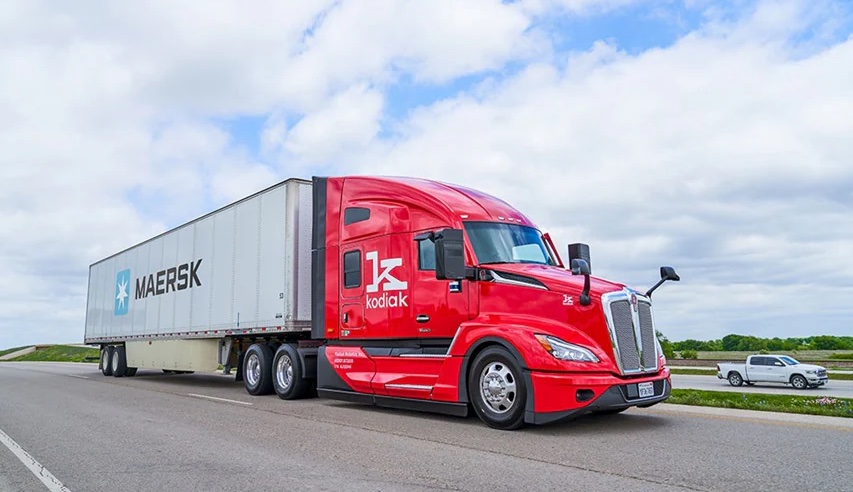
Company Overview - Kodiak AI, formerly known as Kodiak Robotics, is set to begin trading on Nasdaq under ticker symbols KDK and KDKRW on September 25 [1] - The company was formed through a business combination with Ares Acquisition Corporation II, a publicly traded special purpose acquisition company, which was approved by AACT's shareholders on September 23 [2] Financial Highlights - Kodiak received over $212.5 million from institutional investors during the business combination, valuing the company at approximately $2.5 billion [3] Product and Technology - The company's autonomous driving system, Kodiak Driver, is specifically designed for the trucking industry and incorporates real-world experience [3] - Kodiak has delivered Kodiak Driver-powered driverless semi-trucks to Atlas Energy Solutions, which currently operates eight trucks and has placed an initial order for 100 trucks in 2025 [4] Market Strategy - Kodiak aims to scale the commercialization of Kodiak Driver by accessing public markets [4] - The CEO of Kodiak emphasized the importance of going public to transform freight movement through their driverless solutions [5] Partnerships and Collaborations - In October 2023, Kodiak Robotics partnered with Maersk to launch a commercial autonomous trucking lane between Houston and Oklahoma City, utilizing autonomous trucks for transporting consumer goods [6]

Panama Canal is making major play to win back lost energy trade
CNBC· 2025-09-19 15:44
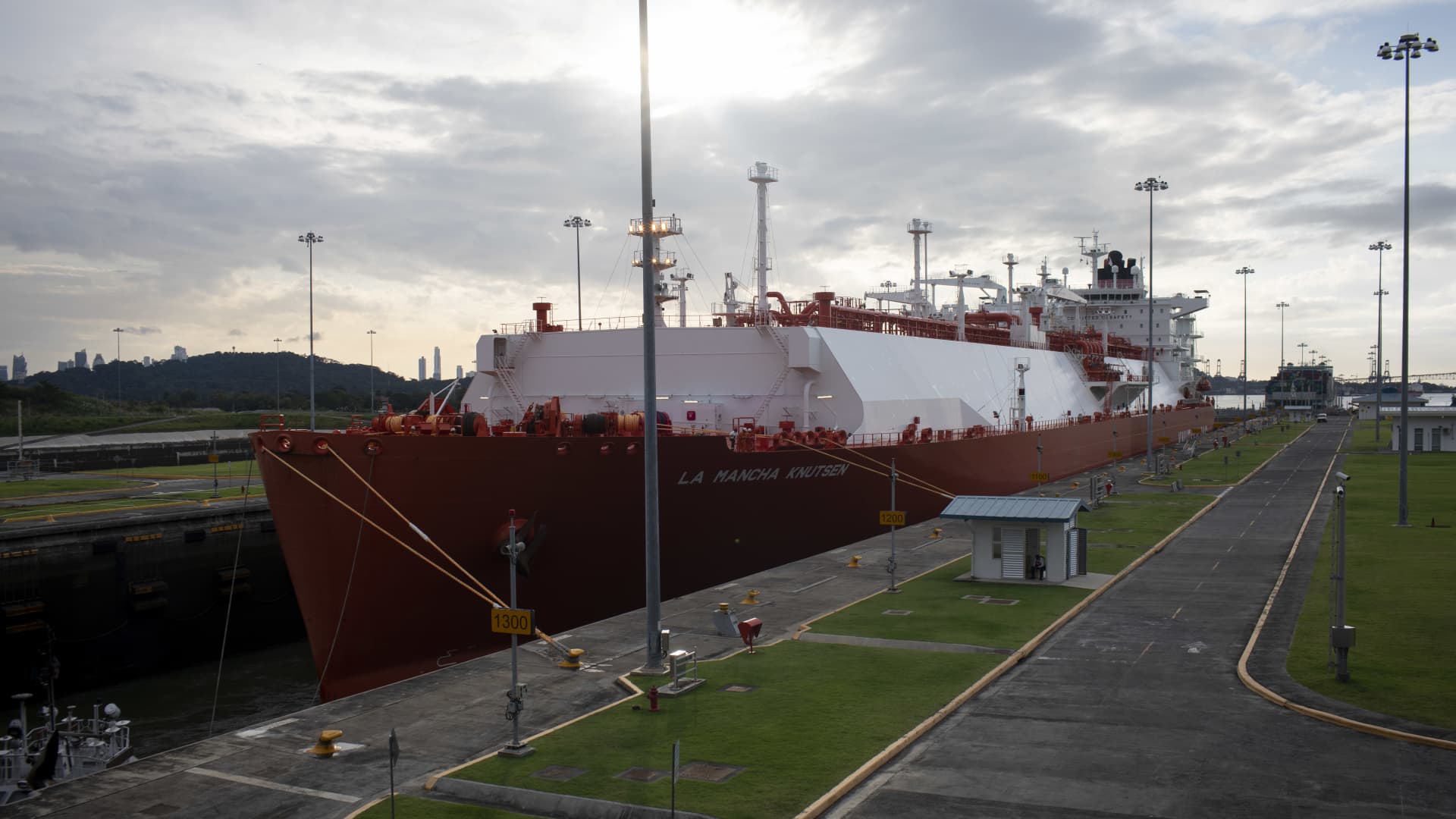
Core Insights - The Panama Canal has experienced a significant decline in liquified natural gas (LNG) transits, with a drop of up to 73% due to severe drought conditions affecting vessel weight restrictions [1] - Despite improvements in conditions, LNG shipments have not returned to previous levels, with carriers opting for longer routes around Africa's Cape of Good Hope [1] Group 1: Changes in Booking and Transit Systems - The Panama Canal Authority is planning to reinstate a preferred booking slot system for LNG carriers to attract more business, which was removed during drought years [4] - New packages for LNG transits are being developed to provide flexibility in tanker types and transit dates, based on industry feedback [3][5] - The canal is moving towards a long-term slot allocation approach, allowing for a full year of reservations, although it was underutilized by LNG this year [4] Group 2: Infrastructure Developments - An ambitious pipeline project, the Interoceanic Energy Corridor, is underway to create a 76-kilometer pipeline connecting Atlantic and Pacific ports, allowing for the transport of 2.5 million barrels of energy products per day [6] - This project aims to free up additional vessel slots for LNG by transporting natural gas liquids through the pipeline instead of tankers [6] Group 3: Market Engagement and Interest - The Panama Canal Authority has engaged with approximately 30 corporations, including major players like Exxon Mobil and Shell, to discuss the new energy terminals and pipeline projects [7] - There is a positive reaction from the Asian market, with significant interest from Japanese companies, as Tokyo is the top buyer of natural gas liquid shipments through the canal [7] Group 4: Economic Impact and Trade Dynamics - The Panama Canal is crucial for the U.S. economy, handling about $270 billion in cargo annually, with U.S. commodity exports and imports making up 73% of its traffic [9] - The canal is facing a forecasted decrease in transits due to trade war frontloading, which has affected container cargo volumes [10] Group 5: Regulatory and Competitive Landscape - The process for selecting a concessionaire for the pipeline and energy corridor is in progress, with a tender expected in the second quarter of 2026 [8] - There are ongoing discussions regarding the involvement of Chinese companies in port operations, with a focus on maintaining an open and competitive bidding process [19][20]
The $1.6 Billion Plan To Fix The Panama Canal’s Drought Problem
CNBC· 2025-09-13 15:00
Panama Canal Drought Impact - The Panama Canal faces challenges due to recent droughts, with vessel transits in 2024 falling 29% compared to the prior year [1][13] - Drought conditions could limit the canal's capacity by 50% by 2050, potentially having devastating consequences for U S commerce [13] - The 2023 and 2024 drought forced the Panama Canal Authority to limit vessel transits to 18 ships per day, while about 36 ships crossed the canal daily before the drought [1] Panama Canal Authority's Response - The Panama Canal Authority plans to spend $16 billion to build a new reservoir to hold 12 billion m³ of water to prepare for future droughts [4] - The Panama Canal Authority had a net income of about $34 billion in 2024 and almost $5 billion in total revenue [22] - The Panama Canal Authority is studying the possibility of adding a 1 million barrel per day pipeline to transport ethane and liquid petroleum gas from the Caribbean to the Pacific side of the canal [29] Alternative Solutions and Adaptations - Some shippers have shifted to roads and trains running alongside the canal to combat drought vessel restrictions and congestion [24] - In 2024, ocean carrier Maersk opened a land bridge and pulled some containers off ships before entering the canal, using rail transport [26] - Large cargo ships pay about $13 million to transit, for vessels like the 17,000 TEU vessels [27][28] Community Impact - The proposed Rio Indio project faces resistance as it will flood 17mi² of land, impacting an estimated 2,500 people [5] - The Panama Canal Authority plans to spend $400 million to compensate and relocate communities affected by the Rio Indio project [16]

Revisiting My Lowered Maersk Target After Q2 2025
Seeking Alpha· 2025-08-29 17:02
Group 1 - The article expresses a beneficial long position in the shares of AMKBY, indicating a positive outlook on the company's stock performance [1] - The author emphasizes the importance of conducting due diligence and research before making any investment decisions, highlighting the need for investors to understand their risk tolerance [2] - The article clarifies that past performance is not indicative of future results, and no specific investment recommendations are provided [3]

SFL .(SFL) - 2025 Q2 - Earnings Call Transcript
2025-08-19 15:00
Financial Data and Key Metrics Changes - The company reported revenues of $194 million for the quarter, with an EBITDA equivalent cash flow of $112 million [5][24] - The EBITDA equivalent over the last twelve months was $526 million [5] - The net profit for the second quarter was approximately SEK 1.5 million or $0.01 per share, compared to a net loss of approximately SEK 32 million or $0.02 per share in the previous quarter [26] Business Line Data and Key Metrics Changes - The container vessel segment generated approximately $2 million in revenue, while the car carrier fleet generated approximately NOK 26 million, slightly up from the last quarter [21][22] - The tanker fleet's gross charter hire decreased to approximately NOK 41 million from NOK 45 million in the previous quarter due to scheduled dry dockings [22] - The overall utilization across the shipping fleet was 98.1%, with an adjusted utilization of 99.9% [15] Market Data and Key Metrics Changes - The charter backlog currently stands at $4.2 billion, with two-thirds of this backlog from customers with investment-grade ratings [10][29] - The company has a diversified fleet consisting of 60 maritime assets, including 30 containerships, 16 large tankers, and two drilling rigs [12] Company Strategy and Development Direction - The company is focused on strengthening its charter backlog by securing agreements with strong counterparties and investing in cargo handling and fuel efficiency upgrades [6][10] - The company has divested older, less efficient vessels and is committed to fleet renewal and new technology, with 11 vessels now capable of operating on LNG fuel [7][12] - The company aims to enhance its fleet to position itself for organic growth and comply with strict regulatory demands aimed at reducing shipping emissions [13][14] Management's Comments on Operating Environment and Future Outlook - Management expressed optimism about finding new employment for the idle drilling rig Hercules, despite current market volatility and oil price fluctuations [8][9] - The decision to adjust the dividend to $0.20 per share was made to ensure that distributions are not subsidized by idle assets, particularly the Hercules rig [10][36] - The company has a strong liquidity position, including undrawn credit lines and unencumbered vessels, which will enable continued investment in new assets [11][27] Other Important Information - The company has returned nearly $2.9 billion to shareholders over 86 consecutive quarters [10] - The average age of the vessels sold was about 18 years, reducing the fleet average by about two years [12] Q&A Session Summary Question: What’s the status with the lawsuit with Seadrill? - The company is involved in two lawsuits, with the larger one regarding the redelivery of the Hercules scheduled for 2026, and a guarantee for an adjustment amounting to approximately $45 million to $50 million has been received from Seadrill [30] Question: Can you walk us through your thought process on the decision to lower the dividend? - Management acknowledged disappointment regarding the dividend adjustment, attributing it to the idle status of the Hercules rig and the need to ensure that distributions are not subsidized by non-operational assets [34][36] Question: What are the expected costs for dry docking in the second half of the year? - Management expects dry docking costs to be significantly lower in Q3 and Q4 compared to Q2, with estimates around $3 million to $3.5 million for Q3 and $1 million to $2 million for Q4 [42][44] Question: How is the company viewing opportunities for potential acquisitions? - The company continues to look for acquisition opportunities, although the market has been slower due to general uncertainty. They have significant investment capacity following recent divestitures [46][47] Question: What should be expected for the organic EBITDA contribution from the energy side? - The energy segment is expected to have a negative drag going forward, but the shipping fleet is generating solid contributions and cash flow [50][54]

集装箱航运及造船洞察-Container Shipping & Shipbuilding Insights
2025-08-14 02:44
Summary of Container Shipping & Shipbuilding Insights Industry Overview - The container shipping and shipbuilding sectors are experiencing increased confusion regarding demand dynamics, with mixed signals about whether demand is strong or weak, pent-up or front-loaded [2][6][8] - Maersk has reported robust demand outside the US, while the US market remains cautious due to tariff uncertainties [2][20] - ICTSI has observed no evidence of cargo front-loading at its ports, complicating the understanding of demand patterns [2][6] Key Companies and Financial Outlook Maersk - Maersk raised its guidance due to strong demand outside North America, expecting global container market volume growth of 2-4% [20][31] - Financial guidance was increased by 17% at the mid-point, with EBITDA raised to US$8-9.5 billion and EBIT raised to US$2-3.5 billion [20][31] ONE - ONE cut its FY25 outlook due to reliance on volatile US routes, lowering EBITDA to US$2.6 billion from US$2.9 billion [21][33] COSCO - COSCO's 1H25 net profit is expected at RMB 18.8 billion, an 11% increase year-over-year [6][38] - Price targets for COSCO have been raised to HKD 21 for COSCO-H and RMB 24 for COSCO-A [6][38] OOIL - OOIL reported a 4.4% year-over-year increase in overall lifting volume for 1H25, with a net profit preview of USD 840 million, up 1% year-over-year [39] Evergreen Marine - Evergreen Marine's 1H25 net profit is expected to see a 2% year-over-year increase, with a price target raised to TWD 352 [6][40] Demand Dynamics - Global container demand grew by 2.6% year-over-year in June, supported by strong Asia-Europe trades [6][8] - Chinese exports in July 2025 rose 7.2% year-over-year, driven by manufacturers rushing to meet tariff deadlines [22][23] Geopolitical and Economic Factors - The Red Sea crisis continues to absorb industry capacity, impacting shipping routes and contributing to port congestion [14][15][28] - USTR 301 tariffs are influencing industry strategies, with Maersk indicating it will not charge customers fees related to these tariffs [16][20] Inventory Levels and Market Sentiment - The US inventory-to-sales ratio indicates increased inventory levels due to pre-stocking activities, with the Logistics Managers' Index (LMI) showing a decline in inventory levels [12][13] - The US market is adopting a "wait-and-see" approach due to tariff uncertainties, which may lead to a spike in demand as tariff deadlines approach [9][10] Challenges and Opportunities - Port congestion remains a significant challenge, particularly in Europe, due to underinvestment in capacity [14][27] - The ongoing geopolitical uncertainties present both risks and opportunities for investment in shipping stocks with strong exposure to non-US markets [23][30] Conclusion - The container shipping and shipbuilding sectors are navigating a complex landscape characterized by mixed demand signals, geopolitical uncertainties, and evolving market dynamics. Companies like Maersk, COSCO, OOIL, and Evergreen Marine are adapting their strategies to leverage opportunities while managing risks associated with tariffs and global trade disruptions.
X @Bloomberg
Bloomberg· 2025-08-11 08:22
Shorting Maersk stock during a global trade war may seem like a sure bet. But the investors who’ve loaded up on the trade since April have so far only been handed big losses https://t.co/IBAHA0A8JG ...
Maersk CEO says ships are going to keep avoiding the Red Sea #shorts
Bloomberg Television· 2025-08-08 13:12
going back through the Red Sea and through the Suez Canal is not something that is going to happen during this year. Uh whereas in May and June uh the situation looked like maybe it was slowly normalizing. The fact that a couple of ships have been sunk by the Houthis uh very recently is certainly pushing or stressing the the lack of security that there still is in doing this and the lack of visibility that there is on how long this security could uh be provided when it when it now comes uh when it comes bac ...
X @Bloomberg
Bloomberg· 2025-08-07 06:20
Maersk, a bellwether for world trade, raised its financial outlook for 2025 saying demand outside North America is “resilient” even amid concerns over a trade war https://t.co/CLGmdcXp4F ...
Maersk, a bellwether for global trade, posts profit beat and raises full-year guidance
CNBC· 2025-08-07 06:12
Company Performance - Maersk reported a second-quarter operating profit of $2.3 billion, exceeding analyst expectations of $1.97 billion and up approximately 7% from $2.14 billion in the same period last year [1][2] - The company raised its full-year 2025 financial guidance, now expecting underlying EBITDA between $8 billion to $9.5 billion, an increase from the previous range of $6 billion to $9 billion [2] - Sales for the second quarter rose nearly 3% year-on-year to $13.1 billion [3] Market Outlook - Maersk anticipates global container market volume growth between 2% and 4%, a revision from the previous forecast of -1% to 4%, indicating stronger market demand outside of North America [3] - The company noted ongoing disruptions in the Red Sea are expected to persist throughout the year [3] Industry Context - The shipping industry is facing a new era of trade complexity due to U.S. President Donald Trump's implementation of higher tariff rates ranging from 10% to 50% on various trading partners [4] - Major trading partners like the U.K., Japan, and South Korea have negotiated lower tariffs, while the European Union has reached an agreement to reduce tariffs on most goods to 15% [5] - The U.S. has imposed significant levies on goods from several countries, including 50% on Brazil, 39% on Switzerland, 35% on Canada, and 25% on India [5]