Siemens Healthineers

Search documents
Siemens leverages AI to close industry's IC verification productivity gap in new Questa One smart verification solution
Prnewswire· 2025-05-13 13:52
Core Insights - Siemens Digital Industries Software has launched the Questa™ One smart verification software portfolio, which integrates AI, connectivity, and a data-driven approach to enhance the Integrated Circuit (IC) verification process and improve engineering productivity [1][2] Product Features - Questa One offers faster engines and requires fewer workloads, supporting complex designs from IP to System-on-a-chip (SoC) and was developed with advanced 3D-ICs and chiplet-based designs in mind [3] - The solution transforms IC design from a reactive process to an intelligent, self-optimizing system, utilizing AI-powered automation and predictive analytics to accelerate verification cycles and reduce manual effort [5][12] - Key technical breakthroughs include: - Coverage Acceleration software achieving coverage goals 50x faster than traditional methods [6] - DFT Simulation Acceleration software delivering 8x faster gate-level design for test simulations [6] - Fault Simulation Acceleration software providing 48x faster performance [6] - Stimulus Free Verification software reducing processing times from over 24 hours to under 1 minute [6] Industry Impact - The Questa One solution addresses the verification productivity gap in the IC industry, which is challenged by increasing design complexity and a talent shortage [4] - Early adopters, including Arm and MediaTek, report significant improvements in verification productivity and efficiency, with reductions in regression time and engineering effort [9] Availability - The Questa One smart verification solution is set to be available in June 2025, aimed at enabling the semiconductor and electronic systems industry to deliver advanced designs [10]



高盛:中国医疗保健 - 2025 年 4 月中国医院设备招标 - 环比增长高于预期
Goldman Sachs· 2025-05-13 05:39
Investment Rating - The report maintains a "Buy" rating for both Mindray and United Imaging, indicating a positive outlook for their stock performance in the near future [82][83]. Core Insights - The procurement value of main medical devices in China has shown strong year-over-year (YoY) growth, with a month-over-month (MoM) increase of 13% in April, surpassing expectations [1]. - The report anticipates a high level of activity in medical equipment procurement throughout 2025, driven by government funding and a recovery in hospital demand [1][25]. - Mindray is expected to maintain its market leadership with multiple growth drivers, while United Imaging is projected to see significant long-term growth potential due to increasing service-related revenue [82][83]. Summary by Sections Procurement Trends - The total bidding value for nine main medical devices in China has reached a high level, with positive MoM growth observed in seven out of nine devices in March [26]. - The report notes that procurement activities are supported by government funding and the implementation of a trade-in program, which is expected to drive demand in the coming quarters [1][25]. Company Performance - Mindray's revenue growth is projected to be +10% in 2Q24, +40% in 3Q25, and +36.5% in 4Q25, reflecting a recovery in its end markets [9]. - United Imaging's management expressed optimism about the upcoming trade-in program in 2025, expecting a smoother process compared to 2024 [9]. Market Dynamics - The report highlights that both domestic and multinational companies achieved notable YoY growth in April, indicating a balanced competitive landscape in the medical device sector [64]. - The trend of domestic substitution is not particularly evident, as both local and multinational companies are performing well in the procurement market [64].
GXO Accelerates Expansion in Healthcare Logistics
GlobeNewswire News Room· 2025-05-06 11:30
Core Insights - GXO Logistics has secured a landmark 10-year, $2.5 billion contract with the UK's National Health Service (NHS), significantly expanding its presence in healthcare logistics [1][2] - The company aims to leverage this agreement as a springboard for further growth in the healthcare sector across the U.K., U.S., and Europe [2] - GXO's logistics solutions are tailored to meet the complex needs of healthcare logistics, including critical fulfillment and inventory management for hospital supplies and medical devices [3] Company Overview - GXO Logistics is the world's largest pure-play contract logistics provider, benefiting from the rapid growth of e-commerce, automation, and outsourcing [4] - The company operates over 1,000 facilities totaling approximately 200 million square feet and employs more than 150,000 team members [4] - GXO partners with leading blue-chip companies to address complex logistics challenges using technologically advanced supply chain solutions [4] Strategic Initiatives - GXO will manage 8 NHS Supply Chain distribution centers and a dedicated fleet of over 300 vehicles to provide modern logistics solutions [2] - The company has also initiated a multi-year agreement with Siemens Healthineers in the U.S. to expand its Forward Stocking Network, including new 'Mega Depots' [2] - GXO has signed additional agreements with large healthcare brands in Europe, further enhancing its healthcare logistics footprint [2] Operational Focus - GXO's logistics solutions ensure full visibility of inventory and orders while managing hundreds of thousands of sensitive, high-value SKUs [3] - The company emphasizes time-sensitive and emergency deliveries, process standardization, data accuracy, and regulatory compliance to enhance patient care [3]


Here's Why GE HealthCare Stock Sank in April
The Motley Fool· 2025-05-05 12:35
Shares in medical equipment company GE HealthCare Technologies (GEHC 4.29%) declined by 12.9% in April, according to data provided by S&P Global Market Intelligence. The key reason for the decline comes from the "Liberation Day" tariffs announced by President Donald Trump at the start of the month. Full-year organic revenue growth is still expected in the 2%-3% range. Adjusted EPS is now expected to be in the $3.90-$4.10 range, compared with prior guidance of $4.61-$4.75. Free cash flow is now expected to b ...


降低医疗科技行业的风险与干扰
IQVIA· 2025-04-21 09:40
Investment Rating - The report does not explicitly provide an investment rating for the MedTech sector but highlights the ongoing risks and disruptions that could affect investment decisions. Core Insights - The MedTech sector is currently facing significant challenges due to global supply chain issues, trade policy changes, and the imposition of tariffs, particularly from the U.S. on imports from Canada, Mexico, and China. These factors are expected to increase costs for medical devices and negatively impact healthcare systems and sales outside the U.S. [4][5][9] - The report emphasizes the need for MedTech companies to adopt both short- and long-term strategies to navigate these disruptions effectively, including scenario analyses, supply chain diversification, and regulatory compliance [4][30][39]. Summary by Sections Executive Summary - The MedTech sector is experiencing ongoing risk and disruption due to factors such as the semiconductor shortage, supply chain issues from the COVID-19 pandemic, and recent trade policy changes leading to tariffs on imports from Canada, Mexico, and China [4]. - The report outlines strategies for manufacturers to mitigate these risks, emphasizing the importance of scenario analyses and strategic planning [4]. Potential Impact of New Tariffs on MedTech - The U.S. has imposed a 25% additional tariff on imports from Canada and Mexico, with a 10% baseline tariff on all countries. This has created uncertainty in global markets and could lead to increased costs for medical devices [5][6]. - Canada’s medical technology imports from the U.S. accounted for 38% of total imports in 2022, with significant reliance on components from China and Mexico [10][9]. Canada: Impacts on Various Device Categories - Class 3 and 4 medical devices, which include higher-risk and life-sustaining equipment, are expected to be significantly affected by the tariffs, with 90-100% of certain categories imported [13][15]. - The diagnostics sector, particularly in-vitro diagnostics, is heavily reliant on U.S. imports, with around 90% of devices sourced from the U.S. [15]. Canada and the United States: Impact on MedTech Manufacturers - Canadian MedTech manufacturers may face increased production costs due to U.S. tariffs, while U.S. manufacturers may also experience higher costs from tariffs on imports from various countries [22][23]. - The report highlights the importance of collaboration between organizations like MedTech Canada and AdvaMed to address tariff impacts and maintain market access [21][24]. Canada: Resilience in the MedTech Market - Health Canada has established pathways to streamline the importation and sale of medical devices, which could support the Canadian MedTech market amid ongoing disruptions [26][27]. - The report notes that Canadian manufacturers are adapting to the evolving landscape through supply chain modifications and market diversification [28]. Short- to Medium-Term Strategies - Companies are advised to gain comprehensive market insights, accelerate advocacy efforts, diversify supply chains, localize production, and adjust financial strategies to mitigate tariff impacts [30]. - Engaging with stakeholders and enhancing market surveillance systems are crucial for informed decision-making [30]. Medium- to Long-Term Strategies - The report emphasizes the need for supply chain diversification, regulatory agility, and investment in digital transformation to navigate uncertainties effectively [39][40][42]. - Companies should explore strategic partnerships and M&A opportunities to secure cost-effective components and enhance resilience [44]. Conclusion - The Canadian medical device industry is navigating a complex landscape marked by economic uncertainties and shifting trade policies, necessitating resilience and strategic foresight for long-term stability [39][43].

Aclarion Announces Expansion to Santa Monica with Medical Imaging Center of Southern California
Prism Media Wire· 2025-04-02 11:46
Core Insights - Aclarion, Inc. has expanded its Nociscan product availability to Santa Monica, enhancing access to its diagnostic services for chronic low back pain [3][4] - The Medical Imaging Center of Southern California (MICSC) is now offering Nociscan, which was previously exclusive to its Beverly Hills location, thereby replicating the benefits for patients and physicians in a new market [4] Company Overview - Aclarion is a healthcare technology company focused on chronic low back pain, utilizing biomarkers and proprietary AI algorithms to assist physicians in diagnosing pain sources [3][9] - Nociscan is the first evidence-supported SaaS platform that noninvasively helps distinguish between painful and nonpainful discs in the lumbar spine, providing critical insights when used alongside other diagnostic tools [7][9] Market Context - Chronic low back pain affects approximately 266 million people globally, highlighting the significant healthcare challenge it presents [5] - Los Angeles, with a population exceeding 3.8 million, is a strategically important market for Aclarion, being the most populous city in California and the second-most populous in the United States [5][6]


Orchestra BioMed Reports Full Year 2024 Financial Results and Provides a Fourth Quarter Business Update
Newsfilter· 2025-03-31 20:21
Core Insights - Orchestra BioMed is focused on executing the BACKBEAT global pivotal study, which aims to establish AVIM therapy as a new standard of care for uncontrolled hypertension in pacemaker patients [2][5] - The company is also preparing to initiate a U.S. coronary pivotal study for the Virtue SAB program, with an updated trial design currently under FDA review [2][5] - The company is entering a formal mediation process with Terumo to resolve partnership negotiations, aiming for a resolution in the second quarter of 2025 [2][5] Financial Results for 2024 - Cash and cash equivalents and marketable securities totaled $66.8 million as of December 31, 2024 [10] - Revenue for 2024 was $2.6 million, a decrease from $2.8 million in 2023, primarily due to reduced partnership revenues from Terumo [10] - Research and development expenses increased to $42.8 million in 2024 from $33.8 million in 2023, driven by costs associated with the BACKBEAT study [10] - The net loss for 2024 was $61.0 million, or ($1.66) per share, compared to a net loss of $49.1 million, or ($1.48) per share, in 2023 [10][17] Product Development and Partnerships - AVIM therapy has shown promising results in pilot studies, with net reductions of 8.1 mmHg in 24-hour ambulatory systolic blood pressure and 12.3 mmHg in office systolic blood pressure at six months [8] - Virtue SAB is designed to deliver an extended-release formulation of sirolimus during balloon angioplasty without the need for a coating on the balloon surface [9] - The FDA has granted Breakthrough Device designation to Virtue SAB for specific indications, enhancing its development prospects [11] Leadership and Governance - The board of directors has been enhanced with the appointment of three experienced independent directors, including former executives from Medtronic and Siemens [5] - Mark Pomeranz has been appointed as Executive Vice President & General Manager, bringing over two decades of experience in medical devices [5]


Avanos Medical Announces Appointment of David Pacitti as Chief Executive Officer
Prnewswire· 2025-03-17 11:30
Core Viewpoint - Avanos Medical, Inc. has appointed David Pacitti as the new CEO, effective April 14, 2025, to lead the company in its next phase of growth and success [1][3]. Company Overview - Avanos Medical is a medical technology company headquartered in Alpharetta, Georgia, focused on delivering clinically superior medical device solutions to improve patient quality of life [6]. - The company addresses critical healthcare needs, including providing nutrition support and reducing opioid use during patient recovery [6]. Leadership Background - David Pacitti has a distinguished career in the healthcare sector, previously serving as president of Siemens Medical Solutions USA and Head of the Americas for Siemens Healthineers, where he drove strategic growth and operational excellence [2][3]. - Prior to Siemens, Pacitti held leadership roles at Abbott Vascular, overseeing significant product launches and commercial operations [3]. Strategic Vision - Pacitti expressed his commitment to building on Avanos' success and driving long-term value for stakeholders, emphasizing the company's strong portfolio of market-leading products [5].

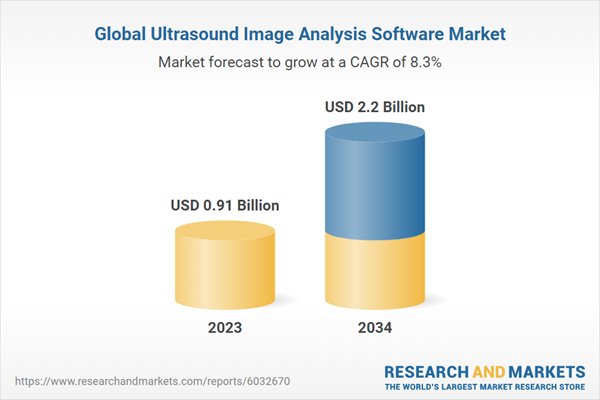
Ultrasound Image Analysis Software Research Report 2024-2035: AI and Machine Learning Revolutionizing the $2.2 Billion Market
Globenewswire· 2025-03-13 14:57
Market Overview - The global ultrasound image analysis software market is estimated to be USD 0.913 billion in 2024 and is expected to reach USD 2.20 billion by 2035, with a CAGR of 8.34% during the forecast period 2025-2035 [1][17]. Technological Advancements - The market growth is driven by advancements in ultrasound technology, particularly in image processing and AI-powered analysis, including developments such as 3D and 4D imaging, elastography, and Doppler imaging [4]. - These technological improvements enhance image quality, automate measurements, and enable real-time visualization, leading to increased demand for sophisticated ultrasound image analysis software [4][5]. Regional Insights - North America is anticipated to have the highest revenue share during the forecast period due to its well-established healthcare infrastructure and high adoption of advanced imaging technologies [6]. - The Asia Pacific region is predicted to grow at the fastest CAGR, driven by an expanding healthcare sector, increasing government investments, and rising prevalence of chronic diseases in emerging markets like China and India [7]. Market Segmentation by Type - The integrated software segment accounted for the highest revenue in 2024, driven by the adoption of comprehensive diagnostic solutions that enhance workflow efficiency [8]. - The standalone software segment is expected to grow at the fastest CAGR, catering to specific clinical needs in smaller clinics and diagnostic centers [9]. Market Segmentation by Product - The Doppler imaging segment accounted for the highest revenue in 2024, widely used in vascular imaging, obstetrics, and cardiology [10]. - The 3D & 4D ultrasound systems segment is predicted to grow at the fastest CAGR due to its advanced imaging capabilities [11]. Market Segmentation by Application - The cardiology segment accounted for the highest revenue in 2024, driven by the increasing prevalence of cardiovascular diseases [12]. - The oncology segment is expected to grow at the fastest CAGR, leveraging advanced image analysis tools for cancer detection and monitoring [13]. Market Segmentation by End-User - The hospitals segment accounted for the highest revenue in 2024, attributed to high patient volume and advanced infrastructure [14]. - The diagnostic centers segment is predicted to grow at the fastest CAGR, driven by the demand for quick and accurate diagnostic solutions [16].
Stratasys(SSYS) - 2024 Q4 - Earnings Call Transcript
2025-03-05 22:53
Financial Data and Key Metrics Changes - In Q4 2024, consolidated revenue was $150.4 million, down 3.8% year-over-year. For the full year, consolidated revenue declined 8.8% to $572.5 million compared to $627.6 million in 2023 [31][33]. - Adjusted gross margin for Q4 was 49.6%, up from 48.8% in the same period last year. For the full year, non-GAAP gross margin improved by 100 basis points to 49.2% [35][36]. - GAAP net loss for Q4 was $41.9 million, or $0.59 per diluted share, compared to a net loss of $15 million, or $0.22 per diluted share, in the same period last year [39]. Business Line Data and Key Metrics Changes - Product revenue in Q4 fell by 4.8% to $105.1 million, with systems revenue down 1.5% to $46.7 million. Consumable revenue decreased by 7.3% to $58.4 million [31][32]. - For the full year, product revenue was $392 million, down from $433.7 million in 2023. Consumables revenue increased by 2.3% to $251.7 million [33][34]. Market Data and Key Metrics Changes - The company generated 36% of its revenues from manufacturing in 2024, up from 34% in 2023, indicating a shift towards end-part manufacturing [10]. - The dental market opportunity is projected to reach nearly $2.5 billion by 2028, with significant interest in the TrueDent resin [23][79]. Company Strategy and Development Direction - The company is focused on enhancing its leadership in additive manufacturing and is committed to right-sizing the business while maintaining R&D resources [9][51]. - The strategy includes a focus on high-value applications, particularly in manufacturing and the dental sector, with plans to expand its product offerings and customer base [10][80]. Management's Comments on Operating Environment and Future Outlook - Management expressed optimism about future growth despite current macroeconomic challenges, emphasizing the long-term value proposition of additive manufacturing [56][108]. - The outlook for 2025 anticipates revenue in the range of $570 million to $585 million, with expectations for sequential growth throughout the year [45]. Other Important Information - The company ended Q4 with $150.7 million in cash and equivalents, with no debt, providing a stable financial position to support growth initiatives [12][44]. - A $120 million investment from Fortissimo Capital is expected to close in Q2 2025, which will further strengthen the company's financial position [13][44]. Q&A Session Summary Question: Market conditions and revenue cadence for 2025 - Management acknowledged current downturns but highlighted strong customer engagement and a focus on reliability and effectiveness of equipment as key areas of customer interest [56][58]. Question: Gross margin guidance for 2025 - Management indicated that gross margins are expected to remain stable, with improvements anticipated as cost-saving measures take effect [62][64]. Question: Organic revenue growth and FX impacts - Management noted minimal impact from divestitures and hedging strategies in place to mitigate FX risks [75][76]. Question: Consumables revenue decline - Management described Q4 as an outlier and expressed confidence in a rebound in consumables revenue for 2025 [88]. Question: Acquisition targets and strategy - Management emphasized a clear strategy focused on shareholder value and indicated interest in opportunities that align with their long-term goals [97][102]. Question: Market verticals with confidence - Management identified dental, aerospace, and tooling as key verticals with growth potential, while remaining cautious about overall market conditions [112][113].