Dollar Tree Inc

Search documents
In-Depth Analysis: Walmart Versus Competitors In Consumer Staples Distribution & Retail Industry - Walmart (NASDAQ:WMT)
Benzinga· 2026-01-21 15:01
Company Overview - Walmart, founded in 1962, is the world's largest retailer with over 10,700 stores globally, including 4,600 in the U.S. and 600 Sam's Club outlets, attracting 270 million customers weekly [2] - In fiscal 2025, Walmart reported sales exceeding $680 billion, with 68% from Walmart US, 18% from Walmart International, and 14% from Sam's Club [2] - Nearly 60% of Walmart's U.S. revenue of $465 billion came from grocery offerings, with another 25% from general merchandise [2] Financial Metrics Comparison - Walmart's Price to Earnings (P/E) ratio is 41.51, which is 1.5 times above the industry average, indicating a higher valuation [5] - The Price to Book (P/B) ratio stands at 9.85, exceeding the industry average by 1.56 times, suggesting a premium valuation relative to book value [5] - Walmart's Price to Sales (P/S) ratio of 1.36 is 1.45 times above the industry average, indicating potential overvaluation in sales performance [5] - The Return on Equity (ROE) is 6.6%, which is 1.3% above the industry average, reflecting efficient equity use for profit generation [5] - Walmart's EBITDA is $12.48 billion, which is 11.45 times above the industry average, indicating strong profitability and cash flow generation [5] - The gross profit of $44.79 billion is 12.17 times above the industry average, highlighting stronger profitability from core operations [5] - Revenue growth for Walmart is at 5.84%, slightly below the industry average of 5.93%, indicating challenges in sales growth [5] Debt to Equity Ratio - Walmart has a debt-to-equity (D/E) ratio of 0.71, indicating a lower level of debt relative to equity compared to its top four peers, suggesting a stronger financial position [9]



摩根士丹利:Temu 调查:进一步下滑
摩根· 2025-07-01 02:24
Investment Rating - Industry view is rated as "In-Line" [6] - Specific company view is rated as "Attractive" [15] Core Insights - Demand for Temu continues to decline, with household purchases at a record low and purchase expectations trailing competitors [2][4] - The removal of the de minimis exemption and high China tariff rates have significantly impacted engagement with Temu [2] - Dollar Stores are expected to benefit from Temu's market share loss, with a hypothetical 30% decline in US sales potentially representing ~$5 billion in market share being transferred to Dollar Stores and other retailers [2] - Temu's US GMV is projected to compound over the next several years, reaching approximately $39 billion by 2030, with profitability expected in 2025 [2] Summary by Sections Consumer Survey Data - Approximately 18% of respondents reported shopping on Temu in the past three months, marking a record low since the survey began in September 2023 [4][9] - Net purchase frequency expectations for Temu are at -25% in June 2025, the lowest among tracked retailers [12] - Web traffic and visitor trends for Temu have shown a significant drop, with traffic down 81% and visitors down 78% compared to March [16] App Performance - Temu app downloads and monthly active users (MAUs) have continued to decline, with downloads down 85% year-over-year and MAUs at approximately 49% of peak levels [17][20] Competitive Landscape - Shopper overlap ratios for Dollar Stores have declined, indicating that Temu's competitive threat is waning [21] - BURL and TJX have seen increases in customer overlap with Temu, while ROST has experienced a decline, suggesting a shift in market dynamics [24][27]
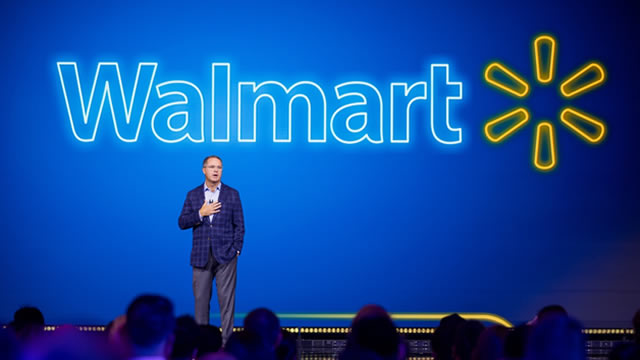
Walmart CEO Says Consumers Changing Spending Due To Inflation, Egg Prices: 'The Money Runs Out Before The Month Is Gone
Benzinga· 2025-03-10 16:17
Core Insights - A leading retailer's executive has raised concerns about changing consumer spending habits due to high food prices, tariffs, and inflation [1][3] - Walmart's CEO Doug McMillon highlighted that budget-conscious consumers are opting for smaller pack sizes and seeking value in their purchases [2][7] - The CFO of Walmart, John David Rainey, acknowledged the uncertainty in the market and the impact of tariffs on food prices, emphasizing efforts to keep prices low [4][6] Consumer Behavior - Consumers are experiencing financial strain, leading to changes in purchasing behavior, such as buying smaller pack sizes towards the end of the month [2][7] - High food prices, particularly for items like eggs, have persisted and are causing frustration among lower-income consumers [3][5] Economic Context - January inflation saw a significant increase, with rising egg prices contributing to the overall inflationary pressure [5] - Other retailers, like Dollar Tree, are also facing challenges due to tariffs and high inflation, indicating a broader industry concern [6][7] Stock Performance - Walmart's stock has seen a decline of 3.47% to $88.50, with a year-to-date decrease of 1.6% in 2025, although it has increased by 46% over the past year [8]