Edmunds

Search documents
Virginia man warns US drivers after county values 3.5-year-old van at $42,200, far above its real worth
Yahoo Finance· 2025-12-26 12:15
Core Insights - The article discusses the discrepancy between vehicle tax assessments and actual market values, highlighting concerns from vehicle owners about inflated tax bills [2][3]. Group 1: Vehicle Valuation Discrepancies - Used car prices have significantly increased, with the typical three-year-old vehicle now valued at approximately $32,635, which is about $9,500 higher than in 2019 [2]. - The county's assessment of Martin's 2022 Toyota Sienna at $42,200 contrasts sharply with valuations from sources like Edmunds, TrueCar, and Kelley Blue Book, which estimate its value between $30,000 and $35,000 [4]. - The assessment system is criticized for not accurately reflecting the depreciation of vehicles, as cars typically lose about 20% of their value in the first year, 15% in the second, and 12% in the third [5]. Group 2: Market Trends and Vehicle Longevity - The average age of vehicles on the road has reached a record high of 12.8 years, indicating that Americans are keeping their cars longer, which affects resale values [5]. - Factors such as age, mileage, condition, and market trends generally lead to a downward trend in vehicle prices over time, rather than an increase back to original sticker prices [5].
Here are the 5 most mind-blowing money stats of the average American. Learn to build riches in 2026
Yahoo Finance· 2025-11-27 15:44
You can’t manage what you can’t measure, and it’s difficult to measure your personal finances against the rest of the country without the right statistics. You may assume you’re doing great or worse than your neighbors, until you see the actual data. From ballooning car loans to trillions sitting idle in banks, the numbers paint a clearer picture for where you and your family stand. Must Read With that in mind, here are five mind-blowing money stats that reveal how the average American handles money — a ...
Americans are falling behind on car loans. Here's how to catch up.
Yahoo Finance· 2025-10-21 16:20
Core Insights - The trend of negative equity in car loans is rising, with 28.1% of trade-ins in Q3 2025 having negative equity, marking a four-year high [1][2] - The average amount owed on underwater car loans has increased to $6,905, up from $4,200 in 2021, with significant portions of trade-in owners owing over $5,000 and $10,000 [2] - The increase in negative equity coincides with a rise in late payments on subprime auto loans, reaching a historic high of 6.5% [3] Trade-In Dynamics - Many motorists are opting to trade in their vehicles despite negative equity, driven by a desire for newer models [4] - The average trade-in vehicle with negative equity is 3.7 years old, indicating a trend of early trade-ins [6] - Rolling negative equity into new loans results in higher average payments, with those trading in underwater loans averaging $907 compared to the industry average of $767 [10] Loan Terms and Interest Rates - The average interest rate for a 60-month new car loan has risen to 7.6%, up from 4.6% four years ago, contributing to the financial strain on borrowers [5] - Longer loan terms are becoming more common, with 22.4% of new vehicle financing being seven-year loans, which can lead to higher overall interest payments [8][9] Consumer Behavior and Recommendations - Consumers often end up purchasing more expensive vehicles than initially planned due to negative equity, creating a cycle of debt [11][14] - Experts suggest strategies for managing underwater loans, including making larger payments, refinancing for better rates, or simply continuing to make payments until equity improves [17][18][20]
Americans are underwater on car loans. They're buying new cars anyway.
Yahoo Finance· 2025-10-15 13:00
Core Insights - A significant increase in the number of Americans trading in vehicles with negative equity has been observed, with 28.1% of trade-ins in Q3 2025 being underwater, marking a four-year high [1][2] Trade-In Trends - The average negative equity for Americans with underwater car loans reached a record $6,905 in Q3 2025, up from $4,200 in the same period of 2021 [2] - Among those trading in vehicles with negative equity, one in three owed more than $5,000, and roughly one in four owed over $10,000, both figures being record highs [2] Consumer Behavior - Many motorists are opting to trade in their vehicles with negative equity rather than waiting to pay down their loans, indicating a trend towards immediate gratification in vehicle ownership [3] - The average age of trade-ins with negative equity is reported to be 3.7 years [5] Financial Environment - The average interest rate on a 60-month new car loan was 7.6% in August 2025, a significant increase from 4.6% four years prior, contributing to the financial strain on consumers [4] - Used vehicle prices have decreased by approximately 15% from early 2022 to August 2025, further complicating the financial landscape for car buyers [4] Loan Dynamics - The trend of longer car loans is increasing, with seven-year loans comprising 22.4% of all new vehicle financing in Q2 2025, an all-time high [7] - Rolling negative equity into a new car loan results in higher average payments, with trade-in buyers with negative equity averaging $907 compared to the industry average of $767 [9] Recommendations for Consumers - Experts suggest that consumers can mitigate negative equity by making larger payments, refinancing for lower rates, or simply holding onto their vehicles until the loan balance is paid down [16][17][19]
Why Shares of Tesla Are Beating the Market Today
The Motley Fool· 2025-03-21 18:44
Group 1 - Tesla shares traded 4.3% higher, with CEO Elon Musk encouraging employees to hold onto their stock [1] - Tesla stock has declined approximately 35% this year following a rally after President Trump's election [1] - U.S. Commerce Secretary Howard Lutnick urged investors to buy Tesla stock during a television interview [1] Group 2 - Retail investors have been net buyers of Tesla shares for 13 consecutive trading days, resulting in about $8 billion of inflows [2] - This is the largest consecutive buying streak since 2015 [2] Group 3 - Customers are trading in new and used Tesla vehicles at a record pace, indicating potential concerns about demand [3] - Data from Edmunds shows that customers are swapping their Teslas for vehicles from other brands [3] Group 4 - Tesla is viewed as a battleground stock, with divided opinions among Wall Street analysts regarding first-quarter deliveries [4] - Some analysts are optimistic about near-term catalysts from Tesla's self-driving and robotic divisions [4] Group 5 - Tesla's stock trades at approximately 92 times forward earnings, indicating potential volatility around the upcoming first-quarter earnings report [5]


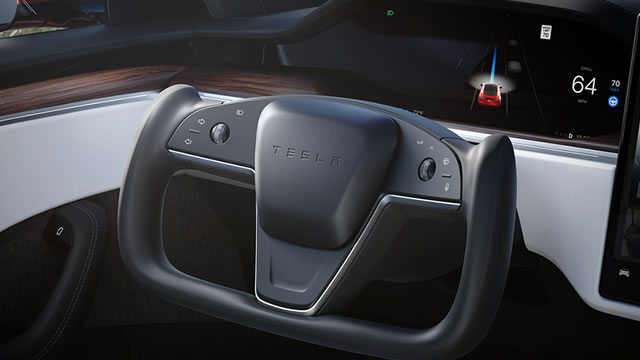
Tesla owners are trading in their EVs at record levels, Edmunds says
CNBC· 2025-03-20 23:38
Core Insights - Tesla owners are trading in their electric vehicles at record levels, with March marking the highest share of trade-ins for Tesla vehicles toward new or used cars from other brands [1] - Tesla's brand value has declined by 26%, approximately $15 billion, in 2024, marking a second consecutive annual decline [6] Market Performance - Tesla's stock price has decreased by 42% this year, with investors moving away from the stock following initial enthusiasm after Trump's victory [3] - Tesla's sales in the U.S. have declined by about 11% year-over-year, while competitors like Ford, Chevrolet, and Volkswagen have increased their EV sales and market share [4] Consumer Sentiment - Shifts in consumer sentiment towards Tesla may provide opportunities for legacy automakers and EV startups to attract defecting Tesla owners and first-time EV buyers [5] - Interest in shopping for new Tesla models has dropped to its lowest level since October 2022, following a peak in November [6]
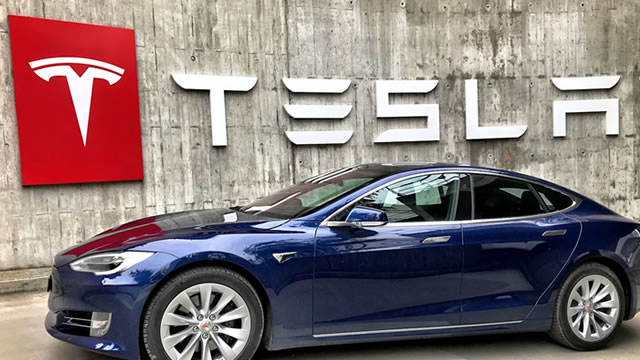
Reports Suggest Tesla is Sinking While the EV Market Grows, But There's a Twist
CNET· 2025-03-10 22:36
Core Insights - Tesla's sales peaked at 1.31 million electric vehicles in 2023, but the company is now facing declining prices and a cratering market for pre-owned vehicles in early 2025 [1] - Despite Tesla's challenges, the overall electric vehicle market remains strong, with 3.2 million hybrid or electric vehicles sold in 2024, representing 20% of the US auto market [2] - The EV industry is undergoing rapid changes, with significant developments occurring in a short time frame [3] Tesla's Market Position - Tesla's leading position in the EV market has allowed it to attract customers through incentives, even as used-car prices drop [5] - The increase in competition and improved EV ranges are making leasing more attractive, with leasing accounting for nearly 75% of all dealership purchases of EVs last year [6] Demographic Shifts in EV Adoption - A new demographic of potential EV customers is emerging, who are less knowledgeable about the market but are interested in electric vehicles [7] - The politicization of EVs has previously alienated some customers, but there is a growing interest among individuals who align with Musk's political views [8] - In certain regions, such as red-state cities, ticket sales for EV expos have tripled, indicating a warming interest in electric vehicles among previously disengaged audiences [8]