General Mills Inc.

Search documents
Jim Cramer Predicts Fed Rate Cuts As Regional Banks Stumble: 'Credit Cavalry Is Right On Time' - General Mills (NYSE:GIS), The Campbell's (NASDAQ:CPB)
Benzinga· 2025-10-17 12:26
Core Viewpoint - A recent increase in bad bank loans signals that the Federal Reserve should begin cutting interest rates, as these credit losses indicate a slowing economy that will prompt swift action from the Fed [1][2]. Group 1: Credit Issues and Economic Impact - Credit losses in banks are seen as a definitive sign of economic decline, motivating the Federal Reserve to act quickly [2]. - Zions Bancorporation reported significant charges due to bad loans, while Western Alliance Bancorp alleged borrower fraud, highlighting emerging credit issues [3]. - Jamie Dimon of JPMorgan Chase likened the situation to "cockroaches," suggesting that one bad loan often indicates more problems within the sector [3][4]. Group 2: Containment and Market Effects - The pain from bad loans is expected to be contained within the banking sector, but lower interest rates will benefit the broader "real economy" stocks, particularly in the service and industrial sectors [4]. - Lower interest rates will enhance housing affordability, facilitate business expansion, and make dividend stocks more appealing compared to bonds [5]. Group 3: Investment Strategies - Investors in speculative stocks are advised to take profits, as the current market resembles the 2021 meme stock mania, where rapid price increases may not be sustainable [6][7]. - The S&P 500, Nasdaq 100, and Dow Jones indices all experienced declines, indicating a cautious market sentiment [7].



Lone Star Nears Deal to Buy Plastic Parts Maker Hillenbrand
Yahoo Finance· 2025-10-14 23:59
Core Viewpoint - Lone Star Funds is in advanced discussions to acquire Hillenbrand Inc., a manufacturer of plastic parts and equipment, with a potential announcement expected soon [1][2]. Group 1: Acquisition Details - Lone Star Funds is reportedly close to finalizing a purchase of Hillenbrand, which is based in Batesville, Indiana, with shares closing at $26.49, giving the company a market value of approximately $1.87 billion [1][2]. - The acquisition discussions are ongoing and may face delays or complications, as indicated by sources familiar with the matter [2]. Group 2: Company Background - Hillenbrand specializes in producing plastic parts and equipment for various industries, including automotive, packaging, construction, and electronics, with notable clients such as Dow Inc. and General Mills Inc. [2]. - In recent years, Hillenbrand has focused on restructuring its portfolio to become a pure-play industrials company, which included selling its Batesville casket business in 2023 and acquiring Schenck Process Food and Performance Materials for approximately $730 million [3]. Group 3: Lone Star Funds Overview - Founded in the 1990s, Lone Star Funds operates globally in private equity, credit, and real estate, managing around $95 billion in assets [4].
Jerky Snacks Market Trends, Industry Developments and Strategic Recommendations 2025-2030 - Rising Consumer Demand for High Protein Content Puts the Jerky Market on a Growth Trajectory of 6.64% CAGR
Globenewswire· 2025-03-21 09:09
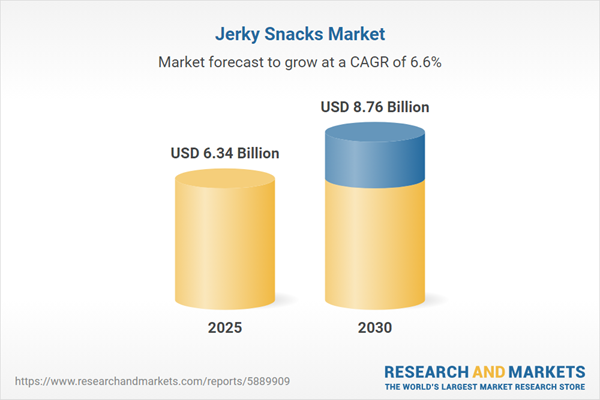
Market Overview - The Jerky Snacks Market grew from USD 5.95 billion in 2024 to USD 6.34 billion in 2025, with a projected CAGR of 6.64%, reaching USD 8.76 billion by 2030 [1][17]. Industry Trends - Innovations in production techniques and preservation methods have led to enhanced flavors, extended shelf life, and improved nutritional profiles, catering to consumer demands for convenience and premium quality [2]. - Consumer behavior has shifted towards health-conscious and adventurous choices, prompting companies to innovate with new flavor profiles and sourcing techniques aligned with natural and organic food trends [4]. - Technological advancements have enabled efficient manufacturing processes and data-driven marketing strategies, enhancing product visibility and consumer engagement [5]. Regional Insights - In the Americas, a mature market dynamic with a strong demand for high-protein snacks supports product innovation and competitive pricing [6]. - The Europe, Middle East, and Africa region is experiencing growth driven by consumer awareness and evolving dietary habits, requiring companies to adapt to diverse tastes and regulatory landscapes [7]. - The Asia-Pacific region is characterized by rapid urbanization and a growing middle class, with a trend towards Western snacking habits and innovative local flavor blends [8]. Competitive Landscape - Key players like Archer Provisions and BARF India are leading through novel production methods and niche market targeting [9]. - Companies such as Chef's Cut Real Jerky and Conagra Brands are capitalizing on premiumization trends and advanced marketing techniques [10]. - Major competitors like Marfrig Group and Nature Gnaws are addressing health concerns with cleaner product lines, while others like General Mills and Jack Link's leverage broad portfolios to influence market dynamics [11]. Strategic Recommendations - Industry leaders should invest in advanced technologies to enhance production efficiency and product quality [13]. - A commitment to product diversification targeting niche segments can yield competitive advantages [14]. - Embracing digital transformation through enhanced online presence and partnerships with online retailers can unlock significant market opportunities [15]. - Collaborative alliances across the value chain can streamline operations and foster innovation [16].
United States Chocolate Forecast Report 2025: A $49.26 Billion Market in 2033, Driven by Increased Demand of Premium Chocolates, Healthier Chocolate, and Rising Usage of Chocolates as Gifts and Treats
Globenewswire· 2025-03-20 09:41
Core Insights - The United States chocolate market was valued at US$ 35.25 billion in 2024 and is projected to grow at a CAGR of 3.79%, reaching US$ 49.26 billion by 2033, driven by increased demand for premium and healthier chocolate options, as well as chocolates being used as gifts and treats [2][20]. Market Dynamics - The market is experiencing growth due to rising consumer interest in premium chocolates, with 67% of consumers purchasing premium chocolate sometimes and nearly 30% preferring it over lower-quality options [7]. - Seasonal events such as Valentine's Day, Halloween, and Christmas significantly boost chocolate sales, accounting for 64% of revenue from chocolate and candy sales [9][8]. Consumer Trends - There is a growing preference for dark chocolate due to its health benefits, including antioxidants that improve heart health and cognitive functions [12]. - The trend towards luxury chocolates is evident, with impulse purchases driven by attractive promotions and in-store displays [6]. Innovation and Product Development - Chocolatiers are innovating with new flavors and ingredients to cater to changing consumer tastes, incorporating exotic fruits, spices, and superfoods [10][11]. - The introduction of products like WholeFruit chocolate and green tea chocolate reflects the industry's response to modern consumer preferences [11]. Challenges - The chocolate market faces challenges from rising cocoa prices due to climate change and supply chain disruptions, which can impact production costs and profit margins [14]. - Health concerns regarding sugar content and obesity are prompting manufacturers to develop healthier alternatives, which may increase production costs [15]. Competitive Landscape - The acquisition of Foley's Chocolates by Puratos enhances its market position and aligns with its commitment to health, sustainability, and innovation [16]. - Key players in the market include Nestle S.A., The Hershey Company, Mondelez International, and Lindt, among others [19].

Functional Flour Industry Report 2025 with Growth Forecasts to 2029 and 2034 - Innovation in Specialty Flours and Clean Label Trends Shaping the Future of the Market
Globenewswire· 2025-03-07 12:27
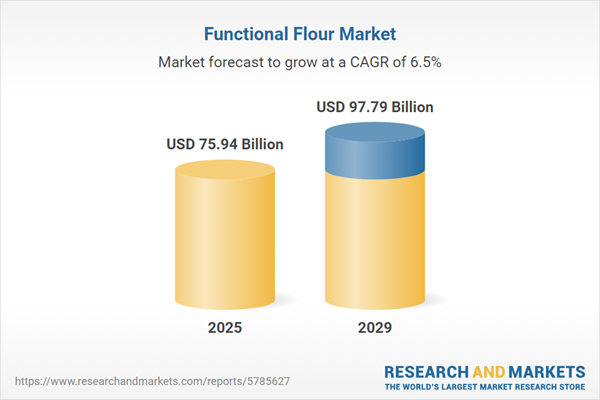
Core Insights - The functional flour market is projected to grow from $71.22 billion in 2024 to $75.94 billion in 2025, with a compound annual growth rate (CAGR) of 6.6% [5] - By 2029, the market size is expected to reach $97.79 billion, reflecting a CAGR of 6.5% during the forecast period [6] Market Characteristics - North America was the largest region in the functional flour market in 2024, while Asia-Pacific is anticipated to be the fastest-growing region [3] - The report covers various regions including Asia-Pacific, Western Europe, Eastern Europe, North America, South America, Middle East, and Africa [3] Growth Drivers - The growth in the functional flour market is attributed to factors such as the demand for specialty flours, health and wellness trends, and the rise of health-conscious consumers [6][8] - The increasing demand for ready-to-eat products is significantly boosting the functional flour market, with China's ready meals market projected to surpass $148 billion in annual sales within the next six to seven years [7] Product Innovation - Product innovation is a key trend, with companies like Tirlan introducing new functional flours that cater to consumer demand for natural and nutritious ingredients [9] - Bay State Milling launched Wingold Wellness multi-purpose flour, which offers three times the fiber content of traditional refined wheat flour while maintaining taste and functionality [10] Market Segmentation - The functional flour market is segmented by type, raw material, and application, including specialty flours, enzyme-treated flours, gluten-free options, and various applications in food products [11][13] - Key raw materials include maize, rice, and wheat, with subsegments for specialty flours like almond and coconut flour [11] Competitive Landscape - Leading companies in the functional flour market include Cargill Incorporated, Archer Daniels Midland Company, Bunge Limited, Associated British Foods PLC, and General Mills Inc. [2][17] - These companies are focusing on developing advanced dietary solutions to meet rising consumer demands [10]