Grocery Outlet Holding Corp.

Search documents
Krispy Kreme (DNUT) Tops Q4 Earnings and Revenue Estimates
ZACKS· 2026-02-26 15:56
Krispy Kreme (DNUT) came out with quarterly earnings of $0.09 per share, beating the Zacks Consensus Estimate of $0.03 per share. This compares to earnings of $0.01 per share a year ago. These figures are adjusted for non-recurring items.This quarterly report represents an earnings surprise of +170.27%. A quarter ago, it was expected that this doughnut wholesaler and retailer would post a loss of $0.06 per share when it actually produced earnings of $0.01, delivering a surprise of +116.67%.Over the last fou ...


Is Sprouts Farmers Set for Another Surprise This Earnings Season?
ZACKS· 2026-02-17 16:21
Core Viewpoint - Sprouts Farmers Market, Inc. (SFM) is set to announce its fourth-quarter 2025 earnings results on February 19, with expectations of continued growth despite challenges in the grocery sector [2][9]. Financial Performance Expectations - The Zacks Consensus Estimate for fourth-quarter revenues is $2,160 million, reflecting an 8.2% increase from the previous year [3]. - The earnings consensus estimate is stable at 89 cents per share, indicating a 12.7% year-over-year rise [3]. - Sprouts Farmers has a trailing four-quarter earnings surprise average of 10%, with a 4.3% beat in the last reported quarter [3]. Earnings Prediction Model - The Zacks model does not predict a definitive earnings beat for Sprouts Farmers this quarter, as it holds a Zacks Rank 2 and an Earnings ESP of 0.00% [4][5]. Factors Influencing Q4 Outcome - The company’s focus on product innovation, technology, and competitive pricing is expected to positively impact sales [6]. - Sprouts Farmers is expanding its presence in the natural and organic market, driven by strong consumer demand [6]. - The introduction of health-oriented products and a shift towards self-distribution in fresh meat and seafood are contributing to better operational execution [7]. Comparable Store Sales Growth - Comparable store sales growth is anticipated at 1.1% for the quarter, a deceleration from previous quarters' growth rates of 5.9%, 10.2%, and 11.7% [8]. Digital Infrastructure and E-commerce - Significant investments in digital infrastructure have enhanced the omnichannel shopping experience, with e-commerce sales rising 21% year-over-year in the third quarter [9][10]. Margin Expectations - Management expects gross margin expansion to slow to 20 basis points in Q4, following previous expansions of 60, 90, and 130 basis points [11]. - SG&A expenses are projected to increase by 8.4% year-over-year, with a slight deleverage expected as a percentage of net sales [11]. Stock Performance - Sprouts Farmers' shares have declined 15% over the past three months, underperforming the industry average drop of 2.8% [12]. - The company has lagged behind competitors such as Grocery Outlet, Albertsons, and Kroger [12]. Valuation Analysis - Despite the stock price decline, SFM's valuation remains elevated, trading at a forward 12-month price-to-sales (P/S) multiple of 0.68, above the industry average of 0.19 [13][14]. Strategic Positioning - Sprouts Farmers is approaching its earnings release with a solid strategy focused on health-and-wellness merchandising, expanding private label offerings, and ongoing investments in digital and supply-chain capabilities [16].


Edgewell Personal Care (EPC) Reports Q1 Loss, Misses Revenue Estimates
ZACKS· 2026-02-09 13:20
Core Insights - Edgewell Personal Care (EPC) reported a quarterly loss of $0.16 per share, which was better than the Zacks Consensus Estimate of a loss of $0.18, representing an earnings surprise of +11.11% [1] - The company posted revenues of $422.8 million for the quarter ended December 2025, missing the Zacks Consensus Estimate by 12.15% and down from $478.4 million year-over-year [2] - The stock has increased by approximately 21.7% since the beginning of the year, outperforming the S&P 500's gain of 1.3% [3] Earnings Outlook - The current consensus EPS estimate for the upcoming quarter is $0.71 on revenues of $588.06 million, while for the current fiscal year, the estimate is $2.33 on revenues of $2.26 billion [7] - The estimate revisions trend for Edgewell Personal was unfavorable prior to the earnings release, resulting in a Zacks Rank 5 (Strong Sell) for the stock, indicating expected underperformance in the near future [6] Industry Context - The Consumer Products - Staples industry, to which Edgewell belongs, is currently in the bottom 30% of the Zacks Industry Rank, suggesting that stocks in this category may underperform compared to those in the top 50% [8]


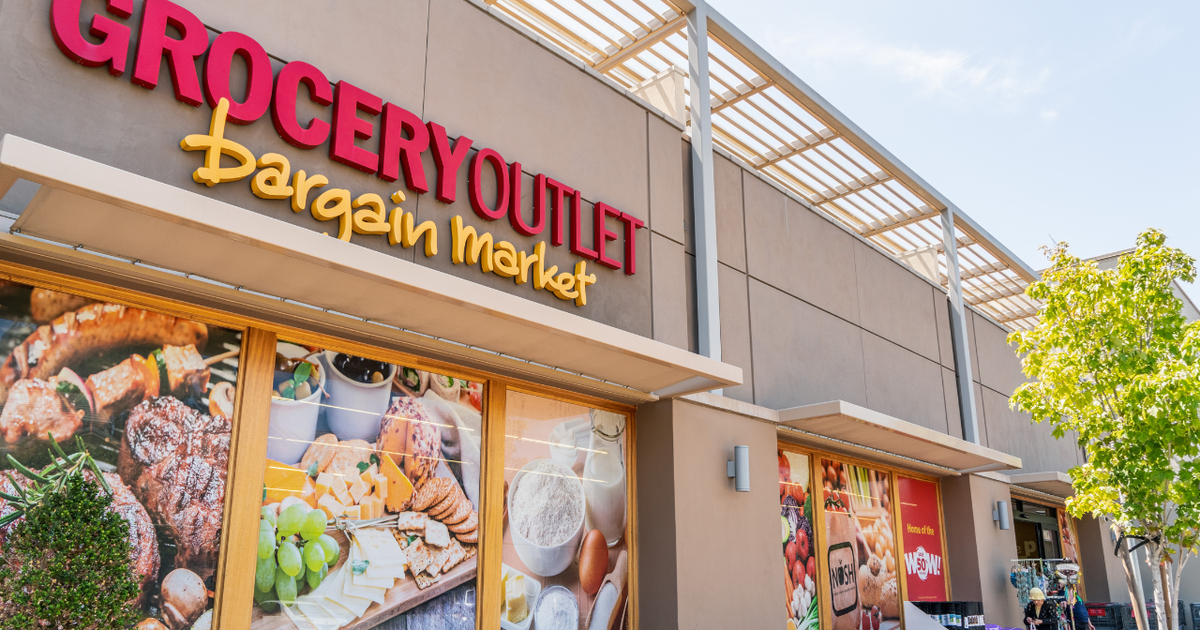
Grocery Outlet’s chief purchasing officer is retiring
Supermarket News· 2026-01-14 20:23
Leadership Changes - Executive Vice President and Chief Purchasing Officer Steve Wilson will retire on March 20 after 31 years with Grocery Outlet [1] - Matt Delly, who joined as chief merchandising officer last year, will expand his role to chief merchandising and purchasing officer [1][2] Operational Strategy - The company aims to improve operational efficiency by combining purchasing and merchandising functions under Delly's leadership [2] - Delly has previously led the merchandising organization and will now oversee the integrated team following Wilson's retirement [3] Sales Forecast and Performance - Grocery Outlet has lowered its sales growth forecast for the fourth quarter due to delays in food assistance benefits during the government shutdown [3] - The shutdown led to an 8.2% decline in preliminary same-store sales through Electronic Benefit Transfer payments for November, with non-EBT same-store sales down 0.5% [4] - The company now expects fourth-quarter comparable-store sales to be flat compared to last year and adjusted earnings per share to be at the low end of the previous forecast of 21 to 23 cents [4]

美股策略-美联储行动支撑 “热度延续” 假说,但力度是否足够?-US Equity Strategy-Fed Actions Support Our Run It Hot Thesis, but Are They Enough
2025-12-16 03:30
Summary of Key Points from the Conference Call Industry and Company Overview - The conference call primarily discusses the actions of the Federal Reserve (Fed) and their implications for the equity market, particularly focusing on sectors such as Consumer Discretionary Goods, Small Caps, Financials, Healthcare, and Software. Core Insights and Arguments 1. **Fed's Actions**: The Fed executed a 25 basis point rate cut and announced a $40 billion per month asset purchase program, which was larger than expected. This is seen as a bullish signal for the market, indicating the Fed's readiness to support liquidity in financial markets [4][18][10]. 2. **Market Sentiment**: Despite the Fed's actions, market sentiment remains muted, particularly in sectors that are expected to benefit from a rebound in nominal earnings growth. The focus is on Consumer Discretionary Goods and Small Caps, which have shown relative strength [4][24]. 3. **Earnings Outlook**: Positive operating leverage and pricing power are highlighted as critical factors for the earnings recovery anticipated in small caps through 2026. The Employment Cost Index showed a reduction in compensation growth, which is bullish for margins [4][25]. 4. **Labor Market Data**: Upcoming labor data is expected to significantly influence market perceptions of interest rate policy. A moderate weakness in the labor market could be viewed positively by equity markets, while a strong jobs report may challenge the Fed's ability to cut rates further [5][19]. 5. **Liquidity Concerns**: The Fed's decision to restart asset purchases is seen as a response to tightening liquidity conditions that have begun to affect funding markets. The Fed's actions are tied to maintaining financial stability and assisting the Treasury in funding the government [10][18]. 6. **Pricing Power Dynamics**: Companies are experiencing a resurgence in pricing power, which is crucial for revenue growth. This is particularly evident in the Consumer Discretionary sector, where companies are adapting to inflationary pressures and changing consumer behaviors [26][71]. 7. **Sector Recommendations**: The report recommends a focus on sectors such as Consumer Discretionary Goods, Small Caps, and Software, while suggesting a cautious approach towards Semiconductors due to elevated positioning [4][34]. Additional Important Insights 1. **Impact of Tariffs**: Companies are actively implementing strategies to mitigate the impact of tariffs, with many reporting strong pricing power and sustainable growth strategies despite macroeconomic uncertainties [71][72]. 2. **AI Adoption**: Companies are increasingly adopting AI technologies to enhance customer engagement and operational efficiency, indicating a trend towards digital transformation in various sectors [56][58]. 3. **Health and Wellness Trends**: There is a growing focus on health and wellness among consumers, influenced by medical advancements and lifestyle changes, which is expected to drive demand in related sectors [64][66]. 4. **Consumer Behavior**: The bifurcation in consumer spending, particularly between lower and higher income groups, is affecting revenue dynamics across different companies, with some reporting declines while others maintain stable demand [45][46]. This summary encapsulates the key points discussed in the conference call, providing insights into the Fed's actions, market sentiment, earnings outlook, and sector-specific dynamics.

主题性阿尔法与消费 - 消费及零售会议总结:主题要点与核心问题解答-Thematic Alpha & Consumer-Consumer & Retail Conference Wrap Up Thematic Takeaways and Answers to Key Questions
2025-12-09 01:39
Summary of Key Points from Morgan Stanley Consumer & Retail Conference Industry Overview - The conference focused on the consumer and retail sectors, highlighting key themes such as the K-Economy, social commerce, AI adoption, health and wellness trends, and tariff impacts [1][2][9]. Core Themes and Insights 1. **K-Economy Dynamics** - Consumer-facing industries are experiencing a bifurcated economy, with lower-income segments under spending pressure while higher-income cohorts remain resilient. Companies are cautiously optimistic, focusing on branding, product differentiation, and innovation to sustain demand amid a soft macro environment [5][12]. 2. **Social & Agentic Commerce** - Retail brands are leveraging social platforms and AI to transform shopping experiences. Social commerce is accelerating the path from awareness to transaction, with platforms like TikTok Shop playing a significant role. This shift is redefining engagement strategies and reducing reliance on traditional advertising [5][20]. 3. **AI Adoption** - AI adoption in consumer industries is in early stages but expanding rapidly. Companies are using AI for pricing, supply chain automation, and customer service, leading to productivity gains and cost savings. Most companies are still exploring AI use cases without major structural changes [5][24]. 4. **Health, Wellness, & GLP-1s** - Health and wellness trends are reshaping consumer priorities, influenced by medical innovations and lifestyle changes. The rise of GLP-1 drugs is prompting companies to adapt their offerings to cater to health-conscious consumers [5][32]. 5. **Tariffs and Mitigation Strategies** - Tariffs remain a source of uncertainty, but companies are implementing multi-pronged strategies to protect margins, including supply chain diversification and selective price increases. Strong pricing power has allowed many companies to absorb cost pressures with minimal impact on volume [5][39]. Consumer Health Insights - The health of the US consumer is stable overall, with some softness in lower-income segments due to external pressures like government shutdowns and SNAP payment timing. Higher-income spending remains resilient, supporting holiday performance tracking in line with expectations [8][10]. Company-Specific Insights - **Walmart (WM)**: Positioned well for both good and bad economic times, expanding its target audience to higher-income consumers while maintaining strong e-commerce capabilities [13]. - **Coca-Cola (KO)**: Acknowledged a tough consumer backdrop but emphasized strong execution and revenue growth management strategies [14]. - **Kimberly-Clark (KMB)**: Experienced volume and mix growth by offering premium product features at various price points, focusing on innovation to sustain demand [16]. - **Estee Lauder (EL)**: Noted a positive outlook for US consumers, leveraging social commerce to drive traffic and sales [20]. - **Peloton (PTON)**: Aiming to become a total wellness provider, expanding offerings in mental health and nutrition in response to consumer needs [34]. Market Sentiment and Future Outlook - Companies expressed cautious optimism for 2026, anticipating a steadier environment as tariff-driven inflation fades. However, the overall sentiment is more tempered compared to previous years, with many expecting stable demand trends and balanced margin expectations [51][52]. Key Questions Addressed - **Consumer Demand**: 74% of companies expect stable demand over the next 12 months, with only 22% anticipating acceleration [53]. - **Margin Expectations**: Margin outlook is evenly split between tailwinds, balance, and headwinds, contrasting with last year's overwhelmingly positive outlook [57]. - **Technology Investment**: 100% of companies expect technology investment levels to either rise or remain stable in the coming year [61]. This summary encapsulates the key themes and insights from the Morgan Stanley Consumer & Retail Conference, providing a comprehensive overview of the current landscape and future expectations in the consumer sector.


4 Consumer Product Stocks to Watch as the Market Resets for 2026
ZACKS· 2025-12-04 14:21
Industry Overview - The Consumer Products – Staples industry is facing a challenging demand environment due to stretched household budgets and value-driven purchasing decisions [1][5] - Companies are experiencing an uneven cost environment, with elevated raw material and logistics costs impacting margins [2][4] - The industry includes a wide range of everyday household and personal-use items, distributed through various retail channels, including digital platforms [3] Current Trends - Rising costs in raw materials, labor, and transportation are pressuring profit margins, leading companies to implement cost-cutting strategies [4] - Increased consumer spending volatility is observed, particularly among lower-income households, affecting sales across the industry [5] - Companies are sensitive to currency fluctuations, with a stronger U.S. dollar posing risks to international revenue [6] Strategic Initiatives - Companies are pursuing strategic optimization to enhance revenue, focusing on e-commerce, innovation, and portfolio reshaping [7] - Many firms are investing in digital transformation and marketing to drive growth and improve operational efficiency [4][7] Industry Performance - The Zacks Consumer Products – Staples industry ranks 183, placing it in the bottom 24% of over 243 Zacks industries, indicating dull prospects [8][9] - The industry has underperformed the S&P 500 index, losing 12.2% over the past six months compared to the broader sector's decline of 5.2% [12] Valuation Metrics - The industry is currently trading at a forward 12-month price-to-earnings (P/E) ratio of 18.21X, lower than the S&P 500's 23.44X and the sector's 16.35X [15] Company Highlights - **Ollie's Bargain**: This company is reinforcing its competitive position through a disciplined value-driven model, with a Zacks Rank 2 (Buy) and an unchanged EPS estimate of $3.82, indicating 16.5% year-over-year growth [18][19] - **Procter & Gamble**: With a Zacks Rank 3 (Hold), it demonstrates market leadership and has an unchanged EPS estimate of $7.01, reflecting 2.6% growth from the previous year [22][23] - **Church & Dwight**: Also holding a Zacks Rank 3, it benefits from a resilient portfolio and has seen its EPS estimate increase to $3.48, indicating 1.2% growth [26][27] - **Grocery Outlet**: This company, with a Zacks Rank 3, has an EPS estimate of 79 cents, reflecting a 2.6% increase, supported by its differentiated value model [30][31]


Super Micro Computer Posts Downbeat Q1 Results, Joins Pinterest, Axon Enterprise And Other Big Stocks Moving Lower In Wednesday's Pre-Market Session - Arista Networks (NYSE:ANET), Advanced Micro Devic
Benzinga· 2025-11-05 13:45
Core Viewpoint - U.S. stock futures are lower, with notable declines in several companies following disappointing financial results and guidance [1] Group 1: Super Micro Computer Inc - Super Micro Computer reported quarterly earnings of 35 cents per share, missing the analyst consensus estimate of 40 cents [2] - Quarterly revenue was $5.01 billion, below the analyst consensus estimate of $5.99 billion and down from $5.93 billion in the same period last year [2] - Shares of Super Micro Computer fell 9.2% to $43.12 in pre-market trading [2] Group 2: Other Companies with Significant Declines - Biohaven Ltd tumbled 46.2% to $7.51 after receiving an FDA Complete Response Letter for VYGLXIA [4] - Trex Company Inc declined 31.9% to $32.02 following worse-than-expected third-quarter results and lowered FY25 sales guidance [4] - Axon Enterprise Inc fell 19.6% to $567.50 after reporting mixed third-quarter results and announcing an acquisition agreement [4] - Pinterest Inc dipped 18.8% to $26.69 after posting disappointing third-quarter earnings [4] - Advanced Micro Devices, Inc. declined 5% to $237.80 despite reporting better-than-expected third-quarter results, with an expected fourth-quarter revenue of approximately $9.6 billion [4]



Super Micro Computer Posts Downbeat Q1 Results, Joins Pinterest, Axon Enterprise And Other Big Stocks Moving Lower In Wednesday's Pre-Market Session
Benzinga· 2025-11-05 13:45
Core Points - U.S. stock futures are lower, with Dow futures falling over 50 points [1] - Super Micro Computer Inc reported disappointing first-quarter results, with earnings of 35 cents per share, missing the consensus estimate of 40 cents, and revenue of $5.01 billion, below the expected $5.99 billion [2] - Super Micro's revenue decreased from $5.93 billion in the same period last year [2] - The company's shares fell 9.2% to $43.12 in pre-market trading [2] Company-Specific Movements - Biohaven Ltd experienced a significant drop of 46.2% to $7.51 after receiving an FDA Complete Response Letter for VYGLXIA [4] - Trex Company Inc declined 31.9% to $32.02 following worse-than-expected third-quarter results and lowered FY25 sales guidance [4] - Soleno Therapeutics Inc fell 22.2% to $49.65 after reporting third-quarter results [4] - Axon Enterprise Inc's shares dropped 19.6% to $567.50 after mixed third-quarter results and an acquisition announcement [4] - Pinterest Inc dipped 18.8% to $26.69 after posting disappointing third-quarter earnings [4] - SSR Mining Inc fell 17.5% to $17.90 after its third-quarter results [4] - Uniqure NV's shares decreased by 15.8% to $25.61 after a prior gain [4] - Clover Health Investments Corp fell 15.5% to $2.97 after mixed third-quarter results [4] - Upstart Holdings Inc declined 15.3% to $39.15 after mixed results and lowered FY25 guidance [4] - Corsair Gaming Inc fell 12.4% to $6.59 following worse-than-expected third-quarter results [4] - Advanced Micro Devices, Inc. declined 5% to $237.80 despite reporting better-than-expected third-quarter results and projecting fourth-quarter revenue of approximately $9.6 billion [4]



Sprouts Farmers Stock After Its Q3 Earnings: Buy, Hold or Sell?
ZACKS· 2025-11-04 16:56
Core Insights - Sprouts Farmers Market, Inc. (SFM) reported profit growth in its latest quarter but faces an uncertain future due to signs of a slowdown in growth and increasing consumer pressures [1][8][17] - Comparable-store sales rose 5.9%, which was below expectations, and management's cautious guidance indicates a potential slowdown in the upcoming quarters [4][10][11] Financial Performance - The company's Q3 earnings results showed a top line that fell short of the Zacks Consensus Estimate, while the bottom line exceeded expectations [2][7] - E-commerce sales grew by 21% and accounted for 15.5% of total sales during the quarter [3][7] - Management guided for Q4 comparable store sales growth between 0% and 2%, with earnings per share (EPS) expected in the range of $0.86 to $0.90 [4][11] Market Reaction - Following the Q3 earnings release, shares of Sprouts Farmers fell approximately 20%, reflecting investor concerns over the company's growth trajectory [2][7][12] - The stock has underperformed compared to industry peers, with a 17.6% decline over the past month, while the industry average drop was 11.5% [12][13] Analyst Sentiment - Wall Street analysts have become cautious, with the Zacks Consensus Estimate for the current fiscal year decreasing by $0.05 to $5.27, and the next fiscal year estimate dropping by $0.29 to $5.63 [5][6] - Despite these downward revisions, the estimates still imply year-over-year earnings growth of 40.5% for the current year and 6.8% for the next year [5] Consumer Trends - There are indications of consumer fatigue, particularly among core health-conscious shoppers, which may be affecting spending patterns [9][10] - The company is expected to face tough year-over-year comparisons well into early 2026, limiting top-line growth potential [4][10] Valuation Metrics - Sprouts Farmers currently trades at a forward 12-month price-to-sales (P/S) multiple of 0.85, which is a premium compared to the industry's average of 0.24 [14][16] - The stock's valuation appears stretched given the slowing comparable-store sales and cautious guidance from management [13][17]