Midea Group

Search documents
中国消费家电_2026 年家电以旧换新补贴及我们的观点-China Consumer Appliances Sector 2026 home appliances trade-in subsidies and our thoughts
2026-01-04 11:34
Summary of the Conference Call on China Consumer Appliances Sector Industry Overview - The conference call focused on the **China Consumer Appliances Sector**, particularly the **2026 home appliances trade-in subsidies** announced by the **National Development and Reform Commission (NDRC)** and the **Ministry of Finance** on December 30, 2025 [2][3]. Key Points and Arguments 1. **Announcement Timing**: The release of the 2026 subsidy policies was slightly ahead of expectations, as the 2025 version was released on January 8, 2025. The overall content aligns with market expectations, benefiting white goods and smart home products [2][3]. 2. **Narrowed Subsidy Scope**: The 2026 subsidies will cover only **6 categories**: fridge, washing machine, TV, air conditioner, PC, and water heater. This is a reduction from the 12 categories in 2025, which included major kitchen appliances and small appliances like range hoods and microwaves. This change may negatively impact companies focused on major and small appliances [3][4]. 3. **Subsidy Structure Changes**: - The subsidy for energy-efficient products will be **15% of the sales price**, with a cap of **Rmb1,500** per category per consumer. This is a decrease from the previous **20%** for Level 1 energy-efficient products and **15%** for Level 2, with a cap of **Rmb2,000** [4]. 4. **Encouragement for Local Governments**: The policy explicitly encourages local governments to subsidize smart home products, including age-adaptive home products. Local governments will have the discretion to set specific categories and standards [5]. 5. **Estimated Total Subsidy Amount**: The total amount for the 2026 subsidies has not been officially released, but estimates suggest it could be around **Rmb250 billion**, slightly lower than the **Rmb300 billion** in 2025. This estimate is based on a recent fund of **Rmb62.5 billion** issued to support consumer goods trade-in [5]. Sector Implications - The focus on white goods is expected to benefit industry leaders such as **Midea** and **Haier**. The support for smart home products may also favor companies like **Roborock** and **Ecovacs**. However, sales for major appliances (e.g., **Robam**) and small appliances (e.g., **Supor**, **Joyoung**) may face challenges due to a high sales base [6]. Risks Identified 1. **Home Appliances Sector Risks**: - Impact of the **China property market** on demand - Elevated raw material prices - Global supply chain constraints affecting exports [9]. 2. **Robotic Vacuum Cleaner Sector Risks**: - Intensifying market competition - Raw material price increases - Foreign exchange losses due to currency fluctuations [10]. 3. **Small Appliances Sector Risks**: - Economic downturn leading to weak consumption - Price competition - Rising raw material costs eroding profitability [10]. Additional Information - The report was prepared by **UBS Securities Asia Limited**, with analysts including **Rennie Pan**, **Christine Peng**, and **Molly Huang** [7]. - The document includes disclaimers regarding the potential conflicts of interest and the nature of the research provided [11][12]. This summary encapsulates the critical insights and implications from the conference call regarding the China Consumer Appliances Sector and the upcoming subsidy policies for 2026.
美的:重庆调研:2B 业务表现强劲,数据中心展望及以旧换新补贴
2025-12-26 02:18
Midea Group Research Summary Company Overview - **Company**: Midea Group - **Sector**: Appliances - **Description**: Midea is a leading technology-driven global provider of Smart Home Solutions (2C) and Commercial & Industrial Solutions (2B). It is the world's largest home appliance company, with a significant presence in industrial robotics through its subsidiary KUKA [doc id='10'][doc id='11']. Key Insights from the Conference Call Industry and Market Outlook - **2B Segment Growth**: Midea's commercial AC factory visit in Chongqing confirmed a strong outlook for the 2B segment, with expectations of positive growth in FY26 despite potential softness in 1Q26 due to tough comparisons [doc id='1']. - **Intelligent Building Segment**: The largest and most profitable 2B segment is projected to achieve sales of US$10 billion by 2030, indicating a 15% CAGR. This growth is driven by share gains, import substitution, and solution expansion [doc id='2']. - **Data Center Cooling Market**: The current market size in China is approximately RMB15 billion, with expectations to grow to US$10 billion as the country shifts to cold liquid cooling technology, aligning with advancements in GPU chips [doc id='3']. Financial Performance and Projections - **Net Income Projections**: Adjusted net income is expected to grow from RMB33.72 billion in 2023 to RMB48.61 billion by 2027, with a slight dip in 2026 [doc id='9']. - **Earnings Per Share (EPS)**: EPS is projected to increase from RMB4.92 in 2023 to RMB6.36 in 2027, with a year-on-year growth rate of 13.6% in 2023 and a decline of 0.2% in 2026 [doc id='9']. - **Valuation Metrics**: The P/E ratio is expected to decrease from 16.09x in 2023 to 12.41x in 2027, indicating a more attractive valuation over time [doc id='9']. Trade-in Subsidies and Channel Strategy - **Trade-in Subsidies**: Expectations for 2026 include a budget similar to 2025, with a narrower focus on key appliance categories. The subsidy ratio may decrease from 20% in 2025, and eligibility will be limited to products with Energy Efficiency Level 1 [doc id='12']. - **DTC Channel Reform**: Midea has implemented channel reforms that enhance supply chain efficiency and profitability, incentivizing distributors to prioritize Midea products [doc id='13']. Investment Rationale - **Buy Rating**: Midea is rated as a Buy due to its dual focus on 2C and 2B segments, potential benefits from trade-in subsidies, and a strong track record of management and shareholder returns [doc id='11']. - **Risks**: Potential risks include an industry down-cycle in 2026, execution risks in 2B expansion, commodity price fluctuations, and regulatory challenges in overseas markets [doc id='27'][doc id='29']. Financial Health - **Strong Cash Flow**: Midea is expected to generate strong free cash flow, with projections of RMB51.59 billion in 2023, decreasing slightly in subsequent years but remaining robust [doc id='23']. - **Balance Sheet Strength**: The company maintains a strong balance sheet with net cash expected to increase from RMB10.21 billion in 2023 to RMB100.36 billion by 2027 [doc id='24']. Conclusion Midea Group is positioned for steady growth in both its consumer and commercial segments, supported by strategic initiatives in channel reform and product innovation. The company faces some risks but remains a strong investment opportunity in the appliance sector.
中国消费板块优选标的与五大投资主题-China Consumer Sector Top Buys with Five Investment Themes-China Consumer
2025-12-01 00:49
Summary of Key Points from the Conference Call Industry Overview - **Industry**: China Consumer Sector - **Event**: Citi's 2025 China Conference - **Participants**: 44 China consumer companies were hosted, leading to the identification of five investment themes in the consumer sector [1][9] Investment Themes 1. **Shift Towards Experience Consumption**: - Consumers are increasingly valuing emotional experiences over physical goods, seeking happiness and self-expression through services [2] - Companies like Pop Mart provide affordable entertainment options that resonate with young consumers [2] 2. **Focus on Well-being**: - Younger generations are prioritizing spending on wellness, including health, fitness, and mindfulness [3] - Growth opportunities are seen in sectors like sportswear (Anta), health supplements (H&H), and beauty care (Giant Bio) [3] 3. **Rising Silver Economy**: - The aging population is driving demand for leisure and cultural experiences, benefiting industries like tourism (H World, Atour) and health supplements [4] 4. **Emerging New Channels**: - New offline channels such as membership stores and snack specialty chains are gaining traction, helping to offset declines in traditional distribution [5] 5. **Multi-brand Strategy**: - Companies are expanding their brand portfolios to meet diverse consumer demands, with a focus on easing channel inventory pressure [6] Company-Specific Insights Pop Mart (9992.HK) - **Sustainability of IP Operation**: Pop Mart is seen as a growth play due to its strong IP incubation capabilities. Concerns about growth sustainability are being addressed through new product launches [10] - **LABUBU Durability**: The company plans to enhance its LABUBU IP with new products and has postponed the launch of LABUBU 4.0 to 2026 [11] - **Overseas Expansion**: Plans to operate over 60 stores in the US by the end of 2025, with expansions into Canada and Mexico [13] Laopu Gold (6181.HK) - **Sales Growth Expectations**: Management expects high revenue growth in 2H25E driven by price adjustments and new store sales [16] - **Price Adjustment Strategy**: A recent price increase of over 25% aims to maintain a gross profit margin (GPM) of at least 40% [17] - **Store Expansion Plans**: Focus on expanding floor areas in existing malls rather than entering new ones [22] Haidilao International Holding Ltd (6862.HK) - **Recovery in Table-Turn**: Management anticipates positive momentum in table-turn rates due to seasonal factors and a low comp base [30] - **Operational Improvements**: Plans to terminate loss-making pilot programs to save on operational expenses [32] China Resources Beer (0291.HK) - **Sales Performance**: The company reported low single-digit year-over-year sales growth, outperforming peers [34] - **Margin Outlook**: Expected GPM improvement in 2H25E, with a target dividend payout ratio increase to ~60% in 2025E [36] Midea Group (0300.HK) - **Sales Growth Target**: Management maintains a target of ~10% sales growth for 2025, with a focus on air-conditioning sales recovery [40] - **Overseas Business Expansion**: Plans to increase overseas production to ~30% and grow sales in developed markets through M&A [41] Li Ning (2331.HK) - **Sales Guidance**: Maintained guidance for 2025 with expectations of flat sales and high single-digit net profit margin growth [48] Nongfu Spring (9633.HK) - **Sales Guidance**: Management reiterated a mid-teen percentage growth target for 2025, with limited impact from price wars in the beverage sector [51] Cosmetics Sector - **Mixed Performance**: Domestic brands like Mao Geping and Chicmax showed strong growth, while others lagged behind [56] - **Growth Strategies**: Companies are focusing on online sales growth and improving operational efficiency to enhance margins [57][59] Additional Insights - **Consumer Trends**: There is a notable shift towards experiential consumption and wellness, indicating a changing landscape in consumer preferences [2][3] - **Operational Strategies**: Companies are adopting multi-brand strategies and optimizing supply chains to enhance profitability and meet diverse consumer demands [6][14] This summary encapsulates the key insights and trends discussed during the conference, highlighting the evolving dynamics within the China consumer sector and specific company strategies.



摩根士丹利:中国 工业机器人运营追踪 - 持续稳健增长
摩根· 2025-06-23 02:09
Investment Rating - The industry investment rating is "In-Line" [4]. Core Insights - The report indicates solid growth in the industrial robot sector, with China's industrial robot production growing by 36% year-on-year in May, up from 34% in the previous four months [7]. - Global players such as ABB, Fanuc, Kuka, and Yamaha saw a combined shipment increase of 3% year-on-year in May, compared to a 2% increase in the first four months of 2025 [7]. - The growth is primarily driven by demand from the automotive sector, consumer electronics (3C), and exports, with expectations of intense competition and sustained market share gains for domestic brands like Estun and Inovance [7]. Summary by Sections Industry Overview - The industrial robot operations in China are experiencing robust growth, with significant contributions from various sectors [7]. Production and Shipment Data - China's industrial robot production increased by 36% year-on-year in May, supported by strong demand from the automotive and consumer electronics sectors [7]. - The report highlights that Fanuc's inventory levels have normalized, allowing for continuous shipments to key customers such as Li Auto and Xiaomi [7]. Market Dynamics - The competition in the industrial robot market remains intense, with domestic brands expected to maintain their market share gains [7].

Europe Microwave Oven Market Forecast Report and Company Analysis 2025-2033 Featuring Illinois Tool Works, Sharp, LG, Whirlpool, GE, Panasonic, Samsung, Midea
Globenewswire· 2025-03-11 09:04
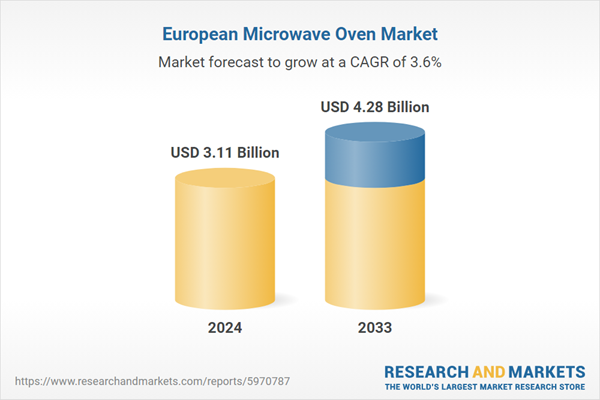
Market Overview - The Europe Microwave Oven market reached a value of US$ 3.11 Billion in 2024 and is projected to grow at a CAGR of 3.62% from 2025 to 2033, reaching US$ 4.28 Billion by 2033 [1][15]. Growth Drivers - Increasing demand for convenience appliances and rising disposable income are key factors driving market growth [1][6]. - The trend towards busy lifestyles and urbanization has led to a surge in demand for appliances that simplify cooking processes, such as microwave ovens [6][10]. - Technological advancements, including IoT-enabled and smart microwave ovens, are enhancing consumer appeal by offering features like remote control and energy efficiency [8][10]. Consumer Preferences - Consumers are increasingly looking for appliances that combine style, efficiency, and functionality, with a notable preference for premium kitchen appliances [10][11]. - The youth and working professionals are significant demographics driving the demand for microwave ovens due to their time-saving capabilities [5][6]. Market Challenges - The European microwave oven market is experiencing high saturation, particularly in developed regions, which limits opportunities for new entrants and necessitates innovation among existing players [12]. - Environmental concerns and strict regulations regarding energy consumption and waste management are posing challenges for manufacturers, requiring investments in sustainable technologies [14]. Competitive Landscape - Major players in the market include Illinois Tool Works Inc, Sharp, LG Electronics, Whirlpool Corporation, GE Appliances, Panasonic Corporation, Samsung Electronics, and Midea Group [20]. - Manufacturers are focusing on high-end products with added functionalities to stimulate demand and enhance market penetration [9].

Oman Air Conditioner Market to Hit Valuation of US$ 747.95 Million by 2033 | Astute Analytica
Globenewswire· 2025-03-03 12:30
Market Overview - Oman's air conditioner market was valued at US$ 447.55 million in 2024 and is projected to reach US$ 747.95 million by 2033, growing at a CAGR of 5.98% from 2025 to 2033 [2] - The market is driven by extreme heat, technological innovations, and regulatory advancements focusing on energy efficiency and smart solutions [1] Climate Impact - Oman experienced its hottest summer on record in 2023, with temperatures in Muscat reaching 49.6°C, leading to increased air conditioner usage [3] - The average Omani household now operates their AC units for 18 hours a day during peak summer months, up from 14 hours in 2020 [3] - The number of days with temperatures above 45°C increased to 37 in 2023, compared to an average of 23 days per year in the previous decade [3] Consumer Behavior - 68% of Omani households now view air conditioning as essential, up from 52% in 2020 [4] - There has been a 22% increase in air conditioner sales in Nizwa due to extreme temperatures [4] - 72% of Omani households prioritize energy efficiency when purchasing AC units, a rise from 53% in 2020 [11] Technological Innovations - Smart air conditioning systems are gaining traction, with 42% of new installations featuring IoT connectivity in 2023, up from 18% in 2021 [7] - Solar-powered AC units have seen a 35% year-on-year growth in sales, particularly in rural areas [8] - The introduction of magnetic cooling systems, which are 30% more energy-efficient than conventional units, is expected to capture 5% of the market by 2026 [8] Regulatory Landscape - New Minimum Energy Performance Standards (MEPS) were implemented in 2023, requiring an energy efficiency ratio (EER) of at least 11.5, a 15% increase from the previous standard [9] - 78% of AC models in Oman now meet or exceed these standards, compared to 45% in 2021 [9] - The National Energy Efficiency Program (NEEP) launched in 2022 offers rebates of up to 25% for high-efficiency AC units, leading to a 40% increase in sales of these models in 2023 [10] Economic Impact - The AC sector accounted for 3.2% of Oman's non-oil GDP in 2023, a 0.5 percentage point increase from 2020 [14] - The industry employs over 25,000 people, with a 15% year-on-year growth in jobs related to AC manufacturing, installation, and maintenance [14] - Local production now meets 35% of Oman's AC demand, up from 22% in 2020, reducing reliance on imports [14] Future Outlook - The market faces challenges such as increasing electricity demand from AC usage, which accounts for up to 70% of peak demand during summer [15] - The government aims to reduce energy consumption per capita by 30% by 2030, presenting opportunities for innovation in energy-efficient cooling solutions [15] - The market for eco-friendly refrigerants is projected to double by 2027, and solar-powered AC installations are expected to grow by 40% annually over the next five years [15][16]