Novamont

Search documents
2026年中国呋喃二甲酸行业发展现状、竞争格局及趋势预测
Sou Hu Cai Jing· 2025-11-26 06:13
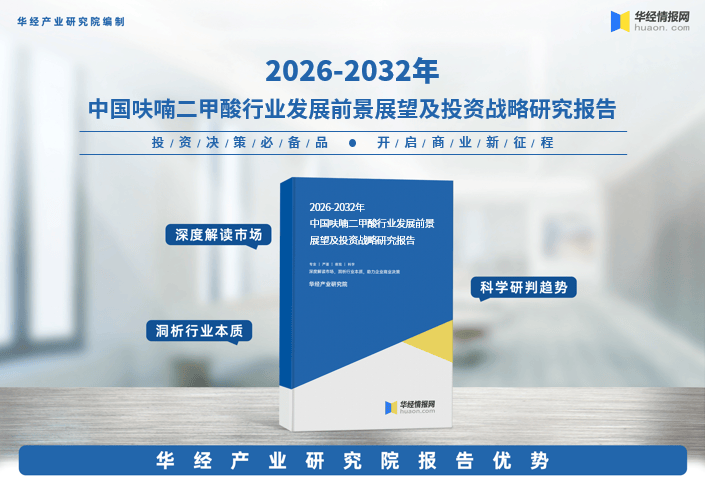
Core Insights - Furandicarboxylic Acid (FDCA) is a promising raw material with applications in surfactants, epoxy resins, and next-generation polymers like PEF (polyethylene furanoate) [1][8] - The FDCA industry chain is centered around biomass resources, utilizing renewable materials such as corn, sugarcane, and straw for production [1][13] - The global FDCA market is expected to grow significantly, with revenues projected to increase from approximately $13.8 million in 2022 to $160.32 million by 2025 [2][15] Industry Overview - FDCA was selected by the U.S. Department of Energy in 2004 from over 300 biomass-derived compounds, gaining attention in the market [2][15] - The first FDCA pilot plant was established by Avantium in the Netherlands in 2011, marking the beginning of commercial interest in FDCA [2][15] - The period from 2022 to 2031 is identified as the early stage of rapid commercialization for FDCA, with significant market fluctuations expected due to new entrants and expansion plans [2][15] Market Dynamics - The shift from petroleum-based products to bio-based alternatives has led to increased R&D investments in bio-based FDCA [2][17] - PEF, derived from FDCA, is anticipated to replace PET plastics due to its superior barrier properties [2][17] - Major global players in the FDCA market include Avantium, Zhongke Guosheng, Lif Biological, and others, with the top five companies expected to hold over 90% market share by 2024 [2][17][18] Application and Benefits - FDCA and its derivatives are used in high-performance polymers, with applications in food packaging, medical materials, and biodegradable products [1][10] - PEF exhibits better gas barrier properties and heat resistance compared to traditional PET, making it suitable for various applications [1][10] - FDCA's antibacterial and chelating properties support innovations in pharmaceuticals and biodegradable materials [1][10] Research and Analysis - The research team employs various analytical models such as SCP, SWOT, and PEST to assess the FDCA industry's market environment, policies, and competitive landscape [3][23] - A comprehensive report titled "2026-2032 China FDCA Industry Development Outlook and Investment Strategy" has been prepared to guide investment decisions and strategic planning [3][23]

全球与中国呋喃二甲酸市场现状及未来发展趋势
QYResearch· 2025-11-13 02:07
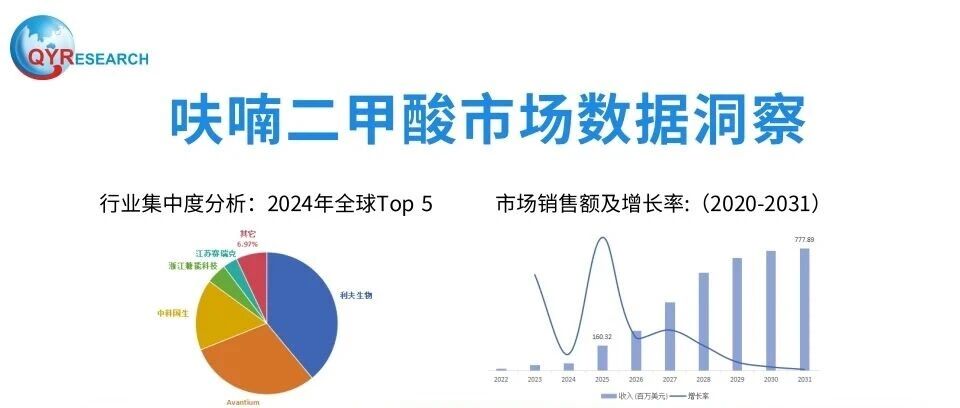
Core Viewpoint - The FDCA (Furandicarboxylic Acid) market is experiencing significant growth due to its potential to replace petroleum-based products, particularly in the production of PEF (Polyethylene Furanoate), which offers superior barrier properties compared to PET (Polyethylene Terephthalate) [3][14]. Group 1: Product Definition and Market Overview - FDCA is a key raw material for high-performance bio-based polymers, including PEF, and is derived from 5-HMF [2]. - The global FDCA market is projected to grow from approximately $1.38 million in 2022 to $77.79 million by 2031, with a compound annual growth rate (CAGR) of 30.1% from 2025 to 2031 [5]. - The commercialization of FDCA began in 2022, following increased research and development efforts since 2018 [3]. Group 2: Regional Market Dynamics - The European and Chinese markets currently dominate the FDCA market, with Europe expected to account for 32.8% and China for 66.0% of the global market value by 2024 [8]. - The production of 99.9% pure FDCA is the mainstream product, projected to represent 95.4% of global output by 2024 [8]. Group 3: Industry Players and Competition - Major players in the FDCA market include Avantium, Novamont, Stora Enso, Origin Materials, and others, with the top five companies expected to hold over 90% market share by 2024 [9]. - The competition in the industry is anticipated to intensify, particularly in the Chinese market [9]. Group 4: Applications and Future Trends - PEF is the primary application for FDCA, expected to account for approximately 92.1% of its usage in 2024 [8]. - The potential for FDCA to be used in various applications, including engineering plastics, polyamides, and polyurethanes, is significant, driven by its strong barrier properties [14]. Group 5: Policy and Regulatory Environment - The Chinese government is increasingly supportive of bio-based materials, including FDCA, as part of its environmental policies aimed at reducing carbon emissions [16]. - FDCA is classified as an "allowed" product under the 2024 Industrial Structure Adjustment Guidance Catalog, indicating a favorable regulatory environment for its development [16].
Food Waste Management Market Set to Reach USD 132.17 Billion by 2034, Driven by Sustainable Solutions and Technological Advancements
Globenewswire· 2025-10-16 13:30
Core Insights - The global food waste management market is projected to grow from USD 81.78 billion in 2025 to USD 132.17 billion by 2034, with a CAGR of 5.44% [1][35] - The market is driven by increasing sustainability awareness, government initiatives, and advanced technologies for waste reduction [2][6] Market Overview - The food waste management market was valued at USD 77.63 billion in 2024 and is expected to grow significantly in the coming years [1] - North America held the largest market share of 35% in 2024, while the Asia Pacific region is anticipated to be the fastest-growing market [7][34] Market Segmentation - By solution type, the collection and logistics segment captured 28% of the market share in 2024, while software and analytics are expected to grow [7][36] - The municipalities and government programs segment dominated the end-user market with a 40% share in 2024, indicating strong government involvement in waste management [7][38] - Aerobic composting led the technology segment with a 30% share in 2024, while on-site systems are projected to grow [7][40] Growth Drivers - Growing environmental awareness and stringent government regulations are key factors driving the market [25][27] - Technological innovations, such as AI and IoT, are enhancing waste management efficiency and sustainability [20][21] Regional Analysis - North America is the dominant region due to effective food waste management programs and sustainable technologies [32] - The Asia Pacific region is experiencing rapid growth due to urbanization, government initiatives, and rising environmental awareness [34] Recent Developments - Partnerships, such as the one between Ikea and Vanguard Renewables, are focusing on converting food waste into clean resources [16] - Various countries have implemented policies to reduce food waste, such as mandatory food donation in France and Italy [16] Key Players - Major companies in the food waste management market include Darling Ingredients, Anaergia, Covanta, and BioHiTech Global, each specializing in different aspects of waste management [48]