Philips Healthcare

Search documents
Refurbished Medical Imaging Equipment Market is expected to generate a revenue of USD 40,056.03 Million by 2032, Globally, at 15.07% CAGR: Verified Market Research®
Globenewswire· 2026-01-11 16:59
Market Overview - The Global Refurbished Medical Imaging Equipment Market is projected to grow at a CAGR of 15.07% from 2026 to 2032, with a market value of USD 12,990.44 Million in 2024, expected to reach USD 40,056.03 Million by the end of the forecast period [1] Key Drivers - Cost-effectiveness and affordability are significant factors driving the market, as healthcare facilities, especially in developing countries, opt for refurbished equipment to maintain high-quality diagnostic capabilities within budget constraints [3] - The growing healthcare infrastructure in emerging markets is increasing the demand for cost-effective imaging solutions, making refurbished equipment a practical option for healthcare providers [4] - Sustainability and environmental concerns are positively impacting the market, as refurbishing medical imaging equipment helps reduce electronic waste and carbon footprint, aligning with global sustainability goals [5] Challenges - Concerns over quality and performance remain a challenge, as some medical professionals doubt the reliability of refurbished equipment, which may hinder market acceptance [7] - Stringent regulatory requirements pose obstacles, as meeting international standards can be challenging and costly, potentially discouraging smaller companies from entering the market [8] - Competition from new technologies in medical imaging may reduce the market share of refurbished equipment, particularly in developed regions where budget constraints are less significant [9] Geographical Insights - North America leads the market due to its strong healthcare infrastructure and favorable reimbursement policies, with hospitals increasingly seeking affordable solutions [10] - Europe follows closely, with rising demand in countries like Germany and the UK, while emerging markets in Asia-Pacific are rapidly gaining ground, presenting promising growth prospects [10] Market Segmentation - The market is segmented by product type, including X-ray devices, ultrasound systems, CT scanners, and MRI equipment [12] - Applications include oncology, cardiovascular, gynecology, and orthopedic [12] - End-users consist of hospitals, diagnostic centers, and ambulatory surgical centers [12] Key Players - Major players in the Global Refurbished Medical Imaging Equipment Market include Siemens Healthineers AG, Canon Medical Systems Corporation, Philips Healthcare, GE Healthcare, DRE Medical, and Atlantis Worldwide [11]


Elastography Imaging Market Size to Reach USD 5.88 Billion by 2032, Driven by Rising Demand for Non-Invasive Diagnostics - SNS Insider
Globenewswire· 2025-12-20 12:00
Market Overview - The Elastography Imaging Market was valued at USD 3.27 billion in 2024 and is projected to reach USD 5.88 billion by 2032, growing at a CAGR of 7.66% from 2025 to 2032 [1][8]. Growth Drivers - Increasing demand for non-invasive diagnostic procedures, especially for liver fibrosis, oncology, and musculoskeletal disorders, is significantly contributing to market growth [2]. - The U.S. Elastography Imaging Market was valued at USD 1.04 billion in 2024 and is projected to reach USD 1.84 billion by 2032, with a CAGR of 7.47% from 2025 to 2032, driven by strong healthcare infrastructure and high adoption of advanced imaging technologies [4]. Market Segmentation By Modality - Ultrasound holds a dominant market share of 70.52% in 2024, being cheaper and more portable than other imaging tools. MRI is the fastest-growing segment with a CAGR of 8.03% due to its high diagnostic accuracy [9]. By Application - The General Imaging segment dominated the market with a share of 34.80% in 2024, with breast elastography expected to witness the fastest growth during the forecast period [10]. By End-User - Hospitals represent the largest and fastest-growing segment, holding 41.30% of the market share and a CAGR of 8.05% due to established facilities and large patient quotas [11]. Regional Insights - North America accounted for 38.52% of the overall revenue share in 2024, primarily due to a developed healthcare system and high prevalence of chronic diseases [14]. - The Asia Pacific region is projected to grow at the fastest CAGR of 8.10% during the forecast period, driven by a large patient population and high prevalence of chronic diseases [15]. Recent Developments - In early 2024, Resoundant expanded MR Elastography clinical collaborations with academic hospitals in the U.S. and Europe [19]. - In March 2025, Siemens announced enhanced AI-assisted elastography analysis integrated into its ACUSON Sequoia system, improving real-time liver fibrosis staging [19].

介入放射学导航系统行业分析报告:产业链、行业政策、发展趋势及进入壁垒
QYResearch· 2025-12-19 04:53
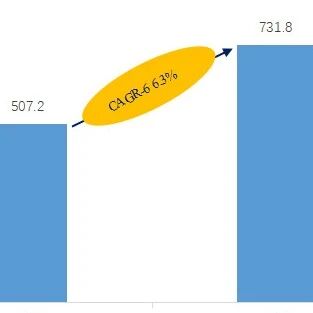
Core Viewpoint - Interventional radiology navigation systems enhance the precision and safety of minimally invasive procedures by integrating medical imaging, sensing technology, spatial positioning algorithms, and surgical path planning, transitioning from experience-driven to data-driven operations [2][5]. Working Principle - The system operates through three main technical modules: image acquisition, coordinate matching, and real-time tracking. It creates a 3D model of the lesion and surrounding tissues using CT, MRI, or ultrasound images, matches the patient's anatomy with the model, and tracks instruments in real-time to provide accurate navigation [4]. Application Areas - Interventional radiology navigation systems are widely used in tumor ablation, biopsy, vascular interventions, and complex anatomical region treatments. They improve accuracy in procedures like liver tumor ablation and vascular interventions by providing real-time corrections and reducing reliance on contrast agents [5]. Development Prospects - The future of interventional radiology navigation systems is geared towards higher precision, intelligence, and automation, driven by advancements in AI, robotics, and multimodal imaging. These technologies aim to enhance clinical success rates and optimize treatment pathways [6]. Important Parameters - Key parameters include spatial positioning accuracy (0.5–1.0mm for high-end systems), tracking stability, navigation modes (electromagnetic, optical), and image processing capabilities, which are crucial for effective navigation [7][8]. Market Size - The interventional radiology navigation system market is projected to reach USD 479 million in 2024 and USD 507 million in 2025, with a compound annual growth rate (CAGR) of 6.3% over the next six years [10]. Industry Chain and Trends - The industry chain shows a clear upstream and downstream collaboration, with upstream relying on precision sensors and imaging devices, while downstream includes medical institutions that adopt these systems to enhance procedural accuracy and reduce complications [14]. The industry is experiencing a trend towards digitalization, intelligence, and automation, with increasing demand for high-precision navigation [16]. Entry Barriers - High entry barriers exist due to the technical complexity of navigation systems, stringent certification requirements, and the strong market presence of established brands. New entrants must invest significantly in training and support to compete effectively [17].
GE HealthCare's Strategic Moves and Market Position
Financial Modeling Prep· 2025-12-11 22:04
Core Viewpoint - GE HealthCare is positioned for growth in the healthcare technology sector, with a new price target set by Jefferies indicating a potential increase in stock value [1][6] Company Overview - GE HealthCare specializes in medical imaging, monitoring, biomanufacturing, and cell and gene therapy technologies, competing with major players like Siemens Healthineers and Philips Healthcare [1] - The company's current stock price is $85.55, reflecting a slight increase of 1.28% [2] - Over the past year, the stock has experienced significant volatility, with a high of $94.80 and a low of $57.65, and a market capitalization of approximately $39.08 billion [2][6] Strategic Partnerships - GE HealthCare has expanded its collaboration with Imaging Biometrics Ltd, enhancing its neuroimaging capabilities with advanced tools like FTB Express maps and QSMetric [3][5] - The FTB Express tool integrates with existing workflows, providing faster access to critical data for clinicians [4] - This partnership underscores GE HealthCare's commitment to innovation and improving patient outcomes, potentially strengthening its market position [5]


Ultrasound Image Analysis Software Research Report 2024-2035: AI and Machine Learning Revolutionizing the $2.2 Billion Market
Globenewswire· 2025-03-13 14:57
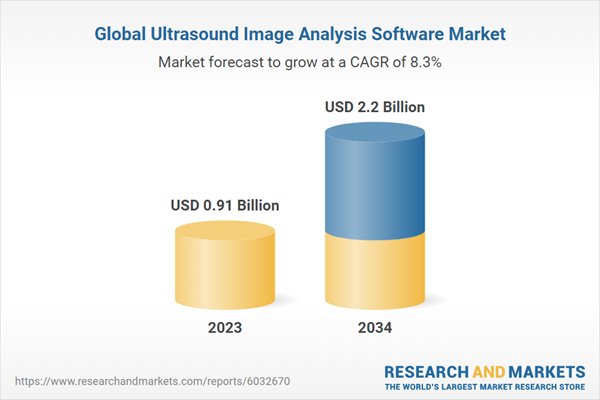
Market Overview - The global ultrasound image analysis software market is estimated to be USD 0.913 billion in 2024 and is expected to reach USD 2.20 billion by 2035, with a CAGR of 8.34% during the forecast period 2025-2035 [1][17]. Technological Advancements - The market growth is driven by advancements in ultrasound technology, particularly in image processing and AI-powered analysis, including developments such as 3D and 4D imaging, elastography, and Doppler imaging [4]. - These technological improvements enhance image quality, automate measurements, and enable real-time visualization, leading to increased demand for sophisticated ultrasound image analysis software [4][5]. Regional Insights - North America is anticipated to have the highest revenue share during the forecast period due to its well-established healthcare infrastructure and high adoption of advanced imaging technologies [6]. - The Asia Pacific region is predicted to grow at the fastest CAGR, driven by an expanding healthcare sector, increasing government investments, and rising prevalence of chronic diseases in emerging markets like China and India [7]. Market Segmentation by Type - The integrated software segment accounted for the highest revenue in 2024, driven by the adoption of comprehensive diagnostic solutions that enhance workflow efficiency [8]. - The standalone software segment is expected to grow at the fastest CAGR, catering to specific clinical needs in smaller clinics and diagnostic centers [9]. Market Segmentation by Product - The Doppler imaging segment accounted for the highest revenue in 2024, widely used in vascular imaging, obstetrics, and cardiology [10]. - The 3D & 4D ultrasound systems segment is predicted to grow at the fastest CAGR due to its advanced imaging capabilities [11]. Market Segmentation by Application - The cardiology segment accounted for the highest revenue in 2024, driven by the increasing prevalence of cardiovascular diseases [12]. - The oncology segment is expected to grow at the fastest CAGR, leveraging advanced image analysis tools for cancer detection and monitoring [13]. Market Segmentation by End-User - The hospitals segment accounted for the highest revenue in 2024, attributed to high patient volume and advanced infrastructure [14]. - The diagnostic centers segment is predicted to grow at the fastest CAGR, driven by the demand for quick and accurate diagnostic solutions [16].