AI驱动

Search documents
美股异动丨Navan盘前大涨超24% Q4扭亏为盈 27财年指引乐观
Ge Long Hui· 2026-03-26 09:19
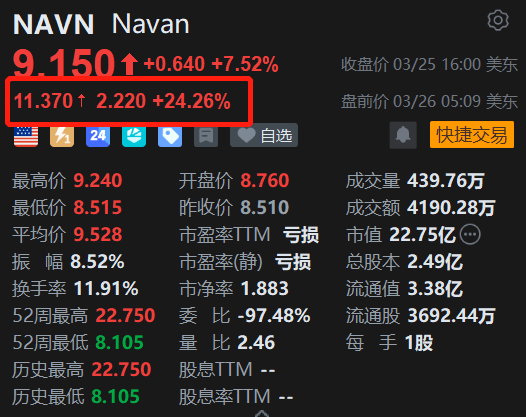
Core Insights - Navan, a leading AI-driven corporate travel and expense management platform, saw its stock rise over 24% in pre-market trading following the announcement of its Q4 FY26 revenue, which exceeded expectations with a 35% growth and achieved positive free cash flow a year ahead of schedule [1] - The CFO indicated that the onboarding speed of corporate clients was "better than previously expected" [1] - For FY27, the company provided an optimistic revenue guidance of $866 million to $874 million, representing a median growth of 24%, surpassing analyst expectations of $841 million [1] Financial Performance - Q4 FY26 revenue growth was 35%, exceeding expectations [1] - Positive free cash flow was achieved a year earlier than planned [1] - FY27 revenue guidance is set at $866 million to $874 million, with a median growth of 24% [1] Market Reaction - Navan's stock price increased by 24.26% in pre-market trading, reaching $11.370 [2] - The closing price on March 25 was $9.150, reflecting a 7.52% increase [2] - The stock has a market capitalization of $2.275 billion [2]

天虹股份(002419) - 2026年3月25日投资者关系活动记录表
2026-03-25 09:50
Group 1: Strategic Direction - The company aims to become an "AI-driven digital technology company," focusing on deep digitalization and intelligent upgrades in retail, with no plans to enter the military industry [2] - The strategic focus includes two main directions: enhancing industry digitalization and accelerating digital industrialization, particularly through the "Lingzhi Bailing Bird AI model" and the "Xiao Huo Er" intelligent labor platform [2][3] Group 2: Core Operating Strategies for 2026 - The core operating strategy for 2026 is based on "three focuses and three cost reductions," targeting breakthrough growth opportunities and optimizing cost structures [3] - Specific initiatives include upgrading the supermarket model (sp@ce3.0), creating benchmark shopping centers, and applying AI in the core value chain of products and services [3] Group 3: Competitive Advantages and Initiatives - The company's competitive edge lies in its comprehensive digital capabilities powered by its proprietary AI model, enabling a fully integrated online and offline retail system [3] - Key initiatives include transforming shopping centers into experiential and digital hubs, enhancing online business through "instant retail + membership value," and optimizing the supply chain with a focus on fresh and ready-to-eat products [3] Group 4: Store Optimization and Financial Outlook - In 2026, the company plans to open one new shopping center and evaluate existing stores for potential closures based on market conditions [4] - The company emphasizes a stable cash dividend policy and is considering share buybacks based on market and operational conditions [4] Group 5: Investor Relations and Market Perception - The company is committed to enhancing its value and investor returns, with a focus on effective communication and market recognition of its value [4] - The stock price has been affected by various factors, including macroeconomic conditions and company fundamentals, and the company encourages rational investment [4]

万孚生物(300482) - 300482万孚生物投资者关系管理信息20260305
2026-03-05 12:38
Group 1: Globalization Strategy - The company is transitioning its globalization strategy from "product-based/opportunistic expansion" to a "structured operational globalization phase" focusing on building systems and improving operational quality rather than just increasing sales [3] - Key markets for expansion include the United States and developing countries, with a focus on deepening core market penetration [2] - The company aims to establish a compliant registration system covering key countries in Europe, Latin America, and others to enhance market access and reduce compliance risks [3] Group 2: Product Development and Upgrades - The company plans to shift from POCT to IVD products globally, enhancing product diversity and achieving higher-level terminal breakthroughs [3] - New product lines include single-use luminescence and tube-based luminescence, with certifications expected in 2025 and 2026, targeting both high-level laboratories and grassroots medical systems [4] - The company is also focusing on developing a pathology strategy that starts with developed countries and expands to developing nations, with certifications expected in 2025 and 2026 [4] Group 3: Financial Performance and Growth - The company anticipates that profit growth will outpace revenue growth in the next two to three years, driven by higher margins from respiratory infectious disease products compared to traditional lines [7] - The international department's revenue potential in core developing countries is estimated at approximately $3 billion, with a low current market share [6] - The company aims to maintain stable gross margins while absorbing price pressures through cost reductions and improving product line growth [7] Group 4: Market Position and Competitive Advantages - The company has over 20 years of overseas market experience, providing advantages in registration, channels, teams, and brand recognition [6] - Compared to Korean manufacturers, the company benefits from production advantages due to the large Chinese market [6] - The company has established a strong position in the U.S. market with a comprehensive product line and effective market coverage, emphasizing channel control and profit management [6]

2026 开发者必备:9 款终端 GPU 加速神器,效率直接拉满~
菜鸟教程· 2026-03-04 03:30
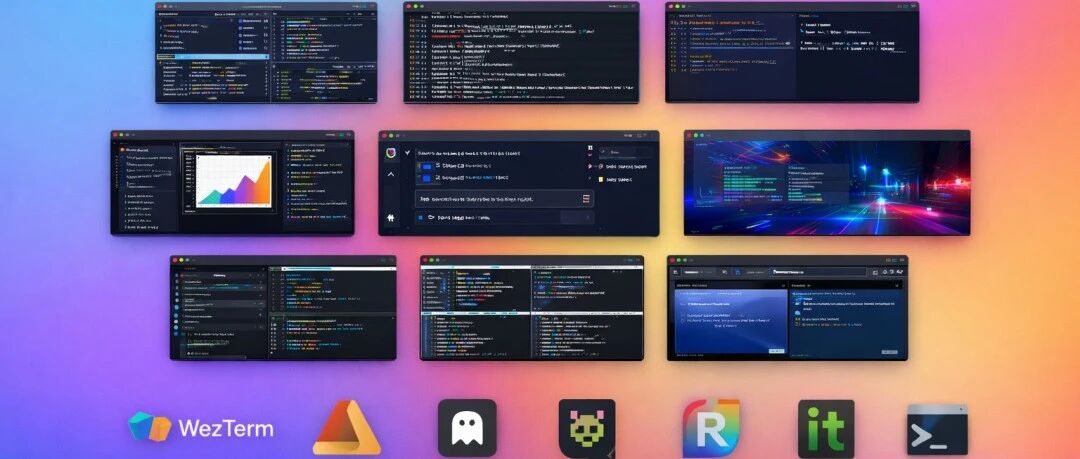
Core Insights - The article discusses the evolution of terminal applications from simple command input interfaces to essential productivity tools for developers, highlighting their role in coding, scripting, Git collaboration, remote SSH, container management, and AI development [1][3]. Group 1: Terminal Evolution - The terminal has transformed into a core productivity tool for developers, facilitating various engineering processes [1]. - The introduction of GPU rendering technology in terminal applications marks a significant upgrade in user experience, particularly for heavy terminal workflows [3]. Group 2: Recommended Modern Terminals - The article lists eight modern terminals to watch in 2026, focusing on cross-platform compatibility, performance, AI integration, and remote development capabilities [4]. Terminal 1: WezTerm - WezTerm supports multiple platforms and features GPU acceleration, true color support, image protocol, and a highly programmable configuration system [6][8]. - It is noted for its high performance and built-in multiplexer functionality, making it a potential replacement for tmux [8][10]. - Ideal for cross-platform developers and remote users [11]. Terminal 2: Alacritty - Alacritty is designed for speed, focusing solely on display without additional features like tabs or splits, making it a benchmark for GPU terminals [14][15]. - Best suited for developers who prioritize responsiveness and a pure CLI workflow [18]. Terminal 3: Ghostty - Ghostty emphasizes minimal configuration with OpenGL GPU rendering and low input latency, aiming to provide an excellent out-of-the-box experience [19][21]. - Targeted at users looking to reduce configuration overhead while enjoying modern terminal features [26]. Terminal 4: Kitty - Kitty is a feature-rich GPU-accelerated terminal favored by advanced users and DevOps engineers, supporting image display and excellent font rendering [27][31]. - Suitable for heavy terminal users and those developing automated workflows [32]. Terminal 5: Warp - Warp integrates AI deeply into the terminal experience, redefining the interaction between developers and the command line [34][35]. - Aimed at developers looking to enhance efficiency through AI [36]. Terminal 6: Rio - Rio is an experimental terminal built on WebGPU, supporting custom shader effects and true color display [37][38]. - It is designed for tech enthusiasts and those interested in visual experiences [41]. Terminal 7: Tabby - Tabby is an integrated terminal platform suitable for users frequently engaging in remote development or server management [42][45]. Terminal 8: iTerm2 - iTerm2 is a mature terminal for macOS, known for its stability and extensive ecosystem, making it ideal for developers seeking a reliable production environment [49][50]. Terminal 9: Windows Terminal - Windows Terminal has become the de facto standard for Windows development environments, featuring advanced split-screen capabilities and deep integration with tmux [52][53]. - It offers a natural upgrade path for Windows developers [55][56].
山西证券研究早观点-20260226
Shanxi Securities· 2026-02-26 01:01
Market Overview - The domestic market indices showed positive performance with the Shanghai Composite Index closing at 4,147.23, up by 0.72% [4] - The Shenzhen Component Index increased by 1.29%, closing at 14,475.87 [4] Coal Industry Analysis - The coal industry report highlights the impact of rising overseas coal prices on domestic coal prices, indicating a need for close monitoring [5][6] - Domestic thermal coal prices are stabilizing with a slight adjustment, as production decreases due to increased holiday shutdowns in coal mines. The spot price for thermal coal in the Bohai Rim region was reported at 717 CNY/ton, with a weekly change of +0.70% [9] - Coking coal prices remained stable, with the main coking coal price at 1,660 CNY/ton, unchanged from the previous week [9] - The report suggests that supply will gradually recover post-holiday, and attention should be paid to downstream replenishment demand and market recovery [9] Company Analysis: DingTong Technology (688668.SH) - DingTong Technology forecasts a revenue of 1.59 billion CNY for 2025, representing a year-on-year growth of 54.4%, and a net profit of 240 million CNY, up by 119.6% [12] - The company is experiencing significant growth in high-speed communication products, with expectations for 112G product shipments to exceed 2 million units monthly by 2026 [12] - The production capacity for communication connectors is set to increase significantly following the issuance of convertible bonds, with an additional annual capacity of 12 million connectors and 20 million precision structural components [12] - The report anticipates a rapid increase in the penetration rate of liquid cooling solutions for optical modules, with production capacity expected to reach 780,000 units annually [12] - The automotive connector segment is also expected to grow, with a focus on BMS projects, and an anticipated increase in production capacity of 344,000 units [12] Investment Recommendations - The report suggests that the loosening of the US dollar credit system may lead to a revaluation of physical assets, benefiting companies in the coal sector such as Guanghui Energy and others [9] - For coking coal, companies like Panjiang Coal and Shanxi Coking Coal are highlighted as potential investment opportunities [9] - In the thermal coal sector, companies such as Yanzhou Coal, Shanxi International Energy, and China Shenhua are recommended for consideration [9]

Tune Talk 携手 Mavenir 成为东盟首家完全云原生移动网络运营商
Globenewswire· 2026-02-23 17:41
Core Insights - Tune Talk has successfully transformed into a fully independent cloud-native mobile network operator (MNO) through a strategic partnership with Mavenir, a provider of AI-driven network software [1][3][4] - The deployment allows Tune Talk to operate its own network system end-to-end, unlocking higher speeds, greater flexibility, and enhanced innovation capabilities [1][3] Group 1: Transformation and Technology - The transition is facilitated by Mavenir's cloud-native OSS and BSS solutions, granting Tune Talk complete control over its network operations and digital service platform [3] - Tune Talk has modernized its OSS and BSS layers using Mavenir's cloud-native platform, establishing a software-defined independent network [3] - The upgrade has accelerated the launch of various digital services, including MyDigital ID integration, Mastercard identity theft protection, free personal accident insurance, foodpanda discounts, and in-app streaming content [3] Group 2: Operational Efficiency and Future Plans - The new cloud-native operating environment features zero-touch processes and self-healing automation, reducing operational expenses while enhancing network stability [3] - The second phase will deepen Tune Talk's AI-driven transformation by introducing advanced orchestration systems and next-generation BSS, further improving network performance and service delivery speed [3] Group 3: Leadership and Industry Impact - Tune Talk's CEO, Gurtaj Singh Padda, emphasized that becoming a fully cloud-native MNO marks a new chapter for the company, reinforcing its ambition to create smarter and more agile mobile networks in Malaysia and surrounding regions [4] - Mavenir's CEO, Pardeep Kohli, expressed pride in the successful completion of the first phase of collaboration, highlighting the importance of a fully cloud-native approach for delivering speed, flexibility, and efficiency [4] - Tune Talk serves as a reference model for cloud-native MNO operations in Malaysia and the ASEAN region, showcasing how modern OSS/BSS architecture can accelerate operators' independent operations and digital transformation [4]
再惠冲刺港股IPO:营收三年复合增长28%背后 毛利率骤降7%与累计亏损21.7亿隐忧
Xin Lang Cai Jing· 2026-02-15 13:29
Core Viewpoint - The company, positioned as an AI-driven online service provider for the restaurant industry in China, is experiencing significant revenue growth primarily driven by its new media services, despite ongoing financial losses and increasing operational risks [1][2][14]. Business Model and Operations - The company offers two main services: new media services (60.3% of revenue in 2024) and online merchant solutions (31.1%) [1]. - The business model is based on a "technology + service" dual approach, with new media services charging project fees (average of 63,000 yuan/year) and online merchant solutions operating on a subscription basis [1]. Revenue Growth - Revenue increased from 379 million yuan in 2023 to 495 million yuan in 2024, representing a compound annual growth rate of 30.8% [2]. - New media services revenue surged by 55.7% from 191 million yuan in 2023 to 298 million yuan in 2024, further increasing to 299 million yuan in the first three quarters of 2025 [2]. - Online merchant solutions revenue declined from 162 million yuan in 2023 to 100 million yuan in the first three quarters of 2025 [2]. Profitability and Losses - The company reported a net loss of 446 million yuan in 2023, narrowing to 235 million yuan in 2024, with a cumulative loss exceeding 2.17 billion yuan over three years [2][3]. - Adjusted operating losses showed improvement, decreasing from 249 million yuan in 2023 to 177 million yuan in 2024 [3]. Cost Structure and Margins - Gross margin dropped from 60.6% in 2024 to 53.6% in the first three quarters of 2025, primarily due to the rising costs associated with new media services [3][4]. - The cost of goods sold for influencer procurement surged by 92.8% to 126 million yuan in the first three quarters of 2025 [4]. Revenue Concentration and Risks - The revenue structure is highly concentrated, with new media services accounting for 66.5% of total revenue in 2025, while online merchant solutions' share declined [5]. - Customer concentration is increasing, with the top five clients contributing 19.7% of revenue in the first three quarters of 2025, raising dependency risks [6]. Supplier Dependence - Supplier concentration has risen, with the top five suppliers accounting for 31.2% of procurement in the first three quarters of 2025 [7]. - The proportion of influencer service fees in procurement costs increased from 39.4% in 2023 to 60.5% in 2025, indicating enhanced bargaining power of suppliers [7]. Shareholding Structure - The largest shareholder is SoftBank Vision Fund, holding 20.73%, followed by the founder and other institutional investors [8]. - The company has resolved its VIE structure but may still face regulatory risks due to historical contractual arrangements [8]. Management Team - The management team has significant experience in the internet sector, with the CEO and CFO having backgrounds in major platforms like Dianping [9]. - There is a notable disparity in executive compensation, with the CEO earning 2.87 million yuan in 2024 compared to an average of 850,000 yuan for other executives [9]. Financial Challenges - The company faces high marketing expenses, with a marketing expense ratio of 65.6%, significantly above the industry average [10]. - Cash flow remains under pressure, with a current ratio of only 0.2 and cash reserves declining from 655 million yuan in 2023 to 401 million yuan in 2025 [11]. Regulatory and Compliance Risks - The company is subject to increasing regulatory scrutiny regarding data transmission and AI-generated content compliance [12]. - The historical VIE structure has previously posed foreign exchange registration risks, which may still affect operations [12]. Conclusion - The company is positioned for growth within the restaurant SaaS sector, benefiting from digitalization trends, but faces significant challenges including declining margins, increasing customer and supplier concentration, and cash flow pressures [14].
阜博集团(03738.HK)与星路科技达成策略合作
Ge Long Hui· 2026-02-10 23:39
Core Viewpoint - The announcement highlights a strategic partnership between Fubo Group and Starway Financial Technology Holdings Limited, focusing on the tokenization of real-world assets in the cultural and creative intellectual property sector [1] Group 1: Partnership Details - Fubo Group has entered into a strategic cooperation with Starway Financial Technology, which is an AI-driven global wealth technology platform based in Hong Kong [1] - The collaboration aims to leverage the strengths of both companies to explore compliant innovation pathways in the realm of cultural creative IP [1] Group 2: Objectives and Goals - The partnership will work towards building an ecosystem that facilitates the transformation of cultural creative IP into efficiently tradable digital assets [1] - The focus will be on the overseas tokenization of real-world assets related to cultural and creative intellectual property [1]
2026年中国商业地产迎四大趋势:反内卷、轻资产、出海升温、AI 驱动
Bei Jing Shang Bao· 2026-02-10 14:25
Core Insights - The report highlights four major trends in China's commercial real estate industry for 2026: "anti-involution," "light asset," "increased overseas expansion," and "AI-driven" development [1][2] Group 1: Industry Trends - The commercial real estate sector is experiencing increased differentiation, with a reduction in new investments and a shift towards light asset models becoming mainstream [1] - The government will intensify efforts to combat involution, particularly addressing unfair competition caused by e-commerce platform monopolies, with new regulations effective from February 1, 2026 [1] - The light asset model, initially applied in hotel properties, has now expanded to various commercial formats and IP content operations, reflecting a cautious investment trend among industry players [1] Group 2: Overseas Expansion and AI Integration - The trend of brands going overseas is expected to continue, with a shift from "brand export" to "ecosystem export," enhancing the global influence of Chinese commercial brands [2] - AI technology will increasingly drive commercial innovation, penetrating all aspects of business operations, from cost control to management decision-making, leading to a fundamental shift in industry development logic [2]
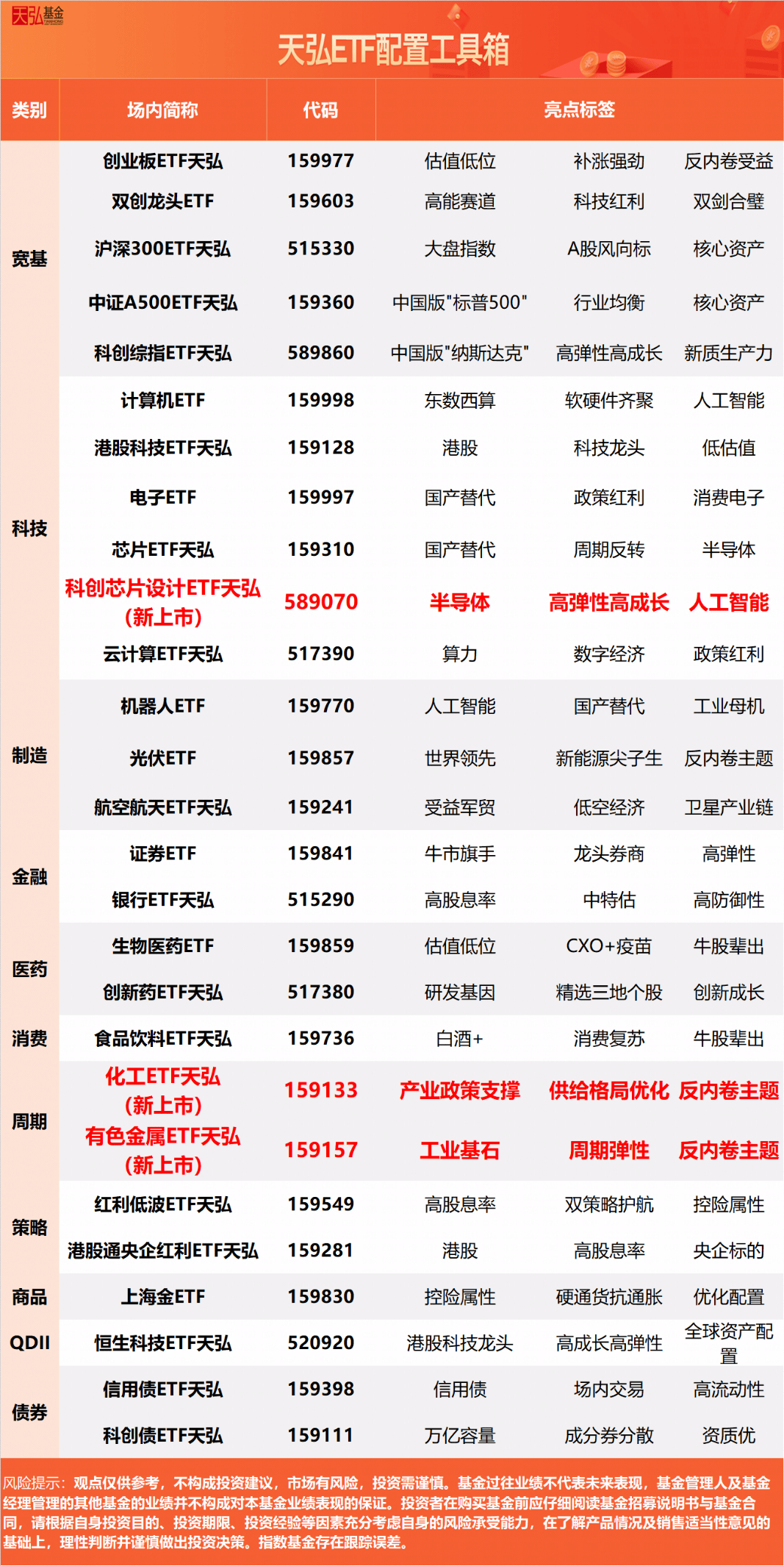
有色金属ETF天弘(159157)今日上市!供给偏紧叠加周期上行,工业有色迎长期配置窗口
Sou Hu Cai Jing· 2026-02-06 01:29
Core Viewpoint - The Tianhong CSI Industrial Nonferrous Metals Theme ETF (code: 159157) will be listed on the Shenzhen Stock Exchange starting February 6, 2026, indicating a growing interest in the nonferrous metals sector [1]. Product Highlights - The industrial nonferrous metals sector is relatively concentrated, with the top three industries being copper (31.1%), aluminum (21.9%), and rare earths (16.1%), collectively accounting for about 70% [2]. - The rapid development of the AI industry is expected to drive up demand for electricity, which in turn will boost the demand for industrial nonferrous metals. Supply growth is anticipated to be limited in the coming years, suggesting a long-term upward trend for upstream resources [2]. - Rare earth metals are becoming increasingly important as strategic national resources, with China holding the world's largest reserves and production. This gives China a significant advantage in resource endowment, smelting technology, and overall cost, enhancing their investment value [2]. - The resource sector is entering an upward cycle, with upstream resources positioned more favorably compared to downstream manufacturing. A tight supply situation is expected to persist, making long-term price increases likely [2]. - Index-based investment is seen as a valuable strategy due to the diverse sub-industries within nonferrous metals, making it challenging for active research to cover all areas effectively [2]. Hot Events - The China Nonferrous Metals Industry Association announced plans to include "copper concentrate" in the national reserve system, which aims to enhance China's bargaining power in the copper supply chain and improve supply chain resilience and security [4]. - This initiative aligns with the previously released "Copper Industry High-Quality Development Implementation Plan (2025-2027)," which seeks to shift the focus of the copper industry from capacity expansion to quality and efficiency improvement [4]. Institutional Views - Guoyuan Securities noted that the nonferrous metals industry remains robust amid global instability, with tightening supply conditions and increasing mining difficulties supporting long-term price increases for copper [5]. - The demand outlook is strong, driven by emerging industries such as AI, electric vehicles, and renewable energy, which are transforming many metals into "critical strategic materials" with sustained demand [5]. - Heightened international strategic competition is leading to tighter controls on strategic metals, further increasing price pressures and creating clear structural investment opportunities in related sectors [5].