
Rigetti Computing

Search documents
Small Cap Investors Should Watch This One Number Before Buying SCHA Right Now
Yahoo Finance· 2026-02-03 13:28
Core Insights - The Schwab U.S. Small-Cap ETF (SCHA) has achieved a 5.5% return year-to-date, benefiting from its low annual expense ratio of 0.04%, which is among the lowest in the small-cap category [2][8] - Recent analyses have shown mixed opinions on SCHA, with some sources highlighting its attractiveness due to low costs and historical performance, while others have downgraded it, suggesting that current market conditions favor large-cap stocks over small-cap stocks [3] Interest Rate Impact - Small-cap stocks are significantly affected by borrowing costs, as they rely more on debt for growth compared to larger firms. The current 10-year Treasury yield is at 4.24%, which poses challenges for small-cap companies [4][8] - If Treasury yields rise towards 4.5% or higher, the increased cost of capital could compress small-cap valuations more rapidly than those of large caps, making interest rate direction a critical factor for SCHA's near-term performance [4] Portfolio Composition - SCHA's portfolio is highly diversified, containing over 500 positions with no single holding exceeding 0.50% of total assets, which shifts performance drivers from individual stock selection to sector allocation [6] - The fund's major sector allocations include Industrials, Financials, and Information Technology, which together account for approximately half of the total assets and are key determinants of the fund's performance relative to its benchmark [6] Notable Holdings - The ETF has significant exposure to emerging sectors such as quantum computing through Rigetti Computing (RGTI), renewable energy infrastructure, and cryptocurrency mining operations [7] - Rocket Companies (RKT), a top holding, illustrates the volatility and growth potential typical of small-cap businesses that have not yet scaled their operations [7]
Forget Rigetti Computing: Serious Investors Are Placing Their Chips on This Enterprise‑Ready Quantum Platform
Yahoo Finance· 2026-02-02 19:06
Core Insights - IBM is a long-established company that has successfully adapted to new technologies, particularly in quantum computing, positioning itself as a leader in the field [1][2] Company Overview - IBM was founded in 1911 and has maintained its reputation for innovation despite its age [1] - The company is recognized for its significant resources and reputation in the quantum computing sector, outpacing competitors like Rigetti Computing and D-Wave Quantum [2] Quantum Computing Technology - Quantum computers utilize quantum bits (qubits) to perform complex calculations, differing fundamentally from classical computers that use binary bits [5][6] - Qubits can exist in multiple states simultaneously, allowing quantum computers to solve problems much faster than classical computers, although they are not suited for everyday tasks [7] IBM's Quantum Capabilities - IBM currently offers 2,299 qubits for customer use and possesses the largest quantum computer with 1,121 qubits [8] - The Nighthawk quantum processor, IBM's latest innovation, features a scalable 120-qubit design that enhances complexity by 30% compared to its predecessor, the Heron chip [9] - The Nighthawk chip also boasts a 20% increase in inter-qubit connections, enabling it to handle larger and more complex workloads [10]

Here's Why I Wouldn't Touch Quantum Computing Stock With a 10-Foot Pole
The Motley Fool· 2026-01-25 08:33
Core Viewpoint - Quantum Computing (QCi) is experiencing significant stock price appreciation but presents serious investment risks due to its high valuation and share dilution issues [2][11]. Company Overview - QCi specializes in photonics technology for quantum computing, which operates at room temperature and requires low power, distinguishing it from other quantum systems [5]. - The company has a market capitalization of approximately $2.7 billion and has generated only $546,000 in revenue over the trailing 12 months, resulting in a price-to-sales (P/S) ratio exceeding 3,000 [3][8]. Financial Performance - QCi's stock has increased by 591% over the last three years, but the company has not yet achieved substantial revenue growth [2]. - The company has a robust balance sheet with over $1.5 billion in cash and investments, crucial for funding its high research and development costs [6]. Share Dilution - QCi has quadrupled its outstanding shares from about 60 million to 224 million over the past three years, raising concerns about share dilution for existing investors [7][9]. - The repeated issuance of new shares to raise capital has resulted in a significant reduction in the ownership stake for early investors [7]. Competitive Landscape - QCi faces fierce competition from other pure-play quantum computing companies such as D-Wave, IonQ, and Rigetti, as well as major tech firms like Alphabet, IBM, and Nvidia that are also investing in quantum technologies [10][11]. - The uncertainty regarding which quantum computing method will prevail adds to the investment risk associated with QCi [5][11].




Quantum Computing Stocks: Separating Hype From Reality in 2026
Yahoo Finance· 2026-01-21 23:35
Core Insights - Quantum computing is emerging as a significant area of potential innovation, with shares of companies like D-Wave Quantum, Rigetti Computing, and IonQ experiencing quadruple-digit growth over the past three years as investors seek opportunities in this sector [1][6]. Group 1: Technology Overview - Quantum computing leverages the behavior of subatomic particles, known as qubits, to perform calculations that classical computers cannot handle, but the technology faces challenges such as error generation and the fragility of qubits [4]. - Current pure play quantum companies are generating revenue by offering access to their quantum hardware through cloud services, while major tech firms like Microsoft and Alphabet are also developing quantum chips [5]. Group 2: Market Sentiment and Predictions - Industry leaders have varying predictions on the timeline for quantum computing to become generally useful, with Nvidia's Jensen Huang suggesting a 20-year timeframe, while Alphabet's Sundar Pichai estimates a 5 to 10-year horizon [6]. - Despite the complexities, the market sentiment remains bullish, with significant stock price increases indicating investor confidence in quantum computing as the next major growth area [7][8].
D-Wave Quantum Stock Sank Today -- Is This a Buying Opportunity for 2026?
The Motley Fool· 2026-01-20 22:55
Core Viewpoint - D-Wave Quantum's stock experienced a significant sell-off, dropping 6.2% in one trading session, influenced by broader market trends and geopolitical events [1][2][3]. Group 1: Stock Performance - D-Wave's share price fell to $27.04, with a market capitalization of approximately $10 billion [4]. - The stock's trading range for the day was between $25.94 and $28.48, while its 52-week range was from $4.45 to $46.75 [5]. - The volume of shares traded was 1.5 million, compared to an average volume of 40 million [5]. Group 2: Market Context - The S&P 500 and Nasdaq Composite indices fell by 2.1% and 2.4%, respectively, indicating a bearish trend in the broader market [2]. - The sell-off was partly driven by geopolitical tensions related to the U.S. attempts to acquire Greenland, leading to potential tariff responses from the EU [3]. Group 3: Valuation Insights - D-Wave's valuation is highly dependent on growth, with a current valuation of approximately 238 times this year's expected sales [6]. - Despite the stock's decline, its pullback appears relatively modest compared to the overall market, suggesting some resilience [5]. Group 4: Investment Considerations - The current geopolitical and macroeconomic uncertainties make D-Wave stock a risky investment, suitable only for investors with a high risk tolerance [7].


Is D-Wave Quantum Your Ticket to Becoming a Millionaire?
Yahoo Finance· 2026-01-16 16:35
Company Overview - D-Wave Quantum (NYSE: QBTS) is a notable player in the quantum computing sector with a market capitalization of $10 billion, attracting investors due to its smaller size and growth potential [1] - The company is not pursuing a general-purpose quantum computing model but is focusing on quantum annealing technology, which optimizes solutions by finding the lowest energy state in a system [6] Industry Context - Quantum computing is a complex technology that utilizes qubits, allowing for multiple calculation paths, unlike traditional bits which are limited to binary states [3] - The competition in the quantum computing field is intense, with significant risks involved, making it a challenging investment area [2] - DARPA has been involved in selecting technologies for military applications, and while D-Wave did not apply for a significant contract, it has been forming partnerships with major manufacturing companies [4][7]
Meet the Quantum Computing Stock That Billionaires Can't Get Enough Of (Hint: It's Not IonQ, Rigetti Computing, or D-Wave Quantum)
Yahoo Finance· 2026-01-14 12:05
Market Overview - The S&P 500 and Nasdaq Composite experienced significant gains of 16% and 20% respectively in the previous year, marking the third consecutive year of double-digit percentage increases, largely driven by positive sentiment surrounding artificial intelligence (AI) [1] Quantum Computing Sector - Quantum computing stocks have emerged as major winners within the AI landscape, with smaller developers like IonQ, Rigetti Computing, and D-Wave Quantum benefiting significantly from the quantum AI trade [2] - Institutional investors are increasingly focusing on a specific quantum computing stock that is not a pure-play but a well-known household name, indicating a shift in investment strategy towards mainstream quantum computing opportunities [3] Investment Risks - Investing in pure-play quantum computing stocks may pose risks, as many investors mistakenly evaluate companies based solely on share price rather than valuation multiples, which are crucial for understanding future stock performance [5] - The price-to-sales (P/S) ratios of popular quantum computing stocks have seen substantial increases during the AI revolution, suggesting that current valuations may be unsustainable [6] - Historical context shows that companies like Cisco experienced significant market value losses after reaching peak P/S multiples during the dot-com boom, highlighting the potential volatility in the quantum computing sector [7] Popularity and Valuation - The momentum in stocks like IonQ, Rigetti Computing, and D-Wave Quantum has led to historically high valuations, raising concerns about the sustainability of these price levels [8]
What Is the Smartest Quantum Computing Stock to Buy in 2026?
The Motley Fool· 2025-12-26 06:00
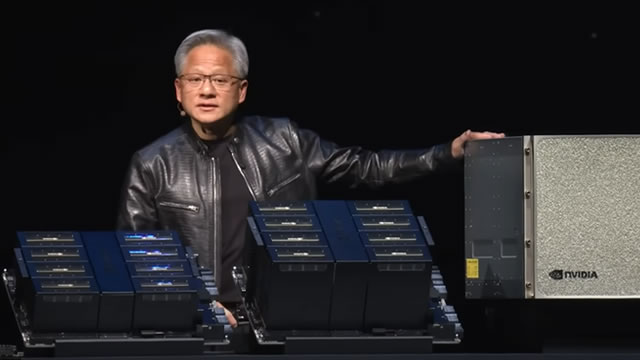
Core Insights - Quantum computing stocks are gaining momentum as they outperform the S&P 500, with companies like IonQ, Rigetti Computing, and D-Wave Quantum leading the charge [1] - Major tech companies, including Alphabet, Amazon, and Microsoft, are exploring quantum computing alongside their generative AI initiatives, indicating a broader interest in the technology [2] - Nvidia is developing a comprehensive quantum computing suite, positioning itself as a key player in the AI infrastructure era [3] Quantum Computing Landscape - Currently, quantum computing is primarily an exploratory field, with companies focusing on research and development rather than enterprise-level applications [5] - Pure-play quantum developers like IonQ and Rigetti are utilizing gate-based approaches, while D-Wave specializes in quantum annealing for optimization tasks [6] - The focus of these companies is on the physics of creating and configuring qubits within new computing architectures [7] Nvidia's Unique Position - Unlike its competitors, Nvidia aims to bridge the gap between software and hardware for quantum computing, rather than building its own quantum computers [9] - Nvidia's software platform, CUDA-Q, allows developers to create applications that operate across CPUs, GPUs, and QPUs, enhancing the integration of quantum computing [10] - The NVQLink interconnect facilitates seamless communication between QPUs and GPUs, reducing latency and bandwidth strain [10] Market Potential and Growth - Nvidia is well-positioned to benefit from increased capital expenditures in AI infrastructure, with hyperscalers projected to contribute nearly $500 billion in 2026 [14] - The AI infrastructure market is expected to grow to nearly $7 trillion by the end of the decade, presenting a long-term opportunity for Nvidia [14] - As quantum computing becomes more integral to AI, Nvidia's products like CUDA-Q and NVQLink may play a significant role in its growth narrative [16] Investment Outlook - Nvidia's stock is currently trading at a forward P/E multiple of 24, which is considered reasonable given its growth prospects [17] - Quantum computing is viewed as an additional growth pillar for Nvidia as AI continues to dominate the market [19] - The company is expected to experience valuation expansion as it heads into 2026, making it an attractive buy-and-hold opportunity for long-term investors [19]

Down 35%, Should You Buy the Dip on IonQ?
The Motley Fool· 2025-12-26 05:00
Core Viewpoint - Despite a significant decline in stock price, IonQ continues to be a leader in the quantum computing sector, which has seen fluctuating interest and investment in 2025 [1]. Company Overview - IonQ's stock has decreased over 35% from its peak, currently trading at $49.82 with a market cap of $18 billion [10]. - The company reported a revenue increase of over 200% in the last quarter, reaching nearly $40 million, and has secured over $100 million in contracts from the Air Force Research Lab [10]. Technology and Competitive Advantage - IonQ utilizes trapped-ion technology, which employs real ytterbium and barium atoms, providing a higher accuracy of 99.99% fidelity compared to competitors [5][6]. - The company aims to replicate Nvidia's success by building an ecosystem around its quantum computing technology, including significant acquisitions to enhance its capabilities [7]. Strategic Acquisitions - One notable acquisition is LightSynq, which provides quantum interconnect technology, enabling IonQ to transition to a modular architecture for better scalability [8][9]. - The modular architecture will allow IonQ to connect small traps, enhancing stability and control of individual quantum chips [9]. Industry Position and Future Outlook - IonQ is one of 11 companies selected by DARPA for the Quantum Benchmarking Initiative, aimed at assessing the potential for building a fault-tolerant quantum computer within the next decade [11]. - While other systems may be faster, IonQ's focus on accuracy positions it favorably in the long-term quantum computing race, with ample cash reserves for future acquisitions [12].


Prediction: D-Wave Quantum Stock Will Be Worth This Much by Year-End 2026
Yahoo Finance· 2025-12-24 14:30
Group 1: Market Performance - Throughout 2025, quantum computing stocks, particularly D-Wave Quantum, IonQ, and Rigetti Computing, have significantly outperformed the S&P 500, with D-Wave Quantum achieving a remarkable 256% gain, making it the top-performing quantum computing stock [1] - D-Wave Quantum's market capitalization currently stands at $10.5 billion, with a notably high price-to-sales (P/S) ratio of 363, raising questions about its valuation [6] Group 2: Technology Overview - Quantum computers utilize qubits, which can represent values as probability amplitudes, unlike classical computers that use binary bits [2] - D-Wave Quantum employs a technology called quantum annealing, which analyzes potential arrangements of qubits to find optimal configurations for specific problems, making it particularly suited for optimization tasks in logistics, manufacturing, route planning, and inventory management [4][5] Group 3: Competitive Landscape - Various companies are exploring different methods for creating and manipulating qubits, with IonQ focusing on trapped ion systems and Rigetti utilizing superconducting qubits [3] - Despite D-Wave's strong performance, historical trends suggest that a sharp correction could occur in its stock price in 2026, indicating potential volatility in the quantum computing sector [7]