Toro

Search documents
Bitcoin on pace for fourth negative week in a row, here's what experts are saying: CNBC Crypto World
Youtube· 2026-02-11 20:41
Market Overview - Bitcoin is experiencing its fourth consecutive negative week, with a loss of over 10% compared to the previous week, while Ether and Solana have dropped nearly 12% and over 15% respectively [2] - The S&P 500 index, in contrast, rose nearly 1% during the same period, highlighting the underperformance of cryptocurrencies against traditional markets [2] Industry Insights - Michael Saylor maintains a bullish outlook on Bitcoin, predicting it will outperform the S&P 500 by doubling or tripling its performance over the next 4 to 8 years [3] - Barry Bannister from Stifel expresses concerns that Bitcoin may struggle without rate cuts from the Federal Reserve, suggesting it behaves more like an overextended tech stock rather than a hedge against inflation [3][4] Regulatory Developments - The CNBC Digital Finance Forum featured discussions on the evolving regulatory landscape for digital assets, with CFTC Chair Michael Celig addressing new legislation aimed at enhancing the agency's regulatory authority over digital assets [5] - The proposed legislation aims to clarify the definition of securities, potentially reducing the SEC's control over this area [6] Market Sentiment - Mike Novogratz from Galaxy Digital describes the current market downturn as more distressing than previous bear markets due to the lack of a clear cause for the decline [7][8] - There is optimism regarding the Clarity Act, a crypto market structure bill that has faced delays [8][9] Technological Advancements - Robinhood has launched a public test net for its blockchain platform, Robinhood Chain, which is an Ethereum layer 2 solution built on Arbitrum, aimed at increasing on-chain trading activity [10][11] - The platform has expanded its tokenization efforts, growing from 200 assets to over 2,000 since its initial launch [12] Future Prospects - Robinhood aims to merge traditional finance with crypto by allowing developers and customers to build on its blockchain, with plans for a mainnet launch dependent on feedback from the test net [18][19] - The company emphasizes the importance of tokenization in modernizing trading practices, advocating for a shift away from outdated systems [21][22] Competitive Landscape - Robinhood differentiates itself from competitors by focusing on user experience, accessibility, and reducing fees, while also acknowledging the growing interest in tokenized stocks from major financial players [24][25]


行业聚焦:全球园林工具行业头部生产商市场份额及排名调查
QYResearch· 2025-11-17 01:21
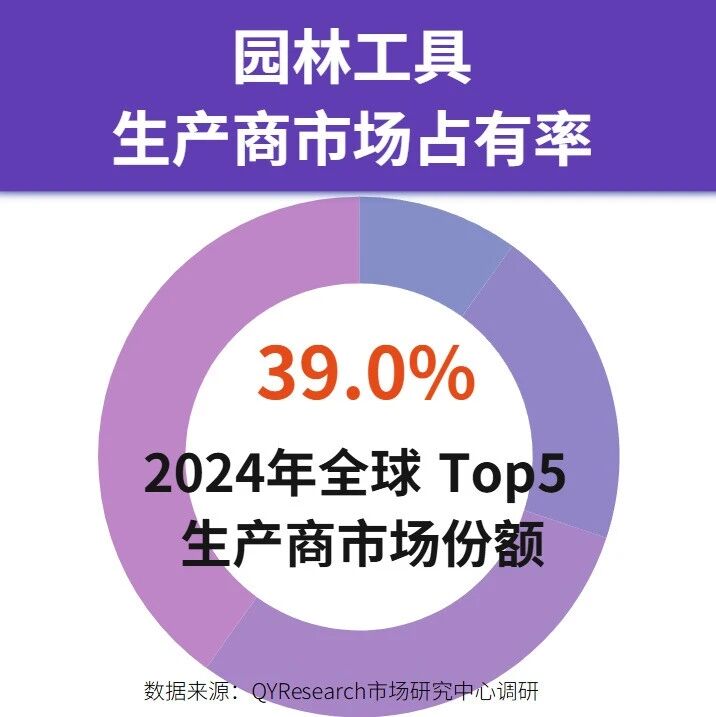
Core Viewpoint - The garden tools market is expected to experience steady growth driven by increased environmental awareness, the rise of home gardening culture, and the proliferation of smart battery-powered devices, with a projected market size of $34.9 billion by 2030 and a CAGR of 4.3% in the coming years [2][4]. Market Overview - Garden tools are specifically designed to assist in gardening, landscaping, and horticultural activities, helping users manage plants, lawns, and soil efficiently [1]. - The market is seeing a shift towards sustainable and durable tools due to global trends in sustainability and urban greening [2]. Market Trends - The global garden tools market is expanding due to the increasing popularity of home gardening, urban beautification, and sustainable lifestyles [14]. - There is a growing demand for smart, ergonomic, and battery-powered garden tools, with innovations such as lithium-ion battery technology and robotic lawn mowers gaining traction [14]. Market Drivers - Key drivers of the garden tools market include the growth of residential construction, urban greening projects, and the rise of leisure gardening and outdoor aesthetics [15]. - Increased disposable income and heightened environmental sustainability awareness are making gardening a lifestyle choice [15]. Market Size and Segmentation - The global garden tools market is projected to reach $34.9 billion by 2030, with a CAGR of 4.3% [4]. - As of 2024, the top five manufacturers hold approximately 39.0% of the market share, with major players including Husqvarna, Stihl, and Toro [9]. - In terms of product type, lawn mowers currently dominate the market with a share of about 39.8% [11]. - Offline sales represent the primary demand source, accounting for approximately 74.5% of the market [13]. Supply Chain Dynamics - The garden tools industry relies on raw materials such as carbon steel, stainless steel, aluminum, plastic, and rubber for manufacturing [17]. - Distribution occurs through retail chains, hardware stores, and e-commerce platforms, serving home gardeners, landscaping companies, and municipal departments [17].
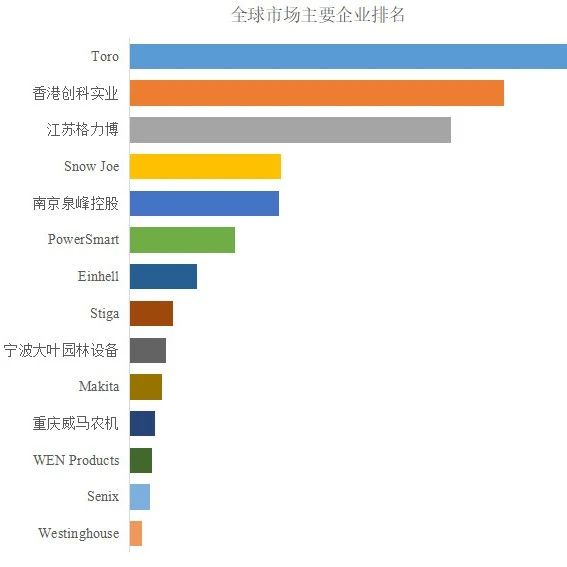
全球锂电扫雪机市场前14强生产商排名及市场占有率
QYResearch· 2025-07-23 03:54
Core Insights - The global lithium battery snow blower market is experiencing rapid growth, driven by increasing environmental awareness and the trend towards electrification, with a significant shift from traditional fuel-powered equipment to lithium battery products [1][2] - The market size is projected to reach $520.05 million by 2031, with a compound annual growth rate (CAGR) of 5.24% over the coming years [2] Market Overview - Lithium battery snow blowers are eco-friendly machines that utilize rechargeable lithium batteries as their core power source, offering zero emissions, low noise, low vibration, and low maintenance costs [1] - The demand for efficient and clean snow removal equipment is notably increasing in China, particularly due to urbanization and the development of winter sports infrastructure [1] Regional Insights - North America remains the largest consumer market for lithium battery snow blowers, driven by strong demand for yard equipment and higher consumer spending power [1] - The European market is benefiting from stringent environmental regulations that accelerate the phase-out of fuel-powered equipment, creating ample opportunities for lithium battery products [1] - The Asian market, while starting later, shows significant growth potential, especially in northern Chinese cities and regions in Japan and South Korea with heavy snowfall [1] Market Share and Competition - The top 14 manufacturers in the global lithium battery snow blower market hold approximately 78.8% of the market share, with key players including Toro, Hong Kong Karcher, Jiangsu Grebo, Snow Joe, and Nanjing QuanFeng Holdings [7] - Self-propelled snow blowers dominate the product type segment, accounting for about 65.57% of the market share [8][9] - The household segment is the largest end-user market, representing approximately 57.99% of the demand [11]
Lawn Vacuum Rental Market Trends, Demand, and Business Opportunities | Exactitude Consultancy
Globenewswire· 2025-03-20 13:50
Market Overview - The Lawn Vacuum Rental Industry is valued at approximately $450 million in 2024 and is expected to exceed $750 million by 2034, driven by urbanization, demand for outdoor maintenance solutions, and eco-friendly landscaping practices [1][43] - The industry is projected to register a compound annual growth rate (CAGR) of approximately 6% from 2025 to 2034, as consumers increasingly opt for rental models to reduce maintenance costs and access advanced equipment [2][3] Key Market Drivers - Increasing demand for outdoor maintenance services due to urbanization is leading to a significant market opportunity, with the broader lawn care industry in the U.S. projected to surpass $90 billion by 2025 [4] - The cost-effective rental model is gaining popularity, allowing consumers to access high-quality lawn vacuums without the upfront costs of ownership, particularly in the commercial landscaping sector [5] - Growing emphasis on environmental sustainability is driving demand for lawn vacuums that promote eco-friendly waste management practices [6] - Technological advancements in lawn vacuum equipment, such as smart automation and enhanced filtration, are attracting a broader customer base [7] Challenges and Restraints - Seasonal fluctuations in demand lead to lower revenue streams during off-peak months, necessitating strategic inventory management [8] - Competition from alternative lawn maintenance methods, such as traditional mowers and leaf blowers, poses a challenge for rental providers [9] - High maintenance and operational costs for rental companies can impact profitability [10] - Limited consumer awareness regarding the advantages of lawn vacuum rentals compared to conventional methods hinders market penetration [11] Growth Opportunities - Expanding target markets beyond residential consumers to include businesses, municipalities, and parks can stabilize revenue streams [12] - Integration of smart technology in rental equipment, such as IoT-enabled features, presents a major growth opportunity [13] - Adoption of subscription-based rental models can enhance customer retention and provide consistent revenue [14] - Emphasizing sustainable practices and eco-friendly solutions can attract environmentally conscious customers [15] - Strengthening digital presence and e-commerce capabilities can improve customer engagement and service efficiency [16][17] Regional Market Insights - North America holds the largest market share at approximately 45% of global revenue, driven by a well-established landscaping industry and increasing disposable incomes [18] - Europe accounts for around 30% of the market, with a projected CAGR of 4.5%, supported by stringent environmental regulations [19] - The Asia-Pacific region is the fastest-growing, holding 15% of global revenue with a CAGR of 6% through 2034, driven by urbanization and rising disposable income [20] - Latin America, while smaller at 5%, is expected to grow at a CAGR of 5%, driven by urban development and interest in outdoor aesthetics [21] Competitive Landscape - The Lawn Vacuum Rental Market features key players such as Billy Goat Industries, Husqvarna, and Toro, who are investing in R&D to enhance product offerings [25][28] - Recent developments include acquisitions and partnerships aimed at expanding market reach and improving product sustainability [28]