United Laboratories International

Search documents
Eli Lilly's next-generation obesity drug delivers strong weight loss, reduces knee pain in late-stage trial
CNBC· 2025-12-11 11:45
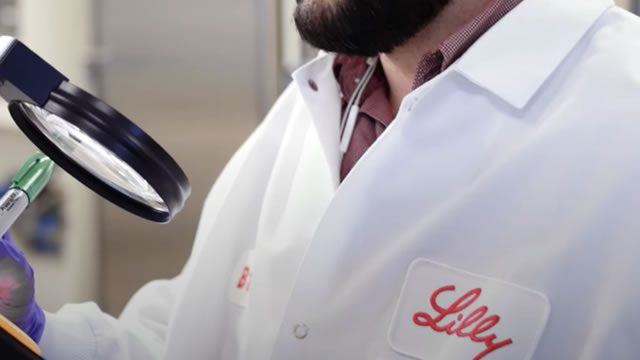
Core Insights - Eli Lilly's next-generation obesity drug, retatrutide, has shown promising results in a late-stage study, demonstrating significant weight loss and pain reduction in knee arthritis patients [1][3][5] Weight Loss Results - The highest dose of retatrutide led to an average weight loss of 23.7% over 68 weeks, including all participants, and 28.7% for those who completed the treatment [2][8] - The drug is positioned as a key component of Eli Lilly's obesity portfolio, following its existing weight loss injection Zepbound [3][4] Pain Reduction in Knee Osteoarthritis - Retatrutide also achieved a reduction in knee osteoarthritis pain by up to 62.6% on average, with over 12.5% of patients reporting complete relief from knee pain by the trial's end [5][6] Market Position and Competition - Eli Lilly aims to maintain its market share against Novo Nordisk in the expanding weight loss and diabetes drug market, which could reach approximately $100 billion by the 2030s [4] - Novo Nordisk is actively pursuing competitive options, including a newly acquired drug that employs a similar three-pronged approach to weight loss [10][11] Side Effects and Dropout Rates - Approximately 18% of patients on the highest dose discontinued treatment due to side effects, significantly higher than the 4% in the placebo group [7] - Common side effects included nausea (43%), diarrhea (33%), and vomiting (20.9%) [7] Future Trials - The study, named TRIUMPH-4, is part of a broader research effort, with seven additional phase three trials expected to report findings by the end of 2026 [8]


With Novo Nordisk's CEO Out, Wall Street Wants an American Leader
MarketBeat· 2025-06-07 12:44
Core Viewpoint - The departure of CEO Lars Fruergaard Jørgensen from Novo Nordisk A/S comes amid significant challenges in the weight loss and diabetes drug market, particularly due to increased competition from Eli Lilly and Company, which has led to a decline in Novo's market share and stock performance [1][3][11]. Group 1: CEO Departure and Company Performance - Jørgensen has been CEO since January 2017, during which Novo Nordisk achieved a total return of approximately 304%, significantly outperforming the S&P 500's 199% return [2]. - However, in the past 52 weeks, Novo's stock has declined nearly 52% from its peak on June 25, 2024, indicating recent struggles [2]. - The company's market share in the weight loss drug sector has fallen from approximately 71% to around 55% as of Q1 2025, primarily due to the rapid growth of Eli Lilly's Zepbound [4]. Group 2: Competitive Landscape - Eli Lilly's tirzepatide has shown to achieve about 47% more weight loss compared to Novo's semaglutide, contributing to Novo's loss of market share [3]. - Recent trial results for Novo's experimental drug CagriSema showed an average weight loss of 22.7%, which was below expectations and only slightly higher than tirzepatide's 22.5% [5][6]. - Following disappointing trial results, Novo's shares dropped significantly, with an 18% decline after the CagriSema announcement and over 9% after further disappointing results [6][7]. Group 3: Future Leadership and Strategy - Analysts suggest that Novo's next CEO may be an external hire, potentially an American, to better navigate the U.S. market, which accounted for 57% of Novo's sales last quarter [8][9]. - The new CEO will need to revitalize Novo's drug pipeline to compete effectively with Eli Lilly, with hopes pinned on the potential of UBT251, a "triple-agonist" drug [10]. - The upcoming earnings report on August 6 is anticipated to provide further insights into Novo's strategic plans and stock outlook [11].

Novo Nordisk is betting on a CEO shakeup to regain its weight loss drug edge over Eli Lilly
CNBC· 2025-05-19 17:12
Core Viewpoint - Novo Nordisk is facing significant challenges in the weight loss drug market, particularly as its CEO Lars Fruergaard Jorgensen steps down amid increasing competition from Eli Lilly's Zepbound, which is rapidly gaining market share [2][4][6]. Company Developments - The abrupt resignation of CEO Lars Fruergaard Jorgensen comes as Novo Nordisk's Wegovy loses ground to Eli Lilly's Zepbound, which analysts believe could lead to a market worth over $150 billion by the early 2030s [2][3]. - Novo Nordisk's stock has seen a decline of over 50% in the past year, resulting in a loss of more than $300 billion in market value, while Eli Lilly's shares have surged approximately 800% during the same period [6][5]. - The Novo Nordisk Foundation has urged for an accelerated CEO succession and greater board representation, indicating internal pressure for change [7][8]. Market Competition - Eli Lilly's Zepbound has surpassed Wegovy in new U.S. prescriptions as of early March 2024, capturing an estimated 40% of the U.S. weight loss drug market [11][10]. - Zepbound and Eli Lilly's diabetes drug Mounjaro now account for over half of U.S. prescriptions for GLP-1s, compared to the combined 46% share of Wegovy and Ozempic [10][12]. - Analysts have noted that Zepbound leads to more weight loss than Wegovy, indicating a shift in physician and patient preference [12]. Future Strategies - The new CEO will need to address the challenges of closing the gap with Eli Lilly, launching new weight loss drugs before Wegovy's patents expire, and managing the impact of Medicare drug price negotiations [3][9]. - Novo Nordisk has filed for U.S. approval of an oral version of semaglutide, which could tap into a market projected to be worth $50 billion in the coming years [15][16]. - The company is also exploring partnerships for small-molecule obesity drugs, although these products are still in early development and years away from market entry [21][22]. Strategic Shifts - Despite the CEO transition, Novo Nordisk maintains that its strategy remains unchanged, focusing on its strong product portfolio [19][20]. - Recent licensing deals suggest a potential pivot towards oral small molecule solutions for obesity, indicating a shift from its traditional peptide-based therapeutics [20][21]. - Novo Nordisk's new drug acquisition from United Laboratories International could compete with Eli Lilly's retatrutide, which is in late-stage clinical trials, potentially entering the market sooner [23].
Healthy Returns: Novo Nordisk scoops up Chinese obesity drug to compete with Eli Lilly
CNBC· 2025-03-25 16:59
Core Viewpoint - Novo Nordisk is strategically targeting its competitor Eli Lilly by acquiring rights to an experimental obesity drug, UBT251, from United Laboratories International for up to $2 billion, indicating a competitive move in the obesity treatment market [2][3][7]. Financial Details - The deal involves an upfront payment of $200 million, with potential milestone payments reaching up to $1.8 billion, alongside tiered royalties [3]. Drug Development and Mechanism - UBT251 is in early development for treating obesity and Type 2 diabetes, utilizing a three-pronged approach by targeting GLP-1, GIP, and glucagon, which may enhance weight loss and health benefits compared to existing treatments [4][5][6]. Competitive Landscape - Eli Lilly's retatrutide, a competitor to UBT251, has shown significant weight loss results in trials, with patients losing an average of 24.2% of their body weight [7][8]. - Eli Lilly's drug could potentially reach the market before Novo Nordisk's UBT251, as it is further along in clinical trials [9]. Clinical Trial Results - Initial phase one trial results for UBT251 indicated a 15.1% average weight loss after 12 weeks, compared to 1.5% for the placebo group, suggesting promising efficacy [10][11]. - The safety profile of UBT251 aligns with other gut-hormone therapies, with mild to moderate gastrointestinal side effects being the most common [10]. Strategic Positioning - The acquisition of UBT251 may reflect Novo Nordisk's strategy to reposition itself following disappointing late-stage data on its other obesity drug, CagriSema [11].