Autonomous Vehicles (AVs)

Search documents
Musk's Tesla Robotaxi Is Cheaper Than Waymo, But Longer Waiting Times And More Human Drivers Are A Drag, Analysts Say - Tesla (NASDAQ:TSLA)
Benzinga· 2026-02-26 11:54
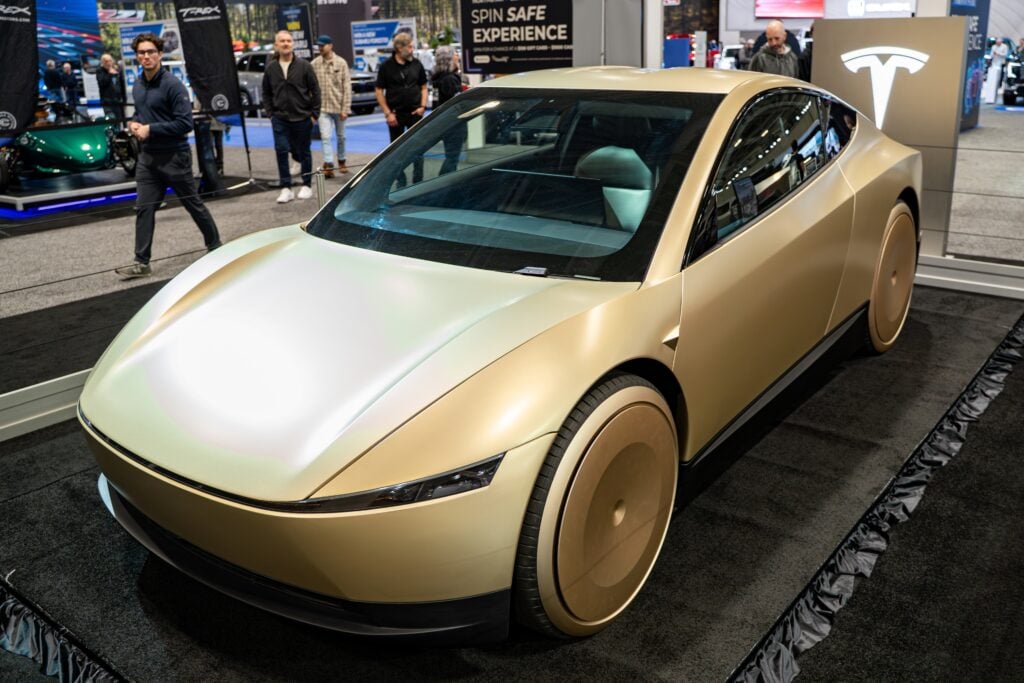
Tesla Inc.‘s (NASDAQ:TSLA) Robotaxi in Austin is cheaper when compared to its rival, Alphabet Inc.'s (NASDAQ:GOOGL) (NASDAQ:GOOG) Waymo.2x Cheaper Than RivalIn a new research note released on Thursday, analysts from investment bank Jeffries analyzed ride-hailing services from Tesla and Waymo, taking over 15 rides in a Tesla and over 19 rides in Waymo. Analysts found that Tesla offered just 2 of the 15 rides without a safety driver and that they also failed to book a ride due to unavailability over 25% of t ...



TechCrunch Mobility: Rivian’s savior
Yahoo Finance· 2026-02-15 17:05
Group 1 - Rivian's fourth-quarter and full-year earnings highlight the importance of its technology joint venture with Volkswagen Group, which is expected to generate an additional $2 billion in 2026 [3][6] - The cost of goods sold (COGS) per unit for Rivian's automotive portfolio decreased from $110,400 in 2024 to $100,900 in 2025, indicating improved efficiency and reduced losses per vehicle sold [4] - Rivian plans to launch the lower-cost R2 SUV in June 2026, which is anticipated to significantly impact production costs and sales volume [5][6] Group 2 - Rivian expects to deliver between 62,000 and 67,000 vehicles in 2026, representing a potential increase of up to 59% from the 42,247 vehicles delivered in 2025 [6][7] - The positive earnings guidance led to a 27% increase in Rivian's stock price following the earnings report [7] Group 3 - Lyft is currently holding approximately $1.8 billion in cash and has initiated a $1 billion share repurchase program, raising questions about its investment strategy in the autonomous vehicle (AV) sector compared to competitors like Uber [9]

Lyft CEO Fires Back As Stock Tanks: 'What Do They Want?'
Benzinga· 2026-02-11 20:13
Core Insights - Lyft's CEO David Risher expressed confusion over the disconnect between the company's strong performance and investor expectations during a CNBC interview [1][2] - Risher highlighted a tension between long-term strategic goals and short-term market reactions, indicating a focus on structural transformation rather than immediate stock performance [2] Financial Performance - Lyft achieved record bookings of $5.1 billion, marking an all-time high [4] - The company reported a net income of $2.8 billion, primarily due to a tax asset release [4] - Lyft generated over $1.1 billion in free cash flow projected for 2025 [4] Strategic Focus - Lyft is prioritizing the development of autonomous vehicles (AVs) and aims to position itself as a leader in fleet management rather than just a ride-hailing service [3] - The company is implementing a hybrid network strategy and has established partnerships with Waymo and Baidu, with plans to launch robotaxis in Nashville by 2026 [3][4] - Lyft's Flexdrive subsidiary is being positioned as essential for maintenance, charging, and depot operations for its AV partners [4]

Lyft(LYFT) - 2025 Q4 - Earnings Call Transcript
2026-02-10 23:02
Financial Data and Key Metrics Changes - In Q4 2025, Lyft reported accelerated gross bookings growth of 19% year-over-year, achieving record profitability with over $1 billion in cash flow [6][12] - The company closed the year with 51.3 million riders and 946 million rides, indicating a strong operational performance [6][12] - Adjusted EBITDA margin is targeted at 4% with a goal of over $1 billion in free cash flow by 2027 [8][53] Business Line Data and Key Metrics Changes - The rideshare business saw active riders grow by 18% year-over-year, marking a record high [43] - Lyft's new product, Lyft Teen, aims to capture the teen market, which consists of approximately 40 million potential users in the U.S. [8] - Lyft Ads has reached a run rate of $100 million, showcasing significant growth in the advertising segment [17] Market Data and Key Metrics Changes - Lyft has expanded its operations into Europe and is focusing on the autonomous vehicle (AV) market, which is expected to significantly increase the total addressable market (TAM) [7][19] - The company is also integrating partnerships, such as with DoorDash and United Airlines, to enhance its service offerings and customer engagement [14][16] Company Strategy and Development Direction - Lyft's strategy emphasizes customer obsession, operational excellence, and expanding partnerships to drive growth [12][14] - The company is focusing on margin expansion, particularly in high-value modes and through its acquisition of FREENOW [14][55] - Lyft aims to build a hybrid network that combines traditional rideshare with AVs, which is expected to lower costs and expand market reach [30][31] Management's Comments on Operating Environment and Future Outlook - Management expressed confidence in the company's ability to navigate competitive pressures and highlighted the importance of maintaining service quality [56][59] - The anticipated demand increase in California is linked to recent insurance reforms, which are expected to enhance rider behavior and overall demand in the latter half of 2026 [65][67] - Management remains optimistic about the long-term growth potential of the rideshare market, particularly with the integration of AVs [19][30] Other Important Information - Lyft is actively working on loyalty programs to enhance customer retention, with a focus on business travelers and consumer cashback initiatives [68][70] - The company is addressing operational efficiencies and cost discipline to ensure sustainable growth and profitability [55] Q&A Session Summary Question: What worked this year on the product innovation side? - Management highlighted impressive gross bookings growth and record driver hours, attributing success to customer obsession and operational excellence [12][14] Question: Can you discuss the guidance for Q1 and margin expectations? - Management indicated strong growth in gross bookings, with profitability expected to remain stable year-over-year despite previous non-recurring items [26][27] Question: What is the long-term opportunity for taxis? - Management noted that integrating taxis into the platform adds supply and enhances market presence, particularly in regulated markets like Europe [47][48] Question: How is Flexdrive contributing to cost efficiencies? - Management explained that Flexdrive is expected to provide significant advantages in fleet management and operational efficiency, particularly as AVs become more prevalent [34][35] Question: What are the implications of AVs on the rideshare market? - Management emphasized that AVs will expand the TAM and reduce costs over time, positioning Lyft favorably in the evolving market landscape [30][31] Question: How is Lyft addressing competitive intensity in markets with AVs? - Management stated that Lyft's pricing strategy remains competitive, focusing on service levels and customer experience to differentiate from AV competitors [56][59]
Uber(UBER) - 2025 Q4 - Earnings Call Transcript
2026-02-04 14:02
Financial Data and Key Metrics Changes - In Q4 2025, Uber achieved a gross bookings increase of 22% year-over-year, reaching an annual run rate of 15 billion trips and over 200 million monthly active users [4] - The company generated $8.7 billion in adjusted EBITDA, representing a 35% margin, and $9.8 billion in free cash flow, up 42% year-over-year [4] Business Line Data and Key Metrics Changes - The introduction of new products, such as the Moto product, has significantly contributed to user growth by attracting new segments [29] - The Reserve product has shown strong performance, particularly among suburban users seeking reliability for time-sensitive trips [30] Market Data and Key Metrics Changes - 60% of Uber's mobility gross bookings are generated internationally, indicating a strong presence outside the U.S. [23] - The company noted that growth in less dense markets is approximately 1.5-2 times faster than in major cities, contributing to overall user growth [31] Company Strategy and Development Direction - Uber is focusing on six strategic areas, including autonomous vehicles (AVs), which are seen as a multi-trillion-dollar opportunity [4][5] - The company aims to leverage its global scale and sophisticated marketplace technology to enhance its AV strategy and partnerships with various AV providers [15][41] Management's Comments on Operating Environment and Future Outlook - Management expressed confidence in the growth potential of AVs, viewing them as a net positive for the overall market rather than a competitive threat [14] - The company is optimistic about maintaining user growth momentum, with a year-over-year increase in monthly active users from 14% to 18% [32] Other Important Information - Prashanth Mahendra-Rajah will step down as CFO, with Balaji Krishnamurthy taking over the role, indicating a transition in leadership [7][10] - The company is committed to returning 50% of free cash flow to shareholders while also making strategic investments in growth opportunities [42][43] Q&A Session Summary Question: Impact of AV ramps from competitors on market share and profitability - Management views the introduction of AVs as a growth driver for markets, with bookings accelerating in cities like San Francisco and Austin [14][15] Question: Strategic priorities for maintaining user growth momentum - The strategy includes introducing new products, targeting different demographics, and expanding into less dense markets [29][30] Question: Concerns about AV technology leading to a winner-takes-most scenario - Management believes that the AV market will have multiple suppliers and that Uber's extensive network will provide a competitive advantage [38][41] Question: Capital allocation philosophy regarding free cash flow and investments - The company plans to balance reinvestments in growth with returning cash to shareholders, maintaining aggressive stock buybacks [42][43] Question: Factors driving acceleration in U.S. trips and gross bookings - Consistent pricing and insurance reforms are expected to enhance demand elasticity, contributing to growth [49][50] Question: Stages and timeline for deploying AVs on Uber's network - Initial deployments will focus on meeting consistent demand, with plans to scale as OEMs ramp production [75][76]

Uber(UBER) - 2025 Q4 - Earnings Call Transcript
2026-02-04 14:02
Financial Data and Key Metrics Changes - In Q4 2025, Uber achieved a gross bookings increase of 22% year-over-year, reaching an annual run rate of 15 billion trips and over 200 million monthly active users [4] - The company generated $8.7 billion in adjusted EBITDA, representing a 35% margin, and $9.8 billion in free cash flow, up 42% year-over-year [4] Business Line Data and Key Metrics Changes - The introduction of new products, such as the Moto product, has significantly contributed to user growth by attracting new segments [29] - The Reserve product has shown higher margins and has successfully introduced new customers, particularly in suburban areas [30] Market Data and Key Metrics Changes - 60% of Uber's mobility gross bookings are generated internationally, indicating a strong presence outside the U.S. [23] - The company noted that growth in less dense markets is approximately 1.5-2 times faster than in major cities, contributing to overall growth [31] Company Strategy and Development Direction - Uber is focusing on six strategic areas, including autonomous vehicles (AVs), which are seen as a multi-trillion-dollar opportunity [4][5] - The company aims to leverage its global scale and sophisticated marketplace technology to enhance its AV strategy and partnerships with various AV manufacturers [15][16] Management's Comments on Operating Environment and Future Outlook - Management expressed confidence in the growth potential of AVs, viewing them as a net positive for the overall market rather than a competitive threat [14] - The company is optimistic about maintaining user growth momentum, with a year-over-year increase in monthly active users from 14% to 18% [32] Other Important Information - Prashanth Mahendra-Rajah will step down as CFO, with Balaji Krishnamurthy taking over the role, indicating a transition in leadership [7][10] - The advertising business has exceeded previous growth targets, with potential for further expansion in delivery advertising [82] Q&A Session Summary Question: Impact of AVs on market share and profitability - Management views the introduction of AVs as a growth driver, with bookings in cities like San Francisco accelerating despite competition [14] Question: Strategic priorities for maintaining user growth - The strategy includes introducing new products, targeting different demographics, and expanding into less dense markets [29][30] Question: Capital return philosophy and free cash flow commitment - The company plans to maintain a 50% free cash flow return to shareholders while also investing in growth opportunities [43] Question: Factors driving acceleration in U.S. trips and gross bookings - Consistent pricing and insurance reforms are expected to enhance demand elasticity, contributing to growth [49] Question: Stages of AV deployment and scaling - Initial deployments will focus on consistent supply, with future scaling dependent on OEM production capabilities [75][76] Question: Long-term potential of delivery advertising - The advertising business is expected to grow significantly, with enterprise advertising catching up to SMBs [82]
Uber(UBER) - 2025 Q4 - Earnings Call Transcript
2026-02-04 14:00
Financial Data and Key Metrics Changes - In Q4 2025, Uber achieved a gross bookings increase of 22% year-over-year, reaching an annual run rate of 15 billion trips and over 200 million monthly active users [5][6] - The company generated $8.7 billion in adjusted EBITDA, representing a 35% margin, and $9.8 billion in free cash flow, up 42% year-over-year [5][6] - For the full year 2025, Uber maintained over 20% annual gross bookings growth for the fifth consecutive year [5] Business Line Data and Key Metrics Changes - The introduction of new products, such as the Moto product, has significantly contributed to user growth by attracting new segments [30] - The Reserve product has shown strong performance, particularly among suburban users seeking reliability for time-sensitive trips [31] - The membership program, Uber One, has grown by 55% year-over-year, enhancing customer retention and engagement [36] Market Data and Key Metrics Changes - 60% of Uber's mobility gross bookings are generated internationally, indicating a strong presence outside the U.S. [23] - Growth in less dense markets is approximately 1.5-2 times faster than in major cities, contributing to overall user growth [32] Company Strategy and Development Direction - Uber is focusing on six strategic areas, including autonomous vehicles (AVs), which are seen as a multi-trillion-dollar opportunity [5][6] - The company aims to leverage its global scale and sophisticated marketplace technology to enhance its AV strategy and partnerships with various AV manufacturers [17][42] - Uber's capital allocation strategy prioritizes reinvestment in core business opportunities while maintaining a commitment to returning 50% of free cash flow to shareholders [45][46] Management's Comments on Operating Environment and Future Outlook - Management expressed confidence in the growth potential of AVs, viewing them as a net positive for the overall market rather than a competitive threat [14][16] - The company anticipates continued user growth, with a year-end MAPC growth of 18% year-over-year, indicating strong momentum heading into 2026 [33] - Management highlighted the importance of maintaining price consistency in the U.S. market to enhance long-term demand elasticity [51] Other Important Information - Prashanth Mahendra-Rajah will step down as CFO, with Balaji Krishnamurthy taking over the role, indicating a transition in leadership [7][8] - The company is actively working on partnerships and investments in AV technology to ensure a competitive edge in the evolving mobility landscape [54][56] Q&A Session Summary Question: Impact of AVs on market share and profitability - Management views the introduction of AVs as a growth driver, with bookings in major cities accelerating despite competition [14][16] Question: Strategic priorities for maintaining user growth - The focus is on introducing new products, targeting different demographics, and expanding into less dense markets [30][32] Question: Willingness to deploy capital into AV fleets - Management is committed to investing in AV technology while ensuring profitable economics and maintaining a healthy financing ecosystem [53][56] Question: Factors driving acceleration in U.S. trips and gross bookings - Consistent pricing and a barbell strategy targeting both low-end and high-end markets are key factors for growth [51][52] Question: Stages of AV deployment and scaling - Initial focus will be on achieving consistent baseload supply from AVs, with scaling dependent on OEM production capabilities [75][76]
GM(GM) - 2025 Q4 - Earnings Call Presentation
2026-01-27 13:30
Financial Performance - GM reported revenue of $185.0 billion for CY 2025[39], and $45.3 billion for Q4 2025[43] - The company's EBIT-adjusted was $12.7 billion for CY 2025[39], with a margin of 6.9%[39], and $2.8 billion for Q4 2025[43], with a margin of 6.3%[43] - Adjusted automotive free cash flow was $10.6 billion for CY 2025[39] and $2.8 billion for Q4 2025[43] - EPS-diluted-adjusted was $10.60 for CY 2025[39] and $2.51 for Q4 2025[43] Sales and Market Share - GM achieved 1 in total U S sales with 2.9 million deliveries in CY 2025, up 6% year-over-year[12, 109] - U S market share grew by 0.6 percentage points to 17.2% in CY 2025[12] - Global deliveries increased by 0.2 million year-over-year to 6.2 million units in CY 2025[47] Strategic Initiatives and Investments - GM invested $9.2 billion in capital projects and repurchased $6.0 billion of stock in CY 2025[13] - Deferred revenue from OnStar services was $5.4 billion at the end of 2025, up 65% year-over-year[22] - The company expects EV losses to improve by $1.0-1.5 billion due to right-sizing EV capacity[34] 2026 Guidance - GM projects EBIT-adjusted to be in the range of $13.0-15.0 billion for 2026[34] - Adjusted automotive free cash flow is expected to be $9.0-11.0 billion for 2026[34] - EPS-diluted-adjusted is guided to be $11.00-13.00 for 2026[34]

The Future of Physical AI is Here
NVIDIA· 2026-01-06 17:33
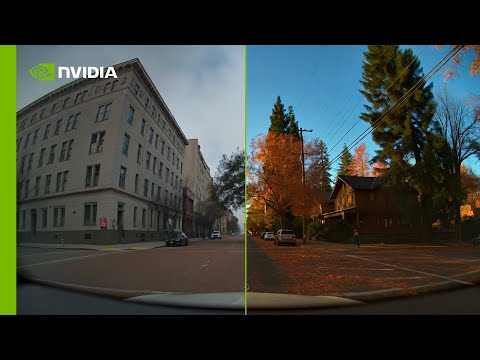
The chat GPT moment for physical AI is nearly here, but the challenge is clear. The physical world is diverse and unpredictable. Collecting real world training data is slow and costly and it's never enough.The answer is synthetic data. It starts with NVIDIA Cosmos, an open Frontier World Foundation model for physical AI. Pre-trained on internet scale video, real driving and robotics data, and 3D simulation, Cosmos [music] learned a unified representation of the world.Able to align language, images, 3D, and ...
2026 展望:在汽车行业不确定的前路中导航-Autos & Shared Mobility -2026 Outlook Navigating the Auto Industry's Uncertain Road Ahead
2025-12-08 02:30
Summary of the Auto Industry and Shared Mobility Conference Call Industry Overview - The report focuses on the **North American Auto Industry** and **Shared Mobility** for the year 2026, highlighting a cautious outlook due to an anticipated 'EV Winter' expected to persist through 2026 [1][4][10]. Key Points and Arguments 1. **Sales Forecasts**: - The 2026 US Auto sales forecast is set at **15.9 million** units, reflecting a **1.0% year-over-year decline**. This includes **14.9 million** Internal Combustion Engine (ICE) vehicles (+1.0% y/y) and **1.0 million** Electric Vehicles (EVs) (-20% y/y) [5][11][25]. 2. **Market Dynamics**: - The **2025 US Auto sales** showed unexpected resilience, driven by pre-buying before tariff implementations and the expiration of consumer tax credits for battery electric vehicles (BEVs) [4][10]. - Factors contributing to the cautious outlook include: - Continued lack of affordability due to the expiration of EV tax credits and rising average transaction prices (ATPs) [5][10]. - Tightened credit standards, particularly affecting subprime borrowers, although some modest loosening has been noted recently [5][10]. - Inflationary pressures from tariffs expected to impact consumer prices through the first quarter of 2026 [5][10]. 3. **Consumer Behavior**: - There is pent-up demand in the market, with US Auto SAAR still below pre-COVID levels and an aging car parc averaging nearly **13 years** [5][10]. - Rate cuts may marginally improve affordability for consumers [5][10]. 4. **Scenario Analysis**: - **Bull Case**: Forecasts a SAAR of **17.5 million** (+8.7% y/y) if consumer confidence improves and OEMs focus on core ICE/hybrid offerings [12][25]. - **Bear Case**: Projects a SAAR of **14.5 million** (-9.9% y/y) if credit availability tightens further and consumer affordability worsens [12][25]. 5. **Stock Ratings Changes**: - **General Motors (GM)** upgraded to **Overweight** with a target price of **$90**, citing strong execution and capital allocation strategies [8][48]. - **Tesla (TSLA)** downgraded to **Equal-weight** with a target price of **$425**, reflecting high expectations and near-term headwinds [8][51]. - **Rivian (RIVN)** and **Lucid (LCID)** downgraded to **Underweight** due to negative EV outlooks [8][54]. Additional Insights - The report emphasizes the importance of monitoring policy updates regarding tariffs and consumer health indicators such as unemployment and inflation [12][13]. - The **EV market** is expected to face significant headwinds, with a projected **20% decline in volume** and a penetration rate of **6.5%** for BEVs in 2026 [10][31]. - Companies with diversified sourcing and regional manufacturing strategies are seen as better positioned amid geopolitical tensions and market shifts [47]. Conclusion - The North American auto industry is navigating a complex landscape with mixed signals for 2026. While there are opportunities for companies with strong execution and adaptability, significant challenges remain, particularly in the EV segment. Investors are advised to remain selective and focus on companies that can effectively manage costs and capitalize on market dynamics.