
Rideshare

Search documents
Jim Cramer Explains Why “Uber Stock Caught Fire Earlier This Week”
Yahoo Finance· 2026-03-20 17:19
Group 1 - NVIDIA is expanding its autonomous driving partnership with Uber, planning to launch a global fleet of self-driving cars using NVIDIA software starting in San Francisco and Los Angeles in the first half of next year [2] - Uber is recognized as the number one rideshare platform and the number two food delivery app, with potential growth in the robotaxi sector through its own vehicles or partnerships [1] - The recent developments in Uber's self-driving strategy, now endorsed by NVIDIA, have positively impacted its stock performance, indicating a strong market position [1][2] Group 2 - Uber Technologies, Inc. operates technology platforms for mobility, delivery, and freight services, including ridesharing and food delivery [3] - There is a discussion about the investment potential of Uber compared to certain AI stocks, suggesting that some AI stocks may offer greater upside potential and less downside risk [4]

Lyft price target lowered by Jefferies on US rideshare slowdown
Proactiveinvestors NA· 2026-03-19 17:27
Company Overview - Proactive provides fast, accessible, informative, and actionable business and finance news content to a global investment audience [2] - The news team operates from key finance and investing hubs including London, New York, Toronto, Vancouver, Sydney, and Perth [2] Expertise and Focus Areas - The company specializes in medium and small-cap markets while also covering blue-chip companies, commodities, and broader investment stories [3] - Proactive delivers news and insights across various sectors including biotech and pharma, mining and natural resources, battery metals, oil and gas, crypto, and emerging digital and EV technologies [3] Technology Adoption - Proactive is recognized for its forward-looking approach and enthusiastic adoption of technology to enhance workflows [4] - The company utilizes automation and software tools, including generative AI, while ensuring all content is edited and authored by humans [5]



Uber-Nvidia deal boosts Bank of America's confidence in rideshare app's AV future
Proactiveinvestors NA· 2026-03-17 17:41
Company Overview - Proactive is a financial news publisher that provides fast, accessible, informative, and actionable business and finance news content to a global investment audience [2] - The company operates with a team of experienced and qualified news journalists, ensuring independent content production [2] Market Focus - Proactive specializes in medium and small-cap markets while also covering blue-chip companies, commodities, and broader investment stories [3] - The news team delivers insights across various sectors, including biotech and pharma, mining and natural resources, battery metals, oil and gas, crypto, and emerging digital and EV technologies [3] Technology Adoption - Proactive is recognized for its forward-looking approach and enthusiastic adoption of technology to enhance workflows [4] - The company utilizes automation and software tools, including generative AI, while ensuring that all content is edited and authored by humans [5]

Uber-Nvidia deal boosts Bank of America’s confidence in rideshare app’s AV future
Yahoo Finance· 2026-03-17 17:37
Core Insights - Bank of America has increased its confidence in Uber's medium-term autonomous vehicle (AV) supply outlook following the expanded partnership with Nvidia [2] - Uber and Nvidia plan to launch Level 4 robotaxis in 28 global cities by 2028, starting with Los Angeles and San Francisco in the first half of 2027 [3] - The partnership is expected to shift the US rideshare market with multiple AV partners operating in key cities by 2027 [4] AV Supply Outlook - The collaboration with Nvidia allows Uber to potentially purchase and lease vehicles, while also encouraging other providers like Waymo and Tesla to integrate their vehicles into Uber's network [5] - Nvidia's updates to its L4 autonomy stack, including the Halos OS safety framework and Alpamayo 1.5 AI model, aim to enhance in-cabin intelligence and support mobility providers [5] Stock Performance - Following the news, Uber's shares increased by almost 6%, trading at $79, while Nvidia's stock remained relatively unchanged at $183 [7] - Bank of America reiterated its 'Buy' rating on Uber, citing improved AV supply prospects as a potential driver for stock multiple expansion [6]

3 Rebound Candidates With Technical Tailwinds
Yahoo Finance· 2026-03-13 21:16
Retail Sector - The retail sector, particularly companies reliant on cheap imports like Wayfair Inc., faced significant challenges due to tariffs, but recent rulings have provided relief opportunities for these companies [1] Technical Analysis - Technical indicators such as MACD and RSI have identified three stocks that may be on the verge of a rebound, suggesting potential for reversal in their performance [2][6] - The RSI measures price changes over a 14-day period, indicating overbought conditions above 70 and oversold conditions below 30, which can signal trend reversals [3] - The MACD uses two exponential moving averages to assess momentum and identify trend shifts, with bullish signals indicated when the signal line crosses above the MACD line [4] Market Volatility - March has been characterized by volatility, influenced by ongoing geopolitical tensions, which may persist into April, making technical analysis particularly valuable during such times [5] - Investors often seek low-beta sectors and dividend-paying stocks during volatile periods, but opportunities also arise for those willing to engage in technical analysis [5] Stock Specifics - Lyft Inc. has seen its shares decline over 30% this year, but the $13 price level has shown resilience, potentially serving as a support level for future bullish momentum, with analysts projecting a price target of $19.63, indicating over 50% upside [8] - Caesars Entertainment Corp. is experiencing renewed interest following a $7 billion takeover bid, which values the company at $34 per share, a significant premium over its current price of around $28 [10] - Caesars reported $2.9 billion in revenue for Q4 2025, reflecting a 4.2% year-over-year growth, surpassing analyst expectations despite competition from online sportsbooks [11] - The stock of Caesars has increased over 55% in the last month, driven by multiple technical indicators signaling a bullish trend reversal, including crossovers above key moving averages [13]
Middle East Escalation and Hawkish Fed Shift Weigh on Global Markets
Stock Market News· 2026-03-12 00:38
Key TakeawaysMiddle East Tensions Surge: Iran launched direct missile and drone attacks against the UAE and Bahrain, targeting critical energy infrastructure including fuel tanks at the Muharraq facility.Hawkish Fed Pivot: US Fed Fund Futures have sharply repriced, with markets now expecting only 26 basis points of interest rate cuts for the remainder of 2026.Hedge Fund Drawdown: JPMorgan Chase & Co. (JPM) reports that hedge funds are suffering their worst drawdown since April as volatility linked to the co ...


2026 Travel Reset: Gen Z Maps The Future of Travel, Hotel, Airlines & Rideshare
Prnewswire· 2026-03-06 04:43
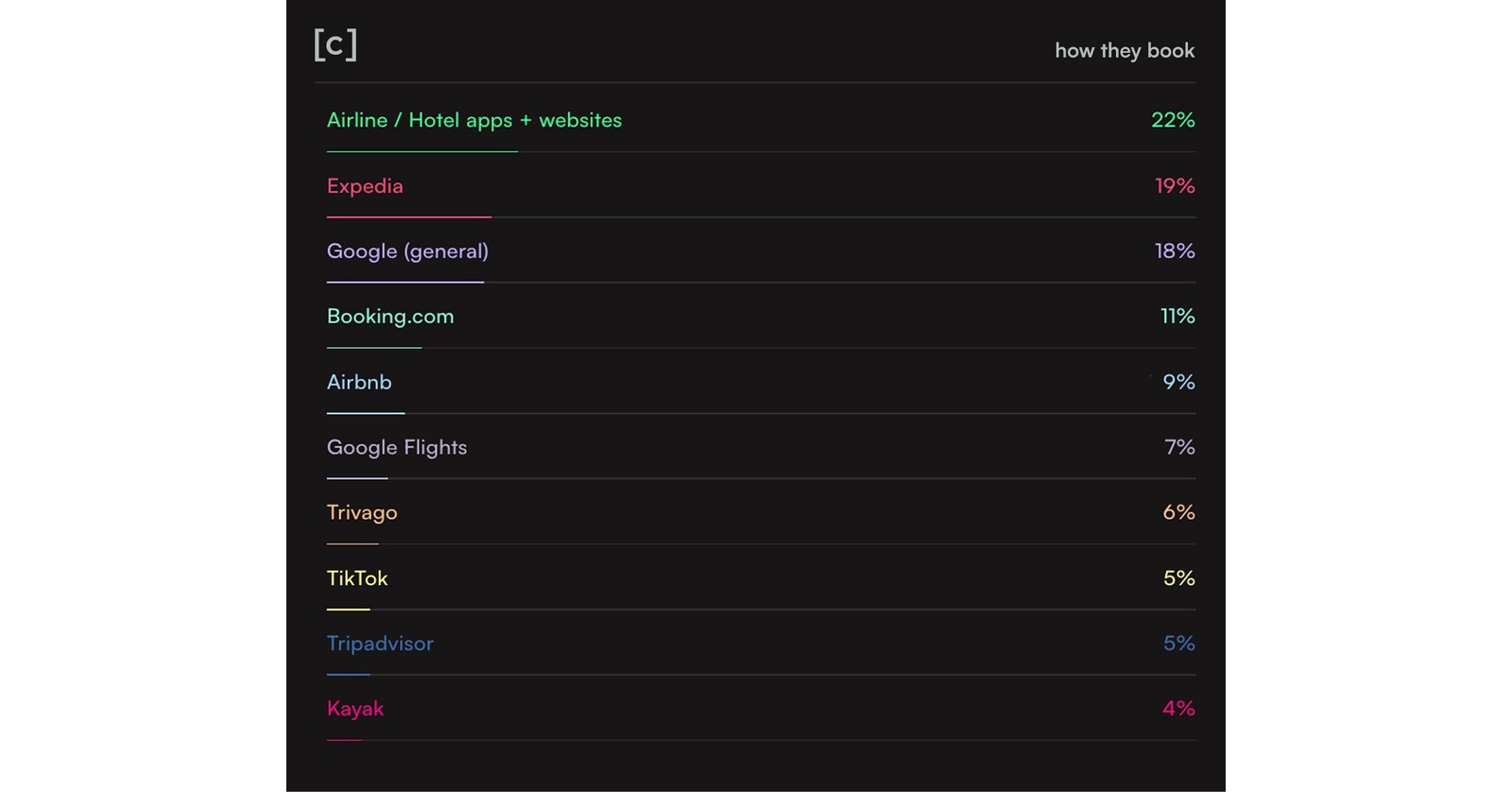
Core Insights - Gen Z prioritizes experiences over traditional travel luxuries, focusing on making memories and spending on activities rather than accommodations [1] - The report highlights a shift in travel booking behavior, with 25% of Gen Z bypassing Online Travel Agencies (OTAs) to book directly with airlines and hotels [1] - Cafeteria's insights platform provides real-time data on Gen Z preferences, helping brands understand and connect with this demographic [1] Travel Preferences - Japan is a favored destination for Gen Z, appreciated for its culture, food, and affordability [1] - Gen Z travelers tend to save on flights to allocate more budget for food and experiences, indicating a strategic approach to travel spending [1] - The majority of Gen Z travelers prefer Uber for airport transfers, with 73% opting for rideshare services upon arrival [1] Booking Behavior - The transition from parental booking to self-booking is gradual, with different age groups showing varying levels of independence in travel planning [1] - Google Maps is the primary tool for hotel searches, with Gen Z focusing on location, cleanliness, and views when selecting accommodations [1] Airline Preferences - Delta, JetBlue, and United are the most favored airlines among Gen Z, with specific preferences for legroom, reliability, and customer service [1] - Loyalty is influenced by the retention of perks and operational reliability, with negative experiences leading to brand switching [1] Customer Experience - Warmth and friendliness from travel staff significantly impact Gen Z's perception of customer service, with memorable experiences often linked to staff interactions [1]
Uber and Joby Aviation Team Up: Game Changer or Hype?
Yahoo Finance· 2026-03-04 23:30
Core Insights - Joby Aviation is focused on developing electric vertical takeoff and landing (eVTOL) aircraft for urban air mobility, aiming to provide zero-emission aerial rideshare services [4][5] - The company has formed a strategic partnership with Uber, allowing users to book Joby’s all-electric air taxis directly through the Uber app [6][8] Financial Performance - Joby reported Q4 earnings with an EPS of -14 cents, beating analyst expectations of -20 cents, and revenue of $30.84 million, surpassing expectations of $16.88 million [7] - The company experienced a year-over-year revenue growth of nearly 5,507%, largely due to the acquisition of Blade Air Mobility's passenger business [9] - Despite the revenue beat, Joby is expected to see a decrease in full-year earnings from -69 cents to -70 cents per share next year [7] Future Outlook - Joby is not projected to reach profitability until 2029 to 2031, as it continues to invest heavily in scaling manufacturing and obtaining FAA certification [8] - The company has an annual cash burn rate of approximately $500 million, indicating significant ongoing financial commitments [8]

Are Uber and Joby Aviation Stocks About to Take Off Based on Their Recent Announcement?
The Motley Fool· 2026-03-04 09:53
Core Viewpoint - Uber Technologies has announced a partnership with Joby Aviation to launch an Uber Air taxi service in Dubai, marking its entry into the air taxi business, although immediate revenue from this deal is not expected [1][4]. Uber Technologies - Uber operates established businesses in mobility, delivery, and freight, generating a combined revenue of $52 billion in 2025, which is an 18% increase year over year [3]. - The company's net income was reported at $10 billion, slightly higher than the $9.9 billion in 2024, but it did not report earnings from outside investments in the last year [6]. - Uber's stock struggles have led to a P/E ratio of 16, making it potentially attractive as it develops new revenue sources in air taxis [7][12]. Joby Aviation - Joby Aviation owns eVTOL air taxis that will provide rides arranged by Uber, but it is at a different development stage compared to Uber [8]. - Joby generated $53 million in revenue in 2025, a significant increase from $136,000 in 2024, but it reported a net loss of $930 million, indicating a long path to profitability [10]. - The stock trades at around 10 times its book value, which may attract investment despite the lack of earnings and modest revenue [11]. Investment Outlook - Both Uber and Joby stocks have the potential to rise, with Uber being an established business likely to benefit from the partnership as a catalyst for its stock [12]. - Joby is considered a speculative investment at this stage, appealing to those who believe in its long-term potential despite short-term volatility [13].

Lyft (NasdaqGS:LYFT) FY Conference Transcript
2026-02-26 20:02
Summary of Lyft's Conference Call Company Overview - **Company**: Lyft - **Industry**: Rideshare Key Points and Arguments 2025 Performance Highlights - Lyft achieved approximately **$18.5 billion** in Gross Bookings and over **$500 million** in adjusted EBITDA in 2025, marking a year of record active riders, driver hours, and profitability [3][4] - The company expanded its portfolio significantly, including partnerships with United and DoorDash, and acquisitions of FREENOW and TBR Global Chauffeuring, enhancing its high-value offerings [5][6] Market Opportunities - The U.S. rideshare market is perceived as mature, but Lyft identifies a **$160 billion** market of personal vehicle trips, with rideshare currently fulfilling a small fraction, indicating substantial growth potential [9][10] - Lyft's strategy includes leveraging partnerships for rider acquisition and converting new riders into frequent users [10] Growth Constraints - Currently, there are no significant constraints on growth; consumer strength remains robust, and no trade-down behavior has been observed [11] Product Roadmap and Innovation - Lyft emphasizes its tradition of innovation, with unique offerings like the driver earnings commitment and new products aimed at enhancing rider experience [13][14] - The company is focusing on higher-value modes and revamping its business travel rewards program, targeting **50% year-on-year growth** in specific segments [15][16] Financial Targets and Growth Strategy - Lyft aims for **$25 billion** in Gross Bookings by 2027, with a focus on increasing active riders and ride frequency as primary growth drivers [17][18] - The company anticipates that Gross Bookings will grow faster than ride volume in the near term due to pricing dynamics and portfolio diversification [20][21] Seasonal and Weather Impacts - Q1 is typically a lower season for rideshare due to weather conditions, but Lyft expects strong bookings growth despite these seasonal challenges [22][23] Insurance Reform and Cost Management - Lyft has benefited from recent insurance reforms in California, leading to lower prices for riders and increased rides for drivers, which the company plans to replicate in other markets [30][31][33] Under-Penetrated Markets - Lyft identifies lower-scale markets (outside top 39-40) as a significant growth area, representing about two-thirds of the overall market size [35][36] International Expansion - The acquisition of FREENOW allows Lyft to enter **9 new European markets**, focusing on taxi services and business users, with synergies expected in marketplace management and advertising [42][43] Autonomous Vehicles (AVs) - Lyft sees AVs as a growth opportunity, with data indicating that their introduction has led to market expansion, particularly in cities like San Francisco, which experienced a **10% growth rate** in Q4 [50][51] - The partnership with Waymo in Nashville focuses on fleet management and integrated supply sharing, enhancing operational efficiency [56][57] Capital Allocation and Share Buybacks - Lyft completed a **$500 million** share buyback in 2025 and announced a new **$1 billion** authorization, indicating a commitment to returning capital to shareholders while maintaining liquidity for growth [86][87] Margin Expansion - Lyft targets a **4% margin** as a percentage of Gross Bookings, with confidence in achieving this through improved platform health, pricing reliability, and operational efficiency [89][90] Advertising and Monetization - The advertising business is seen as a high-margin revenue stream, with plans to innovate and enhance value for both riders and advertisers [93][94] AI and Efficiency - Lyft is deploying AI tools to improve operational efficiencies, particularly in customer care and driver support, contributing to cost management [99][100] This summary encapsulates the key insights and strategic directions discussed during Lyft's conference call, highlighting the company's performance, growth opportunities, and future plans in the rideshare industry.