
Healthcare Costs

Search documents
5 Expenses Most Retirees Still Underestimate in 2026 That Could Cost Them Thousands
Yahoo Finance· 2026-02-28 12:12
Core Insights - Retirement budgets often appear manageable initially, but unexpected costs can arise over time, leading to tighter financial situations than anticipated Group 1: Underestimated Expenses - Healthcare costs are rising faster than inflation, with retirees often failing to plan adequately for these expenses, including premiums and out-of-pocket costs [2][3] - A 65-year-old couple retiring today may need over $172,000 to cover lifetime medical expenses, excluding long-term care [3] - Long-term care and in-home assistance can be financially destabilizing, as Medicare does not cover custodial care, leading to significant monthly costs [3][4] Group 2: Housing and Insurance Costs - Housing costs extend beyond mortgage payments, with ongoing expenses such as property taxes, insurance, and maintenance that can accumulate [5] - Modifications for accessibility due to health issues can lead to steep costs, compounding financial strain [5] - Insurance premiums for auto and home are increasing at double the rate of general inflation, which can catch retirees off guard [5]
Retirees Need 7.7% More for Healthcare, COLA Gives Them 2.16%
Yahoo Finance· 2026-02-22 14:50
Quick Read Healthcare costs rose 7.7% while Social Security COLA increased just 2.16%. This mismatch forces retirees back to work. Personal savings rate collapsed from 6.2% to 3.6% in under two years as spending outpaces income growth. Consumer sentiment at 56.4 sits near recessionary territory. Readings below 60 historically signal genuine financial distress. A recent study identified one single habit that doubled Americans’ retirement savings and moved retirement from dream, to reality. Read more ...
'A win for working people': Democrat flips GOP district in deep red Texas
MSNBC· 2026-02-02 17:11
CARRIING OUT THE LAST THING ABOUT THESE IMMIGRATION RAIDS IS BECOMING A GROWING POLITICAL VULNERABILITY FOR REPUBLICANS. THE WALL STREET IMMIGRATION ENFORCEMENT THAT TURNS UGLY IN THE STREETS IS TURNING OFF THE SWING VOTERS WHO WILL DETERMINE WHO WINS THE RACE FOR CONGRESS THIS YEAR. AND IT SEEMS TO TO HAVE ALREADY PLAYED OUT AT THE BALLOT BOX WHERE THIS WEEKEND DEMOCRATS PICKED UP A STUNNING VICTORY IN A SPECIAL ELECTION RUNOFF FOR A STATE SENATE SEAT.WHERE DISTRICT 9 WHICH REPRESENTS FORT WORTH AND SOME S ...


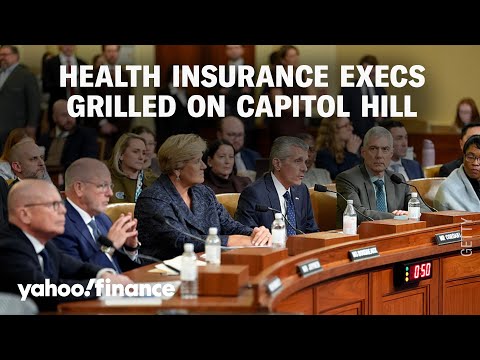
Health insurance companies face pressure on Capitol Hill over costs and CEO pay
Yahoo Finance· 2026-01-25 13:01
Well, health insurers are back in the political spotlight with Congress grilling executives on Capitol Hill over rising premiums, denied care and executive pay for more. We're bringing now Kim Monk, founding partner at Capital Alpha Partners. Uh Kim, it is good to see you. So, I guess first thought, you know, Kim, just get your take on that hearing on Capitol Hill. CEOs are up there. These big insurers, they're they're getting grilled. Kim, you were watching. I mean, what did you make of it? What did you le ...
The Biggest Money Mistakes People Make in Their 50s
Yahoo Finance· 2026-01-15 13:03
Core Insights - Individuals in their 50s are typically in their highest-earning years, presenting a crucial opportunity to enhance retirement savings [1] Group 1: Spending Habits - Discretionary spending can be detrimental in the 50s, as individuals may experience lifestyle creep with increased discretionary income [2] - Excessive spending on luxury items and experiences can lead to diminished financial resources, impacting future retirement quality of life [3] - Many individuals in their 50s are adopting lavish lifestyles instead of focusing on saving for retirement [4][5] Group 2: Debt Management - Americans in their 50s are holding more debt, including mortgages, auto loans, and credit cards, compared to previous generations [5] - It is advised to prioritize debt repayment during peak earning years to avoid financial stress in retirement [6] Group 3: Healthcare Planning - Underestimating future healthcare costs is a significant mistake, as many assume Medicare will cover all needs upon reaching age 65 [7]
Retiring at 64 With $2.1 Million Means Navigating a $10,500 Annual Gap Nobody Talks About
Yahoo Finance· 2026-01-13 16:19
Core Insights - The article discusses the financial considerations for a 64-year-old individual with $2.1 million saved for retirement, focusing on withdrawal strategies and portfolio management to sustain expenses over 25-30 years while addressing taxes, healthcare costs, and market volatility [2]. Withdrawal Strategy - The traditional 4% rule suggests an annual withdrawal of $84,000 from a $2.1 million portfolio, but Morningstar's 2026 research recommends a more conservative starting withdrawal rate of 3.9%, equating to $81,900 annually, due to current market conditions and sequence-of-returns risk [3]. - The portfolio is income-focused, with investments in dividend-paying stocks like Verizon (6.77% yield), Johnson & Johnson (2.49% yield), and Chevron (4.13% yield), generating an estimated annual dividend income of $73,500, leaving a $10,500 gap to meet the 3.9% guideline [4]. Healthcare Costs - Medicare eligibility begins at age 65, with the standard Part B premium rising to $202.90 monthly in 2026, totaling nearly $2,435 annually. Total healthcare costs could range from $8,000 to $12,000 per year, factoring in additional coverage and out-of-pocket expenses [5][8]. Tax Considerations - The tax implications depend on the account structure, with withdrawals from a traditional 401(k) taxed as ordinary income. For married couples filing jointly in 2026, the 12% tax bracket extends to $100,800, while the 22% bracket covers income up to $211,400 [6]. - Strategic withdrawals from taxable accounts before required minimum distributions at age 73 can help manage tax brackets and preserve tax-deferred growth [7]. Strategic Recommendations - Prioritize spending from taxable accounts to manage tax implications effectively, especially before reaching the age for required minimum distributions [7]. - Consider partial Roth conversions during lower-income years to fill the 12% tax bracket without triggering higher rates [7]. - Working an additional year can delay withdrawals and increase Social Security benefits by approximately 8% per year until age 70 [8].
Top 8 Financial Questions That Baby Boomers Want to Ask Financial Experts
Yahoo Finance· 2025-12-27 11:49
Core Insights - The article emphasizes the importance of flexible financial planning for retirement, highlighting strategies to manage spending, investments, and tax implications effectively [1][4][5]. Group 1: Financial Planning Strategies - Stoy Hall, CEO of Black Mammoth, discusses the significance of adjusting spending according to income and market conditions, advocating for a flexible withdrawal strategy rather than adhering to fixed percentage rules [1]. - Derrick Kinney suggests a practice-retirement budget 12–18 months before actual retirement to assess living expenses, which can lead to earlier retirement or extended working years based on individual financial situations [2]. - Stephanie McCullough emphasizes the need to differentiate between long-term and short-term money as retirement approaches, recommending that funds needed within the next five years should be kept in low-risk investments [6]. Group 2: Tax Management in Retirement - Carolyn McClanahan points out that retirees often delay withdrawals from retirement plans until required distributions, which can lead to higher tax brackets later on, stressing the importance of early tax planning [4]. - The article advises retirees to utilize the 10% and 12% tax brackets effectively in the early years to minimize future tax burdens and potentially delay Social Security benefits [5]. Group 3: Healthcare and Long-term Care Planning - Hall recommends pre-funding a Health Savings Account (HSA) before retirement to cover healthcare costs tax-free, and planning for long-term care either through self-funding or insurance [8]. - The article discusses the financial benefits of aging in place, suggesting that downsizing can reduce home maintenance costs and long-term care expenses [7][8]. Group 4: Legacy Planning - Bill Perkins' philosophy, as mentioned by McCullough, encourages making substantial gifts to beneficiaries during one's lifetime rather than prioritizing a legacy at death, which can be uncertain [9].
2 Retirement Risks Affluent Americans Often Overlook
Yahoo Finance· 2025-12-21 19:05
Core Insights - A significant majority of affluent Americans (89%) are confident in their ability to cover essential expenses in retirement, yet many fail to consider critical risks such as inflation and healthcare costs [1][2] Inflation Impact - Many mass affluent couples do not incorporate inflation into their retirement strategies, which can lead to faster depletion of assets. For instance, $100,000 in annual expenses in 2020 would rise to nearly $125,000 by 2025 due to inflation [3] - Average inflation rates over 20 years stand at 2.2%, while the five-year average is 2.7%. High inflation combined with market downturns can significantly affect financial plans [4] Healthcare Costs - Healthcare costs are a major oversight in retirement planning, with an additional $600 per month recommended to cover healthcare expenses. However, long-term care can be substantially more expensive, with typical nursing home costs reaching $10,000 per month [5][6] - Only 53% of individuals who discussed retirement with a partner considered inflation, and this number drops to 45% among those who did not have such discussions. Similarly, only 48% factored healthcare costs into their plans, decreasing to 37% for those who did not discuss retirement [6][7]
House narrowly passes GOP-backed health care bill. What's next?
NBC News· 2025-12-18 17:20
The House narrowly passed a GOPbacked healthc care bill last night aimed at bringing down the cost of healthare >> that doesn't include an extension of subsidies that help keep the cost of premiums down for those on Obamacare. Without that, health care costs for 22 million Americans could double in the new year. While the president and many Republicans saw the subsidies too expensive and won't bring down the overall costs, some in their own party defecting yesterday, joining a Democratic effort to pass thos ...
X @Bloomberg
Bloomberg· 2025-12-17 22:02
Healthcare Pricing - US hospitals are marking up old cancer treatments significantly [1] - Markups are sometimes hundreds of times what Medicare pays [1]