Nuclear Fusion

Search documents
Truth Social parent explores spinning off social media platform
Reuters· 2026-02-27 19:10
Truth Social parent explores spinning off social media platform | ReutersSkip to main content[Exclusive news, data and analytics for financial market professionalsLearn more aboutRefinitiv]A 3D printed miniature of U.S. President Donald Trump and the Truth Social logo are seen in this illustration created on June 22, 2025. REUTERS/Dado Ruvic/Illustration/File Photo [Purchase Licensing Rights, opens new tab]Feb 27 (Reuters) - Trump Media & Technology Group [(DJT.O), opens new tab] said on Friday it is in dis ...



X @Bloomberg
Bloomberg· 2026-02-17 20:03
A small group of scientists and engineers in New Zealand just got a little closer to replicating the power of the sun in their quest to achieve nuclear fusion by levitating a half-tonne magnet inside a chamber of superheated gas. https://t.co/3Lw1lLE5YA ...
Fusion, Flavored Crypto, and Farmland: The Trump Market Rollercoaster
Stock Market News· 2026-02-14 18:00
Group 1: Company Developments - DJT, the parent company of Truth Social, is advancing its $6 billion merger with TAE Technologies to create one of the world's first publicly traded fusion companies, moving beyond its origins as a social media platform [2] - The stock of DJT initially surged 34% upon the merger announcement but has since stabilized between $10.89 and $14.67, reflecting a 5% increase in 2026 while still down 60% year-over-year [3] - Truth Social is launching three new crypto ETFs, including a Bitcoin and Ether ETF, positioning itself as a regulated bridge for institutional investors amid ongoing debates on digital asset regulations [4][5] Group 2: Market Reactions and Economic Policies - The market is experiencing cognitive dissonance, with investors torn between the potential of clean energy and the company's unstable financials, likened to a child's lemonade stand [3] - A recent trade deal with Taiwan has established a 15% tariff rate on imports, significantly lower than the previously threatened 32%, with Taiwan committing to invest $250 billion in U.S. industries, particularly in semiconductors and AI [6] - The administration has threatened a 50% tariff on Canadian aircraft, impacting companies like Bombardier, which saw an 8% drop in shares, indicating a volatile trade environment [7][8] Group 3: Political and Regulatory Landscape - The administration's recent mandate for Voter ID has sparked significant political discourse, while the New Farm Bill aims to support farmers amid changing tariff policies [9] - Trump's upcoming visit to Venezuela is being closely monitored by the energy sector, as shifts in U.S. policy could affect major oil companies like ExxonMobil and Chevron [10] - The current market environment is characterized by uncertainty, with narratives taking precedence over fundamentals, as highlighted by the mixed performance of tech stocks [11]


半年净值翻倍,解密罗擎的布局秘籍
Sou Hu Cai Jing· 2026-01-26 13:39
Core Viewpoint - The article highlights the rise of Luo Qing, a new star at the Wanguo Fund, who has achieved significant returns through a focused investment strategy in technology sectors, particularly in semiconductors, AI applications, and renewable energy electronics [1][5]. Group 1: Background and Experience - Luo Qing has a strong academic background with a bachelor's degree in software engineering from Wuhan University and a master's degree in finance from Fudan University, positioning him well for his current role [3][4]. - He has eight years of experience in the securities industry, primarily focusing on technology research and investment, and joined Dongcai Fund in 2020 [4][5]. - In 2022, he managed several funds at Dongcai, achieving notable performance before moving to Wanguo Fund in 2025 [5]. Group 2: Investment Strategy and Performance - Luo Qing's investment strategy is characterized by precise stock selection, particularly in AI computing and overseas computing power, which has significantly driven fund value growth [7][8]. - Since taking over the Wanguo Innovation Technology Fund in July 2024, the fund has achieved a cumulative return of 106.13%, outperforming the benchmark by 22.04% [7][8]. - His focus on sectors nearing technological "singularities" has led to successful investments in emerging fields like autonomous driving and AI, capturing high-growth opportunities [9][12]. Group 3: Methodology and Approach - Luo Qing employs a rigorous investment research system that includes global industry tracking, on-site verification, and hard indicator screening to identify technological trends and opportunities [12][13]. - He emphasizes the importance of verifying technology through direct engagement with companies, ensuring that investments are backed by solid performance metrics [12][13]. - His approach is likened to that of an "industry hunter," strategically positioning investments at critical moments of technological change [14]. Group 4: Future Prospects and Market Focus - Luo Qing is set to manage the Wanguo Digital Economy Mixed Fund, which is expected to leverage his technology discovery skills in the rapidly evolving digital economy [16][21]. - The fund will likely focus on both "hard technology" and "soft applications," capitalizing on the ongoing data revolution and the integration of AI and cloud computing into traditional industries [16][17]. - His investment strategy will involve a dual-market approach, targeting both A-shares and Hong Kong stocks to capture the full value of the AI industry [18][21].
General Fusion to go public on Nasdaq via $1-billion USD SPAC deal
BetaKit· 2026-01-22 15:27
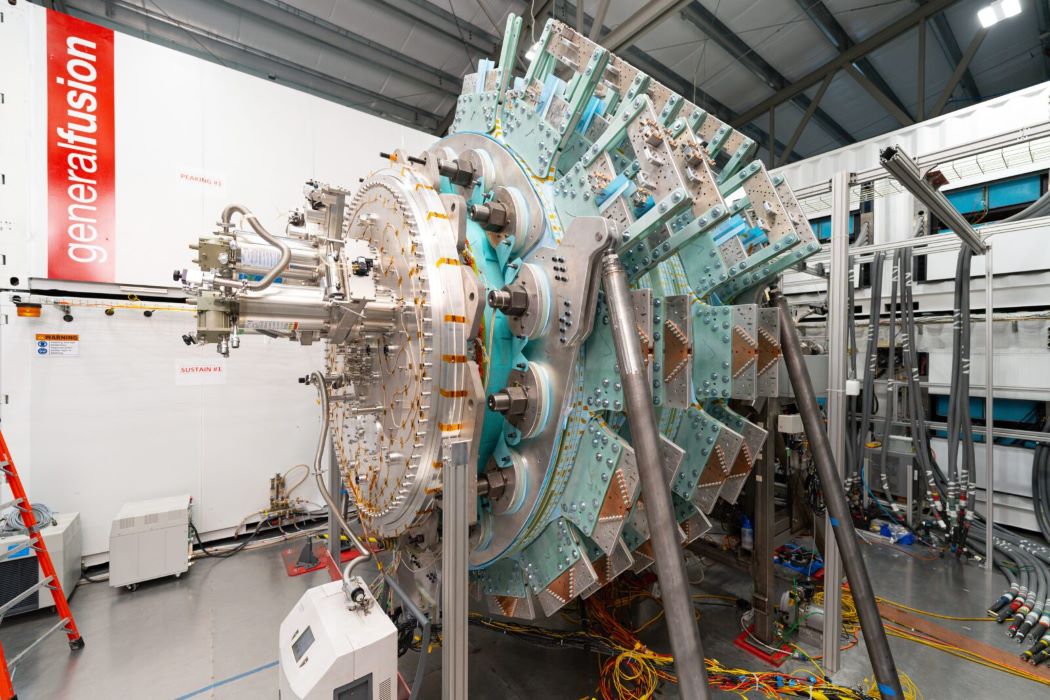
Core Viewpoint - General Fusion is set to become the first publicly traded pure-play fusion company by merging with Spring Valley Acquisition Corp. III, valuing the company at $1 billion USD [1][2]. Group 1: Company Overview - General Fusion is based in Richmond, BC, and is focused solely on developing commercially viable fusion power [2]. - The company plans to begin trading on the Nasdaq following the merger, similar to Canadian peer Xanadu [2]. Group 2: Financial Details - The $1 billion USD valuation includes approximately $105 million from a committed private investment in public equity (PIPE) and $230 million from Spring Valley's trust capital, assuming no redemptions [3]. - This merger marks General Fusion's third fundraising effort, following a cash crunch in early 2025 [4]. Group 3: Recent Developments - In May, General Fusion raised $30 million CAD from existing backers to advance its LM26 fusion demonstration program after scaling back operations [4]. - In November, the company secured an additional $51.5 million CAD in funding, anticipating a public listing soon [5]. Group 4: Industry Context - Nuclear fusion is seen as a potential solution to meet growing energy demands and reduce reliance on fossil fuels, offering the promise of abundant, carbon-free power [5].
Pender Growth Fund Portfolio Company, General Fusion, Announces a Proposed Business Combination
Globenewswire· 2026-01-22 13:39
Core Viewpoint - General Fusion Inc. has entered into a definitive business combination agreement with Spring Valley Acquisition Corp. III, which is expected to lead to General Fusion's listing on Nasdaq under the ticker symbol "GFUZ" [1][2]. Group 1: Proposed Business Combination - The business combination is anticipated to be completed in mid-2026, subject to regulatory and shareholder approvals [2]. - The proposed combination implies a pro-forma equity value of approximately US$1 billion, including US$100 million from committed financing and US$230 million from SVAC's trust capital [2]. - If completed, the net asset value (NAV) of Pender Growth Fund Inc. (PTF) is expected to increase by approximately CAD$27.3 million, translating to about CAD$3.93 per PTF share [2]. Group 2: General Fusion's Technology and Goals - General Fusion has developed a large-scale Magnetized Target Fusion (MTF) demonstration machine, Lawson Machine 26 (LM26), which positions the company at the forefront of fusion technology [3]. - The company plans to use the proceeds from the transaction with SVAC to advance the LM26 program and achieve key technical milestones towards commercial fusion [3]. - General Fusion aims to provide a practical solution for clean and cost-effective energy, anticipating a 40% to 50% increase in energy demands by 2035 according to the International Energy Agency [3]. Group 3: Industry Perspective - The long-term potential of nuclear fusion is viewed as critical for future industrial infrastructure, aligning with investment themes of energy transition and the demands of artificial intelligence and digital infrastructure [4]. - As the energy requirements of the digital economy grow, fusion is expected to become essential infrastructure for energy security and the broader energy transition [5].


Where The Department of Energy Is Investing
ZeroHedge· 2026-01-19 16:20
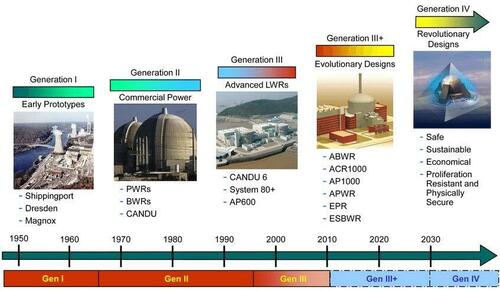
Core Insights - The Department of Energy (DOE) is implementing the Fusion Science and Technology Roadmap (FS&T Roadmap) to transition fusion energy from laboratory research to commercial viability by the mid-2030s [1][5] - The roadmap outlines a phased approach: near-term focus on digitalization and infrastructure, mid-term on prototype integration, and long-term on grid delivery and scale-up [2][3] Near-Term Actions - Emphasis on digitalization and infrastructure preparation to support fusion technology development [1] - Launch of the AI-Fusion Digital Convergence Platform to enhance materials discovery and plasma behavior prediction [4] Mid-Term Actions - Integration of prototypes to test and refine fusion technologies [2] - Construction of small-to-medium test facilities and design completion for large-scale "First-of-a-Kind" (FOAK) facilities [4] Long-Term Goals - Delivery of power to the grid from the first fleet of pilot plants [4] - Expansion of public infrastructure to support a global fusion market, aiming to lower the levelized cost of energy [4] Core Technical Challenges - The DOE has identified six core technical challenge areas to address gaps in fusion technology [3] - Key areas include structural materials, plasma-facing components, confinement systems, fuel cycle and tritium processing, blankets, and plant engineering [4][10] Material Development - Development of Reduced Activation Ferritic Martensitic (RAFM) steels and vanadium alloys to withstand neutron bombardment and minimize radioactive waste [11] - Focus on tungsten for plasma-facing components to handle extreme heat without contamination [12] Fusion Confinement Methods - The FS&T Roadmap pursues both Magnetic Confinement Fusion and Inertial Confinement Fusion [14] - Magnetic confinement utilizes High-Temperature Superconducting (HTS) magnets to stabilize plasma, with Tokamaks and Stellarators as primary architectures [15][18] Inertial Confinement Fusion - This method employs high-energy lasers to compress fuel pellets, igniting plasma through micro-explosions [19] - Companies involved in producing optical components and high-power diodes are critical to this approach [20] Tritium Breeding and Fuel Cycle - The DOE aims for a closed-loop fuel cycle to breed tritium using lithium-containing blankets, ensuring domestic supply and minimizing reliance on international sources [21] - Companies like Oklo and BWXT are involved in tritium production and breeding technologies [24][25] Blanket Technology - The blanket in fusion reactors is essential for energy conversion, tritium breeding, and radiation shielding [29] - The DOE is aligning advanced fission research and development with fusion technology to create a unified supply chain [30] Plant Engineering and Systems Integration - Focus on the Balance of Plant (BOP) to ensure reliability and efficiency in converting fusion energy to electricity [31] - Innovations such as Supercritical CO2 turbines are being prioritized for their efficiency and smaller footprint [32]




Why Trump Media Stock Surged 14.7% Last Month and Has Kept Rising in 2026
Yahoo Finance· 2026-01-12 22:43
Core Insights - Trump Media & Technology Group's stock experienced a significant increase of 14.7% in December, driven by major merger news, although it remains down approximately 60% over the past year [1][3]. Group 1: Merger and Acquisition - Trump Media announced a $6 billion all-stock merger with TAE Technologies, aiming to create one of the world's first publicly traded fusion companies [3]. - The merger is expected to close around mid-2026, with plans to begin production on a fusion power plant this year [5]. - The shift towards nuclear energy marks a significant pivot for Trump Media, which has previously explored various business avenues including social media and financial trading services [4]. Group 2: Market Performance - Following the merger announcement, Trump Media's stock continued to rise, with an additional increase of approximately 5% in 2026 due to plans to distribute cryptocurrency tokens to shareholders [6][7]. - The company's stock gains are attributed to its strategic partnerships and the potential growth in energy demand related to artificial intelligence [5][8]. Group 3: Business Strategy and Challenges - Trump Media has leveraged its connections to former President Donald Trump to attract investor support and facilitate partnerships [8]. - Despite the positive market response, the company has yet to establish significant revenue streams, raising questions about the sustainability of its growth initiatives [8].
The highlights from Day 2 of CES 2026
PBS News· 2026-01-07 19:41
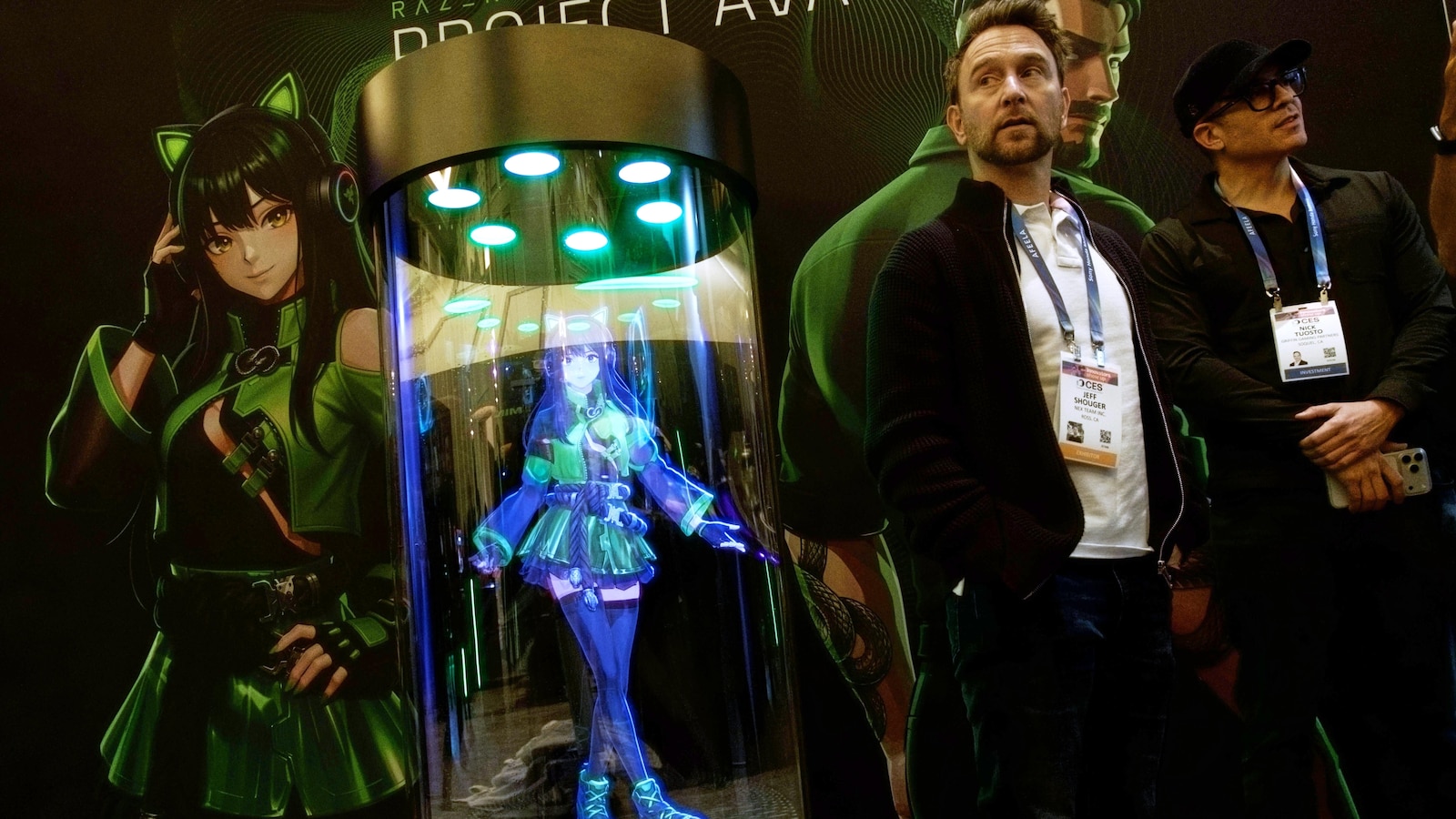
Core Insights - The CES event showcases a wide array of innovations, particularly in AI and robotics, indicating a significant trend towards integrating advanced technology into everyday products and services [1][4]. AI and Robotics Innovations - Siemens and Nvidia announced a partnership aimed at launching an AI-driven industrial revolution to enhance manufacturing and supply chain management [2]. - Razer introduced AI-powered prototypes, including a gaming headset that functions as a general-purpose assistant and an AI desk companion for gaming advice and life organization [5][7]. - Oshkosh Corporation presented autonomous airport robots designed to streamline post-landing processes, aiming to reduce delays and maintain efficiency during adverse weather conditions [8][9]. - Roborock unveiled a vacuum cleaner with legs that can navigate stairs, showcasing advancements in home cleaning technology [10]. Health and Wellness Technology - Withings launched the Body Scan 2, a smart scale that measures 60 biomarkers in 90 seconds, aimed at promoting health monitoring and longevity [11][12]. Energy Sector Developments - Commonwealth Fusion Systems, in collaboration with Nvidia and Siemens, is utilizing AI to accelerate the development of nuclear fusion as a carbon-free energy source, with a prototype fusion power plant, SPARC, nearing completion [13][14][15].


The coolest technology from Day 2 of CES 2026
ABC News· 2026-01-07 05:57
Core Insights - The CES event showcases a wide array of innovations, including AI companions, health tech, and wearables, attracting large crowds on its second day [1] Group 1: AI and Robotics Innovations - Siemens and Nvidia announced an expanded partnership to launch an AI-driven industrial revolution aimed at transforming manufacturing and supply chain management [2] - Razer introduced AI-powered prototypes, including an over-ear gaming headset that functions as a general-purpose assistant and an AI desk companion for gaming advice and life organization [5][7] - Oshkosh Corporation presented autonomous airport robots designed to streamline post-landing processes, aiming to reduce delays and maintain efficiency during adverse weather conditions [9] Group 2: Health and Wellness Technology - Withings unveiled the Body Scan 2, a smart scale that measures 60 biomarkers in 90 seconds, providing personalized health advice and a health trajectory for users [12][13] - The scale is priced at $600 and will be available in spring, with a subscription model for the accompanying app [13] Group 3: Energy Innovations - Commonwealth Fusion Systems, NVIDIA, and Siemens are collaborating to accelerate nuclear fusion as a carbon-free energy source, with a prototype fusion power plant called SPARC nearing 70% completion [14][16] - The partnership aims to create a "digital twin" of the physical machine to expedite progress and data analysis [15]