Retail Transformation

Search documents
Lakeside Shopping Centre announces the arrival of Hollister later this year
Retail Times· 2026-02-19 13:59
Core Insights - Lakeside Shopping Centre will welcome Hollister, a brand of Abercrombie & Fitch Co., in 2026, enhancing its retail offerings with quality apparel, accessories, and fragrances [2] - The shopping centre is undergoing a multi-million-pound investment aimed at transforming its interiors and external spaces, positioning itself as a modern retail destination [3] - The addition of Hollister is part of Lakeside's strategy to redefine the retail experience and attract a broader audience, alongside other premium brands [4] Investment and Development - Lakeside Shopping Centre is making significant investments to set new benchmarks in retail excellence, featuring a diverse mix of brands including Hollister, Next, and JD [3] - The centre's transformation includes the introduction of ten lakefront restaurants and leading entertainment operators, enhancing its appeal as a leisure destination [4] Management and Operations - Lakeside Shopping Centre is owned by SGS UK Retail and managed by Pradera Lateral, with leasing agents Smith Young and LM Real Estate facilitating the new store openings [4]


‘The consumers are still out there’: why a bankruptcy for Saks Global may not spell the end
Yahoo Finance· 2026-01-15 10:00
Company Overview - Saks Fifth Avenue, a prominent luxury department store, has faced significant challenges leading to its Chapter 11 bankruptcy filing, marking a notable decline for a brand once considered prestigious in retail [4]. - The company had recently acquired Neiman Marcus for $2.7 billion, financing the deal with $2.2 billion in borrowed funds, which contributed to its financial strain [3]. Industry Context - The retail environment has shifted dramatically, with many traditional brick-and-mortar stores struggling to compete against online retailers, a trend that has adversely affected Saks [5]. - Despite the challenges faced by Saks, competitors like Bloomingdale's and Nordstrom reported revenue growth, indicating that some department stores are adapting successfully to the changing market [5]. Recent Developments - In 2024, Saks Fifth Avenue did not display its traditional holiday lights for the first time since 2004, reflecting the company's financial difficulties [2]. - The bankruptcy filing is part of a broader trend affecting several American retail giants, particularly those with a heavy reliance on physical store locations [5][6]. - Saks is the third department store under the former parent company Hudson's Bay to file for bankruptcy, following a series of strategic decisions that have led to its current predicament [7].
Philippe Brochard Joins Hanshow as Chairman of the Advisory Committee
Prnewswire· 2026-01-08 08:39
Core Insights - Hanshow has appointed Philippe Brochard as Chairman of its Advisory Committee, enhancing its governance and commitment to innovation and sustainability in the retail sector [1][4] Company Overview - Hanshow is a global leader in developing electronic shelf labels and digital store solutions, providing customized IoT touchpoints and insights to enhance customer experience [5] - The company operates in over 70 countries, helping retailers streamline operations, optimize pricing strategies, and transition towards sustainable practices [5] Leadership Appointment - Philippe Brochard, with over 20 years of international leadership experience, previously served as CEO of Auchan Retail France and has held senior roles at Renault and Alstom Transport [3] - His expertise in retail and organizational transformation will support Hanshow's growth and strategic initiatives [2][3] Strategic Vision - Brochard aims to support technology companies that are rethinking retail models, emphasizing the importance of technological innovation, economic performance, and sustainability [4] - His appointment is seen as a pivotal moment for Hanshow as the retail industry evolves towards more digital and performance-driven models [4]

Can Macy's Save the American Department Store?
Youtube· 2025-12-14 15:00
Core Insights - The holiday season presents an opportunity for American retailers, particularly Macy's, to transform and connect with local communities [2][3] - Macy's is undergoing a corporate transformation under CEO Tony Spring, focusing on revitalizing the brand amidst declining sales and cultural relevance [3][4] Company Strategy - Tony Spring plans to close a third of Macy's U.S. locations, freeing up $750 million to reinvest in high-performing stores [4] - The strategy emphasizes becoming a neighborhood store that offers convenience and special products for customers [2][3] Market Trends - Department stores have seen a significant decline, accounting for less than 1% of total U.S. retail sales, down from about 16% in the early 1990s [5] - The shift in consumer behavior has led to a need for department stores to adapt to the changing preferences of shoppers who prioritize convenience and value [8][12] Consumer Insights - Today's consumers have diverse shopping preferences, including online and in-store options, and they seek excitement in their shopping experiences [10][18] - The divide between economic classes is widening, impacting middle-income households and their spending habits [12] Competitive Landscape - Macy's aims to capture the shrinking middle market by focusing on quality merchandise rather than relying solely on deep discounts [13] - The retail environment is under pressure, but there remains a viable market if stores can meet customer needs effectively [13] Branding and Experience - The importance of creating a special shopping experience is emphasized, as consumers desire to feel valued and excited about their purchases [20][21] - Macy's is looking to replicate the successful strategies used at Bloomingdale's, focusing on curation and ambiance to attract customers [25][26] Future Outlook - The challenge remains for Macy's to redefine its customer base and adapt to the realities of a shrinking middle class while maintaining a balance between value and quality [27][28] - The company has the potential to showcase its best offerings and move from merely surviving to thriving in the competitive retail landscape [29]

Designer Brands(DBI) - 2026 Q3 - Earnings Call Transcript
2025-12-09 14:30
Financial Data and Key Metrics Changes - Total sales for Q3 2025 were $752.4 million, down 3.2% year over year, with comparable sales down 2.4%, reflecting a 260 basis points sequential improvement from Q2 [5][20] - Adjusted operating income for the quarter was $46.5 million, an increase of nearly $3 million from the previous year, despite last year's Q3 including a $9 million benefit from an incentive accrual reversal [6][23] - Adjusted diluted earnings per share were $0.38, up from $0.27 in the prior year [6][24] - Gross margin improved by 210 basis points to 45.1%, driven by fewer markdowns and improved fulfillment operations [21][22] Business Line Data and Key Metrics Changes - U.S. retail comparable sales decreased by 1.5%, with total sales down 1% year over year, showing improvement from Q2 where both metrics were down roughly 5% [7][20] - Canadian retail total sales were down 8%, with comparable sales down 6.6%, primarily due to unseasonable warm weather affecting seasonal product demand [11][20] - The brand portfolio segment saw total sales down 9%, largely due to temporary sourcing-related delivery delays, but operating income increased by $500,000 year over year [12][20] Market Data and Key Metrics Changes - The top eight brands in the retail segment posted a positive 4% comparable sales growth for the quarter, with their penetration expanding by 200 basis points year over year to 42% of total sales [9] - The athletic category showed improvement, with adult athletic sales up 1% and kids' athletic sales up 8%, reflecting strong back-to-school performance [10] Company Strategy and Development Direction - The company is focused on two pillars: customer and product, aiming to enhance private label offerings and build a more profitable wholesale model [13] - The "Let Us Surprise You" campaign is being executed with a holiday-centric approach to position DSW as a gifting destination [13][14] - The company is refining its assortment, ending the quarter with approximately 30% lower choice counts compared to last year while maintaining high in-stock levels [15] Management's Comments on Operating Environment and Future Outlook - Management expressed optimism about closing the year strongly, citing the dedication of teams and the effectiveness of strategic actions [19][32] - The company expects total net sales for the year to decline in the range of 3%-5%, with adjusted operating income projected between $50 million and $55 million [25] Other Important Information - The company paid down $47 million of debt during the quarter, ending with total debt outstanding of $469.8 million [6][24] - Total liquidity at the end of Q3 was $218.3 million, providing solid financial flexibility [25] Q&A Session Summary Question: Can you elaborate on the trends quarter to date and the wide range for Q4 sales guidance? - Management noted that October was the strongest month, with continued momentum in key categories and brands, particularly in boots and affordable luxury [27][28] Question: How is the company thinking about gross margin in Q4 and the promotional environment? - Management is encouraged by gross margin management, anticipating similar improvements in Q4, with a focus on higher average unit retail prices and reduced unprofitable promotions [30]

Why Is Designer Brands Stock Soaring Tuesday? - Designer Brands (NYSE:DBI)
Benzinga· 2025-12-09 13:49
Core Viewpoint - Designer Brands Inc. reported stronger-than-expected quarterly profit, with adjusted earnings per share of 38 cents, surpassing the analyst consensus estimate of 18 cents [1]. Financial Performance - Quarterly sales amounted to $752.411 million, reflecting a 3.2% year-over-year decline and missing the expected $763.400 million [2]. - Total comparable sales decreased by 2.4% [2]. - Segment performance showed weakness, with U.S. Retail down 0.8%, Canada Retail down 7.5%, and the Brand Portfolio down 8.6% [3]. - Gross profit increased to $339.6 million from $333.8 million a year ago, with gross margin improving to 45.1%, up from 43.0% [3]. - Consolidated operating profit rose 87% year over year to $42.663 million [4]. Cash and Debt Position - The company ended the quarter with cash and equivalents of $51.352 million, while long-term debt decreased to $463.089 million from $529.551 million a year ago [4]. Store Operations - As of November 1, 2025, Designer Brands operates 672 stores across North America, including 497 DSW Designer Shoe Warehouse locations in the U.S. and 175 stores in Canada [5]. Dividend Announcement - A dividend of 5 cents per share for both Class A and Class B common shares will be paid on December 19 to shareholders of record at the close of business on December 5 [5]. Future Outlook - The company expects fiscal year 2025 adjusted operating profit to be between $50 million and $55 million, with net sales projected to decline by 3%-5% [6]. Market Sentiment - Designer Brands has 8.10 million shares sold short, representing 57.07% of its public float, indicating a high level of bearish sentiment among investors [7]. - During premarket trading, Designer Brands shares rose 17.11% to $5.68 [7].

3037家门店消失后:“一站式购齐”早已不是刚需,“就近、快速、精准”才是核心诉求。
Sou Hu Cai Jing· 2025-12-05 07:05
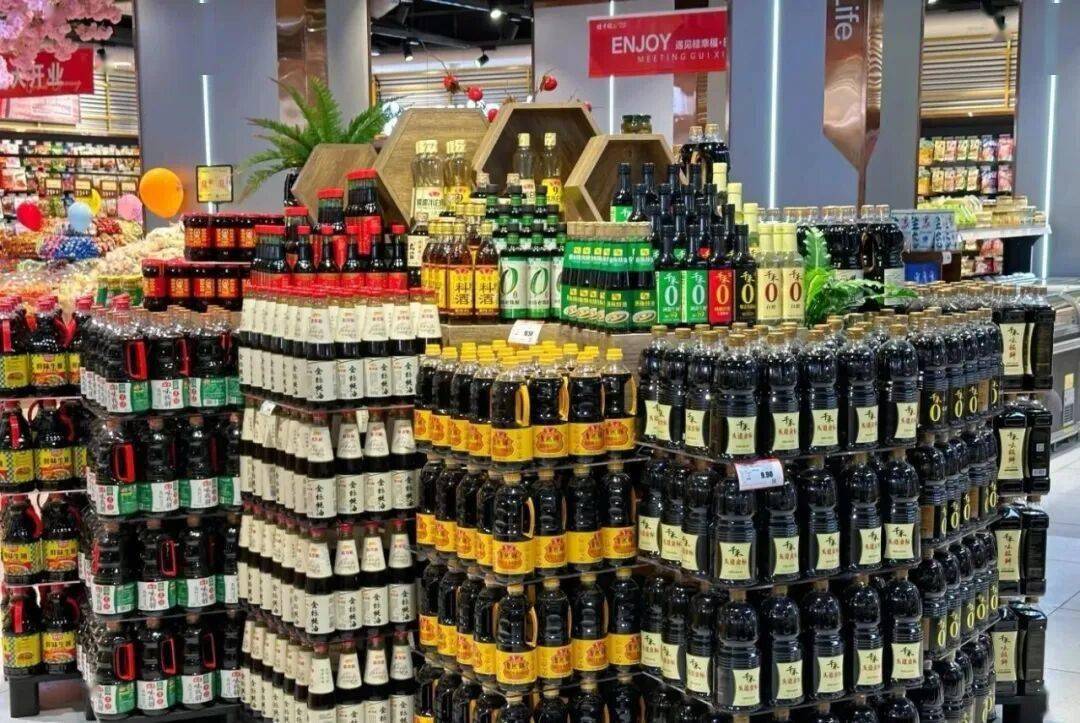
Core Insights - In 2024, the Chinese retail industry witnessed a significant decline as 62 major supermarket chains collectively closed 3,037 stores, averaging 9 closures per day, indicating a severe contraction in the sector [1][3] - The downfall of traditional supermarkets is attributed not only to e-commerce competition but also to systemic failures in their operational models, leading to inefficiencies and customer dissatisfaction [3][5] Group 1: Store Closures and Financial Impact - Major supermarket chains like Century Hualian closed 1,009 stores, nearly halving their presence; CR Vanguard reduced its store count by 493; Yonghui Supermarket closed a quarter of its locations, with revenue plummeting from 48.7 billion yuan to 29.9 billion yuan [1][3] - The closures reflect a broader trend of traditional supermarkets struggling to adapt, with many failing to innovate or improve their service offerings [5][6] Group 2: Operational Inefficiencies - Traditional supermarkets have become "bloated," with large store formats leading to inefficiencies, such as long customer search times and a high percentage of slow-moving inventory [3][5] - New retail formats, like hard discount stores, have outperformed traditional supermarkets by focusing on a limited selection of high-demand products, achieving three times the turnover speed and significantly higher space efficiency [3][5] Group 3: Customer Experience and Service - Traditional supermarkets are trapped in a "no-differentiation trap," offering similar products and prices without superior service, leading to customer disengagement [5][6] - Successful retailers like Pang Donglai and Sam's Club have differentiated themselves through unique customer experiences and specialized offerings, highlighting the importance of service quality in attracting consumers [5][6] Group 4: Future of Retail - The closures signal a shift in the retail landscape, emphasizing that success will depend on supply chain efficiency, product differentiation, and enhanced customer service rather than sheer store count [6] - The future of supermarkets is envisioned as smaller, community-focused stores that offer convenience and specialized products, moving away from the outdated "big and all-encompassing" model [6]

Macy's customers could soon live inside this iconic flagship store
Yahoo Finance· 2025-11-09 18:33
Core Insights - Macy's has been struggling with declining sales, leading to store closures and layoffs, as it rethinks its future in the retail landscape [1][3] - The company is reversing its decision to close its iconic Union Square location in San Francisco, indicating a shift in its transformation strategy [2][6] - Macy's has launched a "Bold New Chapter" strategy, planning to close around 150 underperforming stores by 2026 while focusing on its stronger locations [3][4] Company Strategy - The "Bold New Chapter" strategy aims to concentrate investments on 350 stronger locations and prioritize more profitable divisions like Bloomingdale's and Bluemercury [3] - Over the past decade, Macy's has closed more than a third of its stores, including significant locations like the Union Square flagship [4][5] - The company is exploring new development options for the Union Square site in partnership with TMG Partners, keeping the flagship open through at least Q1 2026 [7]
HighCo: Acquisition of Sogec and BudgetBox finalised
Globenewswire· 2025-09-30 15:59
Core Insights - HighCo has completed the acquisition of Sogec and BudgetBox to enhance its position in the promotions market and drive growth in its Activation division [1][4]. Company Overview - Sogec is a French agency specializing in omnichannel promotion activation, offering services such as discount coupon processing, digital cashback platforms, loyalty programs, and more [2]. - BudgetBox focuses on retail media, creating targeted activation campaigns based on consumer behavior both online and in-store [2]. - HighCo is listed on Euronext Paris and has over 400 employees, achieving a Gold rating from EcoVadis for CSR performance [5]. Financial Impact - The gross profit for Sogec in 2024 was €10.1 million, while BudgetBox reported €6.7 million [3]. - The accounts of Sogec and BudgetBox will be consolidated starting from October 1, 2025, with financial impacts to be disclosed in March 2026 [3]. Strategic Implications - The acquisition is a significant step in HighCo's strategy to refocus on its core business areas, particularly in Activation and Consulting & In-store media selling [4].

Sportsman’s Warehouse(SPWH) - 2026 Q2 - Earnings Call Transcript
2025-09-04 22:00
Financial Data and Key Metrics Changes - Same-store sales increased by 2.1% year-over-year, marking the second consecutive quarter of comp store sales growth [4][12] - Net sales for Q2 were $393.9 million, a 1.8% increase compared to the prior year [12] - Gross margin improved to 32%, an 80 basis point increase from Q2 last year, driven by healthier inventory and higher sales penetration from the fishing department [13][14] - Net loss for Q2 was $7.1 million, compared to a net loss of $5.9 million in the same quarter last year [15] - Adjusted EBITDA improved to $8.3 million, up from $7.4 million in the same quarter last year [15] Business Line Data and Key Metrics Changes - The hunting and shooting sports department grew by 4%, while fishing sales increased by nearly 11% year-over-year [6][12] - Ammunition sales grew by 10%, with average unit retail up in low single digits [6] - Camping sales were down 10% compared to last year, prompting a strategic shift to eliminate slow-moving categories [7] Market Data and Key Metrics Changes - Sales in Alaska grew by high single digits, indicating successful localization of merchandise assortments [5] - The firearms business outperformed the industry despite a 4.9% decline in adjusted NICs checks [5] Company Strategy and Development Direction - The company is focused on four key priorities: inventory precision, local relevance, personal protection, and brand awareness [9][10] - A strategic shift to an everyday low-price model for core ammunition has resonated well with customers [6] - The company aims to improve inventory efficiency and reduce working capital investment [17] Management's Comments on Operating Environment and Future Outlook - Management remains confident in the strategic plan despite ongoing consumer microeconomic challenges [10] - The company anticipates ending the year with lower total inventory than last year and generating positive free cash flow [11][19] - Full-year guidance for net sales has been raised to reflect flat growth, with adjusted EBITDA expected between $33 million and $45 million [18] Other Important Information - Total inventory at the end of Q2 was $443.5 million, compared to $363.4 million in the same period last year, reflecting a strategic decision to prepare for key hunting seasons [16] - The company exercised a $20 million deferred draw feature on its term loan to strengthen the balance sheet [17] Q&A Session Summary Question: Can you talk about the drivers of comp performance and its durability into 2026? - Management highlighted the alignment of strategy around hunting, shooting, fishing, and personal protection as key drivers of performance, with continued investment in inventory to maintain momentum [22][23] Question: Can you discuss margin drivers in the back half of the year? - Management noted that hunting has lower margins due to firearms and ammunition, which will impact overall margins, while fishing has been a beneficiary of margin improvements [26][27] Question: How did demand trend through August and the setup into the back half in terms of comps? - Management expressed satisfaction with August performance, noting acceleration in NICs and a positive outlook for Q3 [32] Question: Can you break down the AOV trend and its potential for improvement? - Management indicated that there is significant room for improvement in attachment rates, particularly in firearms and ammunition, with AOV and UPT both at all-time highs [34][36] Question: How is the company managing potential tariff-related margin pressure? - Management is working with vendors to anticipate cost increases and has flexibility to offset some tariffs through MAP pricing [51][53] Question: Can you provide insight into consumer behavior within the hunt category? - Management noted that average unit retail is down about 4%, but unit sales are up 4.2%, indicating a mixed impact on margins [61][63] Question: Is there an opportunity to increase sales or inventory in suppressors and short barrel rifles? - Management sees significant opportunity in these categories and plans to lean into them in the back half of the year [65]