Voting Rights Act

Search documents
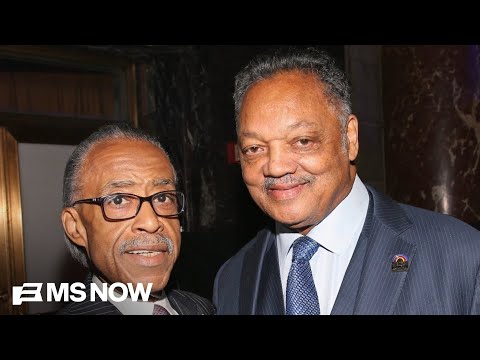
'He meant everything to me': Rev. Sharpton reflects on Rev. Jesse Jackson's legacy
MSNBC· 2026-02-17 21:50
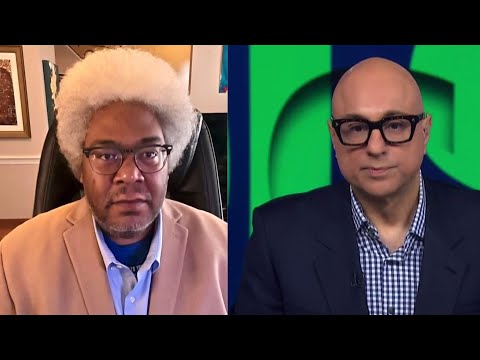
Joining us now, president of the National Action Network and host of MSNOW's Politics The Reverend Al Sharpton and co-host of FAQ NYC and associate professor of political science at Fordham University, Christina Greer. Rev, thanks for being with us today, and I'm so sorry about the loss of your friend. I THINK ANTONIA DID A BEAUTIFUL JOB REMEMBERING THE BROAD STROKES OF HIS CAREER AND WHAT HE MEANT TO THIS COUNTRY.TELL US WHAT HE MEANT TO YOU. WELL, HE MEANT EVERYTHING TO me. I was a boy preacher in Brookly ...

Jim Clyburn warns about the ‘catastrophic consequences’ of redistricting: Full interview
NBC News· 2025-12-07 16:09
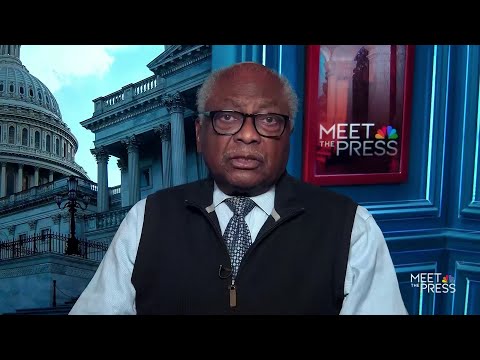
Political Landscape & Democratic Norms - The discussion revolves around the Supreme Court ruling allowing Texas to use a redrawn congressional map favorable to Republicans, sparking debate on potential tit-for-tat responses and their impact on democratic norms [2][3] - Concerns are raised that aggressive partisan responses could undermine the democratic norms of the country, potentially leading to catastrophic consequences reminiscent of historical injustices like Jim Crow [3][4][5] - The Voting Rights Act's potential weakening by the Supreme Court could significantly diminish Democratic representation, potentially mirroring historical periods of limited minority representation [7][9] Social Justice & Equality - The conversation addresses President Trump's rhetoric towards the Somalian community and Congresswoman Ilhan Omar, drawing parallels to historical denigration of people of color after the Civil War [10][11] - The importance of pursuing a more perfect union by defending marginalized communities and upholding the values that have made the country great is emphasized [13] - Sexism and racism are acknowledged as factors impacting the defeat of women in politics, with a call to continue supporting women in their pursuit of leadership positions, despite perceived societal readiness [14][15][16][17] Historical Context & Future Implications - The book "The First Eight" serves as a historical reference, highlighting the experiences of the first eight African-American congressmen from South Carolina and the challenges they faced [4][5][8] - The discussion draws parallels between current political and social issues and historical events, emphasizing the potential for repeating past mistakes if lessons are not learned [4][5][8][9] - The importance of continuous progress and avoiding a regression to past injustices is stressed, advocating for continued efforts towards a more inclusive and equitable society [13][14][16]
‘The Blue wave is coming’: Clyburn predicts major midterm gains for Democrats
MSNBC· 2025-12-06 14:59
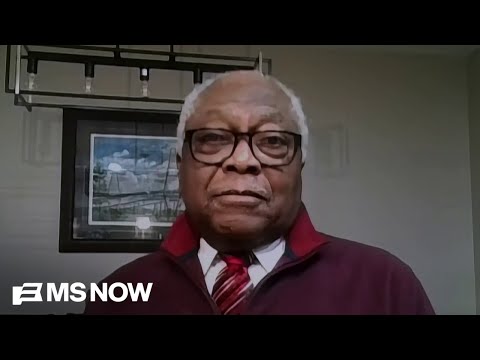
Political Landscape & Affordability Concerns - The White House is shifting its message on affordability after President Trump dismissed concerns [1] - A Democratic overperformance in Tennessee's House special election, where affordability was a key issue, indicates voter frustration [2] - Democrats improved on their 2024 margins by an average of 13 percentage points in nearly 60 special elections, driven by rising costs [2] - Senate Majority Leader Chuck Schumer is urging Democrats to focus on affordability legislation for the 2026 midterms [3] - Analysts suggest Democrats could potentially flip as many as 40 House seats in the next year [3][11] Voting Rights & Representation - The Supreme Court's decisions on racially gerrymandered maps in Texas and potential challenges to birthright citizenship raise concerns about dismantling progress [4][5][8] - Potential changes to the Voting Rights Act by the Supreme Court could lessen African-American representation in Congress [10] - Despite potential setbacks, a "blue wave" is anticipated due to Americans' belief in democracy [11][12] Healthcare & Policy - Congress has limited legislative days to address healthcare, with Republicans and bipartisan groups working on plans [13][14] - Affordability of healthcare, education, energy, and housing is highlighted as a key issue for the government to address [17]
Election Day 2025: PIMCO's Libby Cantrill on what to watch for
CNBC Television· 2025-11-04 13:30
Election Analysis & Market Implications - PIMCO is monitoring off-year elections to test the durability of trends observed in 2024, particularly regarding President Trump's influence and Republican inroads with minorities and younger men [2][3] - These elections could provide clues about the durability of trends seen in 2024 and the effectiveness of the shutdown strategy for Democrats [4][5] - A decisive win by one party in New Jersey, Virginia, and New York City could correlate with the 2026 midterm elections [8] - The Supreme Court's review of the Voting Rights Act is a significant issue, potentially leading to secular trends benefiting Republicans and impacting the House in 2026 and beyond [18][19] Candidate Performance & Messaging - The performance of candidates like Mikey Cheryl in New Jersey is being closely watched, with her campaign potentially being less impactful than expected [6] - Democrats can learn from candidates like Mandani, who, like Trump, effectively communicates on economic issues and understands voter concerns about affordability [11][12] - Mandani's focus on "kitchen table issues" like gas and groceries resonates with voters, similar to Trump's approach in 2024 [12] Specific Races & Referendums - The New Jersey race is significant because Harris won it by only 6 percentage points, compared to Biden's nearly 16 percentage points, potentially indicating shifting trends [7] - Proposition 50 in California is important due to its impact on redistricting and potential benefits for Gavin Newsom's presidential aspirations and Democrats' efforts to counter Republican redistricting [17] - Prediction markets suggest a high probability (e g 84% or 90% or 98%) of certain candidates winning, but surprises are still possible [13][19]
X @The Economist
The Economist· 2025-10-26 13:00
Legal & Political Implications - The Voting Rights Act has historically limited Republican partisan gerrymandering [1] - Gutting Section two of the Voting Rights Act could lead to a surge of aggressive remappings [1]
X @The Economist
The Economist· 2025-10-24 17:25
Political Analysis - The podcast focuses on democracy in America [1] - Discussion includes redistricting frenzy [1] - The Supreme Court's potential impact on the Voting Rights Act is a key topic [1]
‘Let's sit down': House Democratic Leader Jeffries urges GOP to start negotiating amid shutdown
MSNBC· 2025-10-24 01:27
Government Shutdown & Healthcare Crisis - Democrats are ready to negotiate with Republicans to reopen the government and enact a bipartisan spending agreement [1] - Democrats believe Republicans are unwilling to address the healthcare crisis, leading to the government shutdown [3] - The Affordable Care Act (ACA) tax credits extension is a key point of contention, with Republicans' refusal potentially leading to increased premiums for millions [11] - Democrats accuse Republicans of creating a healthcare crisis impacting various communities across America [7] Political Strategy & Polling - Battleground states leaned slightly towards Donald Trump in the last election by 3 to 4 points on average [5] - Public polling indicates that a majority of voters hold Republicans responsible for the government shutdown [5] - Democrats are focusing on issues like the high cost of living, including rising grocery, housing, and electricity costs [10][11] - Republicans are expected to advance "gotcha votes," but Democrats aim to remain unified and strong [12] Redistricting & Voting Rights - Democrats are taking action to counter Republican gerrymandering efforts, including legal challenges and referendums [18][19][20][21] - The Voting Rights Act is considered crucial, and Democrats express confidence that efforts to undermine it will be unsuccessful [16][17] - Democrats are actively involved in redistricting efforts in states like California, Ohio, and Missouri to prevent Republicans from rigging elections [19][20][21]
X @The Economist
The Economist· 2025-10-23 14:50
Legal & Political Landscape - The justices are considering potentially weakening the Voting Rights Act [1]
How Trump’s Supreme Court visit on tariffs could backfire
MSNBC· 2025-10-19 21:24
So, President Trump now says he might show up in person to watch the Supreme Court argue his authority to set sweeping tariffs. A decision from the justices could overturn lower court rulings which found the president has no legal authority to impose countryspecific tariffs from earlier this year. Trump calls it one of the most important cases ever brought.So, joining me now to talk about it, former US attorney and host of the Talking Feds podcast, our friend Harry Litman. Harry, what is your reaction to Tr ...
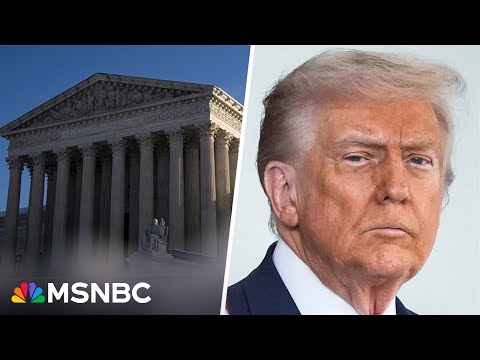
Sounding the Alarm: Supreme Court hears case to gut the Voting Rights Act
MSNBC· 2025-10-19 18:35
Voting Rights Act Overview - The Voting Rights Act of 1965 aimed to end Jim Crow era policies and ensure states could not disenfranchise black voters [2] - The Act was reshaped and expanded to protect a broader range of Americans, including Spanish speakers, Native Americans, disabled people, and minority voters [3] - Section 2 of the Voting Rights Act outlaws election practices that deny or limit voting rights based on race [8] Supreme Court Decisions & Challenges - In 2013, the Supreme Court struck down Section 4B of the Voting Rights Act, weakening Section 5, which established preclearance for states with histories of discriminatory policies [5][6] - The Supreme Court heard oral arguments in Louisiana versus Cala, a case challenging a congressional map with two majority-black districts [9][10] - Conservative justices signaled willingness to strike down Section 2 of the Voting Rights Act, potentially legalizing gerrymandering by race [11] Implications of Dismantling the Voting Rights Act - Opponents of the Voting Rights Act, including Chief Justice John Roberts, have worked to dismantle it piece by piece [12][14] - Dismantling the Voting Rights Act could lead to over-representation of white voters and under-representation of black voters [23] - Without Section 2, it would be more difficult to challenge discriminatory election practices based on their outcome, requiring proof of intent [30][31] Representation & Gerrymandering - A group of white voters in Louisiana is challenging a congressional map that has created two majority black districts out of six, representing one-third of Louisiana's population [10][11] - Striking down Section 2 could allow Republicans to pick up an estimated 19 congressional seats through gerrymandering [11] - White people only make up 56% of the population in Louisiana, but are seeking more representation than they deserve [23]