Profitability

Search documents
Shake Shack Releases Preliminary FY25 Results, Sets 2026 Growth Path
ZACKS· 2026-01-13 15:11
Core Insights - Shake Shack Inc. reported preliminary financial results for Q4 and fiscal year 2025, showing resilient performance despite macroeconomic challenges and food inflation, with shares rising 3.7% following the announcement [2][3]. Fiscal 2025 Results - Total revenues for fiscal 2025 reached $1.45 billion, with Q4 revenues at $400.5 million, slightly below the Zacks Consensus Estimate of $407 million [3]. - Same-Shack sales increased by 2.3% for the fiscal year and 2.1% in Q4, supported by positive traffic trends despite adverse weather conditions in the Northeast [4]. - Restaurant-level profit margins remained healthy in the mid-22% range for both the quarter and the full year, attributed to operational improvements and cost controls [5]. - Adjusted EBITDA is projected to be between $208 million and $212 million, with net income expected to be between $50 million and $60 million, indicating balanced growth [5]. Expansion and Demand Drivers - The company opened 45 company-operated Shacks and 40 licensed locations in fiscal 2025, ending the year with 373 company-operated restaurants [6]. - Management highlighted strong demand drivers, including menu innovation, value-focused digital promotions, and increased media investments [6]. Fiscal 2026 Guidance - For fiscal 2026, Shake Shack expects total revenues of $1.6 billion to $1.7 billion, with licensing revenues projected at $59 million to $61 million, aligning with the Zacks Consensus Estimate of $1.65 billion [7]. - Same-Shack sales are anticipated to grow at a low-single-digit rate, while restaurant-level margins are expected to expand to 23% to 23.5% [7]. - The company plans to open 55-60 company-operated Shacks and 40-45 licensed locations in 2026, supported by a robust development pipeline [8]. Long-Term Outlook - Shake Shack reiterated its long-term goals, targeting over 1,500 company-operated Shacks, low-teens revenue and unit growth, and at least 50 basis points of annual margin expansion through fiscal 2027 [9]. - The preliminary results and guidance suggest the company is entering a phase of profitable scale with improving margins and clear visibility into long-term growth [9].



Should You Scale in 2026? The Questions That Matter More Than Truck Counts
Yahoo Finance· 2026-01-09 14:59
Core Insights - The temptation to grow during favorable market conditions can lead to fragile business models if not approached with readiness and a solid foundation [1] - Companies must assess their true profitability before considering expansion, as adding capacity without a profitable base can exacerbate existing issues [3][4] - Successful scaling requires delegating responsibilities and implementing systems rather than relying solely on owner-operators [5][6] Profitability Assessment - Companies should focus on true, repeatable profitability rather than just revenue or gross margins [3] - A clear understanding of costs and the ability to absorb bad months is essential before scaling [7][8] Scaling Considerations - Growth should be driven by customer demand rather than short-term market fluctuations [9] - Companies must evaluate their operational capacity and ensure they have written processes in place to handle increased complexity [5][8]
How Valero's Operational Flexibility Drives Profitability
ZACKS· 2026-01-08 15:51
Core Insights - Valero Energy (VLO) is a leading refining company with a network of 15 refineries across the U.S., Canada, and Peru, boasting a combined throughput capacity of 3.2 million barrels per day, which sets it apart from other independent refiners [1][8] - The operational flexibility of VLO's refineries allows for the processing of various feedstocks, enabling the company to adjust production between light products and distillates based on market conditions, thereby enhancing profitability [2][3][8] - VLO's high-complexity and diversified refinery footprint contribute to its ability to maintain profitability in a cyclical and volatile refining industry [3] Competitor Overview - Phillips 66 (PSX) operates 11 refineries in the U.S. and Europe, achieving a 99% crude utilization rate in Q3, the highest since 2018, benefiting from strong refining margins and diversified operations [5] - Par Pacific Holdings (PARR) has a refining capacity of 219,000 barrels per day, with operations in Hawaii and the Pacific Northwest, and also runs 119 retail locations [6] Financial Performance - VLO shares have increased by 46.8% over the past year, outperforming the industry composite stocks, which rose by 12.3% [7] - VLO's current valuation is at a trailing 12-month EV/EBITDA of 8.86X, significantly higher than the industry average of 4.39X [10] - The Zacks Consensus Estimate for VLO's 2025 earnings has experienced downward revisions in the last 30 days [11] Ratings - VLO and PARR hold a Zacks Rank of 3 (Hold), while PSX has a Zacks Rank of 1 (Strong Buy) [12]


Rent The Runway: On The Brink Of Profitability In An Unforgiving Industry
Seeking Alpha· 2026-01-08 15:25
Core Insights - Rent the Runway, Inc. is on the verge of achieving profitability for the first time in its history [1] Company Overview - The company operates in a highly competitive market where its pricing power appears to be limited [1]


Can Lucid Keep Its Delivery Growth Streak Alive in 2026?
ZACKS· 2026-01-08 14:27
Core Insights - Lucid Group (LCID) ended 2025 with strong operational momentum, achieving record deliveries and a production ramp that reset expectations, while profitability and cash flow remain critical factors for investors to monitor [1] Delivery Performance - Deliveries reached 15,841 vehicles in 2025, marking a 55% year-over-year increase. Fourth-quarter deliveries totaled 5,345 units, a 31% sequential rise, and surpassed the 3,099 units delivered in the same quarter last year, resulting in eight consecutive quarters of record deliveries [2] Production Highlights - Full-year production totaled 18,378 vehicles, with a significant fourth-quarter surge to 8,412 units, representing a 116% increase from the third quarter and a 148% increase compared to the fourth quarter of 2024, allowing Lucid to meet its year-end production target after a slow first half [3] Product Mix and Revenue Quality - The Gravity SUV became the majority of fourth-quarter production, reflecting a shift in order mix towards Gravity during the third quarter. This shift supported higher average selling prices as the company expanded the Gravity lineup, improving revenue quality alongside volume [4] Operational Adjustments - Management added a second shift in October to sustain the Gravity-led production cadence. The introduction of Gravity Touring is expected to broaden the addressable market, favoring higher-value configurations as 2026 progresses [5] Financial Overview - Margins were near triple-digit negative in Q3 2025, impacted by tariffs (approximately a 13-point hit to GAAP gross margin) and inventory effects related to the fourth-quarter ramp. Adjusted EBITDA losses widened year-over-year in Q3 due to persistent supply chain costs and launch expenses [6] - Free cash outflow was approximately $956 million in Q3, driven by elevated R&D, SG&A, and program investments. For 2025, management guided capital expenditures of $1-1.2 billion, indicating continued negative free cash flow in the near term despite improved volumes. Liquidity stood at $4.2 billion at the end of Q3 2025, with an undrawn delayed-draw term loan facility expanded to roughly $2 billion [7] Revenue Estimates - The Zacks Consensus Estimate for 2025 and 2026 revenues indicates a year-over-year increase of 55% and 77%, respectively, aligning with stronger unit volume and a richer model mix following Gravity's transition to majority production in Q4 [8] Competitive Landscape - While LCID recorded a year-over-year increase in 2025 deliveries, competitors like Tesla (TSLA) and Rivian (RIVN) experienced declines. Rivian delivered 42,247 vehicles in 2025, down from 51,579 in 2024, while Tesla delivered over 1,635,000 vehicles in 2025 compared to more than 1,789,000 in 2024 [9][10] Investor Considerations - Lucid enters 2026 with production momentum and a Gravity-driven mix that enhances sales potential. However, the stock currently holds a Zacks Rank 4 (Sell) and a VGM Score of F, indicating near-term challenges as the market evaluates cash burn, tariffs, and supply variability against improving execution. The investment outlook now depends on the speed of margin recovery and moderation of cash burn amid a volatile cost environment [11]


These 5 Software Stocks Prove Profitability Beats Growth in 2026
247Wallst· 2026-01-07 14:08
Core Insights - Software stocks in 2026 have diverged into two categories: winners with expanding margins and accelerating growth, and losers with stagnant performance despite solid execution. The key differentiator is profitability at scale rather than just revenue growth [1] Group 1: Market Performance - The top five software stocks were ranked based on profitability metrics, revenue growth, and competitive positioning, highlighting the importance of companies that generate real earnings while growing faster than peers [2] - Microsoft leads with a market cap of $3.51 trillion, profit margins of 35.7%, and revenue growth of 18.4% year over year, showcasing a strong business model [12] - Palantir has seen a remarkable 139% increase in stock price over the past year, with revenue growth of 62.8% and profit margins of 28.1%, indicating a rare combination of hypergrowth and profitability [10] Group 2: Company Highlights - Fortinet boasts the highest return on equity in the software sector at 228%, with a P/E ratio of 32x, 14.4% revenue growth, and 28.6% profit margins, demonstrating peak efficiency in cybersecurity [3] - Intuit achieved 41% revenue growth year over year, with earnings per share increasing from $2.64 in fiscal 2015 to $16.97 in fiscal 2024, reflecting a 543% growth over nine years [5] - Oracle reported a 38.7% earnings beat in its latest quarter, with a market cap of $553 billion, 14.2% revenue growth, and 69% return on equity, validating its cloud transformation strategy [7] Group 3: Investment Implications - The market is rewarding companies that convert revenue into profit at scale, leading to premium valuations and strong stock performance, while struggling peers like Snowflake and CrowdStrike fail to achieve similar results [15]




Tilray Inc. (NASDAQ: TLRY) Quarterly Earnings Preview
Financial Modeling Prep· 2026-01-07 11:00
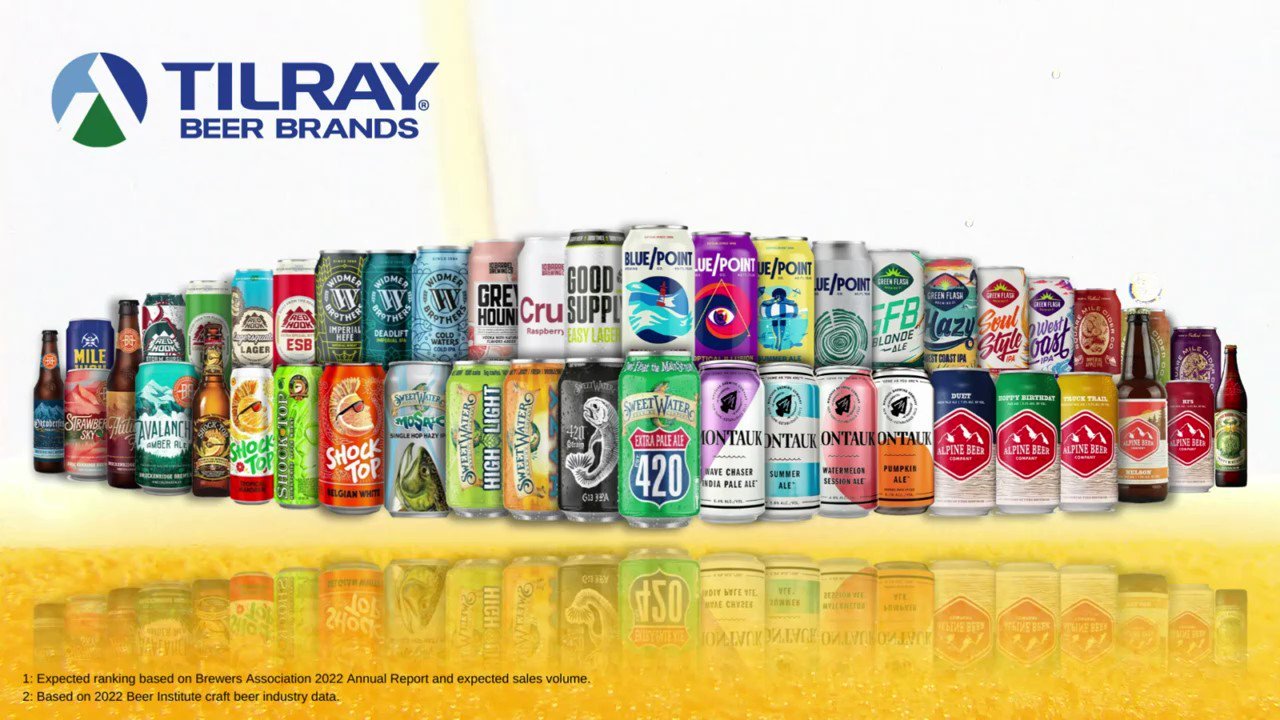
Core Viewpoint - Tilray Inc. is preparing to release its quarterly earnings, with expectations of a loss per share improving significantly and revenue projections indicating a slight decline from the previous year [1][2][6] Financial Performance - Earnings per share (EPS) is projected at -$0.14, a notable improvement from a loss of $1 in the previous year [2][6] - Revenue is expected to be around $211.1 million, slightly above the Zacks Consensus Estimate of $209.7 million, reflecting a minor decline of 0.6% from the previous year [2][6] Financial Health - The company maintains a low debt-to-equity ratio of 0.15, indicating conservative debt usage [4][6] - A current ratio of 2.62 suggests strong short-term financial health, with current assets more than double the liabilities [4][6] - Despite these strengths, the negative price-to-earnings ratio and earnings yield indicate ongoing challenges in achieving profitability [4] Industry Context - The recent executive order by President Donald Trump to expedite the rescheduling of marijuana to a Schedule III substance could significantly impact Tilray and the cannabis industry [5] - Investors are closely monitoring potential regulatory changes, tax relief, and developments related to the new Tilray Medical USA subsidiary, which may influence the company's future performance [5] Segment Performance - The company is experiencing margin pressure in its cannabis and beverage segments, but management remains optimistic about a turnaround in the beverage sector [3] - Strength in wellness products is expected to help cushion quarterly results, which is crucial for investor confidence [3]

What BYD Needs to Prove in 2026
Yahoo Finance· 2026-01-07 00:05
Core Insights - By 2025, BYD Company has established itself as a significant global player in the electric vehicle (EV) market, moving beyond its initial focus on China and achieving volume leadership with expanding exports and growth opportunities beyond automotive [1] - The focus for 2026 will shift from growth to execution in a more competitive and mature EV market, with three key tests for investors [2] Group 1: Profitability Challenges - The primary challenge for BYD in 2026 will be maintaining profitability amidst intense competition in China's EV market, highlighted by price wars in 2024-2025 [4] - Investors should prioritize margin stability over unit sales as the critical financial indicator in 2026, as competition will likely prevent significant price increases [6] Group 2: Global Expansion and Returns - BYD is rapidly expanding its global footprint with new factories in Southeast Asia, Europe, and Latin America to support its international ambitions [7] - The success of these overseas factories will depend on their ability to deliver economic value, including achieving reasonable utilization rates, competitive cost structures compared to China, and sustainable local demand [10] Group 3: Cost Control and Revenue Diversification - Key strategies for BYD to stabilize margins include better cost control across batteries and components, increasing the proportion of overseas sales, and gradually upselling software and features [9] - The economic viability of overseas factories is crucial, as they help mitigate issues like tariffs and logistics but also introduce risks such as higher labor costs and execution complexity [10]

Reasons Why You Should Retain Avis Budget Stock in Your Portfolio
ZACKS· 2026-01-06 17:31
Core Insights - Avis Budget Group (CAR) has a Growth Score of A, indicating strong financial metrics that reflect the quality and sustainability of its growth [1] - The company anticipates a revenue increase of approximately 1.9% and a significant earnings jump of 47.8% year over year for Q4 2025 [9] Revenue Growth Drivers - CAR's revenue growth is primarily fueled by its vehicle rental operations, with a substantial share of airport car rental revenues in North America, Europe, and Australasia [2] - The Zipcar brand operates a self-service car-sharing model, catering to the growing demand for short-term rentals as an alternative to ride-hailing services like Uber and Lyft [2] Operational Efficiency - The company has improved fleet utilization, cost control, and operational efficiency to meet customer demands [3] - Favorable vehicle acquisition prices, reduced supply chain disruptions, and enhanced rental services have collectively strengthened profitability [3] - The launch of Avis First, a luxury car rental service, aims to attract premium customers [3] Technological Investments - Continuous investment in technology enhances customer experience, with partnerships with Alphabet and Amazon for voice-controlled access via Google Assistant and Amazon Alexa [4] - The Avis mobile app's capabilities extend to generating data on road conditions, accident zones, weather, and user preferences [4] Shareholder Value - CAR consistently returns value to shareholders through robust share repurchase programs, buying back shares worth $1.46 billion, $3.33 billion, $951 million, and $70 million in 2021, 2022, 2023, and 2024, respectively [5] - These actions instill shareholder confidence and contribute to growth [5]


What to Expect From Revvity’s Q4 2025 Earnings Report
Yahoo Finance· 2026-01-05 09:51
Core Viewpoint - Revvity, Inc. is a life sciences and diagnostics company with a market cap of $11.1 billion, providing essential tools for genetic screening and infectious disease testing [1] Financial Performance - Analysts anticipate Revvity to report an adjusted earnings of $1.54 per share for the fourth quarter, reflecting an 8.5% increase from $1.42 per share in the same quarter last year [2] - For fiscal 2025, adjusted EPS is expected to be $4.91, slightly up from $4.90 in 2024, with a projected 8.2% annual increase to $5.31 per share in fiscal 2026 [3] Stock Performance - RVTY stock has decreased by 12.4% over the past 52 weeks, underperforming compared to the Healthcare Select Sector SPDR Fund's 13% increase and the S&P 500 Index's 16.9% gain [4] Growth and Profitability Challenges - Revvity has experienced weak underlying growth with constant-currency revenue growth averaging only 2% over the last two years, indicating soft demand [5] - Profitability has declined, with adjusted operating margin decreasing by over 9 percentage points in the past five years due to rising costs and limited operating leverage [5] - Financial performance has deteriorated, with both revenue and EPS declining annually over the past five years, leading to cautious investor sentiment [5]