Dividend Stock

Search documents
Here's Why Nike's Unexpected Ace in the Hole Makes the Dividend Stock a Buy Now
The Motley Fool· 2025-03-28 09:15
Core Viewpoint - Nike's stock has declined significantly from its all-time high in 2021, now trading at multiyear lows, raising concerns about its recovery potential amid various market challenges [1][2]. Group 1: Company Performance and Strategy - Leadership changes and a new corporate strategy focusing on product innovation and key markets in China and North America may aid in Nike's recovery [2]. - Despite challenges such as trade tensions, weak consumer spending, and high interest rates, there are reasons for optimism regarding Nike's near-term performance [3]. - Nike has become a balanced capital allocator, utilizing buybacks and dividends to return value to shareholders, moving away from a heavy reliance on organic growth [5]. Group 2: Dividend and Buyback Programs - Nike has increased its dividend for 23 consecutive years, resulting in a yield of 2.3%, which is higher than the S&P 500 average of 1.3% [6]. - The company is currently offering its highest yield in over 15 years, making it an attractive option for passive income [7]. - In June 2022, Nike's board approved an $18 billion buyback program, with $499 million in stock repurchased in the most recent quarter, totaling 119.3 million shares repurchased for $11.8 billion [9]. Group 3: Financial Health and Future Outlook - Despite slowing growth, Nike's strong cash flow supports its ability to continue raising dividends and buying back stock, indicating financial resilience [10][11]. - The ongoing buyback program suggests management's confidence in the stock's undervaluation, providing a margin for error in capital allocation [12]. - Nike is viewed as an intriguing buy for value investors, although the stock may remain under pressure until there is clear evidence of sales and operating margin improvement [13].



Should Dividend Stock Investors Buy AT&T Stock?
The Motley Fool· 2025-03-22 11:00
Core Viewpoint - The article discusses the lack of positions held by Parkev Tatevosian, CFA, and The Motley Fool in the mentioned stocks, emphasizing their disclosure policy and potential compensation for promoting services [1] Group 1 - Parkev Tatevosian has no position in any of the stocks mentioned [1] - The Motley Fool also has no position in any of the stocks mentioned [1] - There is a disclosure policy in place regarding potential compensation for promoting services [1]


If You Could Only Buy 1 Dividend Stock, This Would Be It
Seeking Alpha· 2025-03-14 11:30
Group 1 - The article promotes iREIT on Alpha, highlighting its comprehensive research offerings that include various investment vehicles such as REITs, mREITs, Preferreds, BDCs, MLPs, and ETFs [1] - It mentions the positive feedback from users, with 438 testimonials, most of which are rated 5 stars, indicating high satisfaction with the service [1] Group 2 - The article does not provide specific financial data or performance metrics related to any companies or industries [2][3]


This Top Dividend Stock Just Entered The Weight Loss Market: Is It a Buy?
The Motley Fool· 2025-03-10 11:57
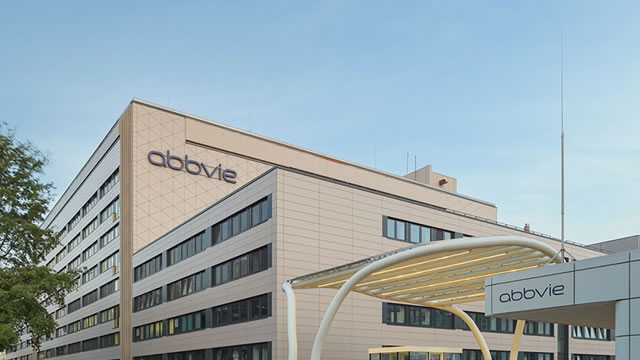
Core Insights - The weight loss market is becoming increasingly lucrative, with drugs like Wegovy and Zepbound generating billions in sales, prompting other pharmaceutical companies to explore opportunities in this sector [1] Company Overview - AbbVie is entering the weight loss market through a licensing agreement with Danish drugmaker Gubra A/S to develop GUB014295, a potential weight loss therapy [2][4] - The agreement includes an upfront payment of $350 million and potential milestone payments of up to $1.9 billion, along with royalties [4] Product Development - GUB014295 operates differently from current leading therapies by mimicking the activity of amylin and calcitonin hormones, rather than the GLP-1 hormone [3] - AbbVie will lead the development of GUB014295, but it is still uncertain if the company can compete effectively against established players like Novo Nordisk and Eli Lilly [5][6] Financial Performance - AbbVie's revenue for 2024 increased by 3.7% to $56.3 billion, despite an 8.9% decrease in adjusted earnings per share to $10.12, attributed to acquisition-related expenses [7] - The company's immunology drugs, Skyrizi and Rinvoq, are expected to continue driving sales growth into the next decade [8] Growth Potential - AbbVie has a diverse pipeline with numerous drug candidates and other growth drivers, including its Botox franchise and Venclexta, a cancer medicine [8] - The entry into the weight loss market diversifies AbbVie's clinical lineup, and even if GUB014295 does not succeed, the company is likely to pursue other opportunities in the anti-obesity space [8] Investment Appeal - AbbVie is recognized as a strong dividend stock, having increased its payouts for 52 consecutive years, with a forward yield of 3.1% and a cash payout ratio of just under 62% [9]

This 6.5%-Yielding Dividend Stock Continues to Add to its Massive Growth Backlog and Has Plenty More Growth Coming Down the Pipeline
The Motley Fool· 2025-03-06 10:26
Core Investment Thesis - Enbridge offers a high dividend yield of 6.5%, significantly above the S&P 500's 1.3% yield, making it an attractive income investment opportunity [1] - The company has a substantial backlog of expansion projects, which is expected to drive growth and total returns for investors in the coming years [1][2] Growth Prospects - Enbridge has secured $20 billion in expansion projects, including an additional $1.7 billion in recent investments, enhancing its long-term growth outlook [2] - The company anticipates placing $15.9 billion of projects into service by 2027, with additional projects expected to come online in 2028 and 2029 [2] Financial Performance Expectations - Enbridge expects adjusted EBITDA growth of 7% to 9% through 2026, followed by 5% annual growth thereafter [3] - The company projects 3% annual growth in distributable cash flow per share through 2026, increasing to 5% beyond next year, supporting annual dividend increases of up to 3% through next year and potentially 5% after 2026 [3] Market Opportunities - Enbridge sees significant growth opportunities across its franchises, with an estimated CA$50 billion ($34.5 billion) in new growth opportunities through 2030 [4] - The largest growth opportunity is in gas transmission, with $15.9 billion in projects aimed at increasing gas supplies in the U.S. Gulf Coast region and supporting growing industrial and export demand [5] Segment-Specific Expansion - Enbridge is pursuing $6.9 billion in liquids pipeline projects, $6.2 billion in gas distribution and storage, and $4.8 billion in renewable power projects [6] - The company is focusing on lower carbon opportunities within its liquids pipeline segment, including carbon capture and storage initiatives [6] Capital Investments - Enbridge plans to invest up to $1.4 billion in its Mainline oil pipeline system through 2028 to enhance reliability and efficiency [7] - Additional expansions include a $276 million investment in the T-North Pipeline and a $69 million expansion of the T15 project, both expected to be completed by 2028 [7] Total Return Potential - The combination of a high dividend yield and solid growth prospects positions Enbridge to achieve total annual returns of 10% to 12% by growing cash flow per share in the 3% to 5% range [9]


Looking for Foundational Dividend Stocks to Build Your Portfolio Around? Consider This Dow Jones Passive Income Powerhouse
The Motley Fool· 2025-02-26 23:50
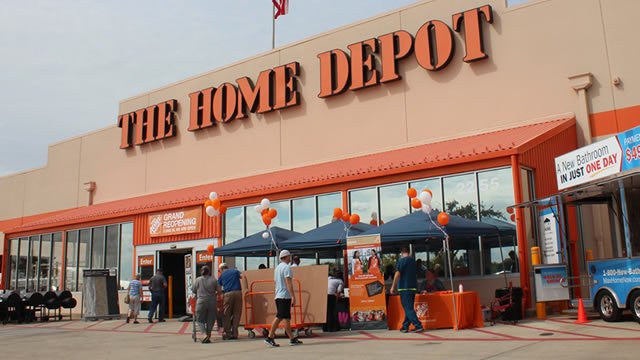
Core Viewpoint - Home Depot remains a strong dividend stock despite facing challenges in the current macroeconomic environment, with a long-term investment thesis intact [2][5][10]. Company Performance - Home Depot's market capitalization has increased from approximately $50 billion 15 years ago to over $380 billion today, indicating strong stock performance [2]. - In fiscal 2023, comparable sales fell by 3.5% and diluted EPS decreased by 9.5%, reflecting a multiyear downturn [4]. - The company's stock has increased by around 11% over the last three years and 57% over the last five years, although it is underperforming compared to the S&P 500 [5]. Macroeconomic Challenges - High interest rates are making home improvement financing more expensive, while elevated mortgage rates are discouraging home purchases [7]. - Existing home sales in the U.S. are near a 10-year low, down approximately 20% from pre-pandemic levels, indicating a strained housing market [8]. - The Case-Shiller Home Price Index is at a 10-year high, contributing to affordability issues for potential homebuyers [7][8]. Dividend Growth - Home Depot has consistently raised its quarterly dividend from $0.25 per share in 2011 to $2.25 per share in 2024, showcasing a commitment to dividend growth [11]. - The company has a dividend yield of 2.3%, making it an attractive option for passive income investors [12]. Valuation and Future Outlook - Home Depot's current price-to-earnings (P/E) ratio is 26.2, with a forward P/E of 24.5, indicating a reasonable valuation despite appearing slightly overvalued [14]. - The acquisition of SRS Distribution for $18.25 billion is expected to enhance Home Depot's exposure to the contractor market, although the full benefits may take time to materialize due to industry slowdowns [15][16]. - Fiscal 2025 may see a slight uptick in sales and earnings post-integration of SRS, even if interest rates remain high [17].