
Machine Learning

Search documents
RCM Technologies(RCMT) - 2024 Q4 - Earnings Call Transcript
2025-03-13 21:15
Financial Data and Key Metrics Changes - Consolidated gross profit for Q4 2024 was $21.6 million, flat compared to Q4 2023. For fiscal 2024, gross profit was $79.8 million, up from $76.7 million in fiscal 2023 [30] - Adjusted EBITDA for Q4 2024 was $6.3 million, down from $8.9 million in Q4 2023. For fiscal 2024, adjusted EBITDA was $25.9 million, compared to $26.6 million in fiscal 2023 [31] - Adjusted EPS for fiscal 2024 was $2.03, slightly down from $2.04 in fiscal 2023 [31] Business Line Data and Key Metrics Changes - In Engineering, Q4 2024 gross profit was $5.2 million, down from $6.1 million in Q4 2023. Fiscal 2024 gross profit was $22.5 million, up from $20.6 million in fiscal 2023 [35] - In IT, Life Sciences, and Data Solutions, Q4 2024 gross profit was $3.9 million, down from $4.5 million in Q4 2023. Fiscal 2024 gross profit was $14.7 million, down from $16.2 million in fiscal 2023 [36] - In Health Care, Q4 2024 gross profit was $12.5 million, up from $11.0 million in Q4 2023. Fiscal 2024 gross profit was $42.5 million, compared to $39.9 million in fiscal 2023 [37] Market Data and Key Metrics Changes - School revenue for Q4 2024 was $34.9 million, compared to $29.8 million in Q4 2023. Non-School revenue for Q4 2024 was $6.2 million, down from $6.9 million in Q4 2023 [38] - Days Sales Outstanding (DSOs) improved from 114 in Q3 2023 to 92 in Q4 2024 [39] Company Strategy and Development Direction - The company aims for smart growth, operational excellence, and delivering unparalleled service to clients as it moves into 2025 [11] - The focus on behavioral health services in schools is a key growth driver, addressing the mental health crisis among students [9] - The company is transitioning to AI and ML tools in its IT services, indicating a shift in primary markets [15] Management's Comments on Operating Environment and Future Outlook - Management expressed optimism for 2025, citing a strong employee base and strategic positioning for success despite macroeconomic uncertainties [6] - The company aims for double-digit growth in adjusted EBITDA for each quarter in 2025, viewing any failure to meet this as a disappointing outcome [73] Other Important Information - The company faced several material expenses in Q4 2024, including a canceled industrial process equipment order and high medical costs, which negatively impacted gross profit [32][33] - A class action lawsuit settlement added approximately $450,000 in SG&A expenses [33] Q&A Session Summary Question: Was any of the extra costs realized in the tax rate? - The tax rate for Q4 was influenced by the overall effective tax rate for the year, which was 34.0%, considered high and abnormal [45][46] Question: What is the normal tax rate range? - The normal tax rate range is expected to be between 26% to 29% [48][49] Question: Can you elaborate on the specific costs in Engineering? - The $900,000 reduction in gross profit was due to a canceled order and significant rework on a project, both resulting in lower revenue [52][56] Question: Did the canceled order relate to any political factors? - No, the canceled order was due to nuances with a particular client, not political factors [62] Question: Is there any impact from DOGE or related headlines? - There is no direct impact from DOGE on the company, although general IT environment changes could occur [66][70] Question: What is the growth expectation for adjusted EBITDA? - The company aims for low double-digit growth in adjusted EBITDA every quarter in 2025 [73]

Ultrasound Image Analysis Software Research Report 2024-2035: AI and Machine Learning Revolutionizing the $2.2 Billion Market
Globenewswire· 2025-03-13 14:57
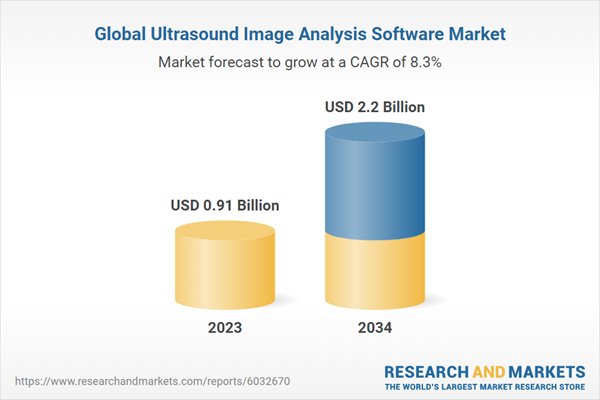
Market Overview - The global ultrasound image analysis software market is estimated to be USD 0.913 billion in 2024 and is expected to reach USD 2.20 billion by 2035, with a CAGR of 8.34% during the forecast period 2025-2035 [1][17]. Technological Advancements - The market growth is driven by advancements in ultrasound technology, particularly in image processing and AI-powered analysis, including developments such as 3D and 4D imaging, elastography, and Doppler imaging [4]. - These technological improvements enhance image quality, automate measurements, and enable real-time visualization, leading to increased demand for sophisticated ultrasound image analysis software [4][5]. Regional Insights - North America is anticipated to have the highest revenue share during the forecast period due to its well-established healthcare infrastructure and high adoption of advanced imaging technologies [6]. - The Asia Pacific region is predicted to grow at the fastest CAGR, driven by an expanding healthcare sector, increasing government investments, and rising prevalence of chronic diseases in emerging markets like China and India [7]. Market Segmentation by Type - The integrated software segment accounted for the highest revenue in 2024, driven by the adoption of comprehensive diagnostic solutions that enhance workflow efficiency [8]. - The standalone software segment is expected to grow at the fastest CAGR, catering to specific clinical needs in smaller clinics and diagnostic centers [9]. Market Segmentation by Product - The Doppler imaging segment accounted for the highest revenue in 2024, widely used in vascular imaging, obstetrics, and cardiology [10]. - The 3D & 4D ultrasound systems segment is predicted to grow at the fastest CAGR due to its advanced imaging capabilities [11]. Market Segmentation by Application - The cardiology segment accounted for the highest revenue in 2024, driven by the increasing prevalence of cardiovascular diseases [12]. - The oncology segment is expected to grow at the fastest CAGR, leveraging advanced image analysis tools for cancer detection and monitoring [13]. Market Segmentation by End-User - The hospitals segment accounted for the highest revenue in 2024, attributed to high patient volume and advanced infrastructure [14]. - The diagnostic centers segment is predicted to grow at the fastest CAGR, driven by the demand for quick and accurate diagnostic solutions [16].

GE Aerospace to invest nearly $1B in US manufacturing
Fox Business· 2025-03-12 15:32
Investment in U.S. Manufacturing - GE Aerospace announced a nearly $1 billion investment in U.S. manufacturing, aimed at strengthening manufacturing and increasing the use of innovative parts and materials for future flight [1] - This investment is nearly double last year's commitment and will enhance the safety, quality, and delivery of engines, benefiting over two dozen communities across 16 states [2] - Eli Lilly is also significantly increasing its investment in U.S. manufacturing, committing an additional $27 billion, bringing its total to over $50 billion since 2020 [5] Job Creation and Economic Impact - GE Aerospace plans to hire around 5,000 U.S. manufacturing and engineering workers as part of its investment strategy [2] - Apple announced a commitment of $500 billion over the next five years, which includes plans to hire 20,000 new employees focused on research and development, silicon engineering, artificial intelligence, and machine learning [7][8] Industry Leadership and Innovation - GE Aerospace's CEO emphasized that the investment will help modernize and expand customer fleets while scaling innovative technologies, keeping the U.S. at the forefront of aerospace leadership [4] - The commitment from major companies like Apple and Eli Lilly reflects a broader trend of reshaping global trade norms to boost domestic manufacturing under the current administration [3][8]



Synchronoss Technologies(SNCR) - 2024 Q4 - Earnings Call Transcript
2025-03-11 22:46
Financial Data and Key Metrics Changes - 2024 was a landmark year for the company, achieving a 5.7% year-over-year revenue increase to $173.6 million, exceeding the midpoint of the outlook [7] - Adjusted EBITDA for the full year was over $50 million, a 61% increase year-over-year, with adjusted EBITDA margins at approximately 29% [7][34] - The company reported a net income of $4.6 million for the full year, compared to a net loss of $64.5 million in 2023 [33] Business Line Data and Key Metrics Changes - The company achieved 6% year-over-year subscriber growth in Q4, contributing to a recurring revenue model that now represents 91% of total revenue [7][28] - Adjusted gross profit in Q4 increased by 12.7% to $35 million, representing 79.3% of total revenue [30] - Income from operations for the full year was $21.7 million, a significant improvement from a loss of $10.6 million in 2023 [31] Market Data and Key Metrics Changes - The company signed significant multiyear contract extensions with AT&T and SFR, with over 90% of projected 2025 revenue under multiyear contracts with global tier one customers [8][9] - The company is experiencing positive early indicators of success in expanding its Personal Cloud solution, particularly with AT&T and SoftBank [13][15] Company Strategy and Development Direction - The company is focused on organic growth opportunities within its blue-chip customer base and expanding its Personal Cloud solution offerings [12] - A new go-to-market strategy was announced, introducing Capsyl, a Synchronoss branded Personal Cloud product aimed at smaller and international operators [22] - The company is leveraging AI and machine learning to enhance user engagement and improve operational efficiency [11][48] Management Comments on Operating Environment and Future Outlook - Management expressed confidence in the growth prospects for 2025, anticipating mid-single digit subscriber growth across the existing customer base [18] - The company expects to achieve a revenue range of $170 million to $180 million for 2025, with adjusted EBITDA projected between $52 million and $56 million [37] - Management highlighted the importance of the tax refund process, which is expected to positively impact the company's financial position [36] Other Important Information - The company reported a free cash flow of $9.1 million in Q4, a significant improvement from a negative $4.4 million in the prior year [34] - The company is actively exploring options for debt refinancing and expects to have a clear path for refinancing senior notes and term loans [55] Q&A Session Summary Question: Can you talk about the degree of cost-cutting or efficiency efforts completed and any expected seasonality? - Management believes cost-cutting actions are substantially complete but will continue to seek efficiencies, especially with AI technologies [42] - Revenue is expected to be steady throughout 2025, with potential increases in Q4 due to new customer opportunities [44] Question: How does AI impact revenue opportunities and cost efficiency? - AI is seen as a way to enrich consumer experience and create additional revenue opportunities, while also improving operational efficiency [48][49] Question: What are the plans for debt refinancing? - The company is actively looking at debt refinancing options and expects to have a clear path in the coming months [55] Question: How important is the prepaid sector to growth? - The prepaid sector currently represents less than 5% of the total customer base but is expected to grow and contribute to subscriber revenue projections in 2025 [58]

3 Scorching-Hot Artificial Intelligence (AI) Stocks With 95% to 167% Upside, According to Select Wall Street Analysts
The Motley Fool· 2025-03-11 08:51
Core Insights - Analysts have identified three AI stocks with significant upside potential, with price targets suggesting increases of 95% to 167% over the next year [4][10][16] Group 1: AI Market Overview - The rise of artificial intelligence (AI) has been a major catalyst for stock market growth, contributing to record highs in major indices like the Dow Jones, S&P 500, and Nasdaq [2] - PwC analysts forecast a 26% increase in global GDP by 2030 due to the impact of AI technology across various industries [3] Group 2: Nvidia - Nvidia is projected to have an implied upside of 95%, with a price target of $220 per share set by Rosenblatt analyst Hans Mosesmann [5] - The company's Hopper chip and Blackwell GPU architecture have generated $11 billion in sales during the fiscal fourth quarter, marking the fastest ramp of a new product in Nvidia's history [6] - Nvidia's CUDA toolkit has been crucial in maintaining customer loyalty, enabling developers to maximize GPU potential [7] - However, Nvidia faces increasing competition from both external rivals and internal customers developing their own AI chips, which could impact its market position [8] - Historical trends indicate that emerging technologies often face bubble-bursting events, raising concerns about Nvidia's reliance on its data center segment, which accounted for 88% of net sales last year [9] Group 3: SoundHound AI - SoundHound AI has an implied upside of 167%, with a price target of $26 per share predicted by H.C. Wainwright analyst Scott Buck [10] - The company aims to create an AI voice ecosystem, integrating voice technology in various industries, including next-generation vehicles and restaurants [11][12] - SoundHound AI is experiencing significant sales growth, with a forecast of 85% growth in 2024 and potential for sales to double [13] - Despite its growth, SoundHound AI is not yet profitable, with a net loss that nearly doubled in the fourth quarter and a significant increase in cash burn [14][15] Group 4: Upstart Holdings - Upstart Holdings is projected to have an implied upside of 105%, with a price target of $110 per share set by Mizuho's Dan Dolev [16] - The company utilizes AI and machine learning to streamline the loan-vetting process, partnering with over 100 banks and credit unions, and achieving 91% automation in its loans [17] - Upstart's platform has shown similar delinquency rates compared to traditional methods, allowing for a broader customer base without increasing risk [18] - Concerns exist regarding Upstart's performance during economic downturns, as its model has not been tested in such conditions [19] - The company's performance is also sensitive to monetary policy changes and interest rates, which could lead to stock volatility [20]




Oracle Q3 Cloud Revenue Surges 23%
The Motley Fool· 2025-03-10 21:10
Core Insights - Oracle reported strong cloud revenue growth in Q3 2025, but overall revenue and earnings fell short of analysts' expectations [1][2] Financial Performance - Adjusted EPS for Q3 2025 was $1.47, slightly below the estimate of $1.49, while revenue was $14.13 billion, missing the estimate of $14.38 billion [1][3] - Year-over-year revenue growth was 6.2%, with adjusted EPS increasing by 4.3% compared to Q3 2024 [3] - The adjusted operating margin improved to 44% from 43% in the previous year [3][7] - GAAP operating income rose 16% to $4.4 billion, and net income increased by 22% to $2.9 billion [7] Cloud Segment Growth - Cloud revenue reached $6.2 billion, reflecting a 23% increase year-over-year [3][6] - Infrastructure cloud services grew by 49% to $2.7 billion, while application services increased by 9% to $3.6 billion [6] - Database MultiCloud revenue saw a 92% uplift from platforms like Microsoft and Amazon [6] Strategic Initiatives - Oracle has formed partnerships with OpenAI and Nvidia, and plans to double its data center capacity [8] - The company is focusing on enhancing its Oracle AI Data Platform, with a 244% increase in GPU consumption for AI training [8] Future Outlook - Management anticipates a 15% revenue increase in the upcoming fiscal year, supported by a $130 billion sales backlog and a 62% growth in remaining performance obligations [9] - Plans to double capital expenditures in the next fiscal year to meet growing demand in cloud infrastructure [10]


Analog Devices Introduces Expanded CodeFusion Studio™ Solution to Accelerate Product Development and Ensure Data Security
Prnewswire· 2025-03-10 10:00
Core Insights - ADI has expanded its CodeFusion Studio System Planner and Data Provenance Software Development solutions to address the increasing complexity faced by embedded developers, including challenges from advanced processors and security environments [1][5] - The new offerings aim to simplify system design management, resource allocation, and proof-of-concept demonstrations while ensuring data integrity at the edge [1] CodeFusion Studio System Planner - The CodeFusion Studio System Planner utilizes an open-source architecture to facilitate flexible project creation across multiple cores, allowing for graphical resource allocation of memory and peripherals [2] - It includes configuration tools that are aware of the real-time operating system or firmware platform, providing context-aware settings for peripherals or memory blocks [2] - Developers can generate necessary code through a plugin-based project creation system, which allows for customization while maintaining a common set of configuration tools [3] - The system features a graphical utility for memory resource partitioning, enabling the generation of linker scripts and Device Tree memory overlay files [4] Data Provenance Software Development Solution - ADI has introduced a Data Provenance solution that establishes a trust framework for signal chain data, ensuring data integrity and authenticity throughout its lifecycle [6] - This solution enhances data fidelity by appending secure metadata and provides strong cryptographic proof to assess data authenticity across complex networks [6][7] - The immediate applications of the Data Provenance solution include building reliable algorithms and AI models, improving sensor insights, and reducing data waste [7] Future Developments - ADI is committed to further enhancing its offerings by integrating artificial intelligence and machine learning models into embedded systems, with additional extensions to the CodeFusion Studio platform expected in the coming months [8] Company Overview - Analog Devices, Inc. (NASDAQ: ADI) is a leading global semiconductor company with over $9 billion in revenue for FY24 and approximately 24,000 employees worldwide [9]

7个考虑将SAP ECC迁移至S/4HANA的原因
NTT DATA, Inc.· 2025-03-07 12:00
Core Insights - The report highlights seven key deficiencies of SAP ECC that hinder organizations from realizing their full potential and emphasizes the importance of migrating to SAP S/4HANA for digital transformation [2][20]. Group 1: Limitations of SAP ECC - Limited scalability and flexibility of SAP ECC compared to modern ERP systems like SAP S/4HANA Cloud, making it difficult for organizations to adapt to market demands [4]. - SAP ECC is based on outdated technology, which may not support the latest innovations and features available in modern ERP systems, potentially causing organizations to fall behind competitors [5]. - The reporting and analytical capabilities of SAP ECC are less powerful and user-friendly than those of SAP S/4HANA Cloud, leading to slower decision-making and lack of real-time insights into business operations [9]. Group 2: Financial Implications - Organizations running SAP ECC may face higher system maintenance and update costs, especially as technology becomes more outdated, while cloud-based solutions like SAP S/4HANA Cloud typically have lower maintenance costs and offer automatic updates [12]. - Migrating from legacy systems to cloud-based ERP solutions can save companies up to 40% in maintenance costs [13]. Group 3: Integration and Customization Challenges - SAP ECC may struggle to integrate seamlessly with modern technologies such as artificial intelligence, machine learning, and advanced analytics tools, limiting organizations' ability to leverage these technologies for competitive advantage [15]. - Many organizations using SAP ECC rely on custom code to meet unique business needs, which can become difficult to maintain over time and may not be compatible with new systems or updates, leading to increased costs and reduced efficiency [15][16]. Group 4: Future Considerations - As SAP focuses on new products like SAP S/4HANA, organizations using SAP ECC may find that support and resources from SAP decrease over time, making it more challenging to resolve issues or implement new features [18]. - Over 90% of SAP's R&D investment is now concentrated on SAP S/4HANA and related technologies, indicating a shift in company priorities [19].

Kodiak Gas Services(KGS) - 2024 Q4 - Earnings Call Transcript
2025-03-07 02:46
Financial Data and Key Metrics Changes - Total revenue for 2024 grew by 36% to approximately $1.2 billion, driven by the CSI acquisition and organic fleet growth [19][35] - Adjusted EBITDA increased by 39% to approximately $610 million, with net income attributable to common shareholders nearly reaching $50 million, reflecting a 149% increase from the prior year [36][19] - Free cash flow generated in 2024 was $122 million, with leverage ending the year at 3.9 times [20][42] Business Line Data and Key Metrics Changes - The contract services segment saw an adjusted gross margin percentage increase to approximately 67%, attributed to successful divestitures and improved pricing strategies [36] - Average horsepower per unit increased from 734 in Q1 post-CSI acquisition to 926 at year-end, indicating a focus on larger horsepower units [37][36] - Revenues from the other services segment were just over $29 million in Q4, with a lower adjusted gross margin percentage of 15% due to seasonal slowdowns [39] Market Data and Key Metrics Changes - Front Month natural gas prices rose from the mid-$2 range to the $4 range, driven by seasonal demand increases and new LNG export terminal startups [22] - The Permian Basin is expected to lead natural gas production growth, with producers generating 10% more gas per barrel of oil compared to 2020 [25][24] Company Strategy and Development Direction - The company is focused on large horsepower compression in oil-directed basins, actively divesting non-core assets to streamline operations [14][12] - Significant investments are being made in training programs and AI technology to enhance service capabilities and operational efficiency [26][27] - The company plans to continue returning capital to shareholders while targeting a leverage ratio of 3.5 times by the end of 2025 [48][42] Management's Comments on Operating Environment and Future Outlook - Management expressed confidence in the strong demand for natural gas compression and the company's strategic positioning to capitalize on this growth [24][49] - The outlook for 2025 includes expected revenue growth between $1.31 billion and $1.38 billion, with adjusted EBITDA guidance of $685 million to $725 million [43][45] - Management highlighted the importance of executing on contract renewals and the deployment of upgraded equipment to drive revenue growth [116][115] Other Important Information - The company returned $139 million to shareholders in 2024, representing about 37% of discretionary cash flow, and increased its quarterly dividend by 8% [17][31] - The company is developing a new ERP system and expanding its support infrastructure to facilitate future growth [47][96] Q&A Session Summary Question: Pricing trends and average revenue per horsepower - Management acknowledged a slight decrease in average revenue per horsepower due to the sale of non-core horsepower but indicated continued upward pricing trends for new units [55][56][58] Question: Cost management and AI investments - Management discussed ongoing investments in AI and predictive maintenance, which are expected to enhance margins over time, although specific margin impacts are still uncertain [64][66] Question: Impact of macroeconomic factors on customer decisions - Management noted that inflationary pressures from tariffs may influence customer decisions to outsource compression services rather than purchase equipment [78][80] Question: Supply chain management and delivery times - Management reported stable delivery times for equipment, with no expected disruptions in the supply chain affecting operations [124][125] Question: Future capital allocation and growth opportunities - Management indicated that while 2025 is well planned, there may be opportunities for increased fleet additions in 2026 as capital requirements from acquisitions decrease [104][105] Question: Labor tightness and training initiatives - Management emphasized the importance of training programs to address labor challenges in the Permian Basin and enhance service quality [113][114] Question: Competitive landscape and market share - Management stated that market share growth is not a primary focus, emphasizing disciplined capital spending and strategic partnerships with customers [118][119]

Kodiak Gas Services(KGS) - 2024 Q4 - Earnings Call Transcript
2025-03-06 22:18
Financial Data and Key Metrics Changes - Total revenue for 2024 reached approximately $1.2 billion, a 36% increase from 2023 [19][35] - Adjusted EBITDA grew by 39% to approximately $610 million [19][35] - Free cash flow generated in 2024 was $122 million, with leverage ending the year at 3.9 times [20][42] Business Line Data and Key Metrics Changes - The contract services segment saw an adjusted gross margin percentage increase to approximately 67% in Q4, reflecting successful pricing strategies and divestitures [36] - Average horsepower per unit increased from 734 in Q1 post-CSI acquisition to 926 at year-end [37] - Revenues from the other services segment were just over $29 million in Q4, with a 15% adjusted gross margin [39] Market Data and Key Metrics Changes - Front Month natural gas prices increased from the mid-$2 range to the $4 range due to seasonal demand and new LNG export terminals [22] - Permian producers are generating 10% more gas per barrel of oil production compared to 2020, indicating a positive trend for gas production growth [25] Company Strategy and Development Direction - The company is focused on large horsepower compression in oil-directed basins, actively divesting non-core assets to streamline operations [14][15] - Significant investments are being made in training programs and AI technology to enhance service capabilities and operational efficiency [26][27] - The company plans to continue returning capital to shareholders while targeting a leverage ratio of 3.5 times by the end of 2025 [28][48] Management's Comments on Operating Environment and Future Outlook - Management expressed confidence in the strong demand for natural gas and the company's strategic positioning to capitalize on this growth [24][32] - The outlook for 2025 includes expected revenue between $1.31 billion and $1.38 billion, with adjusted EBITDA guidance of $685 million to $725 million [43][45] - Management noted that the current pricing environment is durable due to higher equipment costs and ongoing demand for compression services [138] Other Important Information - The company returned $139 million to shareholders in 2024, representing about 37% of discretionary cash flow [17] - The company has exited operations in four countries, focusing on the U.S. and Mexico, with over 80% of fleet capacity located in the Permian or Eagle Ford [15] Q&A Session Summary Question: Average revenue per horsepower per month decreased slightly - Management explained that the decrease was due to the sale of non-core horsepower and that removing those sales would show a modest increase in revenue per horsepower [55][59] Question: Impact of macro volatility on customer decisions - Management indicated that inflationary pressures on capital costs are expected to be manageable and that customers may prefer to outsource compression services [78][81] Question: Supply chain management and delivery times - Management reported that delivery times remain stable at around 45 weeks and that they are effectively managing supply chain challenges [124][126] Question: Future capital allocation and buybacks - Management acknowledged the potential for opportunistic buybacks and emphasized the importance of maintaining a disciplined capital allocation strategy [105][106] Question: Labor tightness in the Permian - Management is focusing on training and technology to address labor challenges and ensure continued service quality [113][114] Question: Expectations for 2025 EBITDA outlook - Management noted that the ability to execute on contract renewals and the timing of deploying capital will influence the EBITDA range [116] Question: Market share and competitive landscape - Management stated that they do not focus on market share but rather on disciplined capital spending and strategic growth [118]