
Debt

Search documents
Finerman's Fine Print: Digging into hyperscaler debt
CNBC Television· 2025-11-06 22:45
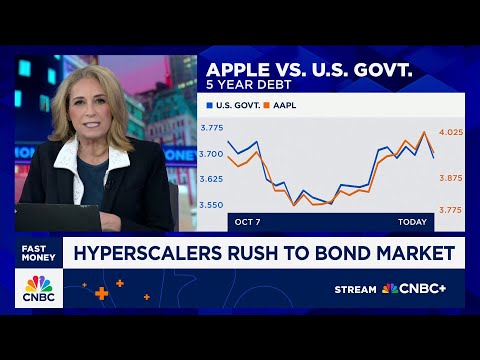
Well, as this doubt has been brewing about the hyperscalers, they have been rushing to the bond market to help fund their AI ambitions. The amount raised by companies like Met and Oracle ballooned to more than $75 billion. That's just since September.The chairwoman has been watching this trend. She's got the fine print tonight on it. As she does the fine print, I want to thank Andy Conson at Damp Spring uh for putting this together.So this is some hyperscalers how their spreads have moved which is a sign of ...


X @Bloomberg
Bloomberg· 2025-11-06 17:12
The International Monetary Fund is working hard to reach a new program for Senegal, mission chief Edward Gemayel said following talks to resolve the fallout from billions of dollars in undisclosed debt that have strained the nation’s finances https://t.co/VDwfGbXVEg ...
What Happens When a Country Accumulates Too Much Debt?
Principles by Ray Dalio· 2025-11-06 16:22
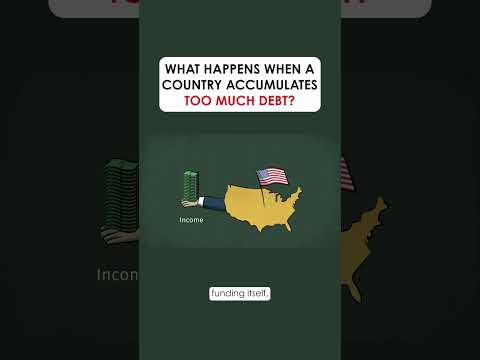
Economic Cycles & Debt - Excessive debt coupled with economic downturns can lead to financial bubbles bursting, forcing countries to choose between defaulting or printing money [1] - Historically, financial crises have been triggered by financial excesses and the costs of wars, as seen with the Dutch, British, and the US [2] - Governments often resort to printing money to manage debt, which devalues the currency and raises inflation [1] Internal Conflict & Political Extremism - Economic hardship, declining living standards, and wealth inequality exacerbate internal conflicts among different groups [3] - Political extremism arises as populism of the left seeks wealth redistribution, while populism of the right aims to preserve wealth [3] - Rising taxes on the wealthy during turbulent times can lead to capital flight, reducing tax revenue and hollowing out the economy [4] Societal Instability & Leadership - Capital flight and turbulent conditions undermine productivity, shrinking the economic pie and intensifying conflicts [5] - Populist leaders emerge, promising order and control, challenging democracy and potentially leading to strong, authoritarian leadership [5]
X @Bloomberg
Bloomberg· 2025-11-06 13:36
Javier Cuellar is making big bets. Upon launching a complex $9 billion debt deal in Swiss francs, dollars, and pesos, Colombia’s public credit director said he was taking an unprecedented risk https://t.co/6mJR1Cio7P ...
X @Ash Crypto
Ash Crypto· 2025-11-06 10:34
BREAKING: 🇺🇸 US Treasury just bought back $2,000,000,000 of its own debt.Bullish for markets. https://t.co/Nie6Tph4gL ...
Tucker Carlson Predicts America’s Next Revolution — and It’s Not Who You Think
All-In Podcast· 2025-11-05 17:24
Labor Market & Social Unrest - The US has approximately 1 million lawyers, leading to potential displacement of other workers [1] - Displacement of lawyers and non-profit employees could trigger social unrest [1] - Frustrated members of the striving class often ferment revolutions [2] Economic Disillusionment - Young people burdened with $400,000 in debt are facing disillusionment as expected life progression (home buying, good living) fails to materialize [3] - The Mandani election surge may be linked to young people's disillusionment stemming from college debt and unfulfilled expectations [3] Societal Impact - Displacement of factory workers has led to negative consequences like drug abuse and unhealthy eating habits [1]

X @Bloomberg
Bloomberg· 2025-11-05 00:26
Chancellor of the Exchequer Rachel Reeves needs to run primary budget surpluses, a feat Britain last achieved quarter of a century ago, to get a grip on the country’s “unsustainable” debt trajectory, a leading economic think tank warned https://t.co/u7g7dUsvV7 ...
X @Raoul Pal
Raoul Pal· 2025-11-04 23:34
I know no one wants to hear bullish ideas and everyone is scared and wants to fling poo at each other... but the Road to Valhalla is getting very close.If global liquidity is the single most dominant macro factor then we MUST focus on that.REMEMBER - THE ONLY GAME IN TOWN IS ROLLING $10TRN IN DEBT. EVERYTHING ELSE IS A SIDESHOW. THIS IS THE GAME OF THE NEXT 12 MONTHS.Currently the gov shutdown has forced a sharp tightening of liquidity as the TGA builds up with no where to spend it.This is not offset by the ...
X @The Block
The Block· 2025-11-04 16:55
Sequans dumps nearly a third of bitcoin holdings to pay down debt as BTC falls to four-month low https://t.co/NvCOZ8omwF ...
X @The Wall Street Journal
The Wall Street Journal· 2025-11-03 10:13
France, the U.K. and Germany have rising budget deficits and debt, while the former crisis hot spots in southern Europe look financially healthier in a role reversal of sorts https://t.co/2QzXjVHypn ...