
跨大西洋关系

Search documents
国际观察|默茨首访聚焦欧洲 欲推欧洲防务自主
Xin Hua She· 2025-05-11 09:49
Group 1 - The new German Chancellor Merz aims to re-establish Germany's significant role in European politics through intensive visits to neighboring countries, signaling a commitment to revitalize the "Franco-German engine" and promote European defense autonomy [1][4]. - Merz's first visit to France highlights the importance of Franco-German relations, with discussions focusing on European defense, the Russia-Ukraine situation, and regional security cooperation [2][3]. - A key outcome of the Merz-Macron meeting is the establishment of a Franco-German Defense and Security Council to address strategic challenges and enhance cooperation in defense capabilities [2][3]. Group 2 - Merz's visits to Poland and Brussels are aimed at strengthening Germany's relationships with these countries and reaffirming Germany's leadership role within the EU [4][5]. - The Polish Prime Minister Tusk noted that Merz's visit provides new momentum for bilateral relations, emphasizing the importance of infrastructure connectivity, despite existing differences on border control and immigration [4]. - In Brussels, Merz expressed the need for Germany to play a strong and proactive role in the EU, indicating a desire to redefine Germany's position in European affairs [4][5]. Group 3 - Analysts suggest that Merz's approach reflects a shift towards European defense independence, particularly in light of changing transatlantic relations under the Trump administration [5][7]. - Merz has articulated the importance of European unity and the need for Germany to prepare for its own and Europe's security, aiming to expand European defense capabilities [6][7]. - A joint article by Merz and Macron emphasizes the need for Europe to take greater responsibility for its own security and to respond decisively to harmful measures from the U.S. [6][7].
白宫官员:美国负债33万亿美元,已无力继续“补贴”北约盟友
Huan Qiu Wang· 2025-04-30 10:06
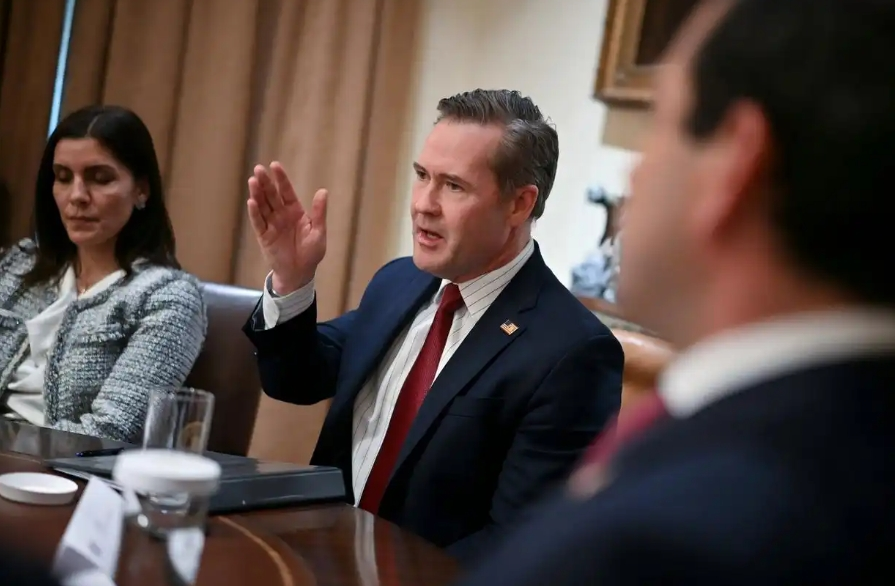
Core Viewpoint - The U.S. is unable to continue subsidizing NATO allies due to its $33 trillion debt, and European countries must take the lead in defense support for Ukraine [1][3] Group 1: U.S. Defense Spending and NATO - U.S. National Security Advisor Mike Waltz stated that the U.S. can no longer afford to subsidize European security, emphasizing the need for NATO members to increase their defense spending [3] - Waltz highlighted that NATO's 32 member countries, including the U.S. and Canada, are projected to have an average defense spending of only 2.71% of GDP in 2024, falling short of the 2% minimum standard [3] - Countries like Poland and Latvia have committed to increasing their defense spending to between 3% and 5% in the coming years, while Sweden and Estonia plan to follow suit between 2026 and 2030 [3] Group 2: European Defense Responsibilities - Waltz pointed out that the future military aid to Ukraine must be led by Europe, which is seen as a basic consensus following U.S.-European discussions [3] - He criticized countries like Spain, Canada, and Italy for their insufficient defense investments, and called for Canada to establish bases and deploy icebreakers in the Arctic in response to threats from China and Russia [3] - The relationship between the U.S. and NATO allies is becoming increasingly strained, with allies losing trust in the U.S. commitment to NATO [3]

德媒:默茨忠实盟友将成德国新外长,或极大减少新任政府内部分歧
Huan Qiu Shi Bao· 2025-04-29 22:31
Group 1 - The core point of the article is the approval of a coalition government agreement between the Christian Democratic Union (CDU) and the Social Democratic Party (SPD) in Germany, with Friedrich Merz set to become the new Chancellor if the SPD membership approves the agreement [1] - The CDU will manage foreign and economic affairs, while the SPD will oversee finance and defense, with the CDU holding 10 out of 17 cabinet positions [1] - The new Foreign Minister, Johann Wadephul, is a conservative and experienced in defense and foreign policy, marking a shift from the previous foreign minister's approach [2][3] Group 2 - Wadephul emphasizes the need for Germany to enhance its ability to respond to global crises and plans to implement a coherent foreign and security policy [3] - The new government aims to break down departmental silos and establish a National Security Council to coordinate efforts across various government levels [3] - Merz has called for the cancellation of all tariffs by the U.S. and mutual recognition of technical standards to reduce bureaucratic barriers in trade [4]