
中韩关系

Search documents
韩国任命新的驻华大使
券商中国· 2025-10-16 06:29
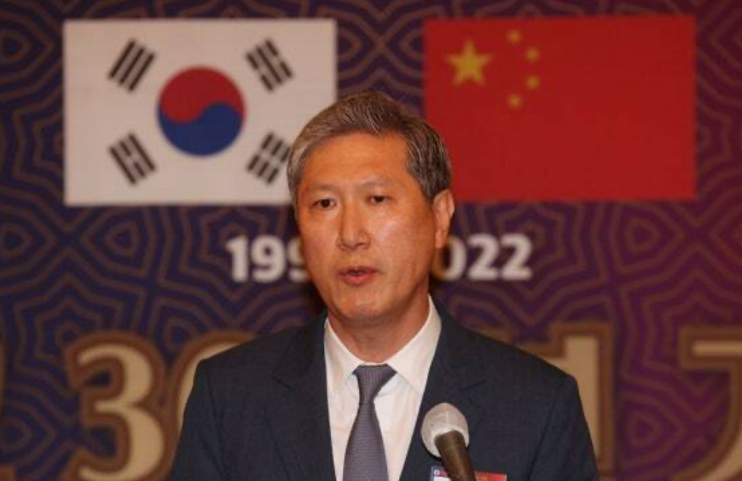
Core Viewpoint - The appointment of Ryu Jae-hyun as South Korea's ambassador to China is seen as a strategic move to improve Sino-Korean relations, especially given his background and previous involvement in cultural exchanges between the two countries [1][2]. Group 1: Appointment Details - Ryu Jae-hyun was officially appointed as the South Korean ambassador to China on October 16, following a cabinet meeting led by President Lee Jae-myung on October 14 [1]. - The ambassador position had been vacant for approximately nine months since the departure of the previous ambassador, Jeong Jae-ho, in January [1]. - Ryu Jae-hyun, 60 years old, is a graduate of Seoul National University and holds a master's degree in political science from Stanford University and a doctorate in law from Georgetown University [1]. Group 2: Diplomatic Context - Ryu Jae-hyun's father, former President Roh Tae-woo, was instrumental in establishing diplomatic relations between South Korea and China [1]. - Ryu has expressed a commitment to enhancing Sino-Korean relations, emphasizing a spirit of perseverance akin to "Yugong Yishan" (愚公移山) [1][2]. - His recent visit to China as part of a presidential delegation in August indicates his active role in fostering bilateral ties [1]. Group 3: Broader Implications - The appointment comes at a time of significant changes in the international order, with Ryu acknowledging the heavy responsibility and historical mission associated with his role [2]. - The Chinese Foreign Ministry has recognized the importance of ambassadors as bridges for friendly cooperation between nations, indicating a positive reception to Ryu's nomination [1].


韩国国务总理下达紧急指示:必要时强力应对反华集会
Huan Qiu Shi Bao· 2025-09-19 22:47
Group 1 - South Korean government is closely monitoring anti-China gatherings in Seoul, with Prime Minister Kim Boo-kyum issuing emergency directives for police to take necessary measures to maintain public order and safety [1][2] - The gatherings, organized by certain political factions, have been fueled by unfounded claims of "Chinese interference in South Korean elections," leading to protests in areas frequented by Chinese tourists [1] - Chinese Ambassador to South Korea, Dai Bing, has urged the South Korean government to ensure the safety and legal rights of Chinese citizens, emphasizing that the actions of a minority are aimed at discrediting China [1] Group 2 - As police increase control in Myeongdong, some groups have relocated their protests to Dalin-dong, causing concern among local businesses and residents due to noise and abusive behavior disrupting normal operations [2] - The South Korean police are considering stricter measures against repeat offenders, including dispersing gatherings, prohibiting similar events, and pursuing legal accountability to prevent conflicts with foreign embassy personnel and tourists [2] - Public opinion suggests that with the government's heightened response, future gatherings may face more stringent restrictions [2]
韩媒:韩国外长本周访华
Huan Qiu Shi Bao· 2025-09-14 22:58
Group 1 - The visit of South Korean Foreign Minister Park Jin to China is seen as a significant test for the Yoon Suk-yeol administration in balancing relations between the US and China [1] - The agenda for the talks is expected to include discussions on the participation of Chinese leaders in the APEC summit in late October and the situation on the Korean Peninsula [1] - The South Korean government is under pressure to manage its relationship with China amid ongoing US-China tensions and stalled trade negotiations with the US [1][2] Group 2 - China has maintained its position as South Korea's largest trading partner for over 20 years, and in 2024, South Korea is projected to become China's second-largest trading partner [2] - There are signs of improving relations between South Korea and China, with the South Korean government taking steps to limit anti-China protests [2] - The new South Korean administration emphasizes a pragmatic approach to managing bilateral relations, focusing on practical cooperation rather than strict adherence to diplomatic protocols [2][3]
韩媒:韩国将提名前总统卢泰愚之子卢载宪任驻华大使
Zhong Guo Xin Wen Wang· 2025-09-11 01:21
Core Viewpoint - The South Korean government has nominated Ryu Jae-hyun, son of the late former President Roh Tae-woo, as the first ambassador to China under the current administration, indicating a strategic move to enhance bilateral relations with China [1]. Group 1: Nomination Details - Ryu Jae-hyun, aged 60, is expected to be officially appointed as the ambassador, with the nomination process already underway [1]. - The nomination has been confirmed by multiple sources within South Korea's diplomatic community [1]. Group 2: Background and Qualifications - Roh Tae-woo, during his presidency, promoted the "Northern Policy" and successfully established diplomatic relations between South Korea and China in 1992 [1]. - Ryu Jae-hyun has experience in fostering Sino-Korean exchanges, having served as an advisor to the International Advisory Council of Chengdu, China, in 2016 [1]. - The current government believes Ryu Jae-hyun's understanding of China makes him the best candidate to improve relations between the two countries [1].
韩媒:韩国政府提名卢泰愚之子卢载宪担任韩驻华大使
Huan Qiu Wang· 2025-09-11 00:22
Core Points - The South Korean government has nominated Ryu Jae-hyun, son of former President Roh Tae-woo, as the new ambassador to China, completing the nomination process [1] - This appointment marks the first ambassador to China since Yoon Suk-yeol took office as President of South Korea [1] - The establishment of diplomatic relations between South Korea and China dates back to August 1992, during Roh Tae-woo's presidency [1] - Ryu Jae-hyun has been actively involved in promoting cultural exchanges between South Korea and China [1] - The selection of Ryu Jae-hyun is seen as an effort by President Yoon Suk-yeol to improve relations between South Korea and China [1]
韩总统特使团在华访问强化沟通
Huan Qiu Shi Bao· 2025-08-25 22:50
Group 1 - The core viewpoint of the articles highlights the simultaneous diplomatic activities of South Korea, with President Lee Jae-myung attending a summit in the U.S. while a special envoy delegation led by former National Assembly Speaker Park Byeong-seok visits China, indicating a balanced approach to foreign relations [1][2] - The special envoy delegation's visit coincides with the 33rd anniversary of diplomatic relations between China and South Korea, emphasizing the new government's commitment to improving bilateral ties while maintaining the U.S.-South Korea alliance [1][2] - Wang Yi, the Chinese Foreign Minister, expressed that the relationship between China and South Korea is at a crucial stage of improvement and development, urging both sides to adhere to their original intentions of establishing diplomatic relations and to expand common interests [2] Group 2 - The South Korean special envoy delegation aims to signal the new government's emphasis on improving relations with China while balancing its diplomatic efforts with the U.S. and Japan [2][3] - There is a recognition of the potential for positive development in China-South Korea relations, driven by the new government's focus on practical interests and the deep economic integration between the two countries [3] - Challenges remain, particularly due to U.S. pressure, which complicates South Korea's adjustments to its China policy, indicating that the restoration of relations will require ongoing efforts [3]
韩外长接受美媒采访谈对华政策:对中国崛起应保持一定“警惕”,但遏制并非奏效之道
Huan Qiu Wang· 2025-08-04 01:25
Group 1 - South Korea's Foreign Minister, Park Jin, emphasizes the importance of maintaining good relations with China while cooperating with the US and Japan [1] - Park views China's rise as a challenge and believes it is necessary to remain vigilant due to China's rapid economic development [1][3] - The South Korean government acknowledges the need for engagement with China in light of new regional challenges, suggesting that attempts to contain China unilaterally will not be effective [3] Group 2 - The South Korean government aims to pursue a pragmatic diplomacy centered on national interests, strengthening the Korea-US alliance and improving relations with China and Russia [3] - China's Foreign Ministry has reiterated that the development of China-South Korea relations is driven by mutual interests and should not be influenced by third-party factors [3]
驻光州总领事顾景奇会见光州广域市国际关系大使朴先哲
news flash· 2025-06-12 06:18
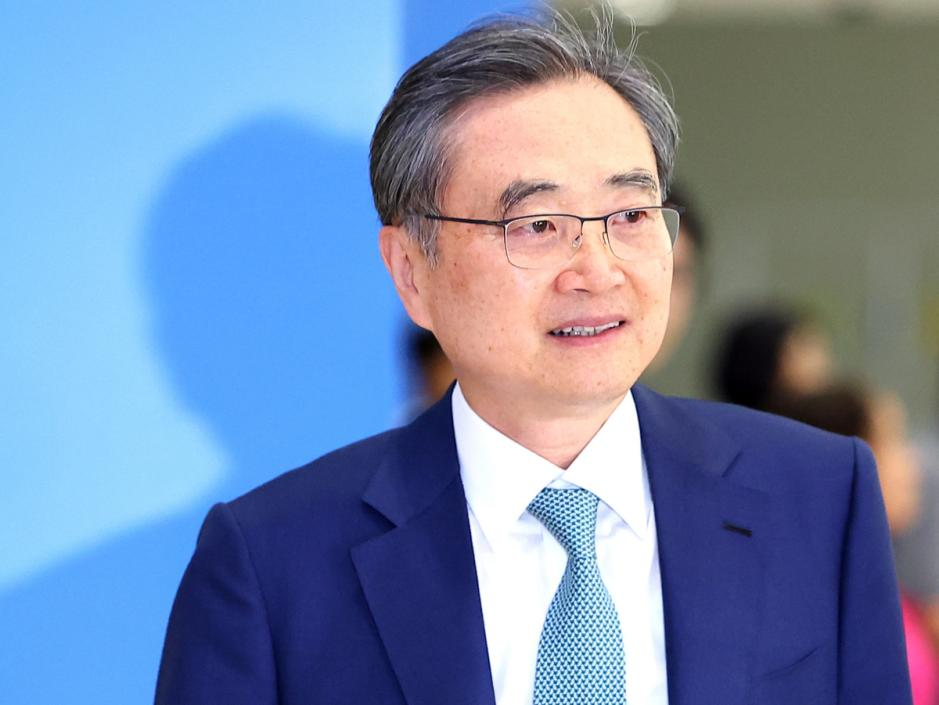
Core Points - The meeting between Consul Gu Jingqi and Gwangju's International Relations Ambassador Park Seon-cheol highlights the importance of China-South Korea relations [1] - The conversation between President Xi Jinping and President Lee Jae-myung reflects the high regard both nations have for their bilateral relationship [1] - The Gwangju city government expresses willingness to enhance communication and cooperation with the consulate to strengthen friendship and mutual benefits [1]
习近平同韩国总统李在明通电话
券商中国· 2025-06-10 03:52
Core Points - The core message emphasizes the importance of strengthening the China-South Korea relationship, highlighting mutual benefits and cooperation in various fields [1][2]. Group 1: Bilateral Relations - Xi Jinping congratulated Lee Jae-myung on his presidential election and reiterated the significance of the China-South Korea relationship as a stable and enduring partnership [1]. - Both leaders acknowledged the historical ties and close economic and cultural connections between China and South Korea, aiming to enhance bilateral relations further [2]. Group 2: Strategic Cooperation - The article stresses the need for both countries to maintain their foundational goals of friendship and mutual benefit, pushing for a higher level of strategic cooperation [1]. - There is a call for increased communication at all levels and in various fields to build strategic trust and ensure stability in global and regional supply chains [1]. Group 3: Cultural Exchange - Emphasis is placed on deepening cultural exchanges to foster mutual understanding and solidify public support for the friendship between the two nations [1]. - Both leaders expressed a commitment to respect each other's core interests and major concerns, ensuring the bilateral relationship remains on the right track [1].

外交部谈未来中韩关系:愿同韩方一道为两国人民创造更多福祉
news flash· 2025-06-04 07:32
Core Viewpoint - The Chinese government emphasizes the importance of mutual interests in the development of China-South Korea relations, advocating for a balanced diplomatic approach from South Korea without external influences [1] Group 1 - The fundamental driving force behind the development of China-South Korea relations is the common interests shared by both countries [1] - China opposes the idea of choosing sides and confrontational alliances, promoting a healthy and stable development of bilateral relations [1] - The Chinese government expresses willingness to work with South Korea to enhance the well-being of both nations and contribute positively to regional peace and stability [1]