中韩关系

Search documents
中国驻韩国大使馆发言人就“驻韩国台北代表部”人员妄谈台湾问题表明严正立场
Yang Shi Wang· 2026-01-14 01:04
Group 1 - The statement made by personnel from the "Taipei Representative Office in Korea" at a seminar hosted by a certain opposition party member in South Korea is deemed ignorant and a violation of international relations norms, challenging the one-China principle agreed upon in the China-South Korea diplomatic communique [1] - The assertion that "the one China recognized by the South Korean government does not necessarily mean the People's Republic of China" is firmly opposed by both China and South Korea, emphasizing the importance of adhering to the established one-China policy [1] - The historical context is provided, stating that the People's Republic of China has been the sole legitimate government representing all of China since its establishment on October 1, 1949, and that Taiwan is an inseparable part of Chinese territory [1] Group 2 - The Taiwan issue is characterized as a core interest of China, with any attempts at "Taiwan independence" viewed as a threat to national integrity, and support for such movements considered interference in China's internal affairs [2] - The Chinese government firmly opposes any official relations or politically significant activities between other countries and Taiwan, particularly condemning interactions between South Korean lawmakers and Taiwanese representatives [2] - Current relations between China and South Korea are seen as improving, with a call for both nations to cherish the positive atmosphere and work together to enhance their strategic partnership [2]
李在明谈访华成果
Xin Lang Cai Jing· 2026-01-08 14:51
Core Viewpoint - The visit of South Korean President Lee Jae-myung to China has laid a solid foundation for the comprehensive restoration of South Korea-China relations, enhancing cooperation in various economic fields [1] Group 1: Diplomatic Relations - President Lee emphasized the importance of South Korea and China as "indispensable partners" and advocated for pragmatic collaboration to expand mutual benefits [1] - The South Korean government plans to actively promote flexible and thoughtful pragmatic diplomacy, expanding cooperation with neighboring countries [1] Group 2: Visit Outcomes - Lee described the outcomes of the visit as exceeding expectations, indicating significant progress in bilateral relations [1] - The Chinese Foreign Ministry expressed willingness to work with South Korea to implement the important consensus reached by the two heads of state, aiming for deeper cooperation and more substantial results [1]
握手未来:中韩友好在数字与温情故事中谱写新篇
Zhong Guo Xin Wen Wang· 2026-01-08 12:35
Group 1 - The core diplomatic visit of South Korean President Lee Jae-myung to China at the beginning of the year signifies the importance of developing Sino-Korean relations and sends a positive signal to the international community about the commitment to a healthy and stable bilateral relationship [1][3] - The bilateral trade volume between China and South Korea is projected to reach $328.08 billion in 2024, marking a year-on-year increase of 5.6%, with China being South Korea's largest trading partner for 21 consecutive years [4] - The areas of cooperation between China and South Korea have expanded from traditional manufacturing to emerging sectors such as high-end manufacturing, cross-border e-commerce, and digital economy, highlighting the complementary advantages of both countries [4] Group 2 - In 2024, the number of people-to-people exchanges between China and South Korea is expected to reach 7.725 million, with 2.595 million South Koreans visiting China and 5.13 million Chinese residents traveling to South Korea, facilitated by over 1,000 regular flights each week [6] - Cultural exchanges have deepened, with the popularity of Korean cosmetics and films in China and the success of Chinese smart appliances in the South Korean market, indicating a significant cultural influence between the two nations [6][8] - Heartwarming stories of mutual assistance between the two peoples, such as a Chinese driver protecting a South Korean tourist and a South Korean coast guard officer sacrificing his life to save a Chinese citizen, illustrate the growing closeness and goodwill between the two nations [8]

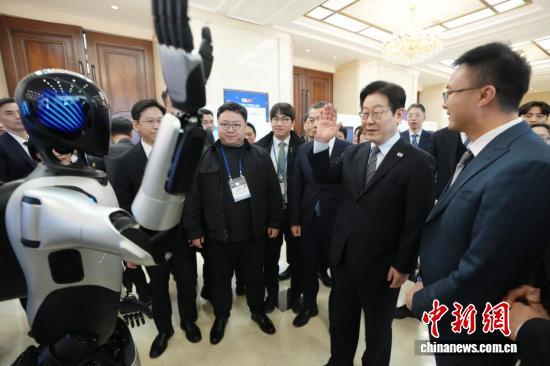
东西问丨韩国总统李在明访华,为何要“打卡”上海?
Xin Lang Cai Jing· 2026-01-07 09:57
Core Viewpoint - The visit of South Korean President Lee Jae-myung to Shanghai marks a significant step in enhancing political trust and practical cooperation between China and South Korea, influenced by historical sentiments, economic ties, and cultural exchanges [3]. Historical Context - The visit to the Provisional Government of the Republic of Korea's site in Shanghai is part of a diplomatic tradition for South Korean presidents since the establishment of diplomatic relations in 1992, emphasizing respect for historical independence and strengthening the historical bond between China and South Korea [5][6]. - The year 2026 will mark the 100th anniversary of the establishment of the Provisional Government's site, with plans for commemorative activities to reflect on its historical significance [5]. Economic Cooperation - Shanghai serves as a key economic and financial hub for China, facilitating South Korea's expansion of cooperation with China, with over 200 South Korean entrepreneurs accompanying the president [8]. - In 2024, the trade volume between China and South Korea reached $328.08 billion, a 5.6% increase year-on-year, highlighting the importance of Shanghai and the Yangtze River Delta in industrial cooperation [8]. - Potential agreements in sectors such as semiconductors, electric vehicles, and artificial intelligence are anticipated during this visit, aligning with both countries' goals for environmental cooperation and third-party market collaboration [8]. Cultural Exchange - The trend of South Korean youth traveling to Shanghai for short trips has become popular, with the city serving as a primary destination for cultural experiences and exchanges [10]. - Following the implementation of visa-free policies for South Korean citizens, Shanghai has become a key window for understanding Chinese culture, with popular tourist activities including visits to local landmarks and the Provisional Government site [10]. - The visit underscores the importance of cultural exchanges in strengthening bilateral relations, with Lee Jae-myung signaling a desire for a stable and predictable partnership between the two nations [10].

外媒观察丨“好的开始”!国际社会热议韩国总统李在明访华
Xin Lang Cai Jing· 2026-01-06 12:15
Group 1 - The core viewpoint of the articles emphasizes the importance of the healthy development of China-South Korea relations for the well-being of both nations and regional stability [1] - South Korean President Yoon Suk-yeol's visit to China marks a significant diplomatic gesture, highlighting the government's focus on strengthening ties with China [1] - The meeting between Chinese President Xi Jinping and South Korean President Yoon is seen as a step towards enhancing the strategic partnership and mutual cooperation between the two countries [1][2] Group 2 - The visit is characterized as a comprehensive economic diplomatic action, with a large economic delegation accompanying President Yoon, indicating the high importance placed on the Chinese market by the South Korean government and business community [2] - Key topics discussed during the visit include cultural exchanges, supply chain stability, digital economy cooperation, tourism revitalization, and transnational crime governance [2] - The frequent interactions between the leaders of China and South Korea signal a mutual willingness to stabilize and advance their bilateral relations [2]
社评:“搬不走的重要近邻”有了务实合作新起点
Huan Qiu Wang· 2026-01-05 17:03
Group 1 - The meeting between Chinese President Xi Jinping and South Korean President Lee Jae-myung emphasizes the importance of bilateral relations and mutual visits, reflecting both countries' commitment to strengthening ties [1] - A total of 15 cooperation documents were signed, covering areas such as technological innovation, ecological environment, transportation, and economic trade, indicating a significant step towards comprehensive recovery and development of China-South Korea relations [1][2] - The economic cooperation remains a cornerstone of the China-South Korea relationship, with China being South Korea's largest trading partner and the bilateral trade expected to grow in 2024 despite global challenges [2][3] Group 2 - The stable and improving China-South Korea relationship is seen as beneficial for both countries' development needs and responds to global expectations amid rising unilateralism and protectionism [3] - Historical ties, particularly the shared experience of resisting Japanese militarism, provide a foundation for cooperation on major issues such as maintaining post-World War II international order and regional stability [3] - The ongoing friendly cooperation and mutual development between China and South Korea are viewed as essential for building trust and contributing to global prosperity [3]
李在明启程赴华
Xin Lang Cai Jing· 2026-01-04 05:31
Core Viewpoint - South Korean President Lee Jae-myung is making his first state visit to China from January 4 to January 7, 2026, marking a significant diplomatic engagement between the two countries [1][3]. Group 1: Visit Details - The visit includes a meeting with overseas Koreans in Beijing on January 4 and a summit with the Chinese president on January 5, which is significant as it is the first summit of the year between the two nations [3]. - This visit is Lee Jae-myung's first trip to China since taking office and his first overseas visit in 2026 [1][3]. Group 2: Diplomatic Significance - Lee Jae-myung emphasized the importance of improving South Korea-China relations, aiming to minimize past conflicts and misunderstandings, and to establish a mutually beneficial relationship [3]. - The visit is seen as a critical opportunity to solidify bilateral ties and send a strong message to the international community regarding the cooperation between South Korea and China [3]. Group 3: Stance on Taiwan - President Lee reaffirmed South Korea's respect for the One China principle, indicating a diplomatic stance that aligns with China's position on Taiwan [3].
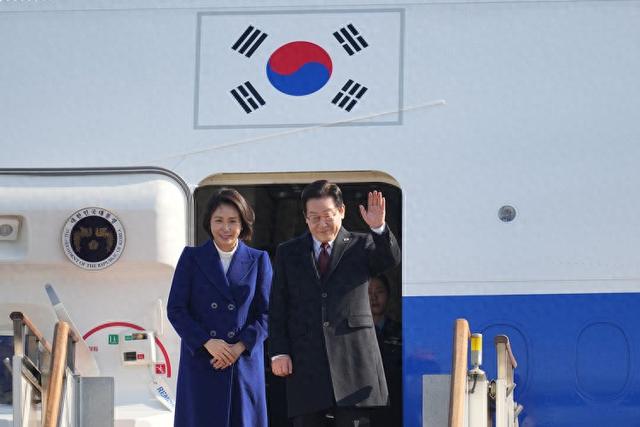
韩媒:李在明启程赴华
Huan Qiu Wang· 2026-01-04 04:42
Core Viewpoint - South Korean President Lee Jae-myung is embarking on a four-day state visit to China, marking his first visit to China since taking office and his first overseas trip in 2026 [1] Group 1: Visit Details - The visit will take place from January 4 to January 7, with Lee Jae-myung departing from Seoul with First Lady Kim Hye-kyung [1] - Key events during the visit include a meeting with overseas Korean residents in Beijing on January 4 and a summit with the Chinese president on January 5 [1] - This summit is significant as it represents the first meeting between the leaders of South Korea and China in the new year, sending an important message to the international community [1] Group 2: Objectives and Statements - Lee Jae-myung emphasized the South Korean government's commitment to improving Sino-Korean relations, aiming to minimize past conflicts and misunderstandings [1] - The goal of the visit is to elevate the relationship between South Korea and China to a new stage, establishing a mutually beneficial partnership [1] - Regarding the Taiwan issue, Lee reaffirmed South Korea's respect for the One China principle [1]
新年伊始首访中国,李在明有何考量?
Xin Lang Cai Jing· 2025-12-30 08:48
Group 1 - The visit of South Korean President Lee Jae-myung to China from January 4 to 7, 2026, marks his first visit to China since taking office in June 2022 and is significant as it is the first visit by a South Korean president to China in six years [1][3] - The timing of the visit is strategic, as it aims to coordinate policies before former President Trump’s visit to China and to strengthen bilateral relations ahead of the Lunar New Year celebrations in February 2026 [3] - The visit is expected to focus on enhancing economic cooperation and cultural exchanges, particularly in the context of the China-South Korea Free Trade Agreement (FTA) upgrade negotiations and future industry collaboration [3][5] Group 2 - The relationship between China and South Korea is crucial, with China being South Korea's largest trading partner and South Korea projected to be China's second-largest trading partner in 2024 [3] - Lee Jae-myung's administration is working to correct the previous administration's one-sided diplomatic approach towards the US and Japan, aiming for a more balanced relationship with China [4][5] - The visit is seen as an opportunity to stabilize and advance the strategic partnership between China and South Korea, especially in light of recent diplomatic tensions [3][5]
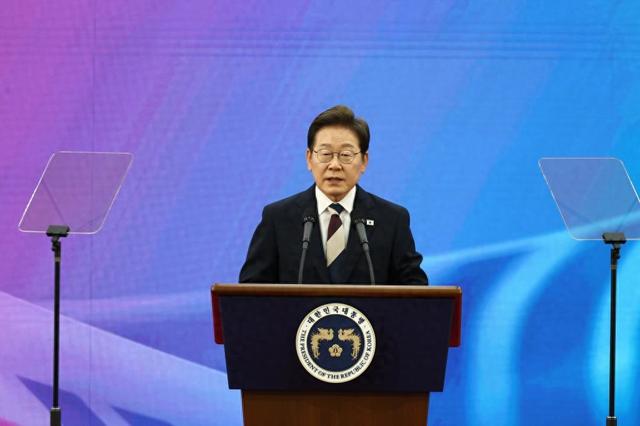
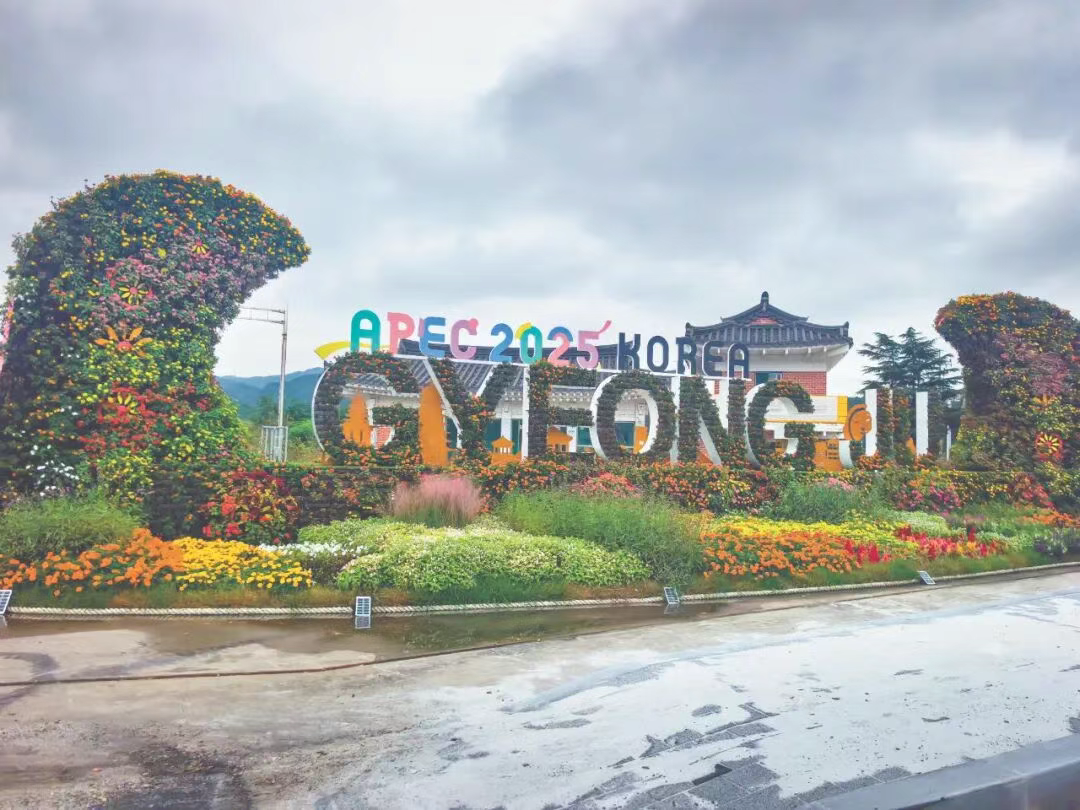
【环时深度】在即将举办APEC会议的韩国庆州,听当地人谈中国
Huan Qiu Shi Bao· 2025-10-26 23:05
Core Viewpoint - The upcoming APEC meeting in Gyeongju, South Korea, is a significant event, marking the first visit of Chinese President Xi Jinping to South Korea in 11 years, which has generated considerable attention and anticipation in the local media and among the public [1][14]. Group 1: APEC Meeting Significance - Gyeongju is referred to as a "museum without walls" and is proud to host the APEC 2025 meeting, which is seen as a major event for the local population [1][5]. - The APEC meeting is expected to enhance diplomatic relations, particularly between China and South Korea, amidst concerns regarding U.S.-South Korea relations [11][12]. Group 2: Visa Policy Changes - The South Korean government has implemented a temporary visa exemption policy for Chinese group tourists from September 29, 2025, to June 30, 2026, allowing groups of three or more to enter without a visa for up to 15 days [5][7]. - This policy is viewed as a reciprocal gesture following China's visa exemption for South Korean citizens, leading to an increase in Chinese tourists in South Korea [5][7]. Group 3: Local Sentiment Towards China - Local residents express a welcoming attitude towards Chinese tourists, noting the increase in visitors due to the new visa policies [5][7]. - Cultural and archaeological collaborations between Gyeongju and Chinese cities, particularly Xi'an, are highlighted as a foundation for strengthening ties [7][11]. Group 4: Anticipation for Xi Jinping's Visit - There is a strong expectation among South Koreans for Xi Jinping's visit to foster improved relations and mutual understanding between the two countries [12][14]. - The visit is seen as an opportunity to address past tensions and explore new avenues for cooperation, particularly in trade and cultural exchanges [14][16].