企业破产法修订

Search documents
专访中国政法大学破产法与企业重组研究中心主任李曙光:丰富企业破产制度工具箱 优化小微企业司法流程
证券时报· 2025-09-17 15:11
Core Viewpoint - The revision of the Enterprise Bankruptcy Law, after 18 years, aims to address practical challenges and enhance the legal framework for bankruptcy, reflecting modern bankruptcy law concepts and responding to market needs [2][4][6]. Group 1: Key Features of the Revision - The revision adds and modifies over 160 provisions, expanding the law from 136 to 216 articles, and introduces new chapters on financial institution bankruptcy and simplified procedures for small and micro enterprises [6][10]. - It emphasizes the importance of bankruptcy law as a fundamental tool for market exit and risk management, aiming to optimize the business environment and deepen supply-side structural reforms [6][8]. - The revision addresses issues such as low willingness to use bankruptcy procedures, difficulties in execution, and the need for better protection of creditor rights [6][8]. Group 2: Addressing Practical Challenges - The current law has limitations, including a narrow scope of application, inadequate management systems, and a lack of simplified bankruptcy procedures for small enterprises [4][5]. - The revision introduces a special chapter for financial institutions, recognizing their unique characteristics and establishing differentiated arrangements for their bankruptcy processes [10][11]. - It aims to improve the efficiency of bankruptcy procedures and provide a "green channel" for small and micro enterprises, allowing for quicker resolutions and reduced costs [15][16]. Group 3: Enhancements to Management and Protection Mechanisms - The revision strengthens the role of bankruptcy administrators, clarifying their responsibilities and enhancing oversight to protect creditor interests [20][21]. - A proposed bankruptcy guarantee fund aims to address the issue of "no assets to liquidate" cases, ensuring that bankruptcy procedures can proceed smoothly [21]. - New temporary measures are introduced to prevent "debt evasion" during the period between the bankruptcy application and court acceptance, enhancing asset protection [22][23]. Group 4: Future Directions and Legal Framework - The revision allows for the potential introduction of personal bankruptcy legislation based on pilot experiences, reflecting a cautious approach to expanding bankruptcy protections [8][12]. - It emphasizes the need for coordination between bankruptcy law and other financial regulations to create a comprehensive legal framework for financial risk management [12][13]. - The revision seeks to balance the interests of creditors and debtors, ensuring fair treatment while promoting efficient market exits for struggling enterprises [18][24].


专访中国政法大学破产法与企业重组研究中心主任李曙光:丰富企业破产制度工具箱 优化小微企业司法流程
Zheng Quan Shi Bao Wang· 2025-09-17 13:40
Core Viewpoint - The draft amendment to the Enterprise Bankruptcy Law, proposed for the first time after 18 years, aims to modernize the bankruptcy legal framework, addressing practical challenges and enhancing the system's effectiveness in risk prevention and resolution [1][4]. Summary by Sections Current Legal Shortcomings - The existing bankruptcy law has significant limitations, including a narrow scope of application, an incomplete administrator system, and inadequate protection for creditor rights [2][3]. - Only 0.5% of companies were deregistered due to bankruptcy in 2024, indicating underutilization of the bankruptcy law [2]. Key Features of the Draft Amendment - The amendment expands the law from 12 chapters and 136 articles to 16 chapters and 216 articles, adding over 160 new and modified provisions [4]. - It emphasizes the importance of bankruptcy law as a fundamental tool for market exit and risk management, aiming to optimize the business environment and deepen supply-side structural reforms [4][5]. Financial Institutions - A new chapter specifically addressing the bankruptcy of financial institutions has been added, reflecting their unique characteristics and the need for differentiated arrangements [6][7]. - The amendment includes provisions for special debt repayment rules and enhances the connection between administrative risk management and judicial bankruptcy processes [6][7]. Small and Micro Enterprises - The draft introduces a special bankruptcy procedure for small and micro enterprises, aimed at improving efficiency and reducing costs associated with bankruptcy proceedings [10][11]. - This new procedure allows for quicker resolution of cases, with specific provisions for simplified management and expedited timelines [11]. Management and Oversight - The amendment strengthens the role and responsibilities of bankruptcy administrators, ensuring they operate independently while being supervised by creditors [15][16]. - A proposed "Bankruptcy Guarantee Fund" aims to address the issue of costs in bankruptcy cases where assets are insufficient to cover expenses [15][16]. Preventing "Debt Evasion" - New temporary measures are introduced to prevent debtors from transferring or hiding assets during the bankruptcy application process, enhancing the integrity of the proceedings [17][18]. - The draft also imposes strict obligations on debtors and their management to disclose financial information accurately and prohibits unnecessary expenditures during bankruptcy [18].
新华社权威快报丨我国拟修订企业破产法 补齐市场退出机制短板
Xin Hua Wang· 2025-09-08 02:40
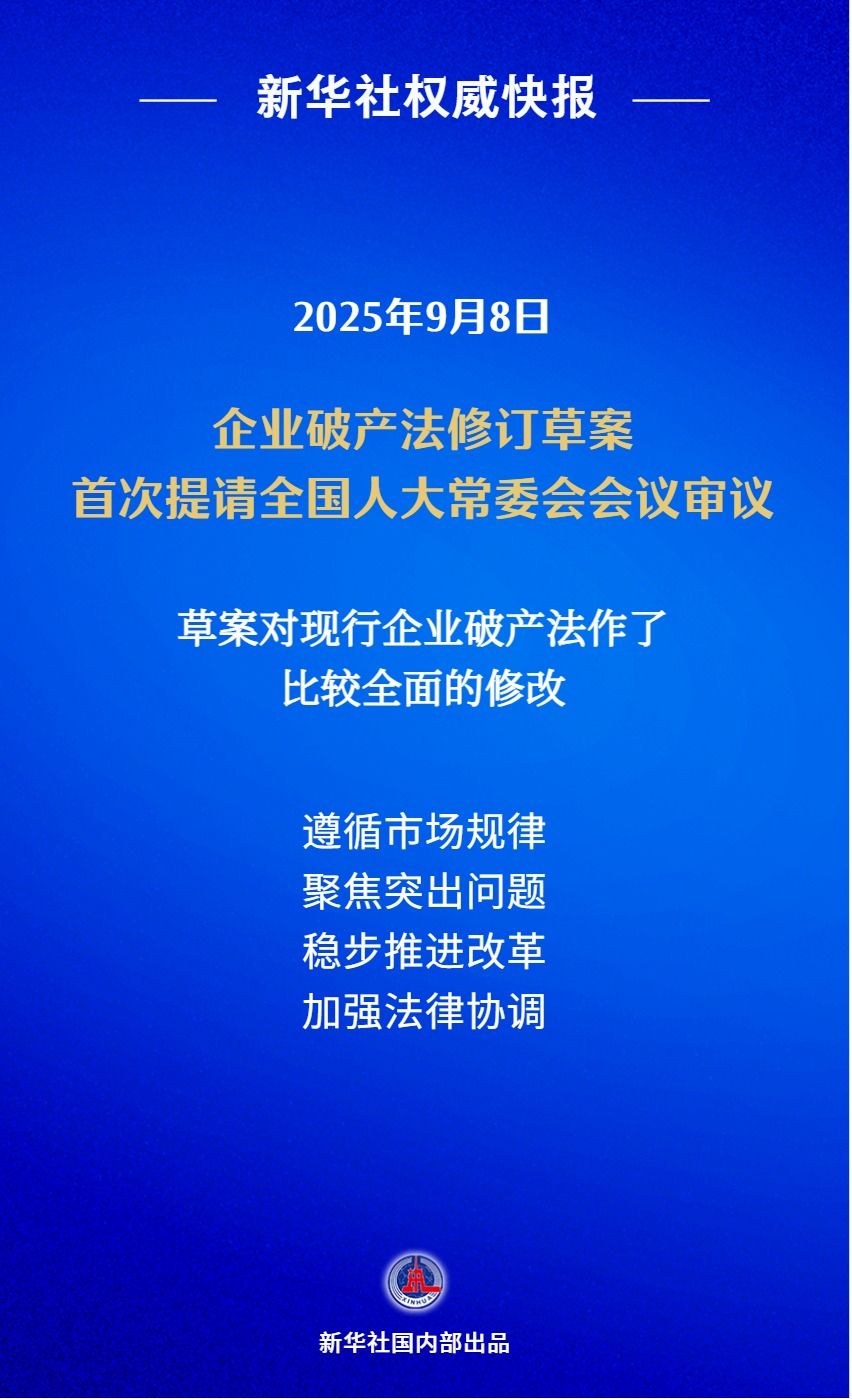
Core Viewpoint - The draft amendment to the Enterprise Bankruptcy Law has been submitted for review, aiming to comprehensively revise the existing law to better align with market dynamics and address prominent issues in the current legal framework [3][5]. Group 1: Legislative Changes - The current Enterprise Bankruptcy Law, in effect since 2007, has played a significant role in facilitating the orderly exit of business entities, promoting fair competition, and optimizing resource allocation [5]. - The draft consists of 16 chapters and 216 articles, with substantial additions and modifications exceeding 160 articles compared to the existing law [5]. Group 2: Reform Objectives - The amendment seeks to follow market rules, focus on outstanding issues, and steadily advance reforms while enhancing legal coordination [3][5].
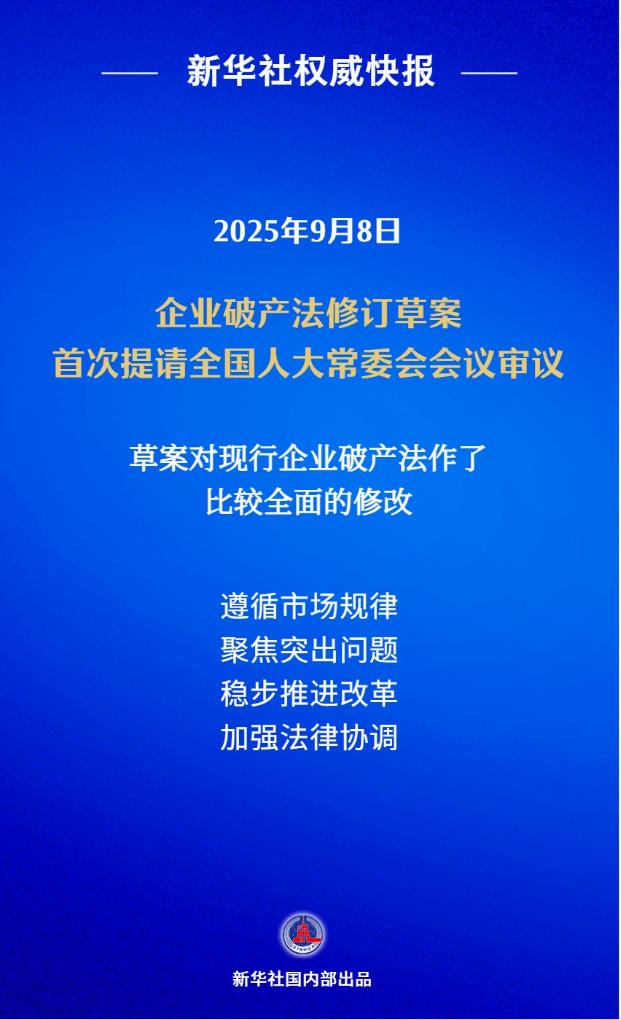
我国拟修订企业破产法 补齐市场退出机制短板
Xin Hua She· 2025-09-08 02:33
Core Viewpoint - The draft amendment to the Enterprise Bankruptcy Law has been submitted for review, aiming to comprehensively revise the existing law to better align with market practices and address prominent issues in the current legal framework [3][4]. Summary by Sections Legislative Context - The current Enterprise Bankruptcy Law, in effect since 2007, has played a significant role in facilitating the orderly exit of business entities, promoting fair competition, and optimizing resource allocation. However, it has become outdated and requires urgent amendments [4]. Draft Details - The draft consists of 16 chapters and 216 articles, with substantial modifications and additions exceeding 160 articles compared to the existing law, indicating a thorough overhaul of the current legal structure [4].
专访全国政协委员、金杜律师事务所高级合伙人张毅:建议将“内卷式”竞争纳入信用评级
证券时报· 2025-03-07 05:58
Core Viewpoint - The article emphasizes that the rule of law is the best business environment, highlighting the ongoing legislative process of the Private Economy Promotion Law, which aims to enhance the legal status and protection of the private economy in China [1][2]. Summary by Sections Legislative Progress - The Private Economy Promotion Law draft is undergoing its second review, with improvements noted in its execution and specificity regarding various issues faced by private enterprises [1][3]. Key Highlights of the Law - The law establishes fundamental principles such as equal treatment, fair competition, and equal protection, affirming the legal status of the private economy as a vital component of the socialist market economy [3]. - It includes detailed provisions addressing specific challenges faced by private enterprises, enhancing its enforceability and protective measures [3][4]. Legal and Regulatory Recommendations - There is a suggestion to further refine the legal responsibilities concerning accountability for violations, enhancing the law's deterrent effect [4]. - The principle of "law permits what is not prohibited" should guide private enterprises in their innovative business practices, ensuring they do not fear legal repercussions as long as they operate within legal boundaries [5]. Addressing Enforcement Issues - Recommendations include strictly limiting the authority to freeze corporate bank accounts, ensuring that such measures are necessary, reasonable, and proportionate [8]. - There is a call for clearer regulations regarding the restriction of personal freedom for corporate leaders to prevent operational disruptions [9]. Tackling "Involution" Competition - "Involution" competition is identified as a form of unfair competition, primarily driven by leading companies abusing their market dominance, which threatens the survival of smaller enterprises and harms consumer interests [13]. - A multi-faceted approach is suggested to combat "involution" competition, including strict enforcement of antitrust laws and enhancing corporate credit evaluation systems [14]. Bankruptcy Law Revisions - The article highlights the need for improvements in the bankruptcy law, particularly in the areas of bankruptcy liquidation and reorganization, to better protect creditor and consumer rights while promoting economic development [15].