伊美谈判

Search documents
阿曼苏丹同伊朗最高领袖顾问讨论伊美谈判进展
Jing Ji Guan Cha Wang· 2026-02-10 10:37
Core Viewpoint - The meeting between Oman's Sultan Haitham and Iran's Secretary of the Supreme National Security Council, Larijani, focused on the latest developments in negotiations between Iran and the United States, emphasizing the need for a balanced and fair agreement [1] Group 1 - Sultan Haitham and Larijani discussed the importance of returning to dialogue and the negotiation table to promote mutual understanding [1] - The discussions aimed to address differences through peaceful means, contributing to regional and global peace and security [1]
伊朗已向中俄通报
中国能源报· 2026-02-09 07:45
Group 1 - Iran's Foreign Minister Zarif stated that Tehran has informed China and Russia about the negotiations with the United States [1][2] - Zarif emphasized the importance of avoiding threats and pressure as a necessary precondition for any dialogue [2] - The indirect talks between the U.S. and Iran took place in Oman, with U.S. President Trump describing the discussions as "very good" and indicating that Iran "wants to reach an agreement" [2]

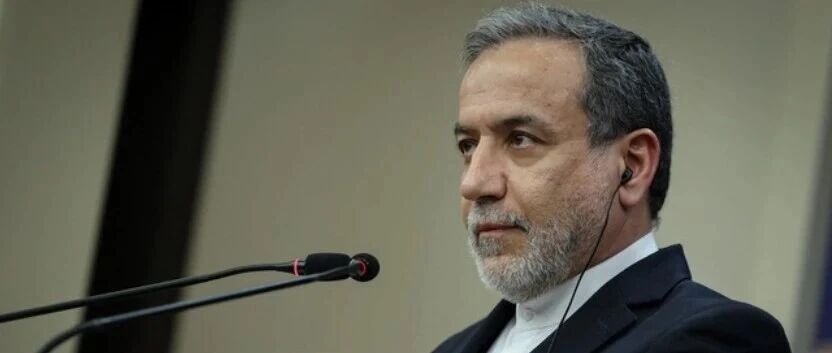
伊朗,突发!称不会放弃铀浓缩,若美国发动军事打击,将把整个地区拖入战争!
Xin Lang Cai Jing· 2026-02-08 04:04
Core Viewpoint - Iran's Foreign Minister, Zarif, stated that Iran will not abandon uranium enrichment or negotiate on its missile program during talks with the U.S. [1][3] - The possibility of war remains, and Iran is prepared for it, indicating a readiness to respond to any military action by the U.S. [1][5] Group 1: Iran's Military Readiness - Iran's armed forces chief, Mousavi, announced that the Iranian Air Force is currently at "highest readiness" to respond to any threats or aggression [4] - Zarif emphasized that if the U.S. attacks, Iran will not target the U.S. mainland but will respond to U.S. military bases in the Middle East [2][5] Group 2: Diplomatic Negotiations - Zarif mentioned that the second round of negotiations with the U.S. is expected to take place in the coming days, although the exact timing is not yet confirmed [2][5] - He reiterated that the U.S. has two options: war or diplomacy, and Iran prefers the diplomatic route while being better prepared for both scenarios [5] Group 3: U.S. Military Presence - The U.S. military, represented by officials including special envoy Hook and senior commanders, visited the USS Abraham Lincoln in the Arabian Sea, signaling continued military presence and pressure on Iran [6] - Despite the ongoing negotiations, there are no indications that the U.S. has decided to take military action against Iran [6]
伊朗外长:第二轮伊美谈判地点可能发生变化
Yang Shi Xin Wen· 2026-02-07 13:26
Core Viewpoint - The Iranian Foreign Minister, Zarif, indicated that the location for the second round of negotiations between Iran and the U.S. may change, emphasizing Iran's opposition to the transfer of uranium out of the country while being willing to lower uranium enrichment levels [2][2]. Group 1 - Iran is prepared to reduce uranium enrichment levels but firmly opposes the export of uranium [2][2]. - Zarif stated that both Iran and regional countries do not wish for a war to break out, but any attack from the U.S. would complicate the situation [2][2]. - Indirect negotiations between Iran and the U.S. took place on February 6 in Muscat, Oman, with both parties agreeing to continue discussions [2][2].
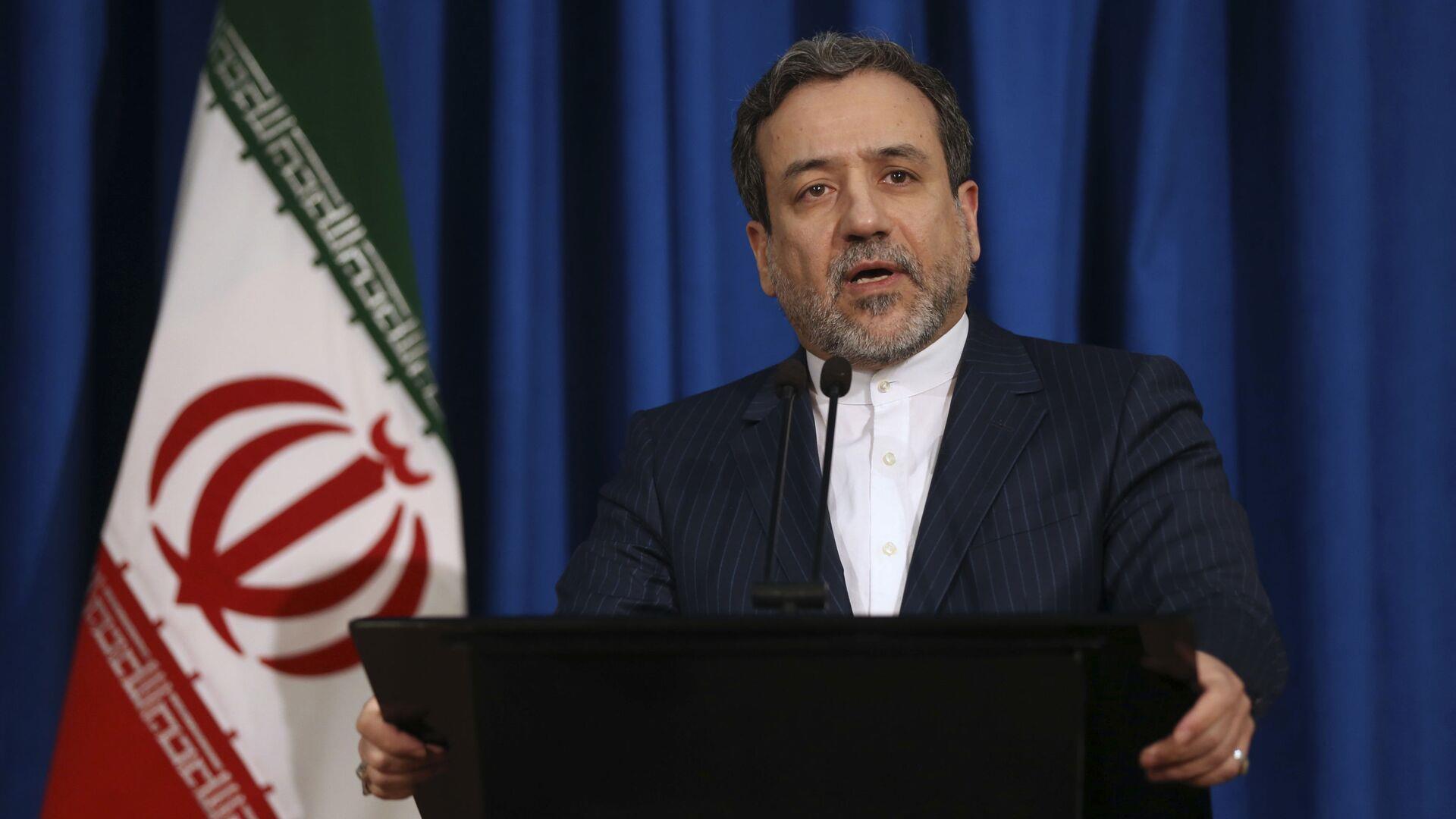
伊朗外长为伊美谈判划定“红线”
Xin Hua She· 2026-02-07 12:06
Core Viewpoint - Iran's Foreign Minister, Zarif, stated that Iran has two "red lines" in negotiations with the U.S.: it will not abandon uranium enrichment and will not negotiate on its missile program [1] Group 1: Negotiation Stance - Iran considers the U.S.-Iran negotiations a good start, but acknowledges that building mutual trust will take time [1] - The specific date for the next round of negotiations has not been determined, but both parties agree that talks should be held as soon as possible [1] Group 2: Uranium Enrichment - Zarif emphasized that the prohibition of uranium enrichment is not negotiable, asserting that it is Iran's legitimate right and must continue [1] - Iran is prepared to reach a reliable agreement regarding uranium enrichment [1] Group 3: Missile Program - Iran will not negotiate on its missile program, as it falls under the country's defense domain [1] Group 4: Military Preparedness - Zarif mentioned that the possibility of war always exists, and Iran is prepared for such an eventuality [1] - If the U.S. attacks Iran, while Iran cannot strike the U.S. mainland, it will target U.S. military bases in the Middle East [1] - Iran will not attack neighboring countries but will strike U.S. military bases located in those countries, highlighting a significant distinction [1]
美媒:伊朗要求将与美谈判地点从土耳其改为阿曼
Xin Hua She· 2026-02-03 23:53
Group 1 - Iran has requested to change the location and format of the negotiations with the United States scheduled for the 6th, moving from Istanbul, Turkey to Oman in the Gulf region [1] - Iran prefers the talks to be held in a bilateral format [1]
战争阴云密布 伊朗首都直击
Xin Hua She· 2026-02-01 03:31
Group 1 - The core message of the articles highlights the escalating tensions between the U.S. and Iran, with warnings from Iran against potential military actions by the U.S. [1] - The Iranian government is facing significant economic challenges, primarily attributed to U.S. sanctions that hinder oil and gas exports, despite Iran's abundant natural resources [2] - Recent indirect negotiations between Iran and the U.S. regarding nuclear issues have stalled due to fundamental disagreements, with Iran asserting its right to peaceful nuclear energy [2] Group 2 - Despite the looming threat of war, daily life in Tehran continues, with citizens engaging in normal activities such as dining out and shopping, although some are stockpiling essential goods in anticipation of potential shortages [1] - There are mixed feelings among the Iranian populace regarding the government's handling of economic issues, with many attributing their struggles to U.S. sanctions rather than domestic policies [2] - The Iranian military is preparing for potential conflict while simultaneously seeking regional and international support, emphasizing a willingness to negotiate but rejecting talks under duress [2][3]
伊朗外长:伊美谈判应在公平、平等的前提下进行
Xin Hua She· 2026-01-30 15:16
Core Viewpoint - Iran's Foreign Minister Zarif stated that Iran will not negotiate under U.S. threats, emphasizing that negotiations should occur on a fair and equal basis. Currently, there are no specific plans for negotiations with the U.S. [1] Group 1 - Iran's stance is that negotiations with the U.S. must be conducted without threats [1] - The emphasis is placed on fairness and equality as prerequisites for any negotiations [1] - There are no immediate plans for negotiations between Iran and the U.S. [1]
伊朗称未对美国提出谈判请求
Zhong Guo Xin Wen Wang· 2026-01-28 17:12
Core Viewpoint - The Iranian Foreign Minister, Amir-Abdollahian, stated that there have been no recent contacts between Iran and the U.S. regarding negotiations, and Iran has not made any requests for talks [1] Group 1: Diplomatic Engagement - Iran is currently in communication with several third-party countries that are attempting to mediate between Iran and the U.S. [1] - The Iranian government has not made any decisions regarding negotiations with the U.S. [1] Group 2: U.S. Military Presence - Amir-Abdollahian emphasized that negotiations must be based on equality, and that U.S. military threats are not an acceptable form of diplomacy [1] - He stated that if the U.S. wishes to negotiate, it must cease its threats and excessive demands [1] Group 3: Regional Communication - Iran maintains ongoing communication with multiple neighboring countries, with diplomats from these nations in direct contact with the Iranian Foreign Ministry [1] - Recently, Amir-Abdollahian has spoken with foreign ministers from various countries who expressed a willingness to mediate between Iran and the U.S. [1]
哈梅内伊提出伊美谈判条件,并称近期不会考虑美国合作请求
Huan Qiu Shi Bao· 2025-11-04 23:00
Core Points - Iran's Supreme Leader Khamenei outlined three preconditions for potential negotiations with the U.S., emphasizing that cooperation will not be considered in the near future [1][3] - Khamenei stated that there are fundamental differences between Iran and the U.S., which are not tactical but rooted in core issues [3] - Iran's Foreign Minister Araqchi indicated that Iran is "not in a hurry" to resume nuclear negotiations with the U.S., stating that talks should be based on mutual interests and conducted on equal terms [3] Group 1 - Khamenei's speech highlighted the necessity for the U.S. to cut support for Israel, withdraw military bases from the region, and stop interfering in the internal affairs of regional countries as prerequisites for cooperation [3] - The timing of Khamenei's remarks coincides with the anniversary of the 1979 U.S. embassy hostage crisis, reflecting a strong stance against the U.S. [3] - Araqchi's comments suggest a strategic approach to negotiations, indicating that Iran seeks a balanced dialogue rather than one dictated by the U.S. [3]