
美国制裁伊朗

Search documents
美方公布新一轮涉伊朗制裁名单
Yang Shi Xin Wen· 2026-02-25 15:32
Core Viewpoint - The U.S. Department of the Treasury's Office of Foreign Assets Control (OFAC) has updated its "Specially Designated Nationals List," imposing sanctions on multiple individuals, entities, and vessels associated with Iran, particularly targeting the Iranian oil and liquefied gas transportation network [1] Group 1: Sanctioned Individuals and Entities - Four Iranian individuals linked to the Iranian aviation industry have been sanctioned [1] - Several shipping and trading companies located in Iran, Turkey, the UAE, Panama, the Marshall Islands, and Liberia have been added to the sanctions list [1] Group 2: Affected Vessels - At least 13 oil tankers and liquefied gas carriers have been included in the sanctions, flying flags from Panama, Palau, Barbados, Vanuatu, Comoros, and Iran [1] - The sanctioned individuals and entities will face asset freezes and restrictions on transactions with the U.S. financial system [1]
九万里:美伊谈了,谈得咋样?
Xin Lang Cai Jing· 2026-02-07 23:55
Core Points - The recent US-Iran negotiations in Oman marked the first face-to-face talks since the US airstrike on Iranian nuclear facilities in June 2025, but no substantial agreements were reached [1][18] - Following the talks, President Trump signed an executive order imposing tariffs on countries trading with Iran and the US State Department announced sanctions on 15 entities, 2 individuals, and 14 vessels related to Iranian oil transactions [1][11] Pre-Negotiation Context - The negotiations faced significant challenges, including a last-minute change of location from Istanbul to Oman, which was initiated by Iran, limiting the discussions to bilateral talks focused solely on nuclear issues and sanctions [6][5] - The US initially rejected Iran's proposal but eventually agreed to the new terms after urgent lobbying from at least nine Middle Eastern countries [6][5] Negotiation Dynamics - The talks involved high-level representatives from both sides, with Iran's Foreign Minister Zarif leading the delegation and the US represented by special envoy Hook and Jared Kushner, among others [7][9] - The negotiations were conducted indirectly, with Oman acting as a mediator, relaying positions between the two parties [7][9] Key Issues and Stalemate - The US presented a "three abandon" demand: Iran must permanently cease all uranium enrichment activities, limit its ballistic missile program, and stop supporting regional armed groups [9][10] - Iran maintained its "red lines," asserting that its missile program is a core defense interest and only showing limited flexibility on nuclear issues, such as reducing uranium enrichment from 60% to 20% under the condition of full sanctions relief [9][10] Post-Negotiation Developments - After the talks, both sides demonstrated a willingness to assert their positions, with the US imposing new tariffs and sanctions while Iran's military leadership emphasized their commitment to national sovereignty [11][10] - The negotiations are viewed as a tactical engagement rather than a strategic breakthrough, with both parties seeking to manage the crisis rather than resolve fundamental issues [13][18] Strategic Considerations - The US aims to control Iran's influence in the Middle East while avoiding a costly military conflict, opting for a strategy of pressure to achieve non-proliferation goals [14][13] - Iran's participation in the talks is driven by the need to alleviate internal economic pressures exacerbated by US sanctions and to avoid military confrontation while focusing on nuclear issues [16][15]

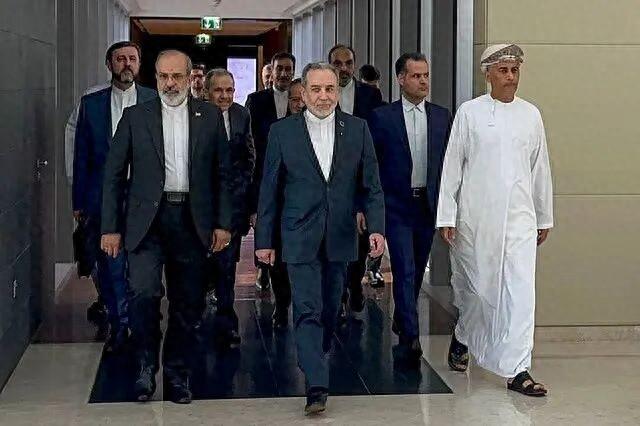
特朗普称希望与伊朗达成协议;伊朗外长:对达成核问题相关协议“仍有信心”
Xin Jing Bao· 2026-02-02 01:03
Core Viewpoint - The article discusses the ongoing tensions between the United States and Iran, highlighting statements from both President Trump and Iranian officials regarding potential agreements and military readiness [1]. Group 1: U.S. Position - President Trump expressed hope for reaching an agreement with Iran regarding nuclear issues [1] - He emphasized the deployment of "the world's most powerful ships" in the region as a show of strength [1] Group 2: Iran's Response - Iranian Supreme Leader Khamenei warned that any U.S. provocation could lead to a "regional full-scale war" [1] - Iranian Foreign Minister Zarif stated that Iran remains confident about reaching an agreement with the U.S. on nuclear issues [1] - Zarif reiterated Iran's demand for the lifting of long-standing sanctions and respect for its right to continue uranium enrichment under the framework of peaceful nuclear energy [1]
战争阴云密布 伊朗首都直击
Xin Hua She· 2026-02-01 03:31
Group 1 - The core message of the articles highlights the escalating tensions between the U.S. and Iran, with warnings from Iran against potential military actions by the U.S. [1] - The Iranian government is facing significant economic challenges, primarily attributed to U.S. sanctions that hinder oil and gas exports, despite Iran's abundant natural resources [2] - Recent indirect negotiations between Iran and the U.S. regarding nuclear issues have stalled due to fundamental disagreements, with Iran asserting its right to peaceful nuclear energy [2] Group 2 - Despite the looming threat of war, daily life in Tehran continues, with citizens engaging in normal activities such as dining out and shopping, although some are stockpiling essential goods in anticipation of potential shortages [1] - There are mixed feelings among the Iranian populace regarding the government's handling of economic issues, with many attributing their struggles to U.S. sanctions rather than domestic policies [2] - The Iranian military is preparing for potential conflict while simultaneously seeking regional and international support, emphasizing a willingness to negotiate but rejecting talks under duress [2][3]
伊朗多地发生骚乱,一警察局遭袭击已致3死17伤
Xin Lang Cai Jing· 2026-01-02 13:16
Core Insights - The protests in Iran are driven by high inflation and rapid devaluation of the currency, leading to significant civil unrest [1][2] - The Iranian government is facing severe economic challenges, with inflation reaching 48.6% in October 2025 and food prices soaring over 70% year-on-year [2] Group 1: Protests and Violence - Protests erupted in multiple regions of Iran, with significant violence reported, including an attack on a police station in Lorestan province resulting in 3 deaths and 17 injuries [1] - The protests are described as the largest since 2022, with demonstrators engaging in violent confrontations with law enforcement, including the use of firearms [2] Group 2: Economic Context - The Iranian economy has been severely impacted by U.S. sanctions following the withdrawal from the nuclear agreement in 2018, leading to currency devaluation and economic stagnation [2] - The Iranian government is convening emergency meetings to address issues related to exchange rates, trade, and public welfare amid the ongoing unrest [2] Group 3: Government Response - Iranian President Pezeshkian acknowledged the need to address public concerns, stating that the government must work to satisfy the populace [3] - U.S. President Trump has threatened intervention in response to the unrest, indicating a potential escalation in geopolitical tensions [3]
特朗普称将就伊朗骚乱事件进行干涉
Yang Shi Xin Wen· 2026-01-02 09:32
Core Viewpoint - The article discusses President Trump's statements regarding potential U.S. intervention in Iran amid recent unrest, highlighting the ongoing tensions and economic challenges faced by Iran due to U.S. sanctions [1] Group 1: U.S. Intervention and Threats - President Trump indicated that the U.S. is "ready" to intervene in response to the unrest in Iran [1] - Trump previously threatened military support for Israel if Iran attempts to advance its ballistic missile program [1] Group 2: Unrest in Iran - Recent protests in two provinces of Iran have resulted in at least 3 deaths and multiple injuries [1] Group 3: Economic Impact on Iran - Since the U.S. withdrew from the Iran nuclear deal in 2018, Iran has faced severe sanctions from the West, leading to currency devaluation and high inflation [1] - The Iranian government is convening emergency meetings to address issues related to exchange rates, trade, and public welfare [1]
打明牌?摩萨德公开鼓动伊朗人上街抗议
Xin Lang Cai Jing· 2025-12-31 10:40
Core Viewpoint - Israel's intelligence agency Mossad has publicly called for Iranian citizens to protest against their government, indicating a significant escalation in the ongoing tensions between Israel and Iran [1]. Group 1: Economic Situation in Iran - The Iranian currency has significantly depreciated, leading to increased import costs and triggering protests among retailers and shop owners in Tehran since last week [1]. - Iran's economy has been struggling since the re-imposition of U.S. sanctions in 2018, which has exacerbated the current economic difficulties [1]. Group 2: Political Tensions - U.S. President Trump threatened to "destroy" Iran if it continues to develop ballistic missiles and nuclear weapons, following a meeting with Israeli Prime Minister Netanyahu [1]. - Iranian President Ebrahim Raisi has stated that Iran is engaged in a "total war" with the U.S., Israel, and Europe, accusing them of attempting to undermine the Iranian regime from multiple fronts [1].