伊朗核问题

Search documents
95岁巴菲特,最新发声!现在的波动“不值一提”,卖苹果卖早了!携手库里重启“慈善午餐”
券商中国· 2026-03-31 15:07
Market Insights - Warren Buffett believes current market valuations lack attractiveness, stating that recent market declines are insignificant compared to historical downturns [4] - Berkshire Hathaway has not found many large-scale investment opportunities during this year's market downturn, but Buffett hinted at a potential small-scale new investment [4] - Berkshire Hathaway purchased $17 billion in government bonds this week, with cash equivalents exceeding $370 billion, primarily in government bonds [5] Leadership Transition - Buffett will hand over the CEO position to Greg Abel in early 2026 but continues to work daily and maintain high market sensitivity [6] - He emphasizes that he will remain involved in investment decisions and will not make any investments that Abel disagrees with [6] Apple Investment - Buffett's investment in Apple has yielded over $100 billion in profits, and he considers it Berkshire's largest holding [6] - He expressed regret about selling Apple shares too early and indicated a willingness to buy more if the stock price becomes attractive [6][7] - Despite a recent decline of over 14% from its peak, Buffett does not find Apple stock attractive at the moment [7] Personal Relationships - Buffett has distanced himself from Bill Gates since the Jeffrey Epstein incident, stating he does not want to be involved in any potential legal issues [8] - He acknowledged their past friendship and charitable collaborations but prefers to refrain from further comments until the situation is clarified [9] Charity Initiative - Buffett announced the relaunch of a charity lunch auction in collaboration with NBA star Stephen Curry, with proceeds supporting vulnerable groups and children's development projects [10] - The auction will take place on eBay starting May 7, with the winning bidder joining Buffett and the Currys for lunch on June 24 [11] - This charity initiative has raised over $50 million in its 20-year history, with a record single bid of $19 million in 2022 [11]



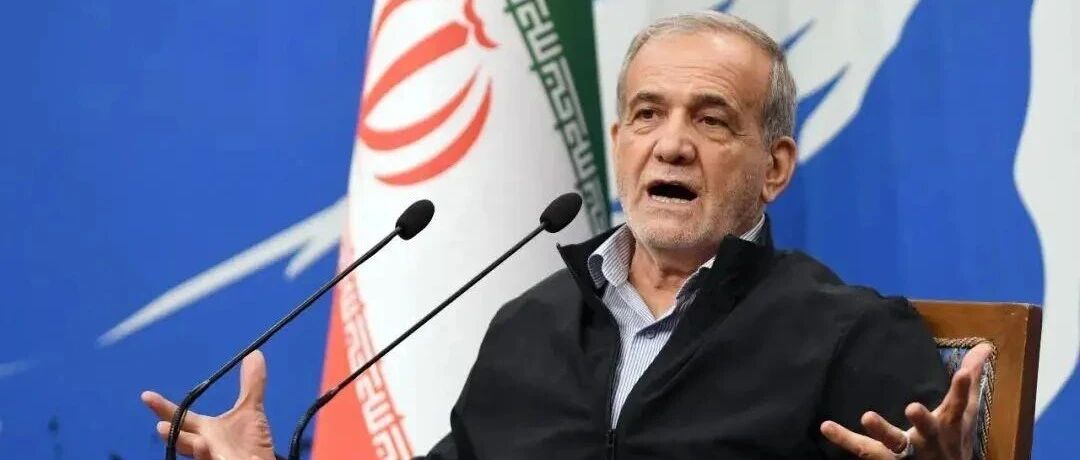
伊朗总统:伊朗致力于全面结束战争,从未寻求拥有核武器,有关指控是为美以非法侵略行为寻找借口
中国能源报· 2026-03-27 02:13
Group 1 - The core viewpoint of the article is that Iran is committed to fully ending the war and has never sought to possess nuclear weapons [1][3] - Iranian President Pezeshkian emphasized that accusations regarding Iran's pursuit of nuclear weapons are merely excuses for illegal aggression by the U.S. and Israel [3] Group 2 - The conversation between Iranian President Pezeshkian and Malaysian Prime Minister Anwar on March 26 focused on the regional and international situation following military actions against Iran that began on February 28 [3]
王毅同加拿大外长阿南德通电话
券商中国· 2026-03-26 15:20
Group 1 - The core viewpoint of the article emphasizes the importance of dialogue in resolving the Iran nuclear issue and the need for international cooperation to maintain regional stability [1] - Canada expresses its commitment to protecting civilians in the Middle East conflict and aims to reduce the impact on the global economy and supply chains [1] - Both China and Canada agree on the necessity of restarting dialogue and expanding mutually beneficial cooperation to promote a stable and healthy development of the China-Canada strategic partnership [1]

王毅:美伊都有重启谈判的意愿,国际社会应鼓励双方重回谈判桌
财联社· 2026-03-26 13:46
Group 1 - The core viewpoint of the article emphasizes the importance of dialogue in resolving the Iran nuclear issue and the need for international cooperation to maintain regional stability and security [1] - Canada is committed to protecting civilians in the Middle East conflict and aims to reduce the impact on the global economy and supply chains [1] - Both China and Canada agree on the necessity of resuming dialogue at all levels to enhance mutual cooperation and promote a stable and healthy development of the China-Canada strategic partnership [1] Group 2 - Wang Yi, the Chinese Foreign Minister, articulated China's principled stance that the Iran nuclear issue should be resolved through dialogue and should not be a pretext for military action [1] - The article highlights the shared interest of ensuring safe navigation through the Strait of Hormuz, which aligns with the common interests of all parties involved [1] - There is a mutual recognition between China and Canada of the need to implement the outcomes of Prime Minister Trudeau's visit to China positively and pragmatically [1]
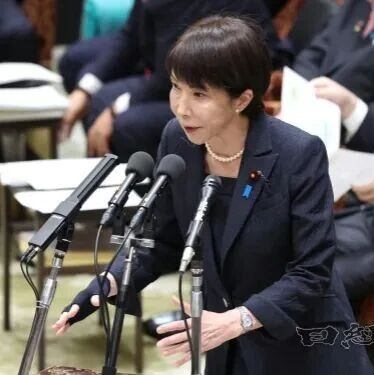
高市早苗:决不允许伊朗开发核武器
日经中文网· 2026-03-02 07:30
Core Viewpoint - Japan's Prime Minister, Fumio Kishida, emphasizes the importance of diplomatic efforts to address the escalating tensions in the Middle East, particularly regarding Iran's nuclear development and regional stability [2][4]. Group 1: Iran's Nuclear Development and Regional Stability - Kishida strongly demands that Iran cease its nuclear weapons development and actions that destabilize the region, advocating for diplomatic solutions including negotiations [4]. - The Prime Minister highlights the significance of U.S.-Iran discussions in resolving the Iranian nuclear issue, asserting Japan's strong support for these efforts [4]. Group 2: Energy Security and Economic Impact - Kishida expresses the importance of peace and stability in the Middle East for Japan, particularly concerning energy security and the maintenance of the international non-proliferation system [4]. - The Japanese government is monitoring the safety of its vessels in the Strait of Hormuz, which has seen halted navigation, and is taking measures to ensure stable energy supply amidst market fluctuations [4][5]. - Japan's oil reserves are reported to cover 254 days of consumption, indicating preparedness for potential supply disruptions [4]. Group 3: Protection of Japanese Nationals - The government is actively working to protect approximately 200 Japanese nationals in Iran, many of whom are associated with international organizations or have Iranian family ties [5]. - Japan has established contact with nearly all of its nationals in Iran and is preparing evacuation plans for about 7,700 citizens stranded in surrounding countries [5].
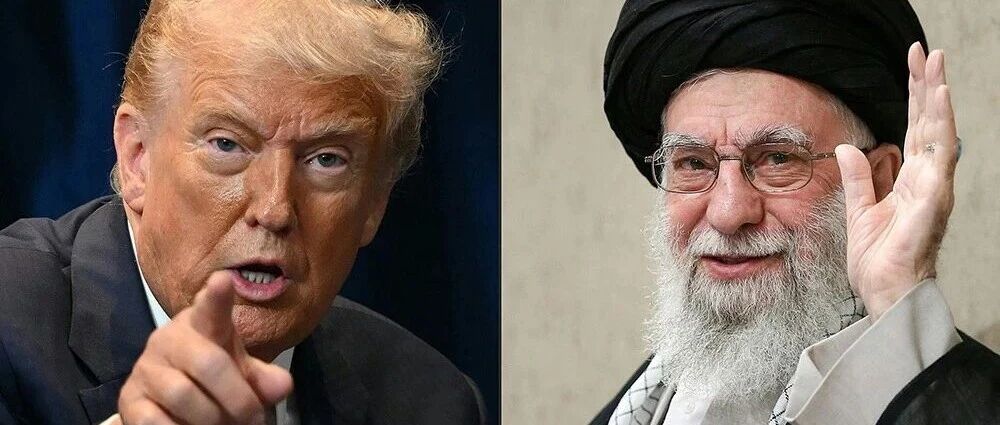
哈梅内伊身后,伊朗能否如美国所愿
财富FORTUNE· 2026-03-01 13:11
Core Viewpoint - The article discusses the escalating tensions between the United States and Iran, highlighting the potential for military conflict and the implications of recent political developments in Iran, particularly following the death of Supreme Leader Ali Khamenei. Group 1: U.S.-Iran Relations - The ongoing threats of war between the U.S. and Iran have persisted for decades, with a belief that armed conflict is inevitable, yet no firm expectation of an immediate outbreak until recent missile strikes towards Tehran [3]. - Following a significant missile attack on Iranian nuclear facilities in June 2025, U.S. military presence in the region was notably increased, marking the largest military buildup in 20 years [4]. - The U.S. has set stringent demands for Iran, including the dismantling of nuclear facilities and cessation of uranium enrichment, which Iran finds unacceptable, yet it has shown a willingness to negotiate [6][7]. Group 2: Iran's Political Landscape - Iran's proposed compromise includes retaining advanced centrifuges and enriching uranium to 20%, which significantly exceeds the limits set by the 2015 nuclear agreement [8]. - The political landscape in Iran is described as unusually weak, with public dissent against the regime growing, particularly following protests against Khamenei's leadership [11][12]. - The potential for regime change in Iran is discussed, with the U.S. and Israel aiming to dismantle the current theocratic leadership, although the outcome remains uncertain [16][17]. Group 3: Implications of Khamenei's Death - The death of Khamenei is seen as a pivotal moment that could trigger significant political changes in Iran, with the possibility of a power struggle among conservative factions [19]. - The Iranian government has declared a period of national mourning for Khamenei, while various internal and external forces are anticipated to maneuver for influence over Iran's future [19].
美国国务卿鲁比奥将出访以色列
Zhong Guo Xin Wen Wang· 2026-02-27 23:38
Group 1 - The U.S. Secretary of State, Rubio, will visit Israel from March 2 to 3 to discuss regional priorities including the Iran issue and the situation in Lebanon, as well as advancing President Trump's Gaza "20-point plan" [1] - Due to heightened security risks, the U.S. State Department has approved the evacuation of non-essential personnel and their families from the U.S. Embassy in Israel [1] - The U.S. Embassy in Israel may further restrict or prohibit government employees and their families from traveling to certain areas, including the Old City of Jerusalem and the West Bank, without prior notice [1] Group 2 - On February 23, the U.S. State Department required the evacuation of non-essential personnel and their families from the U.S. Embassy in Lebanon due to the current security situation in Beirut [1] - The U.S. has recently amassed military forces in the Middle East, with President Trump expressing a preference for diplomatic solutions to the Iran nuclear issue while stating that the U.S. will never allow Iran to possess nuclear weapons [1]
多国撤人、双航母就位 特朗普就伊朗问题释放最新信号
Yang Shi Xin Wen· 2026-02-27 22:46
Group 1 - The core message indicates that President Trump is open to negotiations with Iran but has not ruled out military action, emphasizing that a final decision on military force has not been made [2][6][8] - The U.S. military has increased its presence in the Middle East, deploying two aircraft carriers, the USS Ford and USS Lincoln, which raises the risk of conflict [6][8] - Multiple countries, including Israel, Canada, and several European nations, have issued security alerts and advised their citizens to evacuate or avoid travel to Iran and surrounding regions due to escalating tensions [3][5] Group 2 - The third round of indirect negotiations between the U.S. and Iran concluded with significant disagreements remaining, particularly regarding Iran's nuclear facilities and uranium enrichment [9][11] - Analysts suggest that while there were some concessions made during the negotiations, they did not meet the minimum requirements set by the U.S., indicating a stalemate [11] - The presence of U.S. military assets in the region may serve as leverage in negotiations, but the potential for Israel to take preemptive military action against Iran remains a significant uncertainty [11]
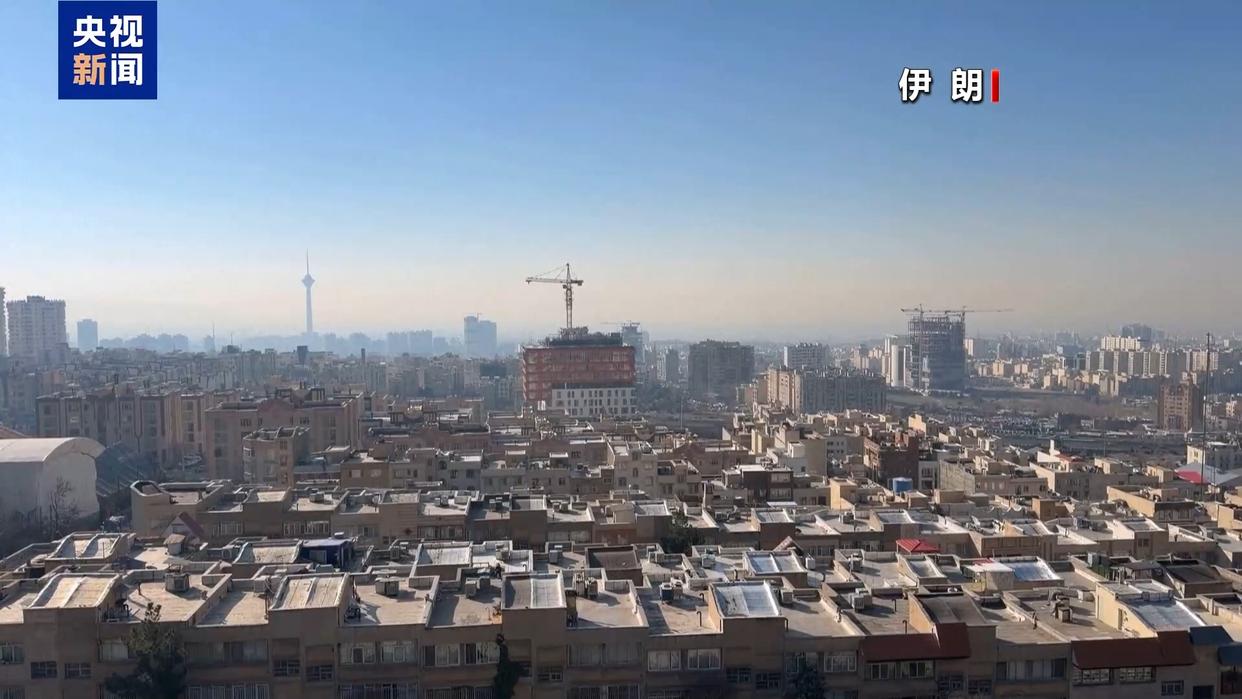
特朗普重申伊朗不能拥有核武器
Yang Shi Xin Wen· 2026-02-27 17:39
Core Viewpoint - The article emphasizes that U.S. President Trump reiterated the stance that "Iran cannot have nuclear weapons" [1] Group 1 - The statement reflects ongoing U.S. policy regarding nuclear non-proliferation in Iran [1]
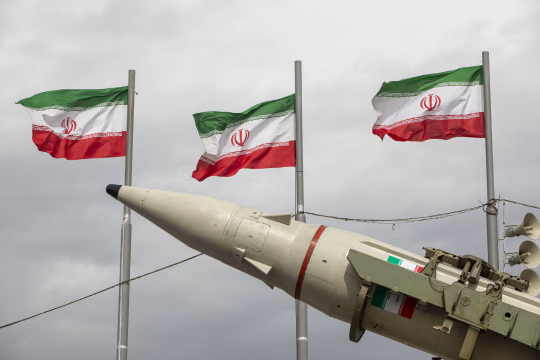
尽管特朗普发出警告,但伊朗远未具备制造洲际弹道导弹能力
Xin Lang Cai Jing· 2026-02-27 16:34
Core Viewpoint - Iran faces significant technological challenges in developing intercontinental ballistic missiles (ICBMs) capable of striking the U.S. mainland, which raises questions about the justification for urgent military action by the Trump administration against Iran. Unless there is a major diplomatic breakthrough, the likelihood of military action is increasing [3][22]. Group 1: Iran's Missile Development - Experts indicate that Iran's ambitions to develop missiles that can reach the U.S. are hindered by high technical barriers, allowing time for negotiations to limit Iran's missile development [4][22]. - Iran does not acknowledge the development of ICBMs and shows no signs of willingness to abandon or limit its short- and medium-range missile arsenal [5][23]. - Iranian Foreign Minister Zarif stated that Tehran has intentionally limited the range of its ballistic missiles to 2,000 kilometers for deterrence purposes, while U.S. Secretary of State Rubio countered that Iran is clearly seeking ICBMs [6][24]. Group 2: Technical Challenges - To create ICBMs capable of reaching the U.S., Iran must overcome multiple core technological hurdles, including developing heat shield technology for re-entry vehicles and precision guidance systems [7][25]. - The U.S. Defense Intelligence Agency predicted that if Iran modifies its satellite launch systems for ICBM use, it could deploy up to 60 intercontinental missiles by 2035 [8][26]. - Experts believe that Iran's space launch program serves as a cover for ICBM development due to the shared technology involved [8][26]. Group 3: Nuclear Capability and Missile Matching - Iran needs to develop miniaturized nuclear warheads that can fit into re-entry vehicles to enable its missiles to carry nuclear payloads, which is a more time-consuming process than quickly building a rudimentary nuclear device [9][27][28]. - Currently, Iran is not enriching uranium to weapons-grade levels, as confirmed by Rubio [11][29]. Group 4: Regional Military Impact - Iran relies on short- and medium-range ballistic missiles to compensate for its air force's weaknesses, with its missiles capable of covering U.S. military bases in the Middle East and Southern Europe [13][31]. - The U.S. has deployed land-based missile defense systems in Romania and Poland to counter potential threats from Iranian missiles to Europe [13][31]. - Despite a stagnation in its nuclear program, Iran's conventional missile and drone capabilities pose a significant threat to Israel and Gulf states [15][33]. Group 5: Negotiation Stalemate - There are substantial divisions in U.S.-Iran negotiations, with some Middle Eastern countries suggesting that talks should focus solely on nuclear issues, postponing discussions on limiting Iran's missile capabilities [16][34]. - The Trump administration has shown no indication of willingness to set aside missile issues in negotiations [17][35]. - U.S. officials are concerned that without resolving these issues while U.S. military forces are concentrated in the region, Iran is unlikely to compromise [18][36]. - Rubio emphasized that Iran's refusal to discuss ballistic missile issues is a significant problem [19][37].