体系作战

Search documents
歼-10C“击落”隐身战机!现场画面公布
中国基金报· 2025-08-03 04:01
Core Viewpoint - The article emphasizes the effectiveness of the J-10C fighter jet in modern combat scenarios, particularly in multi-type system confrontations, showcasing its capability to engage stealth aircraft under a comprehensive support system [9][11]. Group 1: Training and Combat Effectiveness - During a multi-type system confrontation exercise, the J-10C successfully "shot down" a stealth aircraft, demonstrating its operational relevance in current military engagements [7][9]. - The pilot, Xiao Nan, initially struggled to detect the target due to radar interference but effectively coordinated with other units to identify and engage the stealth target [3][5]. - The successful engagement of the stealth aircraft marked a significant achievement against advanced enemy fighters, highlighting the importance of system support in modern warfare [9]. Group 2: Collaborative Combat Strategy - The training emphasized the necessity of joint operations, where different aircraft types work together to enhance combat effectiveness, suggesting that victory is achievable even with older models against newer ones [11][25]. - The concept of a "collaborative zone" was introduced, where shared intelligence and resources among units are crucial for forming an effective combat system [13][25]. - The article stresses that future combat will rely on integrated systems rather than individual capabilities, advocating for unity and collaboration among forces to achieve broader operational success [22][25].

驾驭“鲲鹏”上九天(最美新时代革命军人风采)
Ren Min Ri Bao· 2025-07-23 22:11
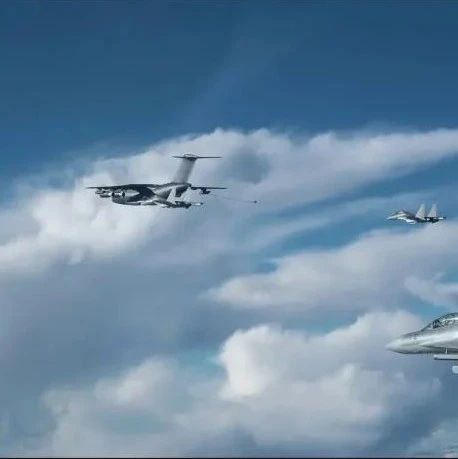
Core Viewpoint - The article highlights the significant advancements in the strategic airlift capabilities of the Chinese military, particularly through the development and operation of the Y-20 transport aircraft, emphasizing the importance of innovative thinking and teamwork in enhancing military effectiveness [5][7]. Group 1: Individual Development and Training - Chen Siqi, a pilot in the Air Force, has demonstrated exceptional skills and commitment, having trained on multiple aircraft types including the Y-20, and has been recognized for his contributions to military airlift operations [2][3]. - His journey began with a strong desire to fly fighter jets, but he shifted focus to transport aircraft after understanding their critical role in military strategy, influenced by his father's background as a transport pilot [3][4]. Group 2: Strategic Airlift and Innovation - The Y-20 is recognized as a symbol of China's enhanced strategic airlift capabilities, representing a leap in military logistics and operational efficiency [5]. - Chen Siqi's innovative approach led to the establishment of a dedicated team that developed standardized procedures for airlift operations, which earned them the "Originality Award" from the Air Force [6]. Group 3: Joint Operations and Future Vision - The article discusses the importance of joint operations in modern warfare, with Chen Siqi advocating for a unified command and control system to enhance collaborative air operations [7]. - His vision for future air combat includes a comprehensive operational plan that integrates various aircraft and support systems, aiming for seamless coordination in complex battle scenarios [7].
中国双航母编队首提“互为对手实战对抗”,解读来了!
Huan Qiu Wang· 2025-06-30 15:40
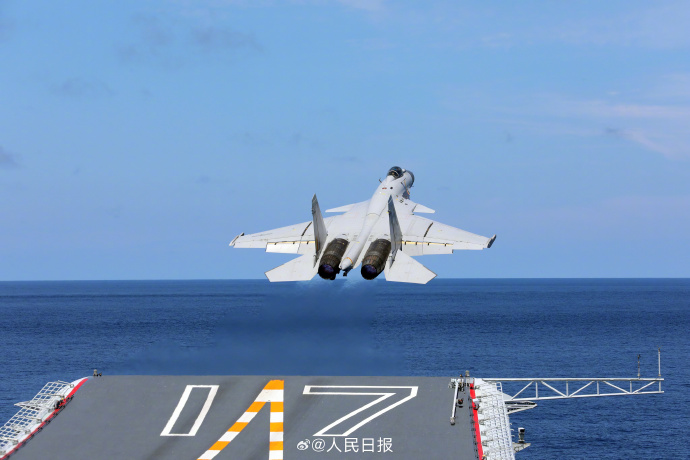
Core Viewpoint - The recent training exercise involving the Liaoning and Shandong aircraft carrier groups demonstrates China's enhanced capabilities in maritime defense and operational readiness, showcasing their ability to conduct realistic combat training in distant waters [1][3][6]. Group 1: Training Details - The Liaoning and Shandong carrier groups completed a comprehensive training mission in the Yellow Sea, East China Sea, South China Sea, and the Western Pacific, marking a significant expansion of their operational range [1][6]. - The training included various military exercises such as reconnaissance, anti-strike, maritime assault, air defense, and tactical flight operations of carrier-based aircraft, indicating a focus on joint operational capabilities [3][4]. Group 2: Strategic Implications - The exercise involved the two carrier groups potentially acting as opposing forces, which reflects a shift towards more sophisticated joint combat training and operational integration with other military branches [3][4]. - The movement of the carrier groups into the Western Pacific signifies a strategic advancement, extending China's defense perimeter and enhancing its ability to project power beyond its immediate coastal waters [6]. Group 3: Operational Readiness - The carrier groups maintained a high state of alert during the training, responding to foreign reconnaissance and monitoring activities, which underscores their readiness to engage in potential conflicts [4][5]. - The training serves to validate the operational independence of the carrier groups as a combat unit capable of addressing various threats, including those posed by foreign naval forces [4].
歼-10C,初试啼声
Hu Xiu· 2025-05-09 03:58
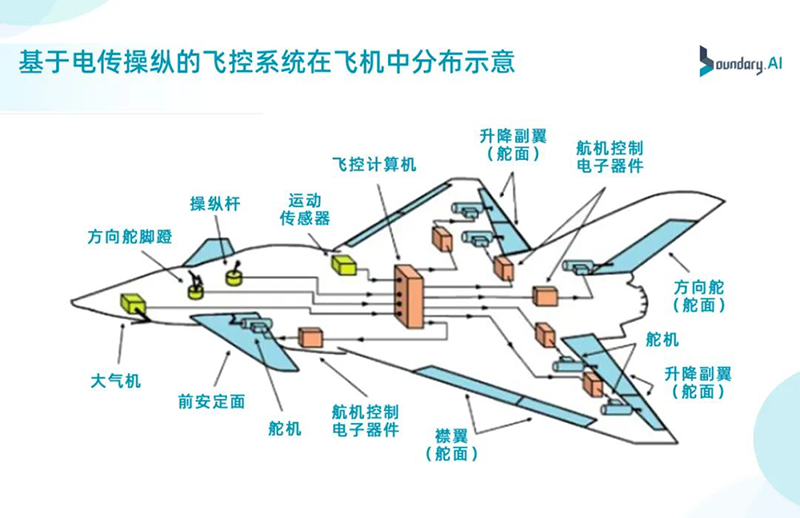
Core Viewpoint - The J-10C fighter jet represents a significant advancement in China's military aviation capabilities, featuring improved avionics, radar, engine, and weapon systems compared to its predecessors, the J-10A/B, making it a key asset for the Chinese Air Force in various combat roles [1][2][3]. Group 1: Overview of J-10C - The J-10C is classified as a fourth-generation multi-role fighter, designed for advanced performance at a relatively low cost, fulfilling diverse missions such as air defense, air superiority, and ground attack [2][3]. - It is regarded as the third strongest main battle aircraft in the Chinese Air Force, following the stealthy J-20 and the heavy multi-role J-16 [3]. Group 2: Operational Process - The operational process of the J-10C involves several stages, including pre-flight preparations, takeoff, mission execution, and return, all requiring close coordination among operational, command, and support chains [4][30]. - Pre-flight checks include comprehensive inspections of the aircraft's systems and the loading of appropriate weapons based on mission requirements [6][5]. - The J-10C can achieve a combat radius of approximately 1,500 kilometers and a range of about 3,900 kilometers when equipped with three external fuel tanks [6]. Group 3: Technical Specifications - The J-10C features a canard-delta wing design that enhances its maneuverability and control, allowing for high angles of attack without stalling [34][40]. - It is equipped with a domestically developed KLJ-10A AESA radar, which offers a detection range of up to 200 kilometers and the ability to track multiple targets simultaneously [80]. - The aircraft's WS-10B "Taihang" engine provides a thrust-to-weight ratio close to 1:1, significantly improving its climb and acceleration capabilities [58][60]. Group 4: Combat Capabilities - In air-to-air combat, the J-10C can engage targets at long ranges using the PL-15 missile, which has a reported range of around 200 kilometers [18][19]. - The aircraft has demonstrated superior performance in simulated engagements against advanced fighters, including the Su-35 and J-16, showcasing its agility and combat effectiveness [19]. - For ground attack missions, the J-10C can deploy precision-guided munitions, relying on data from reconnaissance assets to identify targets [21][22]. Group 5: Information Warfare and Network-Centric Operations - The J-10C integrates advanced electronic warfare capabilities, including radar warning receivers and electronic countermeasures, enhancing its survivability in contested environments [81][84]. - It is capable of operating within a network-centric warfare framework, sharing real-time data with other aircraft and ground forces through tactical data links [88][89]. - The aircraft's ability to conduct coordinated attacks and share situational awareness significantly enhances its operational effectiveness in modern combat scenarios [92][95]. Group 6: Stealth Features - While not a fifth-generation stealth fighter, the J-10C incorporates design elements aimed at reducing its radar cross-section (RCS) and infrared signature, such as the DSI (Ducted Supersonic Inlet) design [96][99]. - The use of composite materials and radar-absorbent coatings contributes to its reduced visibility to enemy radar systems [71][72]. - These stealth measures allow the J-10C to operate more effectively in environments where it may face advanced adversary radar systems [100][101].