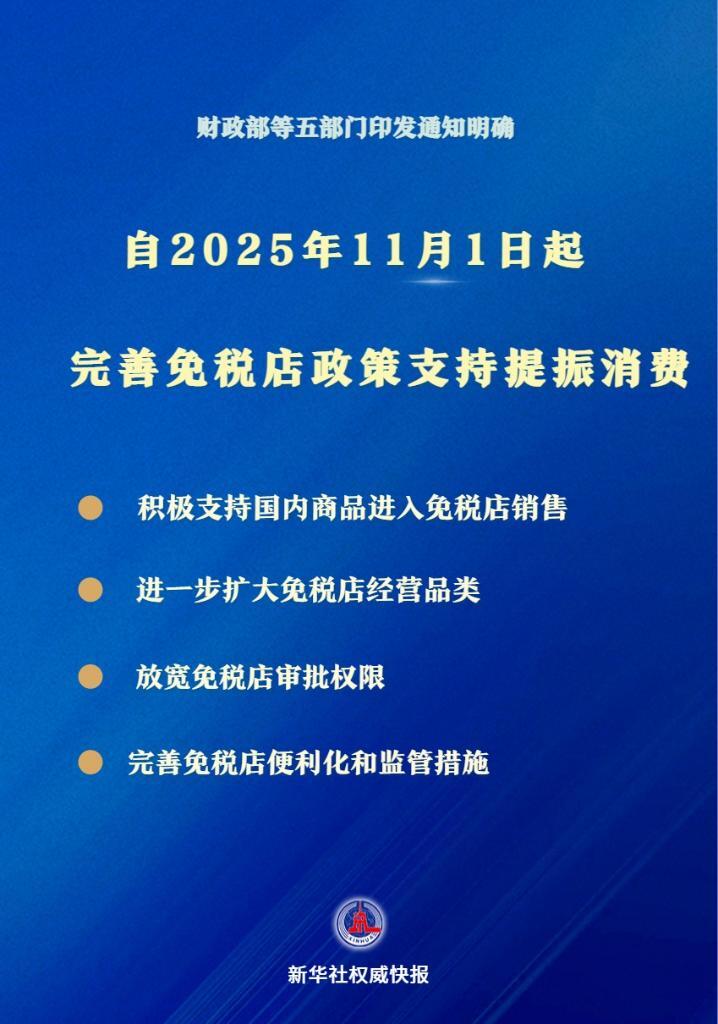
免税店政策升级

Search documents
新华鲜报|支持提振消费!免税店政策“升级”
Xin Hua She· 2025-10-30 11:12
Core Viewpoint - The upgrade of China's duty-free shop policy, effective from November 1, 2025, aims to enhance the attractiveness of duty-free shopping for inbound and outbound travelers by allowing more domestic products to be sold and expanding the range of goods available [1][3]. Group 1: Policy Enhancements - The new policy encourages enterprises with duty-free operating qualifications and foreign-invested companies approved by the State Council to increase the procurement of quality domestic products [3][6]. - Domestic products sold in duty-free shops will be treated as exports, allowing for the refund of value-added tax and consumption tax [3][6]. - The approval authority for establishing and operating duty-free shops will be decentralized from central ministries to provincial departments, facilitating local optimization of duty-free shop layouts [6]. Group 2: Product Range Expansion - The policy will expand the categories of goods available in duty-free shops, including portable consumer products such as mobile phones, micro-drones, sports goods, health foods, over-the-counter drugs, and pet foods [6]. - The introduction of more domestic products is expected to offer travelers more attractive pricing and a wider selection of trendy and diverse goods [3][6]. Group 3: Consumer Experience Improvement - The policy will support online booking services for duty-free shops, allowing travelers to reserve items in city duty-free shops and pick them up at port duty-free shops [6]. - Continuous optimization of the duty-free shopping process is expected to enhance the overall shopping experience for travelers, making it more convenient to purchase quality domestic and international products [6].

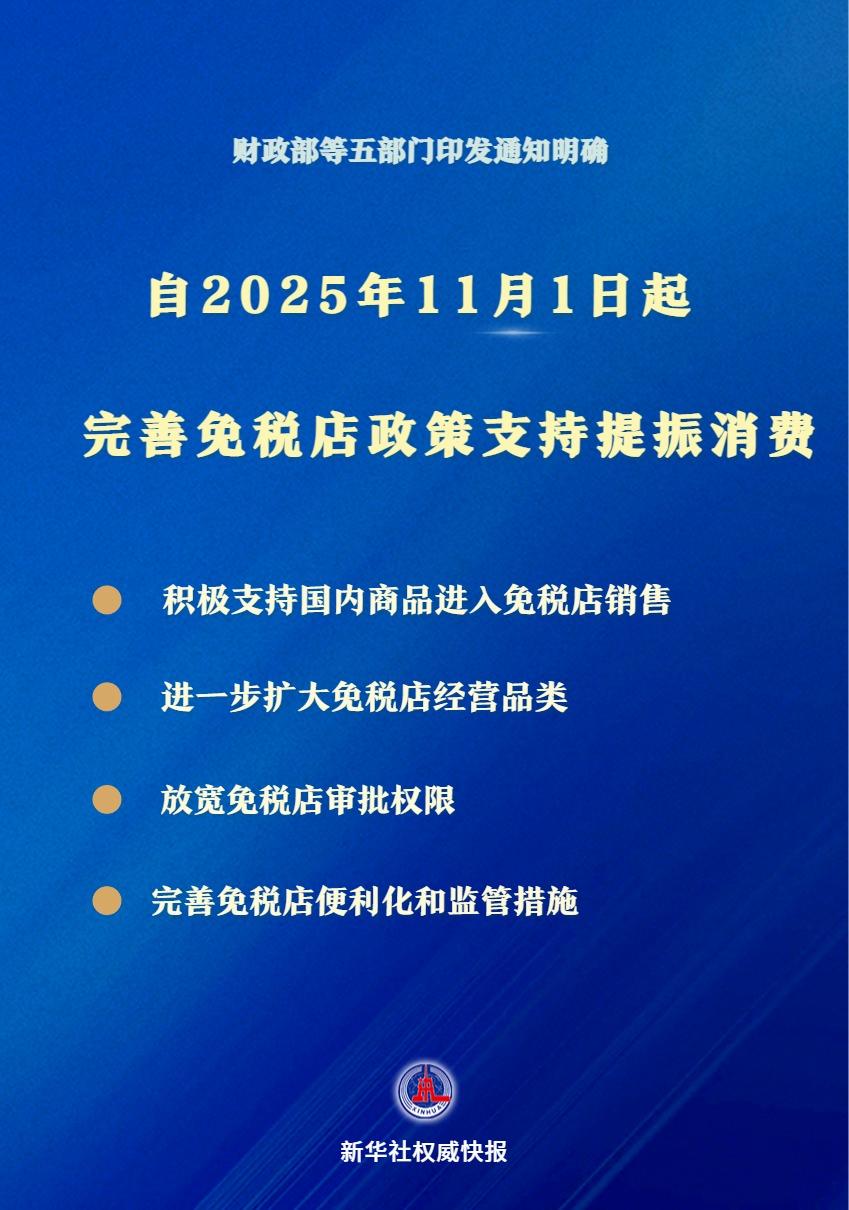
新华鲜报|支持提振消费!免税店政策“升级”
Sou Hu Cai Jing· 2025-10-30 11:09
Core Viewpoint - The upgrade of China's duty-free shop policy, effective from November 1, 2025, aims to enhance the attractiveness of duty-free shopping for inbound and outbound travelers, promoting healthy and orderly development of the duty-free retail business [1][2]. Group 1: Policy Enhancements - The new policy encourages enterprises with duty-free product operating qualifications and foreign-invested companies approved by the State Council to increase the procurement of high-quality domestic products [3][7]. - Domestic products sold in duty-free shops will be treated as exports, allowing for the refund (or exemption) of value-added tax and consumption tax [3][7]. - The approval authority for establishing and operating duty-free shops will be decentralized from central ministries to provincial-level departments, facilitating local optimization of duty-free shop layouts [7][8]. Group 2: Product Range Expansion - The policy expansion includes a wider variety of consumer goods, such as mobile phones, micro-drones, sports equipment, health foods, over-the-counter drugs, and pet foods [7]. - The introduction of more domestic products is expected to offer travelers more attractive pricing and diverse shopping options [3][7]. Group 3: Shopping Experience Improvement - The policy will support online reservation services for duty-free shops, allowing travelers to reserve items in city duty-free shops and pick them up at port duty-free shops [8]. - Continuous optimization of the duty-free shopping process is anticipated to enhance the overall shopping experience for travelers [8].
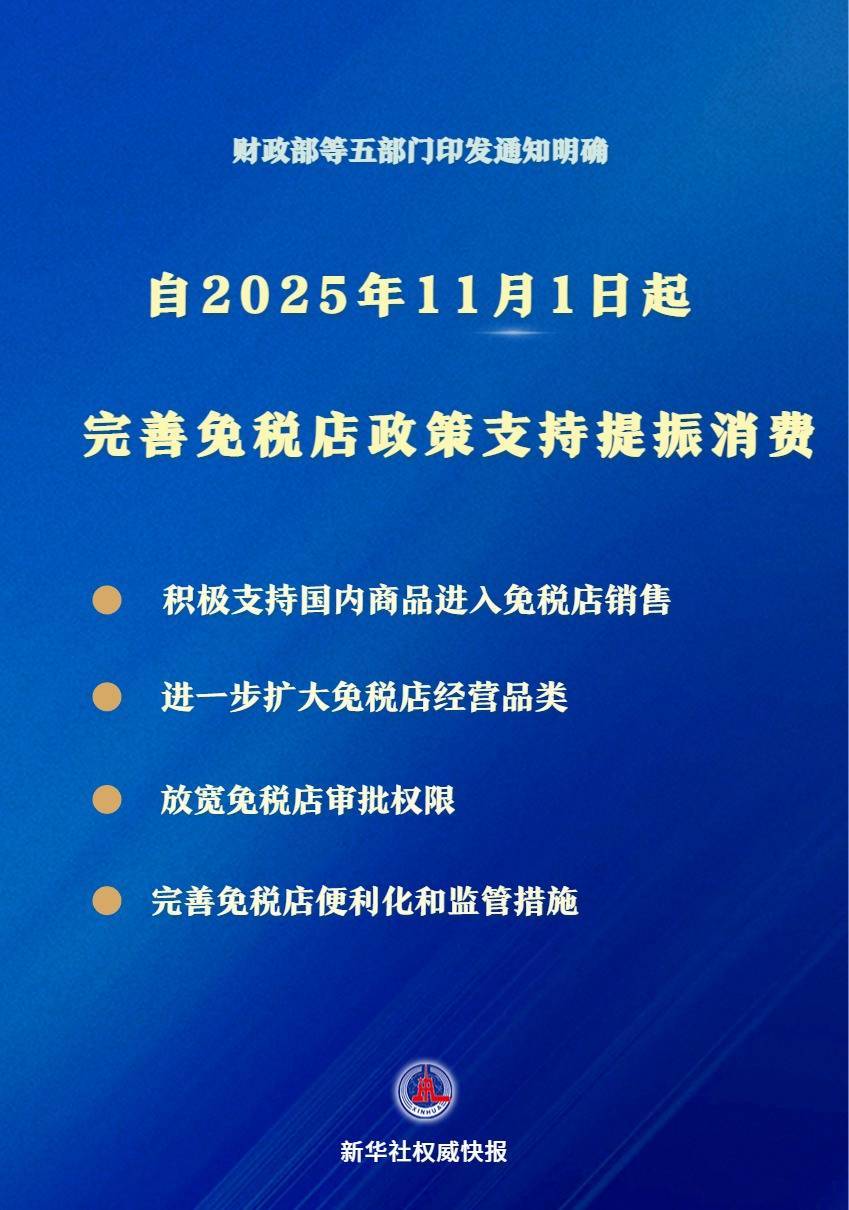
新华社权威快报丨支持提振消费!免税店政策11月1日起“升级”
Xin Hua Wang· 2025-10-30 08:15
Core Viewpoint - The Ministry of Finance and four other departments have issued a notice to enhance duty-free shop policies starting from November 1, 2025, aimed at boosting consumption and promoting the healthy development of duty-free retail business [3]. Group 1: Policy Enhancements - The notice outlines four key areas for improving duty-free shop policies: 1. Optimizing the management of domestic goods tax refund (exemption) policies to support the sale of domestic products in both port exit duty-free shops and city duty-free shops [3]. 2. Expanding the range of products available in duty-free shops to include more easily transportable consumer goods [3]. 3. Relaxing approval permissions for duty-free shops, allowing local authorities to tailor and optimize the layout of duty-free shops according to regional needs [3]. 4. Improving facilitation and regulatory measures for duty-free shops to continuously enhance the shopping experience for travelers [3].