
古树保护

Search documents
邱春盛:守护304岁珍稀五福柿 文脉永续助文旅丨古树守护人手记
Nan Fang Nong Cun Bao· 2025-12-26 12:04
Core Viewpoint - The article highlights the importance of protecting ancient trees, specifically the 304-year-old Wufu persimmon tree in Guangdong, as a vital part of cultural heritage and ecological sustainability [9][10][21]. Group 1: Historical Significance - The Wufu persimmon tree is considered a "living fossil" and is the only remaining specimen in China, with historical ties to the Qing Dynasty [13][14]. - This tree was planted in 1721 by a notable figure, linking it to significant historical narratives [15][16]. Group 2: Conservation Efforts - The guardian of the tree, Qiu Chunsheng, implements a detailed care plan, including regular inspections and soil improvement measures to ensure the tree's health [22][23][27]. - In 2022, the tree underwent a revitalization process that successfully restored its health within three months [26][28]. Group 3: Community Involvement - Qiu Chunsheng has engaged local villagers in conservation efforts by organizing "ancient tree classes" to educate them on tree protection [29][30]. - The community's active participation has fostered a culture of appreciation and care for the ancient tree [31]. Group 4: Ecological and Economic Impact - The health index of the Wufu persimmon tree improved from "good" to "excellent," with a 20% increase in leaf coverage, positively affecting the surrounding ecosystem [33]. - The tree attracts thousands of tourists annually, contributing to the development of local cultural tourism [34][36].


陈文钦:七年坚守护古树 以青春力量反哺家乡丨古树守护人手记
Nan Fang Nong Cun Bao· 2025-12-26 09:03
Core Viewpoint - The article highlights the dedication of Chen Wenqin, a local forestry professional, in protecting ancient trees in Guangdong, emphasizing the importance of combining traditional knowledge with modern technology for ecological preservation [10][34]. Group 1: Background and Importance of Ancient Trees - Guangdong is home to over 85,000 ancient trees, which serve as living cultural relics and ecological resources [2][9]. - The preservation of ancient trees is crucial for maintaining local history and ecology, as they are seen as "living fossils" of the region [9][38]. Group 2: Chen Wenqin's Contributions - Since 2018, Chen has actively engaged in the protection of ancient trees, utilizing both self-taught knowledge and expert consultations to develop effective care strategies [19][24]. - He has implemented advanced techniques such as scientific diagnosis and non-destructive testing, successfully reviving multiple trees previously deemed "dead" [21][25]. - Chen has been recognized for his efforts, receiving the title of "Guangdong Provincial Forestry Local Expert" in 2024, which acknowledges his significant contributions to ecological protection and cultural heritage [35][36]. Group 3: Community Engagement and Future Plans - Chen has initiated community involvement in ancient tree protection, including a donation of 1 million yuan for local conservation efforts and the establishment of an ancient tree park [30][31]. - His ongoing projects aim to enhance the growth environment of ancient trees while educating the public about their ecological and cultural value [32][33]. - Chen expresses a commitment to continue his work in his hometown, focusing on the sustainable preservation of ancient trees and contributing to the "Green Beautiful Guangdong" initiative [37][38].
上海迎来银杏季,秋叶地图助力文旅
Di Yi Cai Jing· 2025-12-08 04:01
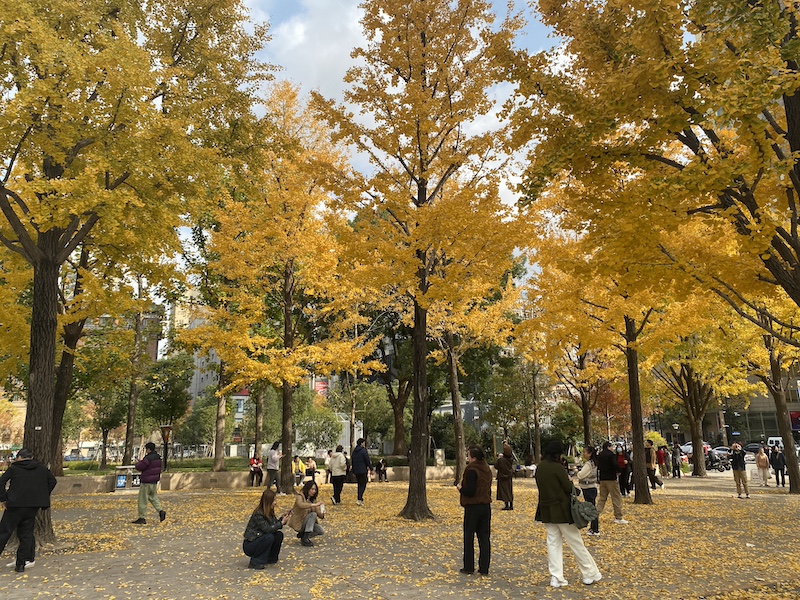
银杏打卡点 12月4日,在长宁区古北的黄金城道步行街,记者看到,工作日午后在此打卡的市民非常多,有的推着轮椅陪老人 出来逛,也有带着小孩来拍照的。来上海旅游的年轻女孩,抱着一把银杏叶洒向空中。扛着长枪短炮的"老法 师",也在人堆中来回出没,捕捉美的瞬间。 秋冬之交,银杏树叶落似金。12月,银杏季如约而至。 "家旁边这棵老银杏,长疯了!" 80后上海市民黄先生从小住在真如寺旁,参加工作以后搬离了一阵,2017年,他带着家人住回了熟悉的老地方。 他告诉记者,真如寺的老银杏快600岁了,与寺庙大体上同龄。小时候,他记得这棵树险些死去,后来转危为安。 这株老银杏,是上海市编号0067的银杏古树,1986年经专业勘测认定。这棵银杏的树龄约为650年。 秋冬之交,银杏落叶似金。12月,上海的银杏季如约而至,通常中旬为最佳观赏期,有的街道会持续到月底。市 民、游客纷纷踩着落叶,在城市中的公园、街角、名人故居等处打卡。 一年一度的"黄金城道银杏艺术节"5日拉开帷幕。艺术节期间,将会组织午间快闪音乐会和音乐巡游、海派艺术共 创和漫步绘画、街区舞蹈、银杏主题插花工坊等活动。步行街的商户、金融机构和高岛屋、程十发美术馆等参与 主办 ...
这群大学师生用镜头记录古树故事
Zhong Guo Qing Nian Bao· 2025-12-07 22:52
Core Viewpoint - The article highlights the efforts of a student team from Qingdao Agricultural University, led by Professor Shao Liying, to document ancient trees in Shandong province, emphasizing the cultural and historical significance of these trees and the importance of their preservation [1][2][4]. Group 1: Ancient Tree Documentation - The team has been actively recording ancient trees, including the "World's Oldest Ginkgo Tree" in Shandong, which is over 4,000 years old, and has been recognized by Guinness World Records [2][8]. - The documentation process involves capturing the trees' physical characteristics and the stories surrounding them, which helps in understanding and preserving local history [3][4]. - The team has created a digital archive of videos and images to promote traditional culture and raise awareness about ancient tree conservation [4][8]. Group 2: Educational Impact - The project serves as a "second classroom" for students, allowing them to engage in hands-on learning about ecological protection and cultural heritage [7]. - Students have reported a transformation in their understanding and appreciation of ancient trees, leading to increased interest in ecological conservation [7][8]. - The team has produced over ten documentaries related to ancient tree culture, with notable recognition in various competitions [7]. Group 3: Future Plans - The team plans to expand its efforts by documenting representative ancient tree species and creating thematic documentaries [8]. - They aim to utilize new media platforms to enhance public engagement and awareness about ancient tree protection [8]. - The initiative seeks to ensure that the stories of ancient trees are recognized and valued, thereby preserving historical memories for future generations [8].
浙江长兴官方民间共护三千银杏古树
Zhong Guo Qing Nian Bao· 2025-12-07 10:17
Core Viewpoint - The article highlights the efforts in protecting and revitalizing ancient ginkgo trees in the Baduqi Scenic Area of Changxing County, Zhejiang Province, emphasizing community involvement and modern techniques in conservation [1][2]. Group 1: Community Involvement - Local villager Wu Nanxing donated 2,000 yuan for the protection of ancient ginkgo trees, which are crucial to the local heritage, with over 3,700 trees in the area, accounting for 80% of the ancient trees in Changxing County [1]. - Wu Nanxing has successfully commercialized the use of ginkgo fruits by creating a product called "thousand-year ginkgo fruit noodles," leading him to commit to annual donations for tree protection [1]. Group 2: Conservation Efforts - The local government has implemented a comprehensive care and restoration plan for the ancient ginkgo trees, addressing issues such as soil aeration and tree health, with a focus on revitalizing trees that showed signs of decline [1][2]. - Approximately 2,000 ancient ginkgo trees have shown significant improvement in growth due to measures like pruning, fertilization, and pest control, while 121 trees have been treated for health issues through various restoration techniques [2]. Group 3: Technological Integration - The conservation strategy has evolved from general protection to a more refined and digital management approach, utilizing expert resources from various institutions for precise mapping, health assessments, and dynamic monitoring of the ancient ginkgo trees [2].
烈士公园银杏披金衣,170岁"树王"受热捧
Chang Sha Wan Bao· 2025-12-01 09:25
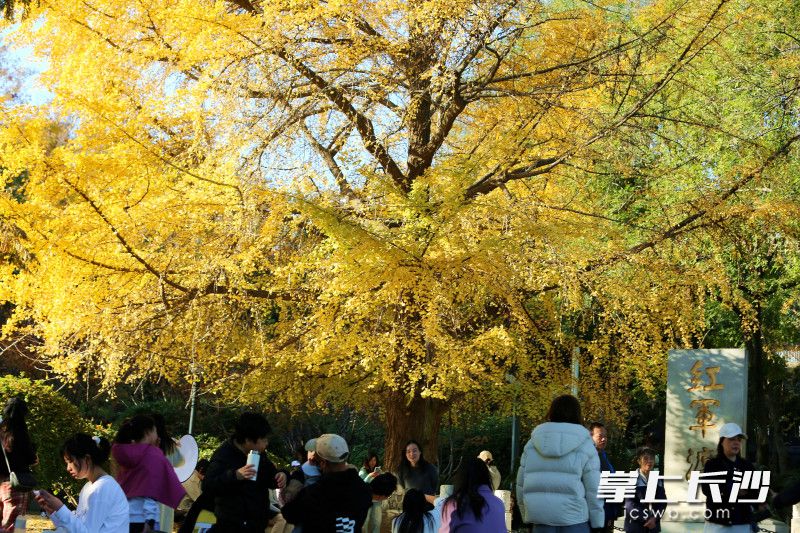
Core Viewpoint - The ancient ginkgo tree, known as the "Ginkgo King," located in Hunan Martyrs Park, is a significant natural and historical heritage, attracting many visitors during the autumn season due to its stunning golden leaves [5][10]. Group 1 - The "Ginkgo King" is over 170 years old and has been designated as a protected ancient tree in Hunan Province, included in the national third-level protection list since June 2019 [5]. - The tree stands approximately 25 meters tall with a crown width of 20 meters, showcasing its robust and resilient structure after enduring over 170 years of weather conditions [5]. - During autumn, the tree's golden leaves create a visually striking scene, drawing visitors who appreciate its beauty and historical significance [7]. Group 2 - The park management regularly conducts health checks, pest control, and maintenance to ensure the tree's continued health and growth, adhering to ancient tree protection standards [10]. - Visitors are reminded to respect the tree by not climbing on it or shaking its branches, emphasizing the importance of preserving this valuable natural and historical asset [10].
京西老矿区发现一株国槐,胸径超京城“槐王”!附近还有多株国槐达标一级古树,也未挂牌保护
Bei Jing Qing Nian Bao· 2025-11-25 04:49
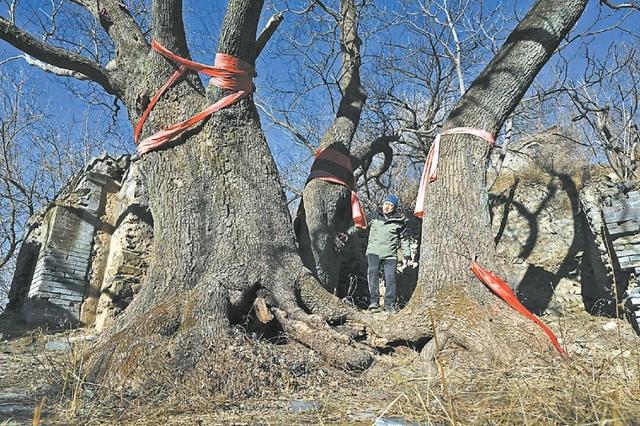
Core Viewpoint - A significant ancient tree, a national locust tree, was discovered in the Beiling area of Beijing, surpassing the size of the city's oldest known locust tree, but it lacks a protective plaque and its health is concerning [1][4][5]. Group 1: Discovery and Condition of the Tree - The tree, located in Xiaodianzicun, has a trunk circumference of 685 cm, translating to an approximate diameter of 218 cm, which exceeds the standard for first-class ancient trees in Beijing by 174 cm [6][7]. - The tree's health is deteriorating, with sparse leaves and a hollow trunk, raising concerns about its survival [4][9]. - The absence of a protective plaque indicates it may have been overlooked during previous surveys of ancient trees [3][4]. Group 2: Historical Context and Significance - The Beiling area has a rich history tied to coal mining, which led to the establishment and subsequent decline of local villages, resulting in the neglect of ancient trees [13][14]. - The locust tree is emblematic of the cultural and ecological heritage of the area, and its preservation is deemed essential for historical and environmental reasons [4][14]. - The region's ancient trees, including the one in Xiaodianzicun, have not been adequately documented or protected, leading to their gradual decline [13][14].
“上海第一树”逐渐进入休眠期 千年古银杏园“闭关”升级中 上海已建成古树园31座
Jie Fang Ri Bao· 2025-11-24 01:49
Core Viewpoint - The construction of ancient tree parks in Shanghai is accelerating, reflecting respect for historical context and local culture, with 31 parks established to date [1] Group 1: Ancient Tree Park Developments - The renovation of the Qianian Ginkgo Garden, home to the "first tree" of Shanghai, aims to enhance visitor experience while ensuring the protection of ancient trees, with completion expected by March next year [2][5] - The renovation will introduce approximately 800 square meters of new recreational facilities, including a visitor center and educational spaces, while improving the landscape and protection measures for the ancient ginkgo tree [2][3] Group 2: Community Engagement and Technology - The newly established ancient tree garden in the Yunhaiyuan community is the first of its kind within a residential area, featuring five 160-year-old magnolia trees and utilizing IoT technology for real-time monitoring of environmental conditions [6][7] - The property management will enhance professional maintenance efforts in collaboration with local green management departments to ensure the health of the ancient trees [7] Group 3: Regulatory Framework and Cultural Integration - Shanghai has 1,890 ancient trees and 953 subsequent resources, with ongoing efforts to balance protection and public access, aiming to create culturally rich parks that meet public demands for appreciation and education [8][9] - The management emphasizes the importance of integrating ancient trees with local culture to foster awareness and appreciation among younger generations, addressing the need for innovative protection models [8][9]
古老银杏 韵传古今(和古树做朋友)
Ren Min Ri Bao· 2025-11-18 23:30
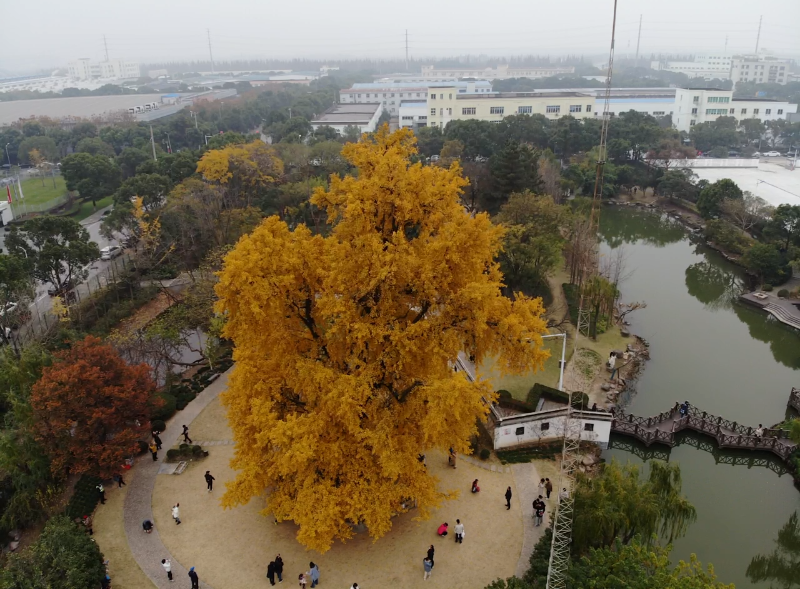
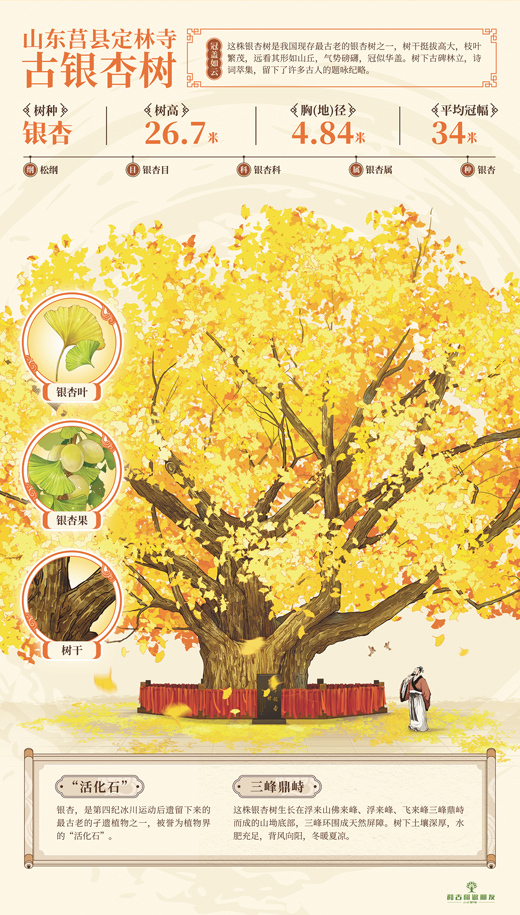
Core Viewpoint - The ancient ginkgo tree in Juxian County, Shandong, is highlighted as a cultural and historical symbol, showcasing the importance of tree preservation and the efforts made to protect it [4][5]. Group 1: Cultural Significance - The ancient ginkgo tree is located in the Dinglin Temple, which is part of a national 4A tourist attraction and serves as a historical museum [3]. - The tree is associated with historical figures, including Liu Xie, a renowned literary theorist, whose work has influenced literature for over a thousand years [4]. Group 2: Preservation Efforts - Juxian County has implemented a tree protection system that includes supplementary surveys, record-keeping, and protective signage [4]. - Li Jianguo, a dedicated caretaker, has been tending to the ginkgo tree since 2014, performing essential maintenance tasks such as watering and pest control [5]. Group 3: Detailed Monitoring - Li Jianguo maintains a "Big Tree Diary" documenting the tree's growth stages and environmental conditions, which aids in expert assessments and care strategies [5]. - The ginkgo tree has seen an increase in fruit production due to improved pollination from surrounding ginkgo trees planted in recent years [5]. Group 4: Botanical Information - Ginkgo biloba, also known as the maidenhair tree, is a large deciduous tree that can reach heights of up to 40 meters and is valued for its ornamental and economic uses [6][8]. - Ginkgo trees are ancient, dating back 345 million years, and are unique to China, with all existing ginkgo trees worldwide originating from this region [6].
特写 | 古树常青,守护长情
Nan Fang Nong Cun Bao· 2025-10-24 04:00
Core Viewpoint - The article highlights the importance of ancient trees in the Lingnan region, emphasizing their cultural and ecological significance, as well as the dedication of local individuals and communities in preserving these natural treasures [1][2][3]. Group 1: Cultural Significance - Over 85,000 ancient trees stand in the Lingnan region, serving as both natural markers of time and cultural connections [2][3]. - The stories and memories associated with these trees are passed down through generations, reinforcing their role as symbols of community identity and heritage [18][19][31]. Group 2: Community Efforts in Preservation - Villagers like Chi Yuede in Shixing County have dedicated their lives to protecting the "King of Guangdong Fir," a tree that has been a part of their family history for six generations [10][21]. - Mo Xiuquan from Huai Ji County has been actively safeguarding the "Thousand-Year Red Cypress King," conducting over 200 inspections annually to prevent damage and educate others about its ecological value [22][24][28]. - Cheng Weizhen and her husband in Guangzhou oversee 2,632 ancient trees, conducting approximately 60,000 inspections each year to ensure their health and safety [35][36]. Group 3: Educational Initiatives - The establishment of the Baguang Nature School in Shenzhen focuses on educating children and the community about the ancient silver leaf trees, fostering a connection with nature [64][68]. - Over five years, the school has developed educational materials and engaged nearly 18,000 participants in various activities related to tree conservation [72][73]. Group 4: Broader Community Involvement - Various initiatives across different regions, such as Chen Xiaoling's project in Jiangmen and Luo Guang's cultural activities in Zhanjiang, aim to raise awareness and promote the protection of ancient trees [78][81]. - The collective efforts of individuals and organizations reflect a growing movement to integrate ancient tree conservation into local culture and tourism, enhancing community engagement and ecological awareness [82][84].