
地区安全与稳定

Search documents
热点问答|沙特为何空袭也门南部
Xin Hua She· 2025-12-27 06:20
Core Viewpoint - Saudi Arabia launched airstrikes against the Southern Transitional Council (STC) in Yemen's Hadhramaut province due to escalating military actions by the STC, which threaten the internationally recognized Yemeni government and the interests of the coalition forces [1][2]. Summary by Relevant Sections Yemeni Domestic Forces - Yemen currently has three main factions: the Houthi movement controls the north and northwest, including the capital Sana'a; the internationally recognized Yemeni government maintains influence in parts of the south and east; and the STC, established in 2017, holds power in areas like Aden and parts of the southern coastline [1]. - The STC was formed to oppose the government and has been involved in conflicts over power distribution and resource control, despite being part of a coalition against the Houthis [1]. Reasons for Saudi Action - The STC has recently expanded its military presence in the desert areas between Shabwa and Marib provinces and captured the second-largest city in Hadhramaut, which is under government control [2]. - Saudi Arabia's Foreign Ministry stated that the STC's actions have led to an "unreasonable escalation" that harms the Yemeni people and coalition efforts, prompting Saudi Arabia to collaborate with the UAE and the Yemeni government to contain the situation [2]. Yemeni Government's Response - The Yemeni National Defense Council condemned the STC's actions as a "blatant rebellion" against legitimate state institutions and called for military measures to protect civilians in Hadhramaut [3]. - The council expressed full support for Saudi-led mediation efforts and urged the STC to withdraw its forces to their original positions under coalition supervision [3]. Regional Reactions - Egypt emphasized the importance of maintaining Yemen's unity, sovereignty, and territorial integrity, calling for the protection of state institutions and the property of the Yemeni people [4]. - The UAE reiterated its support for efforts aimed at strengthening Yemen's stability and contributing positively to regional security and prosperity [4]. - Jordan's Foreign Ministry expressed support for Saudi and UAE-led initiatives to enhance Yemen's security and stability [4].
俄罗斯和吉尔吉斯斯坦批准2026年国防部门合作计划
Yang Shi Xin Wen· 2025-11-27 15:07
Core Viewpoint - The meeting between the defense ministers of Russia and Kyrgyzstan resulted in the approval of a defense cooperation plan for 2026, emphasizing the importance of regional stability and security [1] Group 1: Defense Cooperation - The defense ministers of Russia and Kyrgyzstan discussed and approved a defense cooperation plan for the year 2026 [1] - Both ministers highlighted the extensive activities conducted this year under the Collective Security Treaty Organization (CSTO) and through bilateral military cooperation [1] - The joint military activities are aimed at ensuring the security interests of both nations and are to be completed to high standards [1]
以色列道歉了
中国能源报· 2025-09-30 01:14
Core Points - Israeli Prime Minister Netanyahu apologized to Qatar for the recent attack on Doha, which resulted in the death of a Qatari security personnel [1][4] - The leaders discussed the establishment of a trilateral mechanism to address the Gaza conflict and promote a safer Middle East [3][4] - Qatar emphasized its commitment to resolving regional crises through diplomatic means and condemned any infringement of its sovereignty [6] Group 1 - Netanyahu expressed regret over the attack and assured that Israel would not conduct similar actions against Qatar in the future [3][4] - The meeting included discussions on a proposal to end the Gaza conflict, highlighting the importance of U.S.-Qatar defense relations [3][6] - The attack on Hamas leadership in Doha was described as a "precision strike," which resulted in the deaths of five Palestinians and one Qatari security personnel, but the assassination attempt was deemed unsuccessful [6]


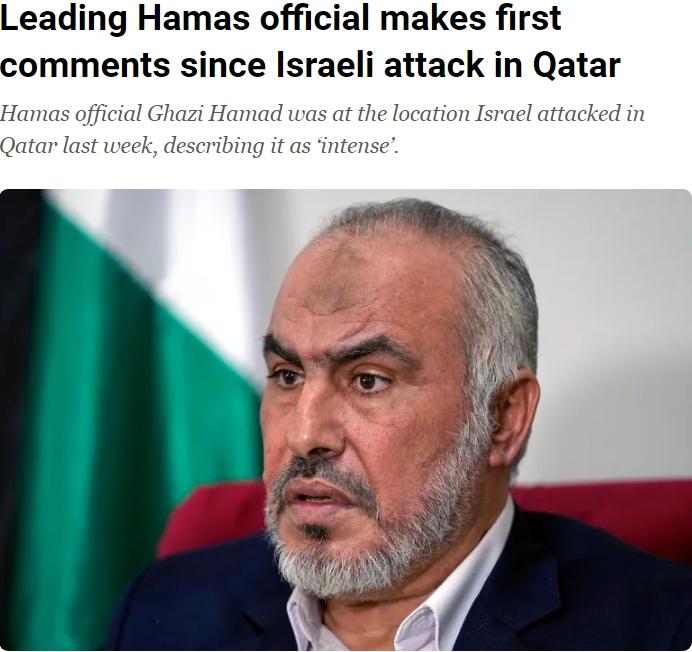
哈马斯一高官在多哈遇袭后首次公开露面 描述袭击现场
Zhong Guo Xin Wen Wang· 2025-09-18 03:18
Core Points - A senior Hamas official, Ghazi Hamad, made his first public appearance after an Israeli airstrike in Doha on September 9, describing the attack that occurred shortly after discussions on a ceasefire proposal [1][4] - The airstrike involved approximately 12 missiles falling within a minute, leading to immediate evacuation of the meeting [4] - The attack resulted in the deaths of five Hamas members, including the son of senior official Khalil Hayya, while Hayya himself survived [5] Summary by Sections - **Incident Description** - The airstrike took place less than an hour after Hamas leadership began discussing a ceasefire proposal relayed by the U.S. through Qatar [4] - Hamad reported hearing massive explosions and confirmed the belief among attendees that the attack was conducted by Israel [4] - **Casualties and Reactions** - Five Hamas members were killed in the airstrike, including the son of Khalil Hayya, while Hayya was not harmed [5] - The Qatari Interior Ministry confirmed the death of a security personnel during the attack [5] - The airstrike has drawn strong condemnation from various parties, citing violations of international law and threats to regional security [5]
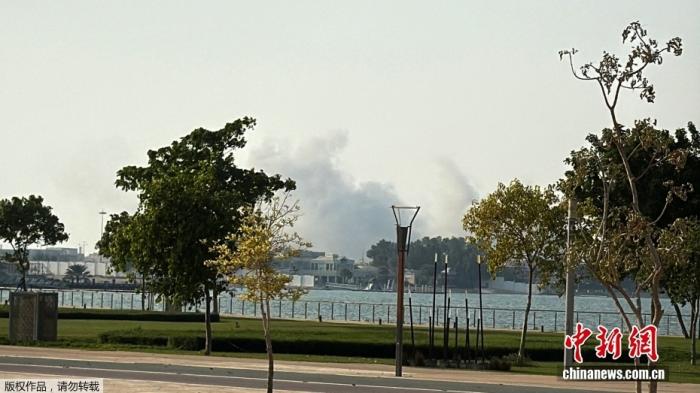
以色列在卡塔尔发动袭击 多国及地区组织强烈谴责
Zhong Guo Xin Wen Wang· 2025-09-10 07:28
Core Points - Israel conducted an attack on Hamas leaders in Qatar, leading to widespread condemnation from multiple countries and organizations, citing violations of international law and threats to regional stability [1][4][5] Group 1: International Reactions - The United Nations Secretary-General condemned the attack as a blatant violation of Qatar's sovereignty and territorial integrity, urging all parties to work towards a permanent ceasefire in Gaza [4] - The European Union stated that the airstrike violated international law and could escalate violence in the region, emphasizing the need to avoid further conflict [5] - Turkey's Foreign Ministry criticized Israel's actions as indicative of a lack of commitment to peace, occurring during ongoing ceasefire negotiations [6] Group 2: Statements from Leaders - The British Prime Minister expressed concern that the airstrike could further escalate tensions in the region, calling for an immediate ceasefire and the release of hostages [7] - The French President deemed the airstrike unacceptable under any circumstances, stressing that conflicts should not spread [8] - The Spanish Foreign Ministry labeled the attack a blatant violation of international law and called for an immediate cessation of violence and a return to diplomatic negotiations [9] Group 3: Regional Perspectives - The Iranian President condemned the attack as illegal and inhumane, claiming it undermined diplomatic efforts and violated Qatar's sovereignty [10] - The Palestinian President described the military action as barbaric and a clear violation of international law, reiterating that a just and comprehensive peace is the only solution to the Israeli-Palestinian conflict [11]
以军空袭叙利亚政权武装致6人死亡
Xin Hua She· 2025-08-27 13:39
Core Viewpoint - The Israeli military conducted an airstrike on Syrian armed forces near Damascus, resulting in six fatalities, amidst ongoing tensions and accusations of aggression from Israel [1] Summary by Relevant Sections Military Actions - An Israeli drone strike targeted Syrian regime forces in Kiswah, south of Damascus, on August 26, leading to the death of six individuals [1] - Israel has reportedly carried out hundreds of airstrikes in Syria since December of the previous year, aiming to prevent military equipment from falling into hostile hands [1] Diplomatic Reactions - The Syrian foreign ministry condemned the airstrike, labeling it a clear violation of Syrian sovereignty and territorial integrity, and called for United Nations intervention to halt Israel's repeated attacks [1] Regional Context - The airstrike occurred against a backdrop of Israel's ongoing military operations in the region, including the occupation of the Golan Heights and efforts to demilitarize southern Syrian provinces [1]
此停火非彼停火 美“调停”叙南部冲突又要帮倒忙
Yang Shi Xin Wen· 2025-07-16 23:59
Core Points - The armed conflict in southern Syria, particularly in Suwayda province, has escalated since July 13, resulting in significant casualties and prompting Israeli military intervention starting July 14 [1][2] - Israel's Defense Minister has declared a commitment to continue military operations in southern Syria until the Druze forces are completely eliminated [1][10] - A new ceasefire agreement has been reached in Suwayda province, although there are indications of internal divisions among the Druze leadership regarding the agreement [11][12] Group 1: Conflict Background - The conflict in Suwayda province is rooted in the historical and cultural ties between Israeli Druze and Syrian Druze, leading to Israeli concerns over the situation [10] - The Syrian regime's control in Suwayda has significantly weakened since the outbreak of the civil war in 2011, with local armed groups gaining power [9] Group 2: Military Actions - Israeli airstrikes have targeted military assets in southern Syria, including tanks and rocket launchers, with at least 3 reported deaths and 34 injuries from the attacks [2][3] - The Israeli military has stated that it will continue to strike at Syrian military targets in the region [2][10] Group 3: International Reactions - The United Nations Secretary-General has condemned the violence in Suwayda and called for an immediate cessation of hostilities [4] - The Gulf Cooperation Council has strongly criticized Israel's actions as a violation of Syrian sovereignty and a threat to regional stability [5] - Iran has also condemned the Israeli strikes, emphasizing the need for global unity against such actions [6][7] Group 4: Ceasefire Developments - A new ceasefire agreement has been established, which includes provisions for the integration of Suwayda province into Syrian government control and the establishment of a joint committee to oversee the ceasefire [11] - However, there are conflicting views among Druze leaders regarding the ceasefire, with some advocating for continued resistance [12]
沙特防长与伊朗武装部队总参谋长进行了通话,双方讨论了该地区的发展,并讨论了维护安全与稳定的努力。
news flash· 2025-06-29 05:53
Group 1 - The Saudi Defense Minister and the Chief of Staff of the Iranian Armed Forces held a conversation to discuss regional developments and efforts to maintain security and stability [1]
卡塔尔外交部称该国当前安全局势稳定
news flash· 2025-06-23 13:52
Core Viewpoint - Qatar's security situation is stable, and the government is actively monitoring the situation while ensuring the safety of its citizens, residents, and visitors [1] Group 1 - Multiple embassies in Qatar have issued travel warnings for their citizens, advising them to take precautions or avoid certain areas, which reflects a general safety policy rather than a specific threat [1] - Qatar's Foreign Ministry spokesperson emphasized that the country will continue to work with regional and international partners to ease tensions and maintain regional security and stability [1] - The Qatari authorities are committed to providing timely updates to the public and encourage citizens to obtain information from official channels [1]
综合消息丨多国担忧以伊冲突升级后果 呼吁缓和紧张局势
Xin Hua Wang· 2025-06-17 01:11
Group 1 - Concerns over the escalating military conflict between Israel and Iran have been expressed by countries including Turkey, Namibia, Algeria, and Egypt, urging for de-escalation of tensions [1][2] - Turkish President Erdogan emphasized Turkey's diplomatic efforts to prevent further escalation and criticized Israel's attacks on Iran, warning that such actions could lead to disaster in the region [1] - Namibia's President expressed deep concern over Israel's attacks on Iranian nuclear facilities, labeling them as a blatant violation of Iran's sovereignty and international law, and warned of severe consequences for regional and global peace [1][2] Group 2 - Algeria's Foreign Minister condemned Israel's aggression and called for the UN Security Council to uphold international law and prevent further attacks on Iran, stating that the situation has plunged the region into violence and instability [2] - Egypt's Foreign Minister highlighted the ongoing escalation in the Middle East and its threat to regional security, indicating Egypt's commitment to diplomatic solutions to control the situation [2] - South Africa's International Relations Department called for immediate measures to de-escalate the conflict and urged all parties to adhere to international law to prevent further casualties [2]