国家主权和领土完整

Search documents
伊朗陆军称密切监控边境敌方动向
Xin Lang Cai Jing· 2026-02-23 04:15
Core Viewpoint - Iran is actively monitoring all enemy movements along its borders to identify and eliminate potential threats to national sovereignty and territorial integrity, emphasizing that full combat readiness is a key deterrent against enemy miscalculations and hostile actions [1] Group 1 - The Iranian Army, led by Commander Ali Jahanshahi, is conducting continuous surveillance of border areas [1] - The focus is on detecting and neutralizing any threats to Iran's sovereignty and territorial integrity [1] - Full combat readiness is highlighted as a primary means to prevent enemy misjudgments and hostile actions [1] Group 2 - The U.S. has recently amassed significant military forces in the Middle East [1] - President Trump has acknowledged that he is considering a "limited military strike" against Iran [1]
丹麦首相:格陵兰岛所面临的压力“不可接受”
Zhong Guo Xin Wen Wang· 2026-02-14 22:32
Group 1 - Danish Prime Minister Mette Frederiksen stated that the pressure faced by Greenland is "unacceptable" and emphasized that Greenland will not be sold at any price [1] - Frederiksen revealed that U.S. President Trump still seriously considers the issue of acquiring Greenland, despite the clear stance of Greenland's population against becoming American [1] - The Danish government is willing to cooperate with the U.S. but insists on respecting national sovereignty and territorial integrity, which are non-negotiable issues [1] Group 2 - Frederiksen and Greenland's Prime Minister Jens Frederik Nielsen expressed a willingness to expand cooperation with NATO in defense and other areas [2] - Greenland is an autonomous territory of Denmark with significant self-governance, while defense and foreign affairs are managed by the Danish government [3]
格陵兰岛问题持续引发关注,泽连斯基表态:乌方尊重丹麦及其主权和领土完整
Huan Qiu Wang· 2026-01-20 13:17
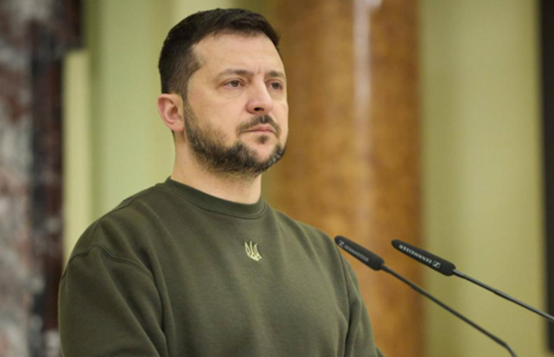
Group 1 - The core viewpoint is that Ukraine respects Denmark's sovereignty and territorial integrity regarding Greenland and hopes the U.S. will listen to European voices through diplomatic means [1][3] - Ukrainian President Zelensky stated that Denmark has not requested Ukraine to send troops to Greenland [3] - The U.S. has faced dissatisfaction from multiple parties regarding its attempts to control Greenland, with President Trump announcing tariffs on goods from Denmark, Norway, Sweden, France, Germany, the UK, the Netherlands, and Finland until an agreement on the "complete and total purchase of Greenland" is reached [3] Group 2 - Several European countries, including France and the UK, have expressed dissatisfaction with the U.S. decision regarding tariffs [3] - Greenland's autonomous government leader, Jens Frederik Nielsen, welcomed support from other countries and stated that the latest U.S. comments, including tariff threats, would not change their position [3] - Nielsen emphasized a firm stance on dialogue, respect, and international law [3]

墨总统:已排除美国在墨西哥采取军事行动可能性
Xin Lang Cai Jing· 2026-01-12 22:06
Group 1 - The core viewpoint of the article is that Mexican President Claudia Sheinbaum has ruled out the possibility of U.S. military action within Mexico to combat drug cartels during a phone call with U.S. President Trump [1][2] - Sheinbaum emphasized that the proposal to send U.S. troops to Mexico to fight drug cartels is "not on the table" [2] - Sheinbaum reiterated Mexico's constitutional stance against any form of military intervention, particularly in relation to the situation in Venezuela [3]
伊朗谴责以色列外长进入索马里兰
Yang Shi Xin Wen Ke Hu Duan· 2026-01-07 19:05
Core Viewpoint - The Iranian Foreign Ministry condemned the illegal entry of the Israeli Foreign Minister into the Somaliland region, asserting that this act constitutes a blatant violation of Somalia's national sovereignty and territorial integrity [1] Group 1: International Relations - The Iranian Foreign Ministry emphasized the need for the international community to respect the sovereignty and territorial integrity of Somalia, an independent nation [1] - There is a call for enhanced cooperation between the international community, Islamic countries, and African nations to prevent the erosion of Somalia's sovereignty [1] Group 2: Somaliland's Status - Somaliland, located in northern Somalia, declared independence in the 1990s but has not received international recognition [1] - Israel officially recognized Somaliland as an "independent sovereign state" on December 26, 2025, and signed an agreement to establish diplomatic relations, which has faced condemnation from multiple countries [1] Group 3: Reactions - The visit of Israeli Foreign Minister Eli Cohen to Somaliland on June 6 has been publicly criticized by the Somali government [1]
加拿大总理卡尼:格陵兰的未来完全由格陵兰人民和丹麦决定
Xin Lang Cai Jing· 2026-01-06 15:48
Core Viewpoint - Canadian Prime Minister Justin Trudeau emphasized that the future of Greenland is solely determined by the people of Greenland and Denmark, in response to U.S. threats of annexation [1][2]. Group 1 - Trudeau stated, "The future of Greenland is entirely up to the people of Greenland and Denmark" during a press conference in Paris [2]. - European leaders issued a joint statement supporting Greenland, asserting that the island belongs to its people [2]. - Trudeau met with Danish Prime Minister Mette Frederiksen, reinforcing Canada's support for Denmark's sovereignty and territorial integrity, including Greenland, which must be respected under international law [2].
特朗普再放狠话 法国重申支持丹麦和格陵兰岛
Xin Lang Cai Jing· 2026-01-05 12:32
Core Viewpoint - The article discusses the geopolitical tensions surrounding Greenland, particularly in light of U.S. President Trump's comments about the need for Greenland for defense purposes, and France's reaffirmation of support for Denmark and Greenland's sovereignty [1]. Group 1: Geopolitical Context - The U.S. has expressed interest in Greenland, with President Trump stating that "we absolutely need Greenland" for defense [1]. - France has reiterated its support for Denmark and Greenland, emphasizing that the territory belongs to the Greenlandic and Danish people, and decisions regarding it should be made by them [1]. Group 2: Responses from Denmark and France - A spokesperson from the French Foreign Ministry stated that borders cannot be changed by force, highlighting the importance of respecting territorial integrity [1]. - Danish Prime Minister Mette Frederiksen asserted that the U.S. has no right to annex Greenland and called for the U.S. to cease its threats against Denmark and the Greenlandic people [1].
“今天是委内瑞拉,明天可能是任何一个国家”
Xin Lang Cai Jing· 2026-01-04 03:31
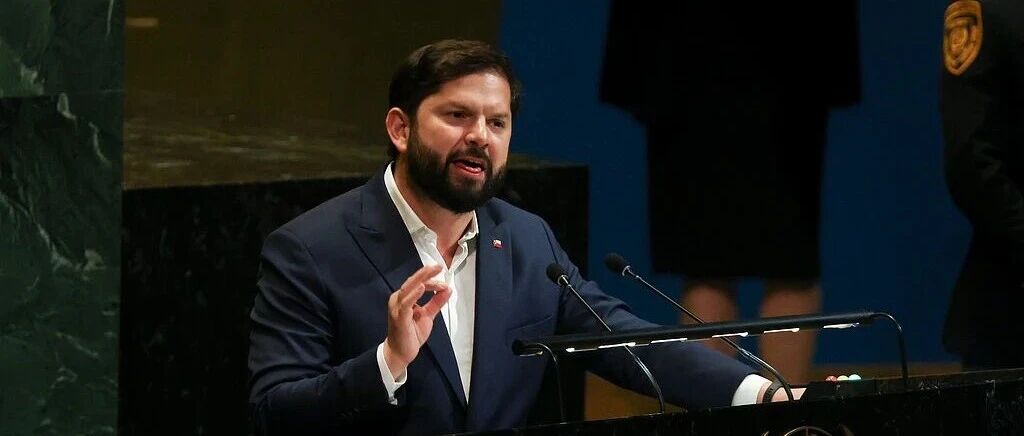
Group 1 - Chilean President Boric condemned the U.S. military actions against Venezuela, emphasizing the importance of respecting national sovereignty and territorial integrity, and calling for the UN to take immediate action to prevent military escalation and protect civilians [1] - Multiple governments and officials from various countries expressed strong condemnation of the U.S. military actions against Venezuela, urging adherence to the UN Charter [3] - Colombian President Petro opposed any unilateral military actions that could escalate tensions or endanger civilians, advocating for dialogue and diplomatic channels [3] Group 2 - Brazilian President Lula criticized the U.S. actions as a serious violation of international law and an infringement on Venezuela's sovereignty, warning that such actions threaten peace in the region [4] - U.S. lawmakers, including Democratic members of the Senate Foreign Relations Committee, questioned the justification for military action in Venezuela, stating that there are no significant national interests at stake [4] - Former President Trump defended the military actions, stating they serve as a warning to those threatening U.S. sovereignty and safety, while also commenting on potential tensions with Cuba [5]
“今日委内瑞拉,明日任何一国”
第一财经· 2026-01-04 03:29
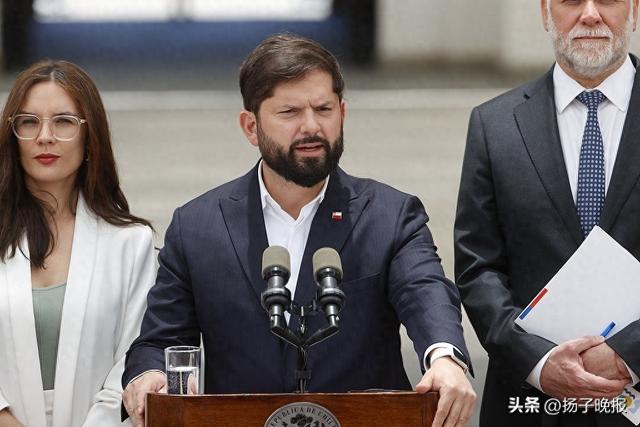
Group 1 - The core viewpoint of the article emphasizes the condemnation of U.S. military actions against Venezuela by Chilean President Boric, highlighting the importance of respecting national sovereignty and territorial integrity as a non-negotiable principle [3] - Boric calls for the United Nations to take immediate action regarding the situation in Venezuela, urging the use of all available mechanisms to prevent military escalation and protect civilians [3] - The article reflects a broader concern that if military actions are accepted in Venezuela, it could set a precedent for similar actions in other countries [3]
“今日委内瑞拉,明日任何一国”
财联社· 2026-01-04 02:49
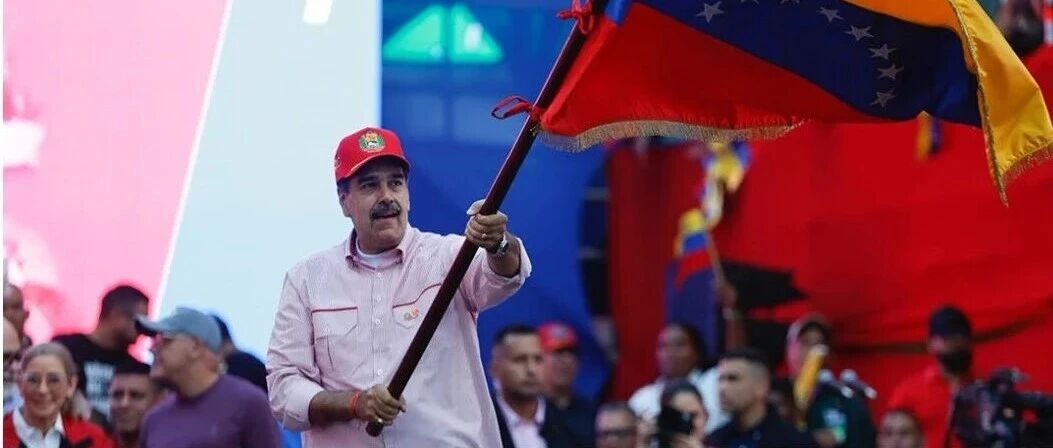
Core Viewpoint - Chilean President Boric condemned U.S. military actions against Venezuela, emphasizing that respect for national sovereignty and territorial integrity is a non-negotiable red line [1] Summary by Relevant Sections - **Political Stance**: Boric called for the United Nations to take immediate action regarding the situation in Venezuela, urging the use of all available mechanisms to prevent military escalation and protect civilians [1] - **International Relations**: The statement reflects Chile's position on international military interventions, suggesting that what happens in Venezuela could set a precedent for other countries [1] - **Call for Peace**: Boric advocated for the reconstruction of a political framework for peaceful resolution in accordance with the United Nations Charter [1]