
总损失吸收能力(TLAC)

Search documents
我国首只TLAC非资本债券即将发行
Zheng Quan Ri Bao· 2025-08-08 07:31
Core Viewpoint - The issuance of TLAC non-capital bonds by Chinese global systemically important banks (G-SIBs) is a strategic move to enhance their total loss-absorbing capacity ahead of the 2025 regulatory deadline, thereby improving their risk resilience and international competitiveness [1][2][5]. Group 1: TLAC Non-Capital Bonds - The People's Bank of China and the former China Banking and Insurance Regulatory Commission introduced TLAC non-capital bonds in April 2022 to help G-SIBs meet total loss-absorbing capacity requirements [2]. - TLAC non-capital bonds are designed to absorb losses and do not count as bank capital, making them a crucial tool for financial stability [2][3]. - The first issuance of TLAC non-capital bonds in China will be by Industrial and Commercial Bank of China (ICBC), with a planned issuance scale of RMB 300 billion [2][4]. Group 2: Industry Response and Future Plans - Major state-owned banks, including ICBC, Agricultural Bank of China, Bank of China, China Construction Bank, and Bank of Communications, are preparing to issue TLAC non-capital bonds to meet the upcoming regulatory requirements [4]. - Agricultural Bank of China plans to issue up to RMB 500 billion in TLAC non-capital bonds, while ICBC's issuance is capped at RMB 600 billion [4]. - Analysts believe that the successful issuance of TLAC non-capital bonds will pave the way for a new funding avenue for systemically important banks, allowing them to enhance their capacity to serve the real economy [3][6]. Group 3: Market Conditions and Investor Appeal - The current high capital adequacy ratios of large commercial banks have narrowed the TLAC gap, indicating a favorable environment for the issuance of TLAC non-capital bonds [6]. - TLAC non-capital bonds are attractive to investors due to their higher credit ratings and safety, along with a potential premium on interest rates due to their subordinated nature [5].

首单TLAC非资本债券今日面世
Zhong Guo Zheng Quan Bao· 2025-08-08 07:31
Core Viewpoint - The issuance of TLAC non-capital bonds by Industrial and Commercial Bank of China (ICBC) marks a significant development in China's banking sector, enhancing capital adequacy and risk resilience for major commercial banks [1][4]. Group 1: TLAC Non-Capital Bonds Issuance - ICBC announced the issuance of TLAC non-capital bonds from May 15 to May 17, with a basic issuance scale of 30 billion yuan, making it the first TLAC non-capital bond in China [1][2]. - The bonds consist of two types: a 4-year fixed-rate bond with a scale of 20 billion yuan and a 6-year fixed-rate bond with a scale of 10 billion yuan, both with conditional redemption rights [2][3]. - The issuance is part of a broader trend among China's Global Systemically Important Banks (G-SIBs) to meet TLAC requirements as the deadline approaches [2][5]. Group 2: Characteristics and Market Impact - TLAC non-capital bonds are designed to absorb losses and are not classified as bank capital, providing a new investment opportunity in the market [3][4]. - These bonds are expected to have higher investment returns compared to traditional financial bonds due to their loss-absorption features, which add a risk premium to their pricing [3][6]. - The regulatory framework for TLAC in China aligns with international standards, requiring G-SIBs to maintain specific TLAC ratios starting in 2025 [4][6]. Group 3: Future Supply and Market Conditions - The total planned issuance of TLAC non-capital bonds by major banks in China is projected to reach up to 440 billion yuan, with individual banks planning significant issuances [5][6]. - Analysts suggest that the pressure to meet TLAC requirements for G-SIBs is manageable, indicating a limited supply of TLAC bonds in the current year [6].

农业银行年内发行TLAC债券800亿元
Mei Ri Jing Ji Xin Wen· 2025-08-05 13:55
Core Viewpoint - Agricultural Bank of China successfully issued a total of 50 billion TLAC (Total Loss Absorbing Capacity) non-capital bonds on August 1, 2023, enhancing its capital structure and loss absorption capacity [1][2]. Group 1: TLAC Bond Issuance Details - The issuance included three maturity combinations: 300 billion for 3+1 years at a rate of 1.85%, 50 billion for 5+1 years at 1.93%, and 150 billion for 10+1 years at 2.15% [1]. - The total issuance of TLAC bonds by Agricultural Bank has reached 800 billion, following a previous issuance of 300 billion on June 26, 2023 [1][2]. - The recent issuance attracted significant interest, with total subscriptions reaching four times the base issuance amount [2]. Group 2: Market Participation and Trends - The June issuance also saw participation from a diverse range of investors, including state-owned banks, insurance companies, and foreign institutions [2][3]. - Other major banks, such as Bank of Communications and Bank of China, have also completed TLAC bond issuances, indicating a growing trend among global systemically important banks [3]. Group 3: Benefits of TLAC Bonds - TLAC bonds serve as a "bail-in" tool, allowing for conversion to equity or write-downs in case of bank insolvency, thereby enhancing loss absorption capacity [3][5]. - The issuance of TLAC bonds helps optimize capital structure by supplementing capital, reducing financing costs, diversifying funding sources, and mitigating systemic risk [4][6]. - The mechanism protects depositors and senior creditors while providing banks with new self-rescue tools during crises, ultimately improving sustainable operational capacity [5][6].

总损失吸收能力非资本债券密集发行 我国5家全球系统重要性银行夯实发展根基
Jin Rong Shi Bao· 2025-07-22 01:00
Core Viewpoint - The issuance of Total Loss-Absorbing Capacity (TLAC) bonds by China's globally systemically important banks (G-SIBs) is a proactive measure to enhance their loss absorption capabilities and align with international regulatory standards [1][3][6] Group 1: TLAC Bond Issuance - Three out of five G-SIBs in China have issued TLAC non-capital bonds to improve their total loss absorption capacity [1] - The first bank to issue TLAC bonds in 2025 was Bank of Communications, followed by Agricultural Bank of China and Bank of China, with respective issuance amounts of RMB 300 billion, RMB 500 billion, and RMB 400 billion [2] - The approved issuance limits for the banks are RMB 600 billion for Industrial and Commercial Bank of China, RMB 1800 billion for Agricultural Bank of China, RMB 1500 billion for Bank of China, and RMB 3000 billion for Bank of Communications [2] Group 2: Regulatory Framework and Compliance - The People's Bank of China, along with other regulatory bodies, established a TLAC management framework in October 2021, requiring G-SIBs to meet specific external TLAC ratio requirements by 2025 and 2028 [4] - Regulatory measures include improving the issuance, trading, and disposal rules for TLAC bonds, as well as establishing a dynamic monitoring mechanism for TLAC ratios [4][5] Group 3: Market Impact and Strategic Significance - The issuance of TLAC bonds is seen as a milestone for China's financial system, enhancing the banks' capital and risk management capabilities while increasing the variety of credit bonds available in the domestic market [5] - Meeting TLAC requirements is crucial for the international development of the five major banks, reflecting their commitment to global financial standards and enhancing China's banking sector's international reputation [6]

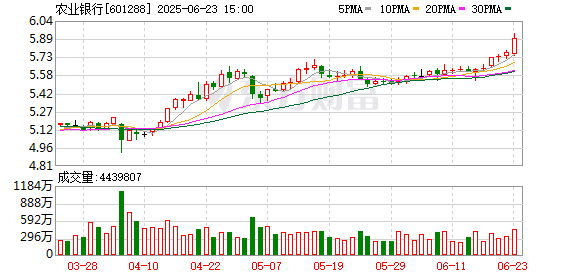
农业银行2025年首期200亿元TLAC非资本债券上线
Xin Hua Cai Jing· 2025-06-23 13:57
Core Viewpoint - Agricultural Bank of China has announced the issuance of the first phase of total loss-absorbing capacity (TLAC) non-capital bonds for 2024, aiming to enhance the issuer's total loss-absorbing capacity, marking the first issuance of TLAC non-capital bonds by the four major state-owned banks this year after meeting the first phase of TLAC requirements earlier in the year [2] Group 1: TLAC Bond Issuance Details - The basic issuance scale of this bond is set at RMB 20 billion, with specific categories: Category One at RMB 15 billion, Category Two at RMB 3 billion, and Category Three at RMB 2 billion [3] - Category One is a 4-year fixed-rate bond with a conditional issuer redemption right at the end of the third year; Category Two is a 6-year fixed-rate bond, and Category Three is an 11-year fixed-rate bond, both with conditional redemption rights at the end of the year prior to maturity [6] Group 2: Market Performance and Investor Insights - TLAC bonds have shown active trading performance in the secondary market since their issuance last year, with a trading turnover rate exceeding 30% in 2024, while the turnover rate for capital bonds from state-owned banks remains below 25% [6] - TLAC bonds are viewed as a significant means of liability supplementation due to their low cost and flexible terms, especially in the context of increasing deposit outflows and pressure on interest margins [6] Group 3: Future Issuance Potential - In 2024, the five major state-owned banks in China have collectively issued TLAC bonds totaling RMB 230 billion, with individual issuances as follows: Industrial and Commercial Bank of China (ICBC) at RMB 40 billion, Agricultural Bank of China at RMB 50 billion, Bank of China at RMB 40 billion, China Construction Bank at RMB 50 billion, and Bank of Communications at RMB 30 billion [7] - Future issuance potential for TLAC bonds is significant, with estimates suggesting a net increase of RMB 5.15 trillion in capital bonds/TLAC bonds needed from 2025 to 2027 to meet regulatory requirements, averaging RMB 1.72 trillion annually [7] Group 4: Regulatory Compliance Outlook - Fitch Ratings indicates that some of the five global systemically important banks (G-SIBs) in China are currently able to statically meet the next phase of TLAC requirements, while others are expected to achieve compliance after receiving capital injections from the Ministry of Finance [8] - The timeline for the four major banks to meet the second phase of TLAC requirements by 2028 and for Bank of Communications by 2027 suggests that there may be changes in compliance status in the future [8]

这家国有大行发布公告
Jin Rong Shi Bao· 2025-06-17 10:10
Group 1 - The core viewpoint of the news is that Bank of Communications has successfully issued its first total loss-absorbing capacity (TLAC) non-capital bond in 2025, totaling RMB 40 billion, to enhance its loss-absorbing capacity [1] - The bond issuance consists of two types: a 4-year fixed-rate bond of RMB 34 billion with a coupon rate of 1.79% and a 6-year fixed-rate bond of RMB 6 billion with a coupon rate of 1.88% [1] - The funds raised from this bond issuance will be used to improve the bank's total loss-absorbing capacity, which is crucial for global systemically important banks during resolution phases [1] Group 2 - The TLAC management framework was established by the People's Bank of China, the former Banking and Insurance Regulatory Commission, and the Ministry of Finance to regulate global systemically important banks in China [2] - The framework sets regulatory requirements for risk-weighted ratios and leverage ratios, with a phased approach to compliance, requiring major state-owned banks to meet the first phase standards by early 2025 [2] - Bank of Communications, as the fifth global systemically important bank in China, is required to meet TLAC standards by 2027 [2] Group 3 - Experts indicate that achieving TLAC compliance among the five global systemically important banks will enhance their risk resilience and operational stability, reducing moral hazard and potential impacts on financial stability [3] - The issuance of TLAC non-capital bonds by these banks is seen as a cost-effective way to meet regulatory requirements while improving their capital strength and risk management capabilities [3] - The Bank of Communications aims to leverage this bond issuance to fulfill its regulatory obligations and enhance its international competitiveness while supporting high-quality economic development [3]