时代变迁

Search documents
何建明:新疆70年,大地如诗
Zhong Guo Qing Nian Bao· 2025-09-25 22:37
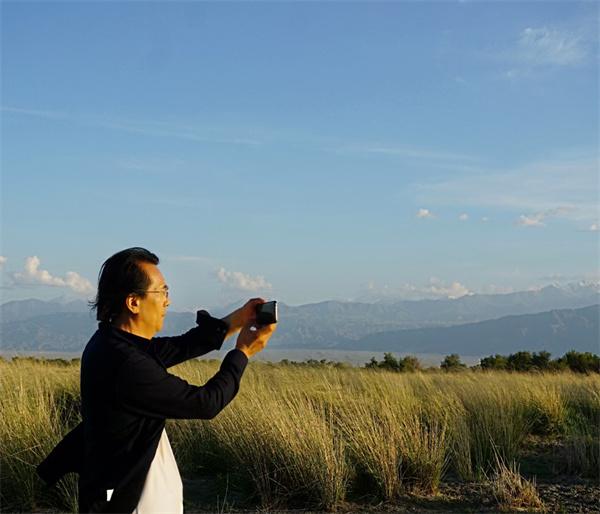
Core Viewpoint - The work "Like a Poem on the Land - Chronicles of Xinjiang in 70 Years" by He Jianming aims to highlight the beauty of Xinjiang, not just in its natural landscapes but also in the struggles and achievements of its people over the past 70 years [1][2]. Group 1: Preparation and Research - He Jianming undertook a comprehensive preparation process, reviewing historical materials and conducting over 200 research and interview points across a journey of more than 50,000 kilometers over 13 months [2][3]. - The challenges faced during the research included high altitude reactions, extreme weather conditions, and physical exhaustion, which tested his resilience [3]. Group 2: Structure and Themes - The book is structured into three parts: historical, poetic, and epic, reflecting the grandeur of Xinjiang's history, its poetic landscapes, and its significance in the broader narrative of China's history [5][6]. - The choice to begin with the stories of intellectuals and revolutionaries emphasizes the foundational role of these figures in the development of Xinjiang [5][7]. Group 3: Character Selection and Narrative - The narrative weaves together individual stories to create a larger theme, portraying Xinjiang as a land of diverse experiences and contributions [6][9]. - He Jianming focuses on ordinary yet remarkable individuals whose stories reflect the spirit of dedication and resilience, aiming to present a rich tapestry of human experience in Xinjiang [7][9]. Group 4: Insights and Reflections - The author expresses a newfound understanding of Xinjiang, recognizing the complexity and beauty of its narrative, and emphasizes the importance of portraying the region's grandeur and beauty in literature [15]. - The writing style incorporates poetic language to convey the emotional and historical significance of Xinjiang, aiming to resonate with readers and evoke a sense of pride [15].

新旧审美观念发廊里“打擂”,北京电影学院话剧《向阳理发馆》欢乐上演
Bei Jing Ri Bao Ke Hu Duan· 2025-09-21 09:23
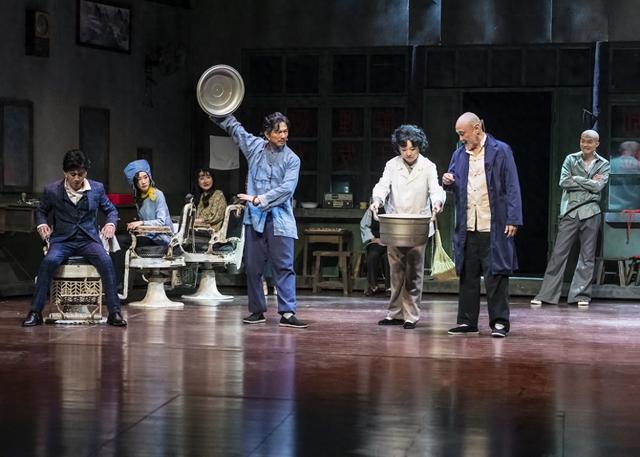
Core Viewpoint - The original realistic drama "Xiangyang Barbershop" showcases the evolution of personal growth and human relationships against the backdrop of societal changes in Beijing over the past 40 years, presented through humor and nostalgia [1][3]. Group 1: Production Details - "Xiangyang Barbershop" is set in an old barbershop in Beijing's hutongs, focusing on the conflict between a traditional barber and his son who wants to innovate the business [3]. - The play was first created in 2018 and is now being re-staged as a project funded by the Beijing Cultural and Artistic Fund for 2024, with key figures including Wang Jinsong as artistic director and lead actor [3][5]. - The production team includes playwrights Cui Jianyu and Xu Qian, and director Yang Jiayin, who aim to balance humor with deeper reflections on societal changes and craftsmanship [5]. Group 2: Audience Engagement and Feedback - The creators engaged with audiences of different age groups during rehearsals to refine the play, resulting in a style that combines humor with emotional depth [5]. - The updated version of "Xiangyang Barbershop" features enhancements in script, stage design, and audiovisual elements, incorporating cinematic techniques to improve narrative flow and depth [5]. Group 3: Future Plans - The Beijing Film Academy plans to keep "Xiangyang Barbershop" and its sequel "Xiangyang No. 8 Building" as regular repertoire for student performances, providing ongoing opportunities for stage practice [5]. - There are intentions to adapt the play for broader stages, adjusting the cast and scale for touring and regular performances while maintaining artistic quality [5].
关于“看见”与“劳作”的艺术跋涉
Ren Min Ri Bao· 2025-06-14 22:46
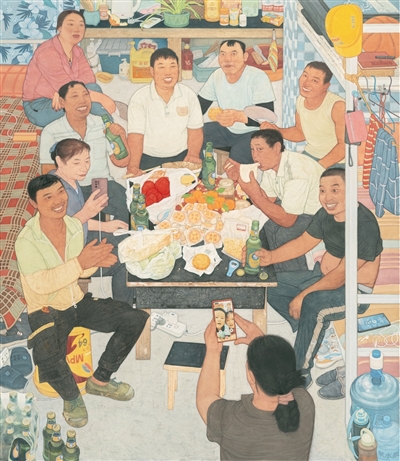
Core Perspective - The exhibition "Chuan·Zhen: A Tribute to Workers" showcases the evolution of artistic expression focused on laborers, reflecting their living conditions and emotional states over the years [2][4]. Group 1: Artistic Evolution - The artist's journey began in the late 1990s, capturing the lives of migrant workers through various mediums, including the "Guarding Series" and "Worker's Shed," which depict their dignity and living conditions [2][3]. - Recent works, such as "Warm," juxtapose video calls with real-life interactions, illustrating the happiness of ordinary people and societal development [3][4]. Group 2: Changing Themes - The artist's focus shifted from urban migrant workers to those who remained in rural areas, exploring themes of aging and familial connections in works like "Warm Sun" and "Old Partner" [3][4]. - The emergence of "new industrial workers" prompted a return to basic mediums like sketching, leading to the "New Industrial Workers Sketch Archive" project, which documents their stories alongside portraits [3][4]. Group 3: Cultural Reflection - The evolution of the artist's work reflects broader societal changes, including improvements in laborers' living conditions and a shift in their self-perception from shyness to confidence [4][5]. - The use of traditional techniques, such as meticulous brushwork, serves as a contemporary means of expression, aiming to make the subjects feel alive and relevant in their time [5].