智慧机场建设

Search documents
海康威视安检验证闸机落地西宁机场 助力旅客通行效率提升
Zheng Quan Ri Bao· 2025-08-27 09:11
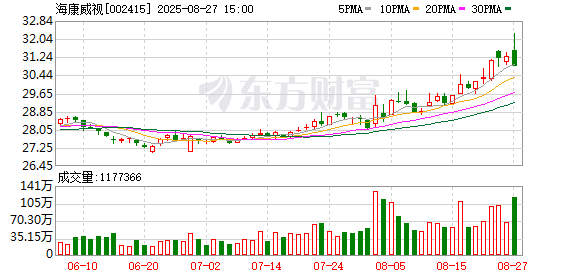
Group 1 - Hikvision Technology Co., Ltd. announced the launch of its self-service security verification gate at Xining Caojiabao International Airport, the largest hub airport in the Qinghai-Tibet Plateau, as part of the airport's third phase of operation in August [2] - The new T3 terminal at Xining Airport incorporates advanced technology, featuring a self-service security check area that allows for efficient passenger document verification, marking the first instance in China's civil aviation industry to use a three-door design for self-service security channels [2] - Traditional security checks at airports require manual verification of passenger documents, taking an average of 30 to 40 seconds per passenger, which can lead to long queues during peak flight times, affecting overall passenger throughput efficiency [2] Group 2 - The security verification gate utilizes high-reliability servo motors and high-density light curtain detection, achieving three-dimensional detection with high precision and fast response, effectively preventing tailgating while balancing safety and efficiency [3] - In practical applications, the average passage speed for passengers is 4 seconds per person, making the efficiency 8 to 10 times faster than traditional manual counters [3] - Hikvision's technology and solutions are deeply integrated into the comprehensive security processes of the airport, providing strong support for the smart airport construction at Xining Airport, with plans for continued technological innovation to assist more airports and transportation hubs in their digital transformation [3]


西安咸阳国际机场微秒级“电力卫士”上岗
Zhong Guo Min Hang Wang· 2025-05-16 01:17
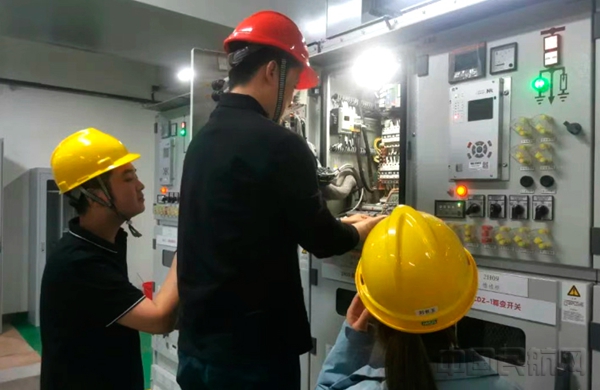
Core Viewpoint - The modernization of Xi'an Xianyang International Airport is advancing, necessitating continuous technological upgrades to ensure a reliable power supply system for smooth airport operations [1][2]. Group 1: Airport Modernization - The commissioning of the T5 terminal and supporting facilities is likened to injecting a strong "heart" into the airport, presenting unprecedented challenges to the airport's power supply system [1]. - The expansion of the distribution network and the long-distance cable laying are critical tasks to build a power supply guarantee system focused on high reliability, intelligence, and multi-dimensional safety [1]. Group 2: Technological Innovations - The introduction of an intelligent fault management system with microsecond-level arc suppression technology aims to address grounding fault arcs, a significant risk in the power supply system [2]. - This advanced system utilizes multi-modal fault diagnosis algorithms and rapid phase grounding switch modules, capable of detecting and extinguishing arcs within 20 milliseconds during single-phase grounding faults [2]. - The system has significantly improved response efficiency compared to traditional protection systems, effectively preventing the escalation of faults and reducing downtime for lower-level electrical equipment at the airport [2]. Group 3: Operational Efficiency - The implementation of this system has not only reduced the risk of prolonged arc burning but also saved substantial time for maintenance personnel by automating fault handling reports, enhancing safety and operational efficiency in complex power grid environments [2].
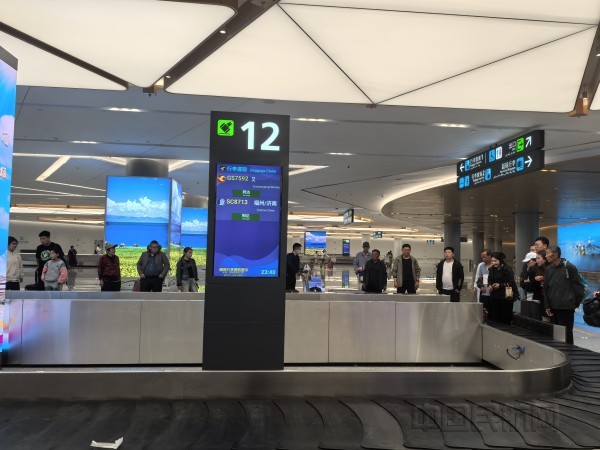
乌鲁木齐机场提升行李运输服务质量
Zhong Guo Min Hang Wang· 2025-05-14 06:02
Core Viewpoint - The Xinjiang Airport Group has implemented a series of measures to enhance luggage retrieval efficiency at Urumqi Tianshan International Airport, aiming to provide a more efficient and convenient travel experience for passengers [1][4]. Group 1: Luggage Retrieval Efficiency - Following the transition to the new terminal, Urumqi Airport faced a significant increase in passenger flow and luggage volume, making luggage retrieval efficiency a key focus for airport service units [3]. - Statistics from January to March 2025 indicate that the average waiting time for luggage retrieval varies by airline, with Xinjiang Tianyi Aviation Service showing an average of 0.5 minutes for the first piece and 12 minutes for the last piece, while China Southern Airlines recorded 2.4 minutes for the first piece and 12.5 minutes for the last piece [3]. Group 2: Service Improvement Measures - The airport has established efficient communication and collaboration mechanisms with airlines to share flight information and luggage transport status in real-time, striving for a "passenger and luggage arrival together" service goal [4]. - During peak periods, the airport employs a combination of system allocation and manual intervention to dynamically adjust the use of 12 luggage carousels and personnel deployment, ensuring quick delivery of luggage after arrival [4]. - The introduction of sorting robots and unmanned luggage vehicles has effectively improved sorting efficiency and accuracy while reducing employee workload [4]. Group 3: Passenger Experience Enhancements - The new terminal has optimized the luggage retrieval area by rationally planning carousel locations, increasing the number of guiding signs, and enhancing clarity to help passengers easily locate their luggage [5]. - Additional amenities such as more seating, charging stations, and information displays have been added to improve passenger comfort while waiting [5]. - On-site assistance has been provided for elderly and disabled passengers to facilitate their luggage retrieval process [5].