
安防

Search documents
量化大势研判202603:3月核心推荐预期成长风格
Guolian Minsheng Securities· 2026-03-04 07:27
Quantitative Models and Construction Methods - **Model Name**: Quantitative Market Trend Judgment Framework **Model Construction Idea**: The model aims to identify the dominant market style by comparing asset characteristics and prioritizing superior assets based on their intrinsic attributes. It incorporates a bottom-up quantitative approach to analyze the lifecycle of industries and their corresponding asset styles[6][10][17] **Model Construction Process**: 1. Define five asset style stages: external growth, quality growth, quality dividend, value dividend, and bankruptcy value[6] 2. Use a priority framework of $g > ROE > D$ to evaluate assets based on growth expectations, profitability, and dividend yield[6][7] 3. Compare mainstream assets (expected growth, actual growth, and profitability) and secondary assets (quality dividend, value dividend, and bankruptcy value) based on their crowding levels and fundamental factors[10][17] 4. Allocate industries using equal weights within each strategy, selecting five industries per strategy per period[17] **Model Evaluation**: The framework has demonstrated strong explanatory power for A-share market style rotations since 2009, achieving an annualized return of 27.81%[17] Quantitative Factors and Construction Methods - **Factor Name**: Expected Growth ($gf$) **Factor Construction Idea**: Measures the expected growth rate of industries based on analysts' forecasts, regardless of the lifecycle stage[7] **Factor Construction Process**: 1. Calculate the expected net profit growth rate ($g_{f,ttm}$) for each industry 2. Rank industries based on $g_{f,ttm}$ and select the top-performing ones[7][23] **Factor Evaluation**: The factor has shown consistent performance in identifying high-growth industries, with significant excess returns since 2019[37] - **Factor Name**: Actual Growth ($g$) **Factor Construction Idea**: Focuses on industries with the highest performance momentum ($\Delta g$), particularly during transition and growth phases[7] **Factor Construction Process**: 1. Calculate the actual net profit growth rate ($g_{ttm}$) for each industry 2. Identify industries with the highest $\Delta g$ values[7][27] **Factor Evaluation**: The factor has delivered strong excess returns in growth-dominated environments[38] - **Factor Name**: Profitability (ROE) **Factor Construction Idea**: Targets industries with high ROE and low valuation under the PB-ROE framework, focusing on mature phases[7] **Factor Construction Process**: 1. Calculate the PB-ROE residuals for each industry 2. Rank industries based on residuals and select the top-performing ones[7][41] **Factor Evaluation**: The factor performed well from 2016 to 2020 but weakened from 2021 to mid-2024[41] - **Factor Name**: Quality Dividend (DP+ROE) **Factor Construction Idea**: Combines dividend yield (DP) and ROE to identify high-quality industries, focusing on mature phases[7] **Factor Construction Process**: 1. Calculate DP and ROE for each industry 2. Combine the two metrics into a composite score and rank industries[7][44] **Factor Evaluation**: The factor has shown significant excess returns in 2016, 2017, and 2023[44] - **Factor Name**: Value Dividend (DP+BP) **Factor Construction Idea**: Combines dividend yield (DP) and book-to-price ratio (BP) to identify undervalued industries, focusing on mature phases[7] **Factor Construction Process**: 1. Calculate DP and BP for each industry 2. Combine the two metrics into a composite score and rank industries[7][47] **Factor Evaluation**: The factor has delivered strong excess returns in 2009, 2017, and 2021-2023[47] - **Factor Name**: Bankruptcy Value (PB+SIZE) **Factor Construction Idea**: Targets industries with low PB and small size, focusing on stagnation and recession phases[7] **Factor Construction Process**: 1. Calculate PB and SIZE for each industry 2. Combine the two metrics into a composite score and rank industries[7][50] **Factor Evaluation**: The factor has shown significant excess returns in 2015-2016 and 2021-2023[50] Model Backtesting Results - **Quantitative Market Trend Judgment Framework**: - Annualized return: 27.81% since 2009 - Significant excess returns in 2017, 2020, 2021, and 2022[17][20] Factor Backtesting Results - **Expected Growth ($gf$)**: - Recent performance: Top industries include automotive sales, lithium battery equipment, and tungsten, with mixed returns over the past three months (e.g., -4.47% for automotive sales, +0.25% for lithium battery equipment)[37] - **Actual Growth ($g$)**: - Recent performance: Top industries include photovoltaic equipment and insurance, with mixed returns over the past three months (e.g., -8.92% for photovoltaic equipment, -6.04% for insurance)[39] - **Profitability (ROE)**: - Recent performance: Top industries include agriculture and garden engineering, with mixed returns over the past three months (e.g., -4.19% for agriculture, -2.07% for garden engineering)[41] - **Quality Dividend (DP+ROE)**: - Recent performance: Top industries include forestry and lithium battery equipment, with mixed returns over the past three months (e.g., +1.21% for forestry, +0.25% for lithium battery equipment)[44] - **Value Dividend (DP+BP)**: - Recent performance: Top industries include security and buses, with mixed returns over the past three months (e.g., +6.09% for security, +12.65% for buses)[47] - **Bankruptcy Value (PB+SIZE)**: - Recent performance: Top industries include automotive sales and textile products, with mixed returns over the past three months (e.g., -4.47% for automotive sales, +4.09% for textile products)[50]
伊朗关闭霍尔木兹海峡,北证50下跌4.11%
Soochow Securities· 2026-03-03 13:39
Capital Market News - The People's Bank of China reported a net injection of 300 billion yuan through Medium-term Lending Facility (MLF) in February 2026, with no net injection through Standing Lending Facility (SLF) and a net withdrawal of 76 billion yuan through other structural monetary policy tools [6] - In February, the net injection of government bonds in the open market was 50 billion yuan, while the 7-day reverse repos saw a net withdrawal of 1,205 billion yuan [6] Industry News - Iran has closed the Strait of Hormuz and will strike any vessels attempting to pass through, as stated by an advisor to the commander of the Islamic Revolutionary Guard Corps [7] - The Ministry of Industry and Information Technology, along with five other departments, issued guidelines to enhance the green production level of photovoltaic components by 2027, aiming to increase the use of recycled materials and improve standards for component disposal and testing methods [8] - The Starlink Mobile V2 satellite, announced by Elon Musk's Starlink, will provide 5G-level speeds from space, enhancing data density by 100 times compared to the current V1 satellites, enabling seamless streaming and high-speed applications [10][11] Market Performance - On March 3, 2026, the ChiNext Index fell by 2.57%, the A-share index decreased by 1.43%, the Shanghai Composite Index dropped by 1.43%, the CSI 300 Index declined by 1.54%, the Sci-Tech Innovation 50 Index fell by 5.21%, and the North Exchange 50 Index decreased by 4.11% [12] - As of March 3, 2026, there are 295 constituent stocks in the North Exchange, with an average market capitalization of 3.057 billion yuan and a trading volume of 28.48 billion yuan, which is an increase of 2.977 billion yuan compared to the previous trading day [12] Company Announcements - Weimao Electronics announced the receipt of an invention patent certificate for a device combining a filter mesh and a scale plug [21] - Geber announced a significant contract for a special electronic fiberglass manufacturing project with an estimated total investment of no more than 1 billion yuan [21] - Haomiao Technology disclosed plans for shareholders to reduce their holdings, with specific numbers of shares to be sold by various shareholders [22] - Haomiao Technology also announced the completion of business registration for its Shanghai branch [23] - Haiseng Medical reported on signing a tripartite supervision agreement for raised funds related to its public offering of shares [25] - Chuangyuan Xinke received an invention patent certificate for a system and method for automatic recovery processing of monitoring equipment failures [26]
大华股份公布国际专利申请:“METHODS FOR IMAGE ENCODING AND DECODING”
Sou Hu Cai Jing· 2026-02-27 21:50
Core Viewpoint - Dahua Technology (002236) has filed an international patent application for "METHODS FOR IMAGE ENCODING AND DECODING," with the application number PCT/CN2025/104372, set to be published internationally on February 26, 2026 [1] Group 1: Patent Information - Dahua Technology has announced a total of 13 international patent applications this year, representing a 550% increase compared to the same period last year [1] - The details of the patent application are sourced from the World Intellectual Property Organization (WIPO) [1] Group 2: R&D Investment - In the first half of 2025, Dahua Technology invested 1.984 billion yuan in research and development, which is a year-on-year increase of 4.37% [1]


智赋制造 向新而行!如东以“AI+”擘画新型工业化新蓝图
Yang Zi Wan Bao Wang· 2026-02-24 07:42
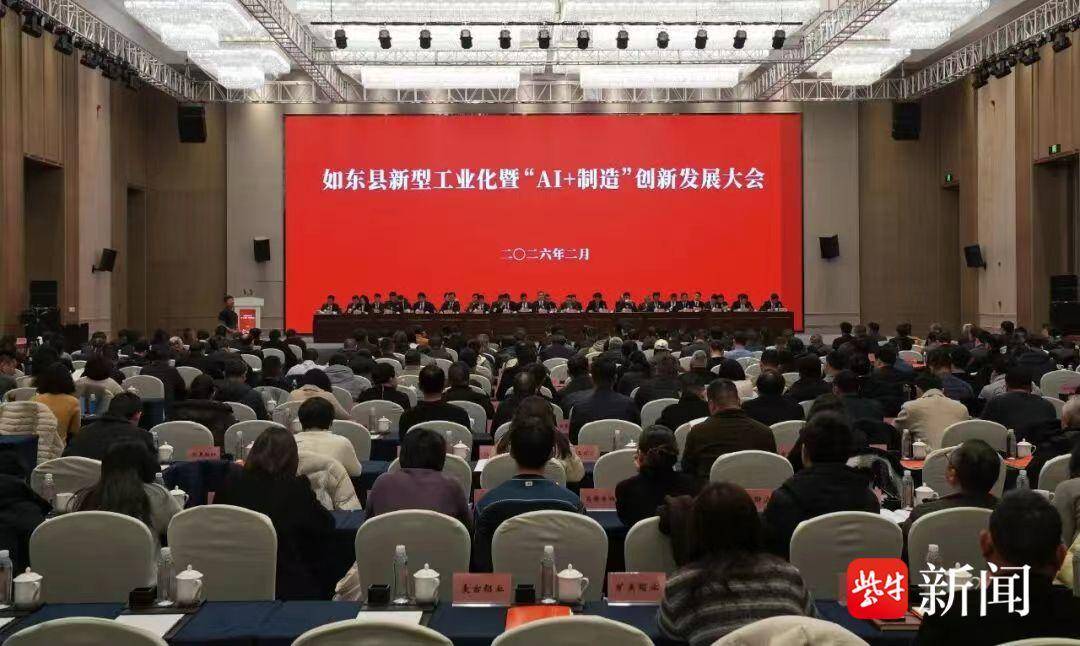
Group 1 - The core viewpoint of the article emphasizes the commitment of Rudong County to pursue new industrialization through the integration of artificial intelligence (AI) and manufacturing, aiming to build a robust industrial framework to support the 14th Five-Year Plan [2] - Over the past five years, Rudong has achieved significant industrial growth, with an average annual increase of 6.7% in industrial added value, and the three major industries of new energy, new materials, and new equipment generating over 150 billion [2] - The conference highlighted the establishment of a modern industrial system focusing on intelligent, green, and integrated development, with plans to enhance traditional industries and strengthen key sectors like offshore wind power and security [4] Group 2 - The implementation of the "AI+" initiative and the "Smart Transformation and Network Integration" action plan aims to create a roadmap for the transformation of manufacturing through AI, including the establishment of an OPC community and the development of specialized industry models [5] - The event showcased a strong pro-business orientation, with entrepreneurs taking center stage, and introduced significant policies to invigorate enterprise development, including the official unveiling of the Rudong offshore wind power equipment industry cluster [5] - Companies like Zhongtian Technology and Jinhongye Paper Industry are actively expanding and investing, with Zhongtian Technology planning to build a national leading intelligent factory [7]

特朗普访华前夜,对全球加税15%!中美关系突生变数,背后有三重玄机
Sou Hu Cai Jing· 2026-02-23 20:45
Core Viewpoint - The article discusses the significant political and economic developments surrounding President Trump's planned visit to China and the recent Supreme Court ruling against his tariff policies, highlighting the complexities and uncertainties in U.S.-China relations. Group 1: Supreme Court Ruling and Tariff Implications - The U.S. Supreme Court ruled that President Trump does not have inherent authority to impose tariffs during peacetime, overturning previous tariff measures implemented under the International Emergency Economic Powers Act [3][5] - The ruling could lead to the U.S. Treasury facing pressure to refund approximately $175 billion in tariffs deemed illegal, with numerous companies already filing lawsuits for refunds [5][21] - The ruling is expected to lower the effective tariff rate from 12.8% to 8.3%, impacting American households with an estimated annual loss of $1,681 due to increased consumer prices [6] Group 2: Trump's Response and New Tariff Policy - In response to the Supreme Court ruling, Trump announced a new 10% import tariff on all countries, utilizing a rarely invoked provision of the Trade Act of 1974, which allows for tariffs but limits them to 15% and requires congressional approval for extensions [8][10] - Within 24 hours, Trump increased the tariff rate from 10% to 15%, the maximum allowed under the new legal framework, indicating a rapid shift in policy [10] - The new tariffs are set to take effect on February 24, with a list of exempted goods including critical minerals and certain agricultural products [8][20] Group 3: Impact on U.S.-China Relations - Trump's planned visit to China from March 31 to April 2 is seen as a critical opportunity to address ongoing trade tensions, with the backdrop of the recent tariff changes adding complexity to the discussions [10][12] - The Chinese government has not officially confirmed the visit, reflecting a different diplomatic pace compared to the U.S., and emphasizing the importance of mutual respect in negotiations [12][22] - The visit comes at a time when Trump faces domestic pressure due to low approval ratings and economic challenges, making diplomatic achievements crucial for his administration [14][24] Group 4: Global Reactions and Future Considerations - Other global economies, including Germany and France, have expressed concerns over the new U.S. tariff policy, indicating potential retaliatory measures and emphasizing the negative impact on consumers [16][20] - The article notes that the new tariffs may create competitive disadvantages for Chinese products if other countries benefit from reduced costs, complicating the trade landscape [16] - The ongoing issues surrounding Taiwan and military sales are also highlighted as potential flashpoints that could affect the outcome of the upcoming visit [18][24]
中威电子实控人变更,付英波入主引市场关注
Jing Ji Guan Cha Wang· 2026-02-14 05:15
Group 1 - The core point of the article is the change of actual controller of Zhongwei Electronics from the Xinxiang Municipal Government to Mr. Fu Yingbo, an expert in the AI field, which is expected to inject AI technology into the company and assist in the intelligent transformation of its traditional security business [1] Group 2 - Following the change of control, Zhongwei Electronics' stock price experienced significant fluctuations, with a 5.53% increase on February 6, 2026, closing at 11.83 yuan and a trading volume of 223 million yuan, with a turnover rate of 7.24%. However, by February 13, 2026, the stock price had decreased to 11.67 yuan, reflecting a cumulative decline of 1.35% over five days [2] - The latest financial data from the third quarter of 2025 shows total operating revenue of 71.1015 million yuan, a year-on-year decrease of 34.47%, and a net loss attributable to shareholders of 43.3178 million yuan, although the loss narrowed by 14.0% year-on-year. This was primarily due to lower-than-expected collection of receivables leading to credit impairment losses, while management and sales expenses optimization did not fully offset the revenue decline [3]

恒辉安防:当前公司已与国内外多家机器人领域领先企业开展深度对接
Zheng Quan Ri Bao Wang· 2026-02-11 02:49
Core Viewpoint - Henghui Security (300952) is actively advancing multiple lines of business in the robotics sector, achieving significant results through collaborations with leading domestic and international companies in the field [1] Group 1: Business Development - The company is engaged in deep cooperation with several leading enterprises in the robotics industry, involving technical exchanges, joint research and development, sample testing, and validation [1] - Henghui Security plans to continue focusing on technological iteration and market expansion to steadily advance business implementation [1] Group 2: Confidentiality - Due to business confidentiality agreements, the company is currently unable to disclose specific details of the collaborations [1]


“智”护生产安全,海康威视观澜大模型落地湖北宜化
Jin Rong Jie· 2026-02-10 03:40
Core Viewpoint - The integration of AI technology in Yihua Group's operations enhances production safety and efficiency, particularly through the implementation of intelligent inspection systems and AR technology for comprehensive safety management [1][9]. Group 1: AI Implementation in Production - Yihua Group utilizes AI-driven intelligent inspection systems to monitor over 700 key points across seven core production segments, achieving an overall detection accuracy exceeding 90% [6]. - The AI systems are designed to identify safety hazards such as powder leakage, liquid spills, and smoke, thereby ensuring continuous production and safeguarding personnel and equipment [6][8]. - The deployment of AI technology has significantly reduced the need for manual inspections, allowing a single team to conduct centralized inspections, which enhances risk identification and response speed [8]. Group 2: Monitoring and Safety Management - Hikvision has installed intelligent monitoring systems on over 100 key points of belt conveyors in Yihua's phosphate chemical company, addressing issues like belt misalignment and blockages that can disrupt production [3][5]. - The AR-based management system at Xinyihua Chemical provides a unified visual interface that integrates environmental monitoring data and hazard information, improving safety management efficiency and response times [9]. - The shift from traditional manual inspections to AI-driven monitoring represents a significant advancement in operational efficiency, allowing for better resource allocation and risk management [11].

量化大势研判202602:市场△gf继续保持扩张
Guolian Minsheng Securities· 2026-02-04 05:29
- The report introduces a quantitative model framework for market trend analysis, focusing on five asset style stages: external growth, quality growth, quality dividend, value dividend, and bankruptcy value. The model evaluates assets based on their intrinsic attributes and prioritizes them using the sequence of g > ROE > D, analyzing whether there are "good assets" and whether they are "expensive" [5][8][9] - The model incorporates key factors such as expected growth (gf), actual growth (g), profitability (ROE), high dividend (D), and bankruptcy value (B/P). Each factor is associated with specific market phases, e.g., expected growth is relevant across all phases, while profitability is emphasized during maturity phases [9][12] - The quantitative model has demonstrated strong historical performance, achieving an annualized return of 27.67% since 2009. It has shown consistent excess returns in most years, particularly post-2017, with limited effectiveness in years like 2011, 2012, and 2016 [19][22] - The model's backtesting results for specific years include notable excess returns, such as 51% in 2009, 36% in 2013, and 62% in 2022. However, it also recorded underperformance in years like 2011 (-11%) and 2014 (-4%) [22] - The report details six specific strategies derived from the model, each focusing on different factors: - **Expected Growth Strategy**: Selects industries with the highest analyst-forecasted growth rates. Recent recommendations include sectors like automotive sales, lithium equipment, and tungsten [38][39] - **Actual Growth Strategy**: Focuses on industries with the highest unexpected growth (△g). Current recommendations include photovoltaic equipment, insurance, and coal chemical sectors [40][41] - **Profitability Strategy**: Targets high-ROE industries with low valuations under the PB-ROE framework. Recommended sectors include copper, liquor, and non-dairy beverages [43][44] - **Quality Dividend Strategy**: Utilizes a DP+ROE scoring system to identify industries. Current recommendations include forestry, lithium equipment, and fiberglass [46][47] - **Value Dividend Strategy**: Employs a DP+BP scoring system. Recommended sectors include security, daily chemicals, and buses [49][50] - **Bankruptcy Value Strategy**: Focuses on industries with the lowest PB+SIZE scores. Current recommendations include automotive sales, ceramics, and cotton textiles [53][54]





锚定高质量发展“后发先至” 聚力实现“十五五”良好开局
Xin Hua Ri Bao· 2026-02-04 00:52
Group 1 - The core focus for Lianyungang in 2026 is to implement high-quality development strategies aligned with the directives from Xi Jinping and the goals set by the provincial government [1] - The city aims to boost domestic demand and stabilize growth by launching consumption promotion initiatives and ensuring annual industrial investment reaches no less than 130 billion yuan [1] - Lianyungang plans to enhance innovation and strengthen industries by leveraging local research centers and focusing on key technologies, targeting an industrial output value of over 600 billion yuan [1] Group 2 - The city is committed to promoting reforms and expanding openness by developing key infrastructure projects and enhancing port operations, with a target of 5% growth in annual port throughput [2] - Efforts will be made to improve public welfare by increasing employment stability and expanding public services in education and healthcare, alongside urban renewal initiatives [2] - Lianyungang will prioritize risk prevention and safety management, addressing various risks in sectors such as finance and real estate to maintain social stability [3] Group 3 - The success of the 14th Five-Year Plan is heavily reliant on strong party leadership and the implementation of feedback from inspections, emphasizing the importance of a correct performance outlook among party members [3]