
特应性皮炎治疗

Search documents
国金证券:AD现有疗法仍可优化 双抗药物有望破局
智通财经网· 2025-09-17 02:37
Core Insights - The market potential for Atopic Dermatitis (AD) is significant, with a large patient population and unmet medical needs, particularly for effective and safe treatments [1][2] - The development of small molecules and biologics is entering a new phase, with several new therapies gradually being approved for AD treatment [2][3] - JAK inhibitors show excellent efficacy but have safety concerns, while TYK2 is emerging as a promising new option with potentially higher safety [3][4] - Biologics such as IL-4Rα and IL-31 demonstrate strong efficacy in improving skin lesions and alleviating itching, but there is still room for improvement compared to JAK inhibitors [4][5] - Dual and multi-target antibodies may offer a new approach by combining the advantages of different targets, with several companies already exploring this strategy [5] Group 1: Market Overview - Atopic Dermatitis (AD) is a chronic, recurrent inflammatory skin disease characterized by severe itching, affecting approximately 600-700 million patients globally, with around 67 million in China [1] - The demand for effective and safe medications is high due to the significant burden of the disease on patients' daily lives [1] Group 2: Treatment Landscape - Traditional therapies have poor safety profiles, leading to the emergence of biologics and small molecule targeted therapies over the past decade, with about a dozen products approved globally [2] - Current approved small molecule JAK inhibitors include Upadacitinib and Abrocitinib, but they carry safety warnings from the FDA [3] Group 3: Biologics Efficacy - Among the biologics, IL-4Rα and IL-13 show confirmed efficacy, while IL-31 is particularly effective in alleviating itching [4] - There is a notable difference in efficacy between biologics and JAK inhibitors, with Upadacitinib showing superior results in head-to-head studies [4] Group 4: Future Directions - The exploration of dual/multi-target antibodies aims to enhance treatment efficacy and extend dosing intervals, with several companies already developing such therapies [5] - Ongoing research into various targets may lead to improved outcomes for AD patients [5]

8月“小非农”低于预期,纳指小幅高开0.15%
Ge Long Hui· 2025-09-04 13:37
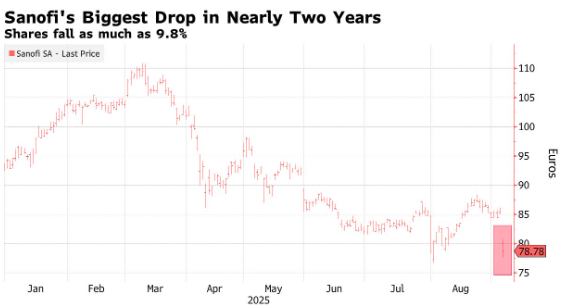
Group 1 - The ADP employment number in the US increased by 54,000 in August, which is below market expectations, leading traders to maintain their interest rate cut bets unchanged [1] - The US stock market opened with mixed results, with the Nasdaq up 0.15%, the S&P 500 up 0.11%, and the Dow Jones down 0.06% [1] Group 2 - Salesforce, a customer relationship management software giant, saw its stock drop over 7% as it expects a slowdown in revenue growth for Q3, which is below expectations [1] - Sanofi's stock fell by 8.6% despite its Amlitelimab treatment for atopic dermatitis meeting all primary and secondary endpoints in Phase III studies, as the results did not meet market expectations [1] - Figma, a UI design software developer, experienced a drop of over 19% after its first earnings report post-IPO fell short of expectations, with guidance only slightly exceeding forecasts [1] - American Eagle, a US apparel retailer, surged over 33% after reporting Q2 results that exceeded expectations and reissuing its full-year guidance [1]
赛诺菲(SNY.US)盘前跌近9% 特应性皮炎药物后期试验疗效不及预期
Zhi Tong Cai Jing· 2025-09-04 09:23
Core Viewpoint - Sanofi's experimental drug for atopic dermatitis, amlitelimab, has underperformed in late-stage trials, disappointing investors and leading to a pre-market stock drop of up to 9.3% [1]. Group 1: Drug Performance and Market Impact - Amlitelimab showed improvement in skin clearance and disease severity compared to placebo, but the efficacy was still lower than Sanofi's best-selling drug, Dupixent [1]. - The stock has declined by 18% over the past 12 months, reflecting investor concerns about the drug's potential [1]. - Analysts believe the results of the amlitelimab trial are crucial for Sanofi, especially given the uncertain future of another key drug, itepekimab [1]. Group 2: Future Prospects and Comparisons - Sanofi is seeking alternatives to Dupixent, which is projected to generate over €21 billion annually at peak sales [3]. - Amlitelimab is expected to generate approximately €1.5 billion (around $1.75 billion) in annual revenue by 2031 [3]. - Amlitelimab has a dosing advantage, requiring administration only once every three months compared to Dupixent's more frequent dosing schedule [3]. Group 3: Other Drug Developments - The efficacy results of itepekimab have been mixed in recent late-stage trials, as it is being tested for chronic obstructive pulmonary disease in former smokers [4].


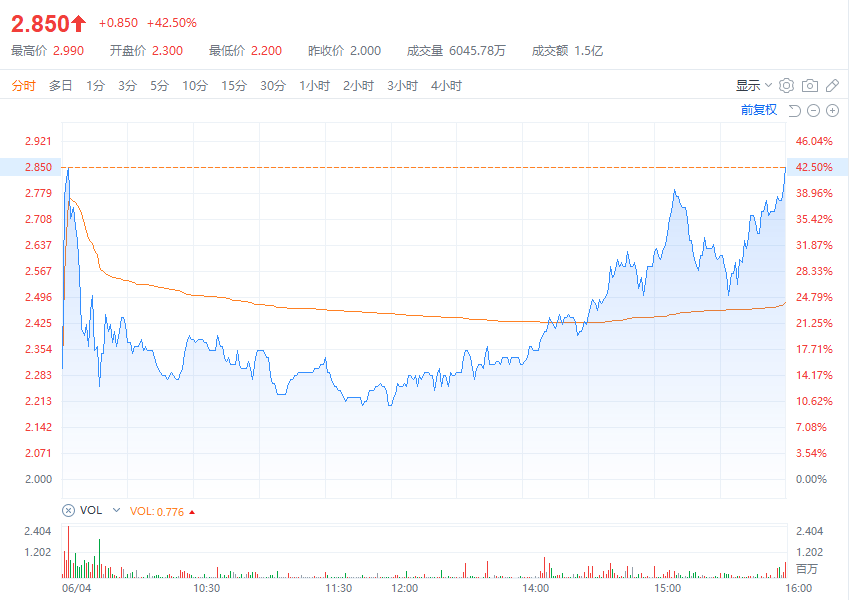
中国抗体-B(03681)两日涨超80%,市场“战略性押注”下一个重磅BD?
智通财经网· 2025-06-05 01:31
Core Viewpoint - The Chinese innovative drug sector is gaining global competitiveness, highlighted by significant business development (BD) deals and the promising clinical data of the drug SM17, which is expected to attract attention from major pharmaceutical companies [1][2][12]. Group 1: Market Dynamics - The market is actively seeking the next major BD deal, especially after the significant $6 billion BD deal between 3SBio and Pfizer, indicating a trend of increasing interest in Chinese innovative drugs [1]. - The total amount of outbound transactions for Chinese innovative drugs is projected to reach a record high by 2025, with $45.5 billion already achieved in 2025 alone [5][7]. - The frequency of BD transactions is driven by multinational pharmaceutical companies facing "patent cliffs," necessitating the acquisition of innovative drug pipelines to replenish their product lines [7][8]. Group 2: SM17 Drug Overview - SM17 is a first-in-class monoclonal antibody targeting the IL-25 receptor, showing promising results in clinical trials for moderate to severe atopic dermatitis (AD) [2][3]. - The drug demonstrated a 91.7% response rate in itch control and a 75% response rate in skin lesion improvement during phase 1b trials, significantly outperforming existing treatments [4]. - SM17's unique dual mechanism of action allows for rapid itch relief and effective inflammation reduction, setting it apart from current therapies [3][4]. Group 3: Clinical and Commercial Potential - The global AD patient population is substantial, with at least 230 million affected worldwide, including over 70 million in China, indicating a significant market opportunity for SM17 [2][4]. - SM17's safety profile is favorable, with no serious adverse events reported during the clinical trials, further enhancing its attractiveness for potential licensing deals [4][9]. - The drug has potential applications beyond AD, including asthma and other autoimmune diseases, which could broaden its commercial prospects [9][11]. Group 4: Company Strategy and Future Outlook - The company has established a robust pipeline of innovative drugs, focusing on monoclonal antibodies for various immune-related diseases, positioning itself for sustainable growth [11][12]. - The strategic emphasis on self-research and innovation, coupled with promising clinical data for SM17, is expected to attract significant investment and partnership opportunities [12].
中美本维莫德乳膏对比:中国产品疗效与价格双优
Zhong Guo Jing Ji Wang· 2025-05-20 09:10
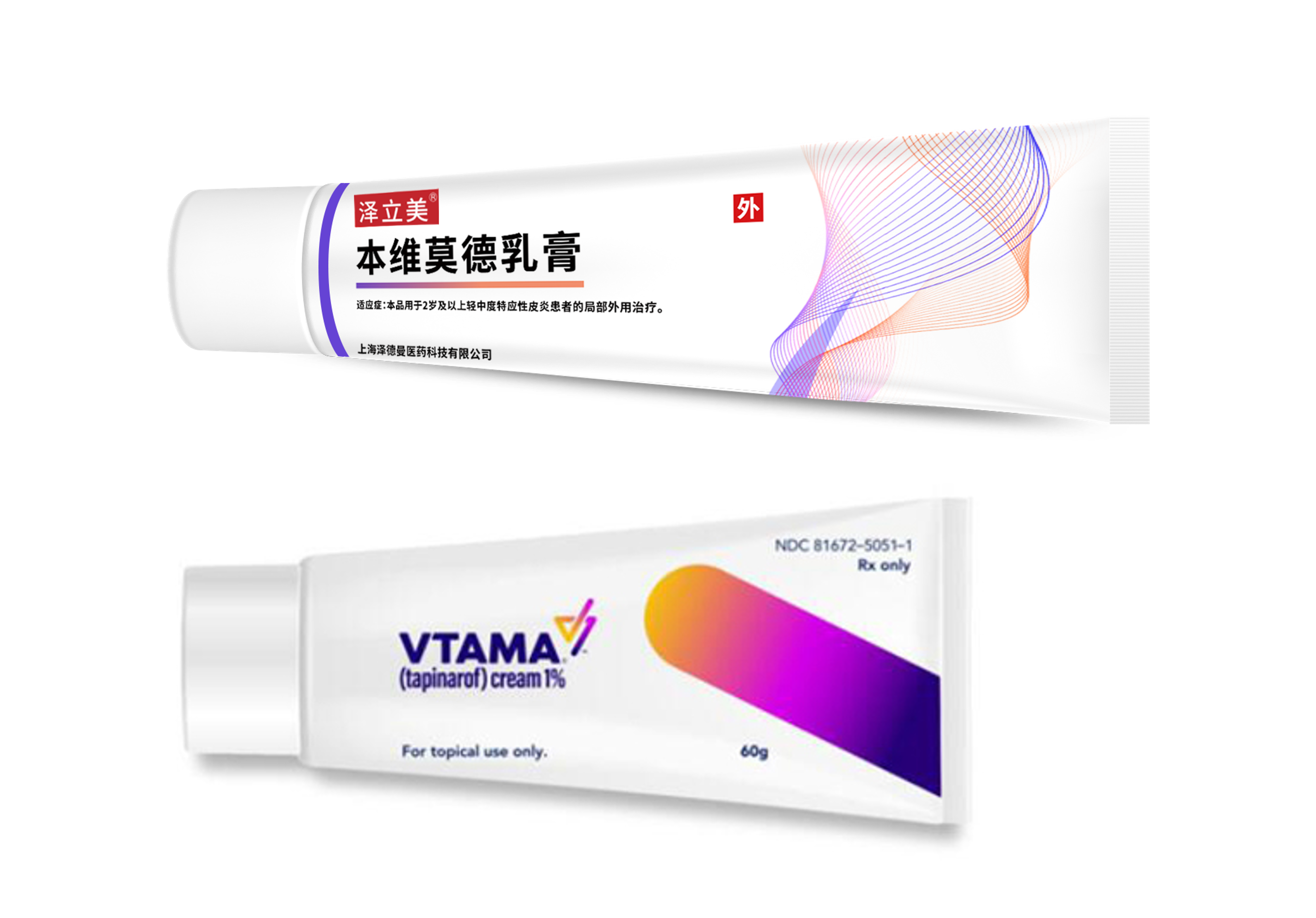
Core Viewpoint - The approval of Benovolimod cream (Zelime) in China marks a significant advancement in the treatment of atopic dermatitis for patients aged 2 and above, being the first non-steroidal topical innovative drug globally for this indication, with a notable price and accessibility advantage over the US counterpart, VTAMA [1][4][9] Group 1: Development Background - Benovolimod was discovered in the 1990s by Dr. Chen Genghui during research in Canada, leading to the establishment of a patent shared between Canada and China [4] - Dr. Chen returned to China to establish Tianji Pharmaceutical, while the overseas development rights were acquired by GSK and later sold to Dermavant in the US [4] Group 2: Clinical Trials - Phase III clinical trial results show similar efficacy and safety profiles for both Zelime and VTAMA, with Zelime demonstrating superior efficacy in children aged 7-11 [6] - EASI75 response rates were 54.4% for Zelime and 55.8% for VTAMA, while IGA response rates were 46.2% for Zelime and 45.4% for VTAMA [6] Group 3: Price Comparison - The price of Zelime in China is 980 RMB per tube, while VTAMA costs approximately 1400 USD (around 9800 RMB), making VTAMA about ten times more expensive than Zelime [7] - Even when adjusted for weight, VTAMA remains 2.5 times more expensive than Zelime, significantly reducing the economic burden on Chinese patients [7] Group 4: Patient Feedback - Both Zelime and VTAMA received positive feedback from patients, with Chinese users highlighting its effectiveness in controlling itching and reducing flare-ups, especially for children [8] - American patients reported effective relief from eczema symptoms with VTAMA, despite its high price, as evidenced by sales reaching 20 million USD in the first quarter of 2025 [8] Group 5: Overall Summary - Overall, Zelime offers a more cost-effective and efficient treatment option for atopic dermatitis patients in China compared to VTAMA, benefiting from local development, superior pediatric efficacy, and broader patient acceptance [9]
SM17概念验证临床数据超预期,中国抗体-B(03681)AD赛道全球化成长潜力凸显
智通财经网· 2025-04-08 00:28
Core Insights - China Antibody's innovative drug SM17 has shown promising results in a Phase 1b clinical trial for moderate to severe atopic dermatitis (AD), demonstrating significant advantages in itch relief, skin lesion treatment, and safety compared to existing products [1][5][6] Clinical Results - Over 90% of patients treated with high-dose SM17 achieved an NRS-4 response, while over 70% reached an EASI 75 response, and over 40% achieved an IGA 0/1 response [1][5] - No serious adverse events (SAE) or grade 3 and above drug-related adverse events were reported during the trial, indicating a favorable safety profile [4][5] Mechanism of Action - SM17 is a first-in-class humanized IgG4-κ monoclonal antibody targeting the IL-25 receptor, which plays a crucial role in the inflammatory response associated with AD [2][12] - By inhibiting IL-25 binding to its receptors, SM17 effectively reduces downstream inflammatory cytokines, promoting skin repair and reducing inflammation [2][12] Market Potential - The global atopic dermatitis drug market is projected to grow from $13.62 billion in 2023 to $31.44 billion by 2034, highlighting the significant commercial opportunity for effective treatments like SM17 [8][10] - With over 230 million AD patients worldwide, including more than 70 million in China, the demand for effective therapies is substantial [7][10] Competitive Landscape - Current treatments for AD, such as Dupilumab, have limitations, including slow onset and safety concerns, creating an unmet need that SM17 could address [10][11] - The AD treatment market is highly competitive, with a focus on innovative targets; however, SM17's unique mechanism may provide a competitive edge [10][11] Commercialization Strategy - The potential for licensing SM17 to multinational pharmaceutical companies is seen as a key pathway for commercialization, similar to recent high-value deals in the AD space [11][12] - The drug's early safety and efficacy data, along with its novel mechanism, position it as an attractive candidate for partnerships and market entry [12][13]
