
综合交通运输体系

Search documents
一条高铁激活四城经济,山东在京沪间再造200公里“直线走廊”
Qi Lu Wan Bao Wang· 2025-05-20 07:26
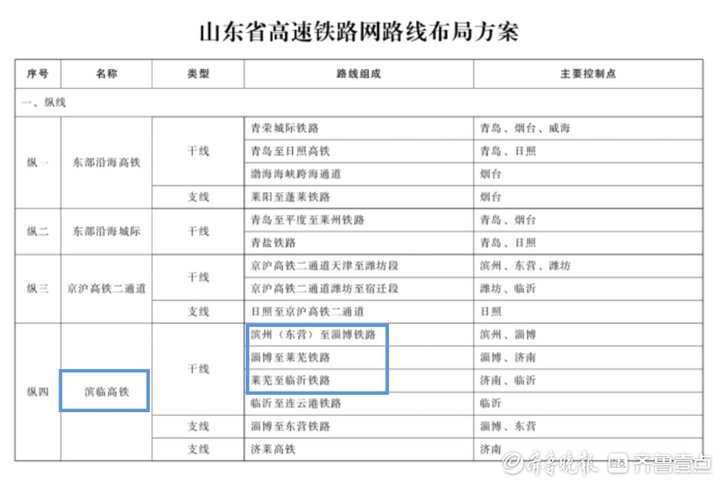
Core Viewpoint - The launch of the Bin-Zi-Lai high-speed railway project marks a significant step in filling the high-speed rail gap in central Shandong, enhancing connectivity between key cities and promoting regional integration [1][2][3]. Group 1: Project Overview - The Bin-Zi-Lai high-speed railway will connect the existing Tianjin-Weifang railway at Binzhou station, covering approximately 150 kilometers through several districts and counties [1][2]. - This railway is part of a larger plan, the Bin-Lin high-speed railway corridor, which aims to connect Binzhou, Zibo, Laiwu, and Linyi, with a total planned length of about 238 kilometers [2][3]. Group 2: Strategic Importance - The railway addresses the previous high-speed rail "vacuum" between Binzhou, Zibo, and Laiwu, facilitating easier travel and reducing travel time for residents [2][5]. - It enhances the overall railway network in Shandong, contributing to the province's goal of a modern integrated transportation system to meet growing travel demands [2][3]. Group 3: Historical Context - The planning for the Bin-Zi-Lai high-speed railway dates back to 2018, when it was included in the Shandong Province's long-term transportation plan [3][4]. - Recent developments indicate a strong push from local authorities to integrate this project into national planning frameworks, highlighting its importance for regional connectivity [4][5]. Group 4: Economic Impact - The railway is expected to significantly improve economic interactions between cities like Jinan, Zibo, and Linyi, promoting resource sharing and collaborative development [9][10]. - By connecting to existing high-speed rail lines, it will enhance Jinan's role as a regional economic hub, facilitating better access to surrounding areas [8][10]. Group 5: Future Prospects - The completion of the Bin-Zi-Lai high-speed railway could create a new north-south corridor in Shandong, linking it more effectively with the Beijing-Tianjin-Hebei region and the Yangtze River Delta [10][11]. - The project is seen as a potential auxiliary route to the Beijing-Shanghai high-speed railway, further integrating Shandong into national transportation networks [10][11].

云浮召开新闻发布会介绍“十五五”交通建设规划
Nan Fang Ri Bao Wang Luo Ban· 2025-03-31 09:21
Group 1 - The core viewpoint of the news is the introduction of the transportation development plans and achievements in Yunfu City during the "14th Five-Year Plan" and the upcoming "15th Five-Year Plan" [1] - During the "14th Five-Year Plan," Yunfu implemented 101 transportation projects with a total investment of 50 billion yuan, including the addition of 38.4 kilometers of expressways and the completion of 16.3 billion yuan in investments [1] - The "15th Five-Year Plan" will focus on 36 key transportation projects, including 16 major projects with a total investment of approximately 180 billion yuan [1] Group 2 - The planned projects for the "15th Five-Year Plan" include the construction of the Fozhao Yun Expressway and other projects totaling 432 kilometers with an investment of 90.4 billion yuan [2] - The plan also includes the construction of 18 national and provincial road projects totaling approximately 500 kilometers with an investment of about 27 billion yuan [2] - The upgrade of rural roads is set to cover 3,000 kilometers with a total investment of 5 billion yuan, alongside the development of port projects and low-altitude logistics hubs [2]