考古学

Search documents
一场科技与文明的双向奔赴(文化中国行·人文观察)
Ren Min Ri Bao· 2025-11-18 23:11
Core Insights - The integration of artificial intelligence (AI) with archaeology is revolutionizing the field, enhancing efficiency and depth of research while enabling new applications and discoveries in cultural heritage protection and utilization [5][6][7][9]. Group 1: AI in Archaeology - AI is being utilized to process and classify archaeological artifacts, such as pottery shards from the Baodun site, showcasing its potential in addressing complex classification issues [7]. - Traditional archaeological methods are evolving as AI enhances research capabilities, allowing for faster and more accurate dating and analysis of artifacts [6][9]. - AI is also being applied in the restoration of ancient texts, such as oracle bone inscriptions, significantly reducing the time and effort required for manual reconstruction [8]. Group 2: AI in Cultural Heritage Protection - The use of AI technologies in cultural heritage protection is expanding, with applications in monitoring and diagnosing the condition of historical sites, such as the Yungang Grottoes [10][13]. - AI-driven tools are being developed for real-time monitoring of environmental conditions and potential threats to cultural relics, enhancing the precision of preservation efforts [13]. - The digital restoration of artifacts, like the 3D printing of the Yungang Grottoes' statues, exemplifies how AI can facilitate the revival of historical artworks [10][12]. Group 3: Educational Initiatives - Universities are introducing interdisciplinary courses, such as "AI Archaeology," to equip students with the necessary skills to integrate AI into archaeological research [9]. - The focus on cultivating cross-disciplinary talent is essential for the future of archaeology, as AI becomes a critical tool in the field [9][16]. Group 4: Cultural Engagement - AI technologies are transforming how cultural heritage is experienced by the public, making historical figures and events more accessible through interactive exhibits [14][15]. - The integration of AI with virtual and augmented reality is creating immersive experiences that bridge the gap between ancient civilizations and contemporary audiences [14][15]. Group 5: Future Directions - There is a call for national standards in the digitization of cultural relics and the training of professionals in technology-driven archaeological methods [16]. - The collaboration between archaeologists and AI technologies is seen as a pathway to enhance the effectiveness of cultural heritage preservation and education [16].

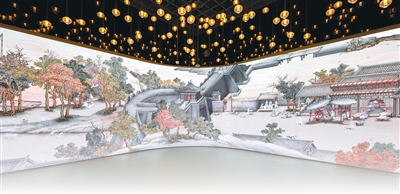
“一铲一铲挖出来”的国家一级博物馆
Zhong Guo Qing Nian Bao· 2025-10-11 02:00
Core Insights - The Shandong University Museum, with its two locations in Jinan and Qingdao, serves as a cultural bridge, showcasing both historical artifacts and modern technological interpretations of cultural heritage [1][4] - The museum emphasizes the importance of archaeological education and community engagement, with a focus on hands-on experiences for students and the public [6][8] Group 1: Museum Overview - The Shandong University Museum is a national first-class museum that reflects the dedication of its faculty and students in archaeological research and preservation [2] - The museum houses over ten thousand artifacts, most of which were excavated and restored by the university's archaeology students and faculty [3][6] - The Qingdao campus features a new building of over 40,000 square meters, hosting various thematic exhibitions that attract a growing number of visitors [4][6] Group 2: Archaeological Significance - The museum's collection includes significant artifacts such as a bronze weighing scale from the Wang Mang reform period, which is the only officially excavated example from that era [3] - The discovery of the Dinggong pottery with early written characters is highlighted as a major archaeological find, providing insights into the origins of Chinese civilization and writing [5][6] - The focus on fieldwork at the Jiaojia site allows students to engage directly with archaeological practices, enhancing their educational experience [7][8] Group 3: Community Engagement and Education - The museum has hosted over 215,000 visitors in the past year, with various educational programs and workshops aimed at different community groups [6] - Activities such as "expert-led museum tours" and "cultural appreciation workshops" are designed to make archaeological findings accessible to the public [6][8] - The integration of fieldwork, laboratory research, and museum exhibitions creates a comprehensive educational framework for archaeology students [8]
考古现场,如何“搬”进博物馆
Ren Min Ri Bao· 2025-10-09 00:05
Core Insights - The Yujia Mountain Archaeological Museum in Hangzhou, Zhejiang Province, has attracted over 3,000 visitors daily since its opening on May 18, 2025, showcasing its significance in connecting modern society with ancient civilizations [1][2]. Group 1: Museum Features - The museum covers a total area of 25,000 square meters and includes various exhibition halls featuring 1,800 selected artifacts, primarily pottery and jade items, many of which are being displayed for the first time [2]. - The exhibition design emphasizes the archaeological process, allowing visitors to understand the construction and evolution of the Yujia Mountain site and the rise and fall of the Liangzhu culture through various displays [3][6]. Group 2: Archaeological Significance - The Yujia Mountain site, recognized as one of the "Top Ten Archaeological Discoveries of 2011," contains evidence of the Liangzhu culture spanning 1,000 years, making it a unique resource for studying ancient social structures and burial practices [1][4]. - Over 600 tombs and more than 8,000 artifacts, including precious jade items, have been excavated, providing critical insights into the social dynamics and cultural practices of the Liangzhu civilization [4][5]. Group 3: Educational Approach - The museum aims to educate visitors not only about the artifacts but also about the methods of archaeological discovery, featuring interactive areas that simulate excavation experiences and explain archaeological techniques [6][7]. - The use of advanced technologies, such as 3D displays and augmented reality, enhances the storytelling aspect of the exhibits, making the historical context more accessible and engaging for visitors [8][9]. Group 4: Architectural Design - The architectural design of the museum reflects the historical narrative, with a landscape-inspired layout that integrates the natural environment, creating a rich spatial experience for visitors [9][10]. - A large glass wall in the Yujia Mountain exhibition hall allows for a direct view of the archaeological site, enhancing the visitor experience while ensuring the safety of the artifacts [10]. Group 5: Future Plans - The museum plans to develop educational programs that leverage the resources of the archaeological park and surrounding enterprises, aiming to improve visibility and accessibility for diverse audiences [10][11].
考古现场,如何“搬”进博物馆(文化中国行·华夏博物之旅)
Ren Min Ri Bao· 2025-10-03 22:02
Core Insights - The Yujia Mountain Archaeological Museum, located in Linping District, Hangzhou, Zhejiang Province, has attracted numerous archaeology enthusiasts since its opening on May 18, 2025, with an average daily visitor count exceeding 3,000 [12][17] - The museum showcases the Yujia Mountain prehistoric settlement site, recognized as one of the "Top Ten Archaeological Discoveries of 2011," which spans 1,000 years of the Liangzhu civilization's evolution [12][13] - The museum features a total construction area of 25,000 square meters, housing various exhibition halls and displaying 1,800 artifacts, primarily pottery and jade items, many of which are being exhibited for the first time [12][14] Group 1: Museum Features - The museum includes several exhibition halls, such as the Linping Site Hall, Maoshan Site Hall, and Yujia Mountain Site Hall, allowing visitors to explore the construction process of the Yujia Mountain site and the rise and fall of Liangzhu culture [12][14] - The museum emphasizes the archaeological process, showcasing not only artifacts but also the methods of discovery, including dating techniques and excavation technologies, with interactive experience zones for visitors [14][15] - The design of the museum incorporates landscape architecture, creating a rich spatial effect that connects the historical narrative with the physical site, including a large glass wall in the Yujia Mountain Hall that offers views of the archaeological site [16][17] Group 2: Educational and Cultural Impact - The museum aims to enhance its educational role by developing social education courses tailored to different audiences, leveraging the resources of the archaeological park and surrounding enterprises [17] - The exhibits and educational programs are designed to help visitors understand the wisdom of ancient peoples in modifying nature and the logic of social operations, fostering a dialogue that spans millennia [17] - The museum's innovative use of technology, such as 3D displays and augmented reality, transforms traditional exhibition methods into engaging narratives that resonate with contemporary audiences [15][16]

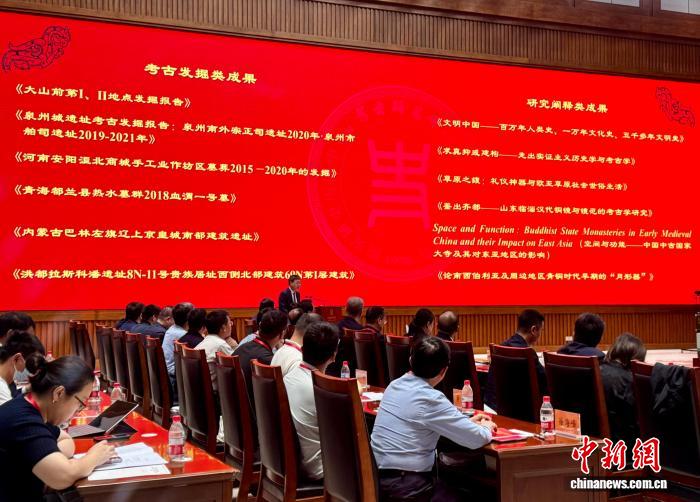
中国社会科学院考古研究所发布近五年重要成果 泉州城遗址等入选
Zhong Guo Xin Wen Wang· 2025-09-28 05:38
Core Insights - The Chinese Academy of Social Sciences Archaeological Research Institute has released significant archaeological findings from the past five years, including the Quanzhou City site and the Copán site in Honduras, among 12 selected representative achievements [1][3]. Excavation Achievements - The excavation report of the Dasha Qian site enhances the understanding of the dating and classification of the Xiajiadian Lower Culture pottery group, providing crucial support for exploring the cultural center of the Xiajiadian Lower Culture [2]. - The Quanzhou City site excavation report deepens the research on the layout of Tang and Song Quanzhou, providing archaeological evidence for the world heritage designation of "Quanzhou: China's World Maritime Trade Center of the Song and Yuan Dynasties" [2]. - Excavations at the Anyang Huabei Shangcheng industrial workshop cemetery from 2015 to 2020 advance the study of key issues regarding the burial system of the mid-Shang Dynasty, filling gaps in the understanding of artisan family burial sites during that period [2]. - The excavation of the Hot Water Tombs in Dulan County, Qinghai, innovates burial excavation methods and explores burial customs in the Tang Dynasty, reflecting the historical process of cultural exchange along the Silk Road [2]. - The discovery of high-status south-facing buildings in the southern architectural site of the Liao Dynasty's Shangjing city in Inner Mongolia marks a significant finding, showcasing a complex accumulation process of large building foundations over time [2]. Research and Interpretation Achievements - The publication "Civilization China: A Million Years of Human History, Ten Thousand Years of Cultural History, and Five Thousand Years of Civilizational History" systematically interprets the classic assertion of human history, cultural history, and civilization history using the latest archaeological findings [4]. - "Seeking Truth or Construction: Moving Beyond Positivist Historiography and Archaeology" is the first comprehensive work in Chinese archaeology to systematically explain the theoretical foundations of historiography, promoting paradigm innovation between traditional historiography and archaeology [4]. - "The Ritual Artifact and Secular Life in the Eurasian Steppe" explores the origin, transmission, and evolution of ritual artifacts in the Eurasian steppe, providing new perspectives on interactions and migration patterns among different groups [4]. - "Identifying Qi Capital: Archaeological Studies of Han Dynasty Bronze Mirrors and Mirror Molds" is the first academic work to apply 3D scanning technology to ancient bronze mirror research, demonstrating the integration of field archaeology and technological archaeology [4]. - The English monograph "Space and Function: Buddhist State Monasteries in Early Medieval China and their Impact on East Asia" discusses the profound influence of state monasteries in medieval China on East Asia, contributing significantly to the theoretical framework of Chinese cave temple archaeology [5].
当AI成功地将陶片重新拼合
Ren Min Ri Bao· 2025-08-08 21:42
Core Insights - The "Daxinzhuang Pottery Shard Assembly AI Challenge" was launched at the World Artificial Intelligence Conference in Shanghai, aiming to connect thousands of Shang Dynasty pottery fragments from the Daxinzhuang site in Jinan, Shandong, with cutting-edge AI technology [1] - This initiative emphasizes interdisciplinary collaboration, involving experts from archaeology, mathematics, computer science, and cultural anthropology to address key research challenges in archaeology [1][2] Industry and Company Summary - The challenge seeks to push the boundaries of foundational research in archaeology, focusing on tasks such as intelligent classification, break matching, and assembly of pottery shards, which are critical for the advancement of the field [2] - Participants are encouraged to develop universal and interpretable algorithm models that can handle the complexities of pottery shards that have undergone 3000 years of weathering, wear, and color distortion [2] - Successful assembly of pottery shards not only reconstructs artifacts but also provides new dimensions for historical interpretation, allowing for a deeper understanding of ancient social structures, craftsmanship, and technological evolution [2][3] - The initiative promotes open science by sharing valuable archaeological data globally and requiring participating teams to open-source their solutions, fostering innovation in AI applications within archaeology and cultural heritage preservation [3] - The integration of AI in archaeology is expected to enhance the efficiency and accuracy of archaeological work, making the field more dynamic and appealing, while not replacing archaeologists but rather deepening their understanding of artifacts and history [3]
《盛世长安》重磅上市,解码千年古都的文明基因
3 6 Ke· 2025-07-01 07:26
Core Insights - The book "盛世长安" (Prosperous Chang'an) is a significant archaeological work that reconstructs the grandeur of Chinese civilization during the Han and Tang dynasties, focusing on the city of Chang'an as a cultural and historical axis of China [1][2][5] Group 1: Archaeological Significance - "盛世长安" utilizes archaeological findings to bring the ancient city of Chang'an back to life, showcasing the real details and social aspects of the city through excavated sites and artifacts [3][4] - The book features a combination of archaeological results, historical texts, and visual materials, allowing readers to experience the ancient city as if they were walking through it [3][4] Group 2: Cultural and Historical Context - Chang'an served as the political center and cultural hub of the Han and Tang dynasties, embodying the essence of Chinese civilization and its evolution over time [2][6] - The book addresses key historical questions regarding the governance and cultural philosophies of ancient China, revealing the deep logic behind the development of Chinese order and systems [5][6] Group 3: Visual and Academic Integration - The work is designed to be both scholarly and accessible, featuring numerous illustrations that enhance the understanding of historical narratives and cultural exchanges in Chang'an [4][5] - It highlights the artistic and architectural achievements of the Tang dynasty, showcasing how Chang'an was a melting pot of diverse civilizations [4][6]
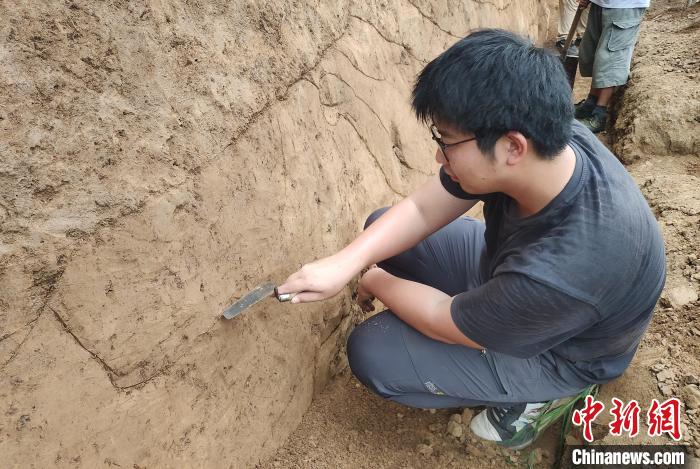
“00后”台青大陆考古 “对话”五千年文明
Zhong Guo Xin Wen Wang· 2025-06-25 14:09
Group 1 - The article highlights the passion of a graduate student, Pan Zhiwei, for archaeology, particularly his experiences at the Qiaojia site in Jinan, which dates back over 5,000 years [1][4] - Pan Zhiwei initially pursued a history major but shifted to archaeology after a transformative field practice at the Qiaojia site, which changed his perception of the discipline [2][4] - The Qiaojia site has revealed significant archaeological findings, including rammed earth city walls, moats, sacrificial pits, and large tombs, making it an important practical base for the Shandong University Archaeology Institute [4][6] Group 2 - Pan Zhiwei emphasizes the collaborative nature of archaeological work, crediting his growth to the support from teachers and peers during his studies [5][6] - He expresses a desire for further theoretical and practical training to deepen his understanding of archaeology, recognizing the complexity of the field beyond surface-level discoveries [6] - Pan Zhiwei aims to work in an archaeological research institute in the future, focusing on field archaeology to continue exploring and uncovering historical narratives [6]
“看·见殷商”火爆开展,一文回顾百年前殷墟是如何被发现的?
Bei Jing Wan Bao· 2025-05-20 02:00
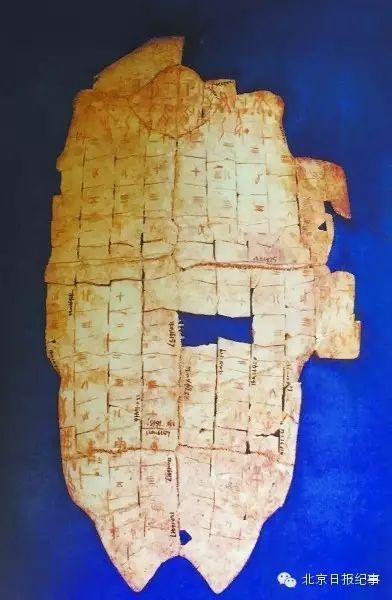
Core Points - The "Seeing the Yin Shang" exhibition opened at the Beijing Grand Canal Museum, showcasing 338 cultural relics from 28 national cultural institutions, including over 50 key artifacts from the Yin Shang period [1] - The discovery of the Yin Ruins has brought renewed attention to the historical significance of the Shang Dynasty, particularly through the lens of oracle bone inscriptions [2][4] - The exhibition highlights the importance of the character Fu Hao, the first recorded female hero in Chinese history, whose legacy was uncovered through oracle bone inscriptions [1][4] Group 1: Historical Context - The excavation of the Yin Ruins began in 1928, marking a significant milestone in Chinese archaeology as it provided physical evidence of the Shang Dynasty's existence [2] - The discovery of oracle bones in the late 19th century led to the realization of the historical significance of the Yin Ruins, which had been buried for over 3,000 years [1][2] - The initial findings at the Yin Ruins were driven by local legends and the mistaken belief that certain bones were medicinal "dragon bones," which later turned out to be oracle bones [4][5] Group 2: Key Figures and Contributions - Wang Yirong, a Qing Dynasty scholar, played a crucial role in identifying oracle bones as ancient artifacts, leading to the establishment of oracle bone studies as a new academic field [7][8] - The first excavation at the Yin Ruins was led by Dong Zuobin, who faced challenges due to local resistance and the prevalence of looting [23][29] - Li Ji, appointed as the head of the archaeological team in 1928, emphasized the need for scientific methods in archaeology, marking a shift from treasure hunting to systematic excavation [38][40] Group 3: Archaeological Developments - The first excavation yielded significant findings, including 555 pieces of oracle bones and various artifacts, but faced criticism for its lack of scientific rigor [35][37] - Subsequent excavations under Li Ji introduced a more structured approach, focusing on the context of artifacts and the importance of recording excavation details [39][40] - The establishment of the National Central Research Institute's excavation team in 1929 marked a formalization of archaeological practices in China, leading to the development of a new generation of archaeologists [50][51]
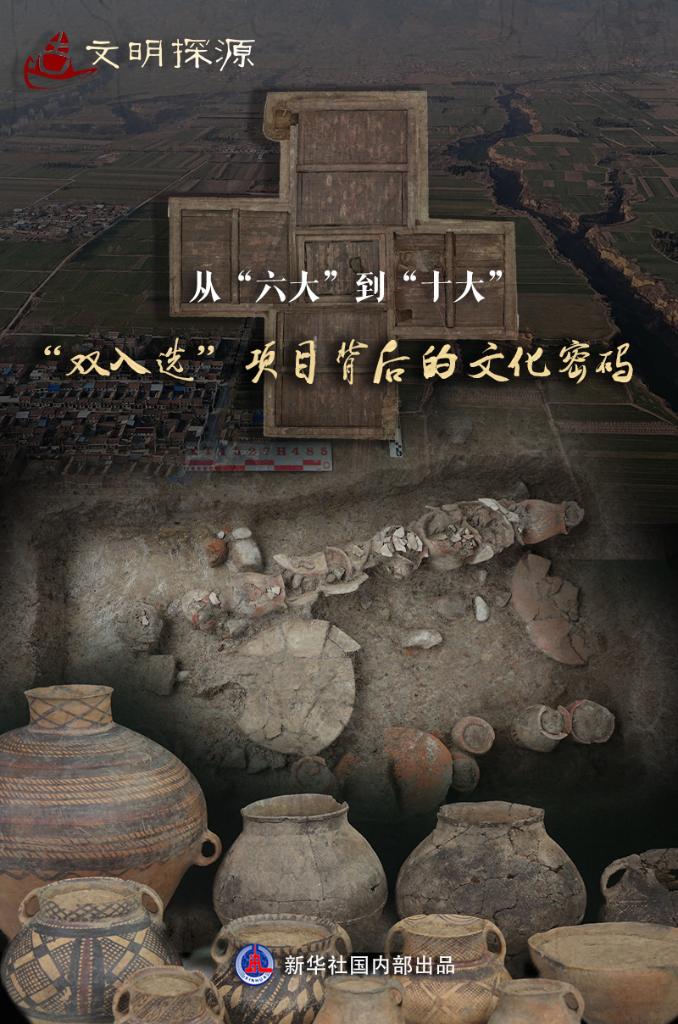
文明探源|从“六大”到“十大”,“双入选”项目背后的文化密码
Xin Hua Wang· 2025-05-08 02:51
Core Insights - The recent announcements of the "2024 New Discoveries in Chinese Archaeology (Six Major)" and "2024 National Top Ten Archaeological Discoveries" highlight significant archaeological sites, including the Xiaotang site in Zhejiang, the Tsiwa site in Gansu, the Zhouyuan site in Shaanxi, and the Wuwangdun No. 1 tomb in Anhui, which have been recognized for their cultural significance and historical value [3][4][5] Group 1: Archaeological Discoveries - The Xiaotang site is the southernmost of the Shanshan culture sites and provides crucial evidence for early agricultural societies in southern China, showcasing settlement patterns and structures from a 10,000-year cultural history [3][6] - The Tsiwa site, dating back 5,000 years, reveals the largest and most comprehensive Maijiawa culture settlement, indicating advanced social organization and management capabilities [4][5] - The Zhouyuan site confirms its status as a pre-Zhou capital, with new findings of large rammed earth structures that provide insights into the early Zhou people's settlement before the fall of the Shang dynasty [5][10] - The Wuwangdun No. 1 tomb is the largest and most complex high-status tomb from the Chu state, offering systematic archaeological data for studying the burial customs and cultural history of the late Warring States period [5][10] Group 2: Archaeological Methodology and Philosophy - The archaeological work at these sites reflects a philosophy of integrating multi-disciplinary research with traditional excavation methods, aiming for a comprehensive understanding of the sites' broader contexts [6][8] - The concept of "big site archaeology" emphasizes the importance of understanding the environmental and contextual factors surrounding archaeological sites, moving beyond isolated findings [6][8] - The excavation of the Wuwangdun site includes advanced protective measures for artifacts, such as high-density resistivity methods for safe digging and humidity control systems to preserve delicate items [8][10] Group 3: Future Research Directions - Ongoing research at the Xiaotang site aims to clarify the layout and functions of the settlements within the surrounding ditches, as well as to identify other significant structures from the same period [8][10] - The Zhouyuan site requires further investigation into the functions of its various regions, including the orientation of the newly discovered "three-layer city" and the distribution of buildings [10] - Plans for the Wuwangdun site include the establishment of an archaeological park and museum, expected to be completed by the end of 2027, to promote the heritage and cultural significance of the Chu civilization [10]