
自主系统

Search documents
人类的下一场手术,可能由自主机器人来操刀
机器人大讲堂· 2025-07-12 03:28
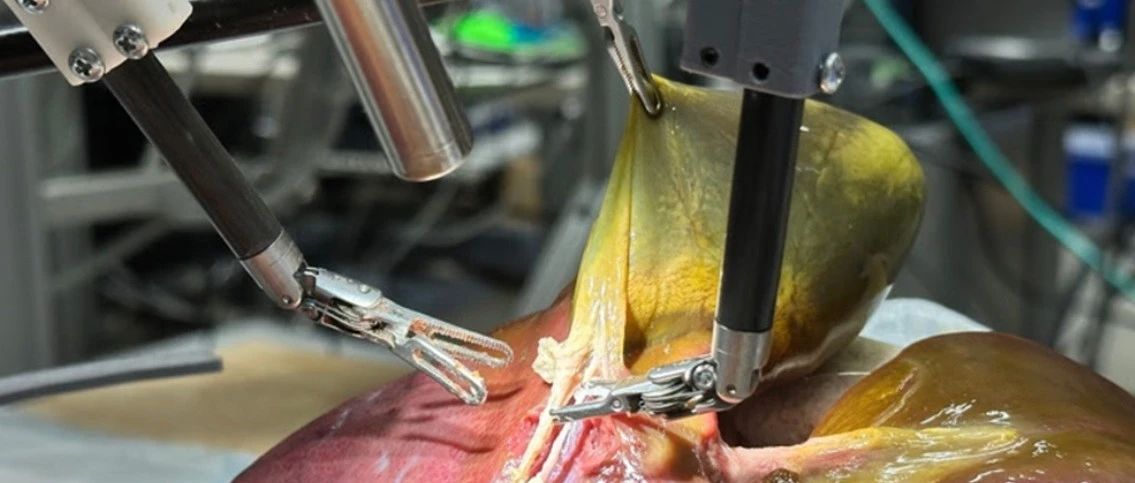
Core Viewpoint - Autonomous surgical robots are gaining global attention due to technological advancements and clinical needs, with the potential to revolutionize surgical procedures by enabling robots to make independent decisions during operations [1][2]. Definition and Understanding - Autonomous surgical robots are defined as robotic systems capable of performing surgical tasks independently, integrating advanced AI technologies for perception, decision-making, and task execution [2][3]. Technical Aspects - The goal of autonomous surgical robots is to enhance surgical precision, safety, and efficiency while reducing reliance on direct human intervention, ultimately allowing the robots to learn from experience and adapt to new situations [3][5]. Development and Progress - The SRT-H robot developed by Johns Hopkins University has demonstrated a 100% accuracy rate in recent surgeries, although it takes longer than human surgeons, indicating significant progress in autonomous surgical capabilities [5][9]. Classification System - The classification of autonomous surgical robots follows a tiered system from 0 to 5, where level 3 autonomy is currently the target for research, allowing robots to assist surgeons while still under human supervision [6][7]. Global Landscape - The development of autonomous surgical robots is uneven globally, with institutions like the University of North Carolina at Wilmington leading the way with their STAR system, which has shown superior precision and stability in animal trials [9][10]. Challenges and Limitations - Despite advancements, challenges remain in core technologies, particularly in perception, decision-making, and execution accuracy, along with the need for ethical standards and clinical validation [15][16]. Future Outlook - The future of autonomous surgical robots looks promising with advancements in AI, micro-manufacturing, and the potential for integration with technologies like 5G and cloud computing, which could enhance surgical quality and efficiency [16].

探索未来:全面解析2025年十大颠覆性IT技术
Sou Hu Cai Jing· 2025-06-08 01:15
Core Insights - The article highlights the rapid advancements in the information technology sector, emphasizing ten key IT technologies that will shape digital transformation over the next decade [1] Group 1: Generative AI - Generative AI has evolved from text generation to multimodal capabilities, enabling the creation of videos, 3D models, and code [2] - Microsoft's AutoGen framework allows AI agents to autonomously break down tasks, enhancing efficiency in development processes [2] - Ethical risks are increasing, prompting OpenAI to introduce a framework for AI behavior guidelines [2] Group 2: Quantum Computing - IBM's 1121-Qubit quantum processor achieves a 1000x speedup in drug molecule simulations, while Google's quantum error correction reduces error rates to 0.1% [6] - Morgan Stanley applies quantum algorithms to optimize investment portfolio risk assessments, reducing errors by 47% [6] - Commercialization of quantum computing faces engineering challenges, as these systems require near absolute zero temperatures to operate [6] Group 3: Neuromorphic Chips - Intel's Loihi 2 chip mimics human brain synaptic plasticity, achieving energy efficiency in image recognition at 1/200th of GPU consumption [8] - Tesla's Dojo 2.0 supercomputer enhances autonomous driving training speed by five times [8] - Neuralink's technology allows paralyzed patients to control digital devices through thought, with a data transmission bandwidth of 1 Gbps [8] Group 4: Edge Intelligence and 5G-Advanced - 5G-Advanced reduces latency to 1 ms, enabling industrial robots to respond at human nerve signal levels [10] - Siemens' deployment of a "digital twin + edge AI" system in Germany achieves a 98% accuracy rate in equipment fault prediction [10] - Security issues remain, with 76% of edge nodes reported to have unpatched vulnerabilities [10] Group 5: Privacy Computing - Ant Group's "Yin Yu" framework enables data usage without visibility in multi-party collaborative modeling [12] - Federated learning in healthcare enhances cross-hospital tumor research efficiency by three times while complying with GDPR [12] - NVIDIA's H100 encryption acceleration engine reduces training time by 60%, although encrypted computing still incurs a 10-100x performance overhead [12] Group 6: Extended Reality (XR) - Meta's XR OS 2.0 supports multimodal interactions, with Quest 3 headset achieving 8K resolution and 120Hz refresh rate [13] - BMW utilizes XR systems to design virtual factories, reducing design cycles by 40% [13] - Apple’s Vision Pro addresses motion sickness issues with dynamic gaze rendering technology, maintaining latency under 3 ms [13] Group 7: Green Computing - AMD's EPYC 9005 processor utilizes 3D V-Cache stacking technology, improving energy efficiency by four times [14] - Microsoft's underwater data center project lowers PUE to 1.06 through seawater cooling [14] - Global data centers still account for 3% of electricity consumption, with liquid cooling technology adoption at only 15% [14] Group 8: Biofusion Technology - Neuralink's N1 chip enables wireless transmission of brain signals at 4 Kbps, with future potential for direct AI access [15] - Swiss teams have developed "electronic skin" that surpasses human fingertip sensitivity, though biological compatibility requires 5-10 years of validation [15] Group 9: Blockchain 3.0 - Ethereum 2.0's PoS mechanism reduces energy consumption by 99.9% and supports 100,000 transactions per second [16] - Walmart employs blockchain to track food supply chains, reducing loss rates by 30% [16] - Interoperability issues persist, with Polkadot's cross-chain protocol connecting over 50 blockchains but capturing only 1% of the market [16] Group 10: Autonomous Systems - Tesla's FSD V12 uses an end-to-end neural network, but its accident rate remains three times higher than human drivers [17] - Boston Dynamics' Atlas robot achieves fully autonomous navigation with a positioning error of less than 2 cm [17] - Legal frameworks are lacking, with the EU planning to introduce a "Robot Liability Bill" to clarify accident responsibility [17] Future Outlook - The ten technologies are not developing in isolation but are showing deep integration trends, such as quantum computing accelerating AI training and neuromorphic chips empowering edge intelligence [18] - Companies need to build a "technology matrix" capability rather than focusing on single technology deployments [18] - Gartner suggests that the technology leaders of 2025 will be those who can weave quantum, AI, and privacy computing into new value networks [18]



美国副总统万斯:美国和印度联合自主系统产业联盟将促进两国开发最先进的海事系统。
news flash· 2025-04-22 10:05
Core Viewpoint - The establishment of a joint autonomous systems industry alliance between the United States and India is expected to enhance the development of advanced maritime systems in both countries [1] Group 1 - The alliance aims to foster collaboration in the autonomous systems sector, particularly focusing on maritime applications [1] - This initiative is part of broader efforts to strengthen defense and technological ties between the U.S. and India [1] - The partnership is anticipated to leverage both nations' technological capabilities and resources to create cutting-edge maritime solutions [1]