
行政复议

Search documents
2025年行政复议案件量111.5万件,同比增长近四成
Di Yi Cai Jing· 2026-02-11 06:00
经行政复议后,93.6%案件未再进入诉讼或信访程序。 2025年全年共办理行政复议案件111.5万件,同比增长38.1%,比新法实施前的2023年增长了173%。 2026年2月11日,司法部行政复议与应诉局局长徐运凯在新闻发布会上介绍了这一情况。"经过行政复议 后,93.6%的案件未再进入诉讼或信访程序,'案结事了'率同比增长3.3个百分点。" 行政复议是政府系统自我纠错的监督制度和解决"民告官"行政争议的救济制度。2024年1月1日,新修订 的行政复议法正式实施,至今已有两年。2025年,司法部加快推进了《行政复议法实施条例》修订工 作,并在全国范围内全面推行在线复议,去年网上申请行政复议案件数量已占新收案件总量的近30%。 徐运凯在发布会上介绍2025年行政复议化解行政争议主渠道作用情况时,强调做实"复议护企",持续推 动优化法治化营商环境。 2025年,各级行政复议机构共办理涉企行政复议案件6.1万件,纠正侵害企业合法权益的违法不当执法 行为6431件。 2025年,司法部联合国家发展改革委、全国工商联印发了《关于进一步发挥行政复议监督职能 规范涉 企行政执法的指导意见》,与最高人民法院联合发布"监督 ...
普洱中院发布5起行政审判典型案例:澜沧县政府强制清除地上附着物被判违法
Xin Lang Cai Jing· 2026-01-31 09:10
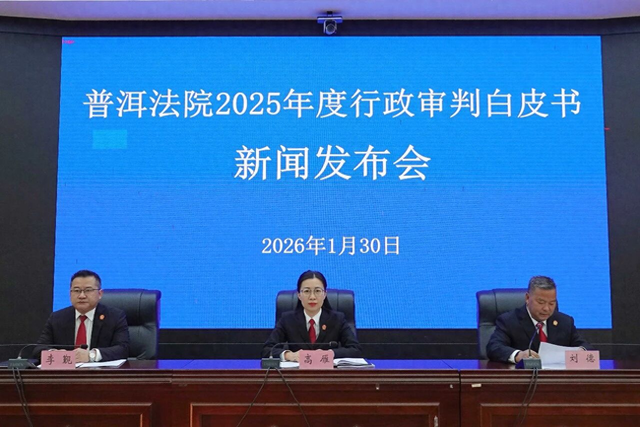
Core Viewpoint - The Yunnan Pu'er Intermediate People's Court reported on the administrative trial work for the year 2025, highlighting a decrease in administrative cases and presenting five typical cases that reflect ongoing issues in administrative law enforcement and public interest protection [1][3]. Summary by Sections Administrative Case Statistics - In 2025, the two-level courts in the city accepted a total of 619 administrative cases, a year-on-year decrease of 16.24% [3]. - The first-instance administrative litigation cases involving "multiple cases for one person" and "multiple cases for one matter" were prevalent, totaling 360 cases, with significant cases in public rental housing rent management, urban construction, resources, public security, and labor and social security, accounting for 84.72% of the total [3]. - Administrative compensation or indemnity cases were frequent, with 47 first-instance cases accepted, making up 13.62% of the total, and no successful mediations [3]. - The appeal rate for administrative litigation cases increased to 32.84%, up by 4.44 percentage points year-on-year, indicating a rise in complex cases entering the administrative litigation process [3]. Typical Administrative Cases - **Case 1**: Chen vs. Pu'er Traffic Management Team regarding fines and license revocation. The court ruled that the administrative penalties were illegal due to procedural errors, emphasizing the importance of strict administrative enforcement procedures [4][5]. - **Case 2**: Public interest litigation against the Mengjiang Natural Resources Bureau for failing to supervise a brick factory's environmental restoration. The court mandated the bureau to fulfill its supervisory responsibilities to protect public interests [6]. - **Case 3**: A company vs. the Shima District Human Resources Bureau over work injury insurance payments. The court ruled in favor of the employee, highlighting the need for social security departments to prioritize emergency medical care over procedural compliance [7][8]. - **Case 4**: Yang vs. the Nanping Town Government regarding land rights confirmation. The court ordered the government to actively fulfill its duties in handling land disputes, clarifying the government's responsibilities in such matters [9]. - **Case 5**: Luo vs. the Lancang County Government over unlawful administrative compensation for land clearing. The court ruled that the government must adhere to legal procedures and awarded compensation for losses incurred due to illegal actions [10][11].

潘怡:23年坚守行政复议初心的“架桥人”
Xin Lang Cai Jing· 2026-01-30 03:10
Core Viewpoint - The article highlights the importance of administrative reconsideration in resolving administrative disputes, emphasizing the need for effective mechanisms and public awareness to enhance its role as a primary channel for dispute resolution [2][3][4]. Group 1: Administrative Reconsideration Mechanisms - The establishment of a professional team including administrative reconsideration specialists, lawyers, and local community members aims to provide comprehensive legal services to the public [3]. - A grassroots administrative reconsideration work station was set up to implement a grid-based service mechanism, ensuring full coverage of legal services [3]. - The administrative reconsideration process has seen a continuous increase in cases, with a notable rise in the number of reconsideration lawsuits over the past seven years [4]. Group 2: Case Studies and Impact - In 2023, a citizen successfully submitted an administrative reconsideration application and received a prompt response from the involved administrative agency, showcasing the efficiency of the new mechanisms [3]. - Over 23 years, the expert has handled over 4,000 administrative reconsideration and litigation cases, achieving an 80% success rate in resolving administrative disputes and a 95% rate in ceasing complaints [4]. - The expert's intervention in a housing demolition case led to the cessation of illegal actions by the local street office, demonstrating the effectiveness of administrative reconsideration in protecting citizens' rights [5]. Group 3: Support for Enterprises - The expert has provided over 800 legal consultations to businesses, helping them recover more than 10 million yuan in economic losses [6]. - In a case involving a fine for alleged false advertising, the expert successfully argued for a reduction in penalties based on mitigating circumstances, emphasizing the principle of proportionality in administrative enforcement [5].

近九成行政争议在复议阶段化解
Xin Lang Cai Jing· 2026-01-26 17:57
Core Viewpoint - The administrative reconsideration process in Futian District, Shenzhen, has effectively resolved disputes and reduced litigation, demonstrating the importance of legal governance in fostering a favorable business environment [1] Group 1: Administrative Reconsideration Statistics - In 2025, Futian District received 1,719 administrative reconsideration applications, a year-on-year increase of 40.90% [1] - The district concluded 1,530 cases, with a year-on-year growth of 49.85% in case resolution [1] - Nearly 90% of administrative disputes were substantively resolved during the reconsideration phase, highlighting its role as a primary channel for dispute resolution [1] Group 2: Impact on Enterprises - The reconsideration office handled 990 enterprise-related cases in 2025, recovering economic losses of 524,700 yuan for businesses [1] - Through mediation and reconciliation, 309 enterprise-related disputes were resolved, with a withdrawal rate of 31.21% for such cases [1] Group 3: Innovations and Mechanisms - The district established a "pre-mediation one-click start" mechanism to address issues raised by enterprises, allowing mediators to intervene within one working day [1] - The office has implemented a closed-loop management mechanism for administrative enforcement, enhancing the standardization of administrative actions [1] Group 4: Organizational Development - In 2025, the Futian District established the Administrative Reconsideration Committee, appointing the first batch of specialized reconsideration officials to support high-quality development [1] - The district is advancing the standardization of case review processes and enhancing transparency and credibility in administrative reconsideration [1]
亲属质疑案件情况通报,“重新报案,已获受理”
Xin Lang Cai Jing· 2026-01-16 11:53
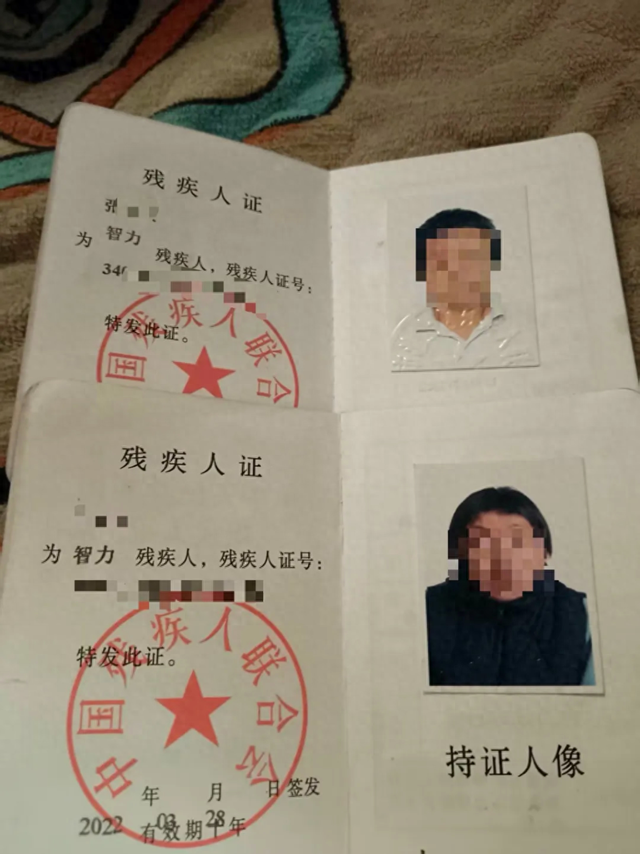
Core Viewpoint - The case of a 12-year-old boy, Zhang, who died from severe scalding in a restaurant in Shantou, Guangdong, has raised significant public concern, with his relatives questioning the official report and seeking justice for the incident [1][9]. Group 1: Incident Overview - The incident occurred on January 2, 2023, when Zhang was reportedly scalded while attempting to boil water for bathing in a restaurant [1]. - The official report from the local government stated that Zhang's death was due to scalding leading to multiple organ failure, and ruled out homicide [1][9]. - Zhang's relatives have submitted an administrative review application to contest the official report, claiming it omits critical facts about the parents' disabilities and the circumstances surrounding the incident [2][4]. Group 2: Family Background and Employment - Zhang's parents are both classified as having "intellectual disability level two," which limits their decision-making capabilities [2][4]. - The family has worked for the restaurant owner, Zhou, for 14 years, with Zhang starting to work there at around 10 years old, performing various tasks [7]. - Zhang's parents reportedly did not receive regular wages but instead withdrew funds as needed, leading to concerns about their financial exploitation [7][8]. Group 3: Legal Actions and Investigations - Relatives have filed new criminal charges against Zhou, including involuntary manslaughter and child abuse, which have been accepted by the local police [12]. - There are discrepancies regarding the police's communication with the local government about the case, raising questions about the investigation's integrity [5][6]. - The relatives have expressed dissatisfaction with the official explanations and are seeking further investigation into the circumstances of Zhang's death [9][12].
495个监督联系点确保执法权规范运行
Xin Lang Cai Jing· 2026-01-15 19:28
Core Viewpoint - The article highlights the efforts of the Xinjiang Uygur Autonomous Region in China to enhance the legal environment for businesses through standardized administrative law enforcement, aiming to boost government credibility and enterprise confidence [1][2]. Regulatory Framework - Xinjiang has established a comprehensive legal supervision system led by the "Administrative Law Enforcement Supervision Regulations," which includes various regulations on law enforcement document management and discretionary power standards [1]. - A total of 495 law enforcement supervision contact points have been set up, with 1,318 law enforcement supervisors and 2,026 special supervisors, achieving full coverage of four-level supervision [1]. Administrative Law Enforcement Reform - The region has formed a working structure with seven comprehensive law enforcement teams for urban management and one for townships, enhancing the standardization of law enforcement [1]. - The implementation of the "three systems" of administrative law enforcement has led to increased transparency and legality in enforcement decisions [1]. Innovation in Inspection Processes - The introduction of the "scan to enter the enterprise" smart supervision model has digitized the entire inspection process, resulting in a nearly 50% reduction in inspection frequency in the Urumqi Economic and Technological Development Zone [1]. - In the Hotan region, 221,300 business entities have been integrated into the "scan to enter" system, shifting the focus from passive compliance to proactive supervision [1]. Efficiency in Joint Inspections - The "comprehensive inspection" mechanism has been implemented across Xinjiang, significantly reducing the time businesses spend on inspections, with a 69.97% decrease in inspection frequency in certain areas [1]. - The integration of 224 inspection items into 48 comprehensive projects in Changji Prefecture has led to a 50% reduction in inspection occurrences [1]. Non-Contact Law Enforcement - The deployment of drone inspection systems has enabled 24/7 monitoring, with a reported 85.88% increase in non-contact inspections in the ecological environment sector [1]. - The number of on-site inspections has decreased by 22.48%, demonstrating a shift towards less intrusive regulatory practices [1]. Administrative Review and Dispute Resolution - Xinjiang has reformed its administrative review system, establishing 111 review institutions and 232 convenience windows, with a focus on efficient dispute resolution for businesses [1]. - The region has successfully mediated 4,523 cases through administrative review, achieving a resolution rate of 55.37% and preventing 93.9% of cases from entering litigation [1]. Economic Impact - The administrative review actions have helped businesses recover direct economic losses amounting to 59.27 million yuan, with a cumulative recovery of 185 million yuan from 1,300 cases [1]. - The collaboration of 1,932 lawyers with 4,129 enterprises has facilitated legal risk prevention and compliance [1].

成都邛崃一妇女骑车过无护栏桥梁时坠河身亡:被认定操作不当,镇政府拒担责
Xin Lang Cai Jing· 2026-01-08 09:39
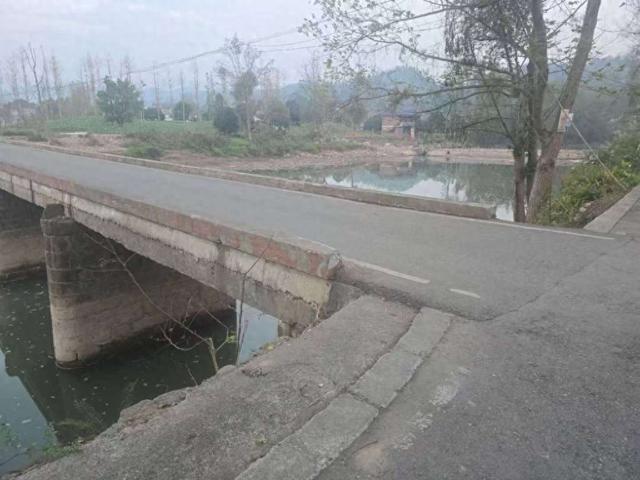
Core Viewpoint - The incident involving a woman falling into a river from a bridge in Chengdu highlights the lack of safety measures, specifically the absence of guardrails, which the victim's family claims contributed to the accident [1][3]. Group 1: Incident Details - The accident occurred on December 23, 2025, when a 55-year-old woman, Wang, fell into a river while riding an unregistered electric bicycle [3][4]. - The bridge is approximately 10 meters high and spans a river that is 20 to 30 meters wide, with no guardrails or adequate safety signage present [3]. - The local government initially expressed willingness to communicate with the family but later denied responsibility after the traffic accident report was issued [3][4]. Group 2: Accident Investigation - The traffic accident report from January 7, 2026, indicated that Wang was operating a vehicle without a driver's license, not wearing a helmet, and the vehicle was uninsured [4]. - The investigation concluded that Wang's multiple violations were the sole cause of the accident, placing full responsibility on her [4]. Group 3: Legal Perspectives - A lawyer from Beijing suggested that while the lack of guardrails may have contributed to the accident, traffic accident responsibility assessments typically do not consider environmental factors [5]. - The family may pursue civil litigation to determine if the traffic management department bears any responsibility for the incident [5].
行政复议成为化解行政争议“主渠道”——新修订的行政复议法实施以来我省行政复议工作实现新跨越
Hai Nan Ri Bao· 2025-11-20 03:09
Core Points - The number of administrative review cases involving enterprises in the province has significantly increased, with 592 new cases received from January to October, resulting in economic losses of 71.7961 million yuan being recovered for businesses [1] - The implementation of the newly revised Administrative Review Law in 2024 has led to a record high of 4,618 new administrative review cases, an increase of 86.51% compared to 2023, surpassing the number of new first-instance administrative litigation cases in the same period [1][2] - The province has adopted a "mediation and reconciliation first" principle, achieving a mediation and reconciliation rate of 34.65% in administrative review cases, with a high case resolution rate of 82.38% [2] Administrative Review Mechanism - The province has established a "supervision network" platform to monitor administrative review processes, allowing for timely oversight of non-compliance with review decisions [3] - A total of 29 supervisory actions have been initiated through this platform, with 18 cases successfully executed, enhancing the authority and credibility of administrative reviews [3] Future Developments - The province is working on revising the implementation measures for the Administrative Review Law and exploring the establishment of an administrative review officer system to build a professional review workforce [4] - Collaborative meetings between the provincial judicial department and the provincial high court have been held to address complex legal issues and unify legal standards, aiming to prevent and reduce administrative disputes [4]
莱山区开展“复议护企·法助营商”主题系列活动
Sou Hu Cai Jing· 2025-10-16 02:56
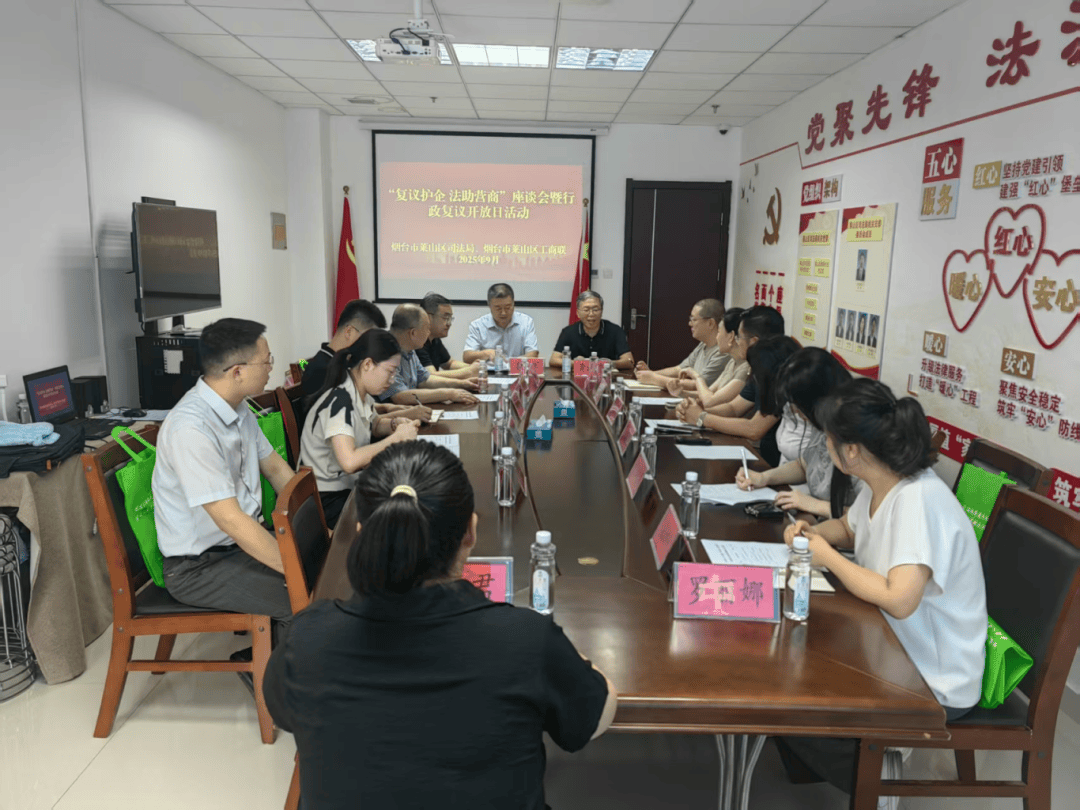
Core Points - The article discusses the implementation of the Administrative Review Law in China, focusing on enhancing the business environment and protecting the legal rights of market entities through a series of activities titled "Review Protection for Enterprises, Legal Assistance for Business" [1] Group 1: Administrative Review Activities - The Lai District Judicial Bureau, in collaboration with the Lai District Federation of Industry and Commerce, organized an "Administrative Review Open Day" to educate business representatives and lawyers about the administrative review process, which received positive feedback from participants [2] - A "Review Protection for Enterprises, Legal Assistance for Business" seminar was held, where representatives provided valuable suggestions for optimizing administrative relief channels [2] Group 2: One-Stop Administrative Review Services - The first administrative review service point for enterprises was established at Yantai Ailisi Pet Food Co., facilitating one-stop services for application guidance, review consultation, and mediation, thus helping businesses resolve administrative disputes efficiently [5] - Legal lectures and on-site consultations were conducted to address potential administrative dispute issues faced by enterprises, enhancing their understanding and trust in the administrative review system [5] Group 3: Mechanisms and Processes - A "green channel" for administrative review cases was opened, and a "one-time notification" mechanism was established to reduce the time and economic costs for enterprises seeking to protect their rights [9] - The mediation and resolution rate for administrative review cases reached 28%, with efforts to ensure comprehensive coverage of mediation for involved enterprises [9] - The administrative review process includes a simplified procedure for straightforward cases to expedite resolution times, while complex cases are discussed by a review committee to improve case handling quality [9] - Six special inspections have been conducted this year to ensure administrative agencies comply with review decisions, enhancing the enforcement of administrative oversight [9]
省人大常委会开展行政复议法执法检查
Liao Ning Ri Bao· 2025-10-14 00:58
Core Points - The enforcement inspection team emphasizes the importance of implementing the Administrative Review Law effectively in the province, focusing on key legal provisions to enhance the quality and efficiency of administrative review work [1][2] - The team conducted inspections in six cities, utilizing various methods to understand the implementation status and identify prominent issues, aiming to improve public trust and satisfaction in administrative reviews [1] Group 1 - The enforcement inspection team acknowledges the achievements in implementing the Administrative Review Law and provides targeted suggestions for identified issues and weaknesses [1] - The team stresses the need for a high-quality, professional administrative review workforce to meet the demands of legal implementation [2] - The team highlights the importance of collaboration and coordination among departments to strengthen the enforcement of the Administrative Review Law [2] Group 2 - The team calls for the establishment of a robust evaluation mechanism for administrative review work and encourages public supervision to address social concerns promptly [2] - The team advocates for legal education and awareness to foster a culture of lawfulness in society, providing a strong legal guarantee for revitalization and development [2]