
铸牢中华民族共同体意识

Search documents
山东不断健全民族宗教事务治理制度体系
Da Zhong Ri Bao· 2026-02-13 01:00
Core Viewpoint - Shandong Province is enhancing its governance system for ethnic and religious affairs, with a focus on promoting the awareness of a shared Chinese national identity and achieving modernization in selected regions [2]. Group 1: Governance and Institutional Development - Since 2025, Shandong's ethnic and religious work departments have taken on political responsibilities and deepened legal governance [2]. - The establishment of the Shandong Provincial Promotion Association for the Awareness of a Shared Chinese National Identity aims to gather support from various sectors for ethnic work [2]. - The governance system for ethnic and religious affairs is continuously improving, with new regulations and assessments being implemented, including the evaluation of the "Shandong Provincial Ethnic Work Regulations" [2]. Group 2: Pilot Regions and Recognition - Four counties (Yongxin County included) have been designated as national pilot areas for common modernization [2]. - Sixteen regions and units, including Zaozhuang City and Liaocheng City, have been recognized as the twelfth batch of national model units for ethnic unity and progress [2]. Group 3: Future Initiatives - In the current year, Shandong's ethnic and religious work departments will implement the "Ten Actions" to strengthen the awareness of a shared Chinese national identity and the "Seven Projects" for the Sinicization of religion [2]. - The focus will be on advancing the construction of a shared Chinese national community while preventing and mitigating major risks in the ethnic and religious sectors [2].
四川再增23个地方(单位)获全国民族团结进步示范命名
Xin Lang Cai Jing· 2026-02-12 22:40
Core Viewpoint - The National Ethnic Affairs Commission has designated 488 locations and units as the twelfth batch of national ethnic unity and progress demonstration units, with significant representation from Sichuan province [1] Group 1: Designation of Units - A total of 488 locations and units have been named as the twelfth batch of national ethnic unity and progress demonstration units [1] - Sichuan province has 23 locations and units included in this designation, such as Panzhihua City, Aba Prefecture, Ganzi Prefecture, and Sichuan University of Arts and Science [1] - Sichuan has cumulatively achieved 112 designations of national ethnic unity and progress demonstration units [1] Group 2: Policy and Implementation - Sichuan has focused on strengthening the awareness of the Chinese national community, enhancing policy support, and innovating implementation methods [1] - The province has integrated ethnic unity and progress initiatives with rural revitalization, ecological protection, cultural tourism, education, health, and grassroots governance [1] - There has been a notable cultivation of effective demonstration units across various regions and sectors, contributing to the high-quality development of ethnic unity and progress [1]
紧扣主线推进中华民族共同体建设
Xin Lang Cai Jing· 2026-02-12 20:33
Group 1 - The core viewpoint of the article emphasizes the strategic direction and path outlined by the Inner Mongolia Autonomous Region's Party Committee for the "14th Five-Year Plan" period, focusing on the implementation of the "1571" work deployment to enhance national unity and development [1] - The regional ethnic affairs system aims to strengthen political awareness and responsibility, ensuring that the construction of a shared Chinese national identity is integrated into all aspects of ethnic work [1][2] - The article highlights the importance of enhancing the leadership of the Party in ethnic affairs, promoting a system that combines the main line of national unity with specific work mechanisms [1][4] Group 2 - The article discusses the promotion of a shared spiritual home for all ethnic groups, focusing on theoretical research and the establishment of educational practice bases to enhance national identity [2] - It outlines initiatives to foster extensive exchanges and integration among various ethnic groups, including the creation of exemplary projects and training programs to improve grassroots personnel capabilities [3] - The article mentions efforts to enhance governance capabilities in ethnic affairs, including the revision of regulations and innovative outreach activities to raise legal awareness among ethnic communities [4]
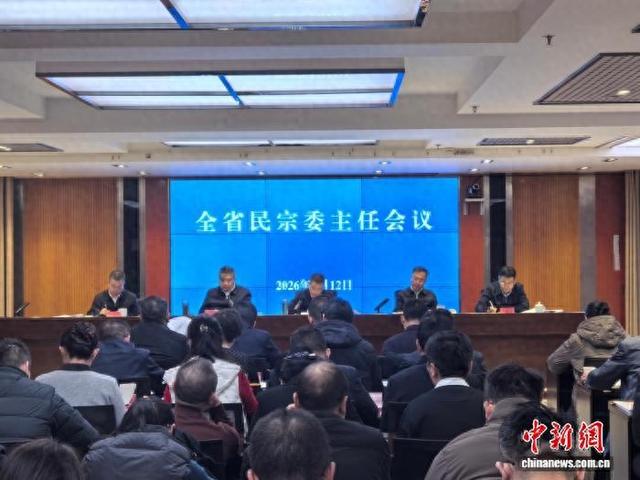
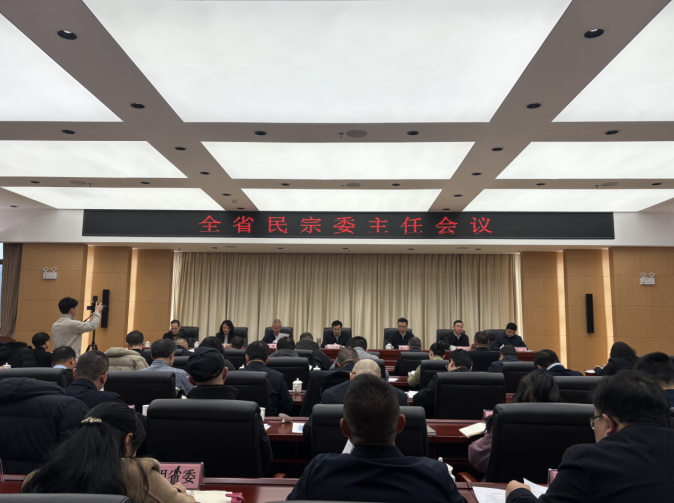
全省民宗委主任会议召开
Xin Lang Cai Jing· 2026-02-12 19:35
Core Viewpoint - The meeting emphasized the achievements and developments in ethnic and religious work in the province for 2025, while outlining tasks for 2026, marking it as a crucial year for the construction of a shared consciousness of the Chinese nation [1] Group 1: Achievements in 2025 - The province has made new achievements and developments in ethnic and religious work, with the creation of a national model province for ethnic unity and progress nearing completion [1] - The construction of a shared community of the Chinese nation has been comprehensively advanced, with deepening interactions among various ethnic groups [1] - Steady progress has been made in the modernization of ethnic regions [1] Group 2: Goals for 2026 - 2026 is identified as the starting year for high-standard construction of a model province for strengthening the consciousness of the Chinese nation [1] - The focus will be on promoting the construction of a shared community of the Chinese nation and enhancing education on this consciousness [1] - Efforts will be made to foster interactions among ethnic groups, support the modernization of ethnic regions, and improve the governance capabilities of ethnic affairs [1] Group 3: Implementation Strategies - The provincial ethnic and religious system is urged to align with mission tasks and adopt a rigorous work style [1] - There is a need to enhance capabilities in political awareness, understanding the current situation, and serving the broader context [1] - The focus will also be on policy research, problem-solving, and fostering a spirit of struggle to promote high-quality development in ethnic and religious work [1]
青海全省民宗委主任会议在西宁召开
Xin Lang Cai Jing· 2026-02-12 14:23
Core Viewpoint - The meeting emphasized the achievements and developments in ethnic and religious work in Qinghai province for 2025, highlighting the completion of the national ethnic unity demonstration province creation task and the promotion of the Chinese national community construction [1][3]. Group 1: Achievements in 2025 - In 2025, Qinghai province made new achievements in ethnic and religious work, with the national ethnic unity progress demonstration province creation task largely completed [1]. - The construction of the Chinese national community was comprehensively advanced, with deepening interactions among various ethnic groups [1]. Group 2: Goals for 2026 - The year 2026 marks the beginning of the "14th Five-Year Plan" and the high-standard construction of a demonstration province for strengthening the awareness of the Chinese national community [3]. - Key tasks for 2026 include promoting the construction of the Chinese national community, enhancing education on the awareness of the Chinese national community, and fostering interactions among ethnic groups [3]. Group 3: Governance and Development - The meeting called for improving the governance capabilities of ethnic affairs and religious affairs in accordance with the law, and advancing the Sinicization of religion in Qinghai [3]. - Emphasis was placed on understanding and addressing the current situation, enhancing political capabilities, and promoting high-quality development in ethnic and religious work [3].

中国人民政治协商会议第十三届青海省委员会常务委员会工作报告
Xin Lang Cai Jing· 2026-02-11 20:52
Core Insights - The report outlines the achievements and future plans of the Qinghai Provincial Political Consultative Conference, emphasizing the importance of collaboration and democratic processes in achieving socio-economic development goals [2][11]. Group 1: 2025 Key Work - 2025 is identified as a crucial year for completing the "14th Five-Year Plan" and planning for the "15th Five-Year Plan," with a focus on ecological protection and high-quality development [2]. - The provincial government aims to enhance comprehensive strength, improve living standards, and solidify the foundation for the new development journey [2]. Group 2: Strengthening Political Theory - The organization emphasizes the importance of Xi Jinping's thoughts as the guiding principle for its work, conducting over 110 sessions of learning and discussions on key speeches and directives [3]. - Activities celebrating the 70th anniversary of the Qinghai Provincial Political Consultative Conference were held, showcasing the successful practice of the system under the leadership of the Communist Party [3]. Group 3: Specialized Consultation Functions - The organization completed 8 key consultation projects and 50 research and inspection activities, producing 45 special reports and 277 proposals [4]. - Focus areas included ecological protection, economic development, cultural prosperity, and the development of highland health industries, with significant engagement in legislative consultations [4][5]. Group 4: Promoting Unity and Cooperation - The organization worked to enhance cooperation among various political parties and social groups, facilitating 230 exchanges and joint research activities [6]. - Efforts were made to promote national unity and cultural integration, including initiatives to support the Chineseization of religions and enhance community awareness [6]. Group 5: Enhancing Public Welfare - The organization prioritized connecting with community members and addressing social welfare issues, conducting over 90 policy advocacy sessions and gathering 46 suggestions from the public [7]. - Initiatives included promoting tourism, improving employment opportunities for minority graduates, and enhancing the legal environment for businesses [7]. Group 6: Capacity Building - The organization focused on reforming its operational framework, implementing new regulations to enhance the effectiveness of its work [9]. - Emphasis was placed on improving the quality of proposals and enhancing the research capabilities of its members, with 415 proposals submitted and 327 officially registered [9]. Group 7: Party Leadership and Governance - The organization reinforced the importance of the Communist Party's leadership in its operations, ensuring alignment with the Party's directives and maintaining a focus on political integrity [10]. - Continuous efforts were made to promote a culture of accountability and transparency within the organization, with a commitment to addressing issues of formalism and improving operational efficiency [10].
2025年贵州民贸民品企业获贴息3.31亿元,贴息规模全国第一
Xin Lang Cai Jing· 2026-02-09 13:06
Core Viewpoint - In 2025, Guizhou aims to strengthen the awareness of the Chinese national community and advance the construction of a model province, achieving significant results in cultural inheritance, modernization, interaction, and policy support, with multiple initiatives leading the nation [1]. Group 1: Cultural Protection and Development - Guizhou is implementing six major projects to promote the protection and development of ethnic culture, focusing on innovation and transmission [3]. - The province is advancing the "Change Customs" project, enhancing ethnic unity canteens as platforms for policy promotion, cultural transmission, and community interaction [3]. - The "Guizhou Province Ethnic Culture Inheritance and Protection Plan (2025-2035)" is being developed, alongside the eighth provincial ethnic arts festival, which includes 205 performances reaching an audience of 323,000 [3]. Group 2: Community and Economic Development - Guizhou has completed a resource survey of 32 "Chinese Ethnic Minority Characteristic Villages" and invested 152 million yuan in their protection and development, receiving national recognition for its efforts [4]. - The province has allocated 171.1 billion yuan in transfer payments to ethnic regions, accounting for 47.8% of total provincial transfer payments, contributing to GDP growth in several regions [5]. - Guizhou has implemented a mechanism linking interest subsidies to ethnic trade and products, supporting 801 enterprises with 331 million yuan in interest subsidies, leading to 27 billion yuan in loans, the highest in the nation [5]. Group 3: Policy and Legislative Framework - The province is enhancing its policy and regulatory framework by introducing five new systems and revising two existing work systems, alongside legislative research for the "Guizhou Province Ethnic Unity Progress Regulations" [5].
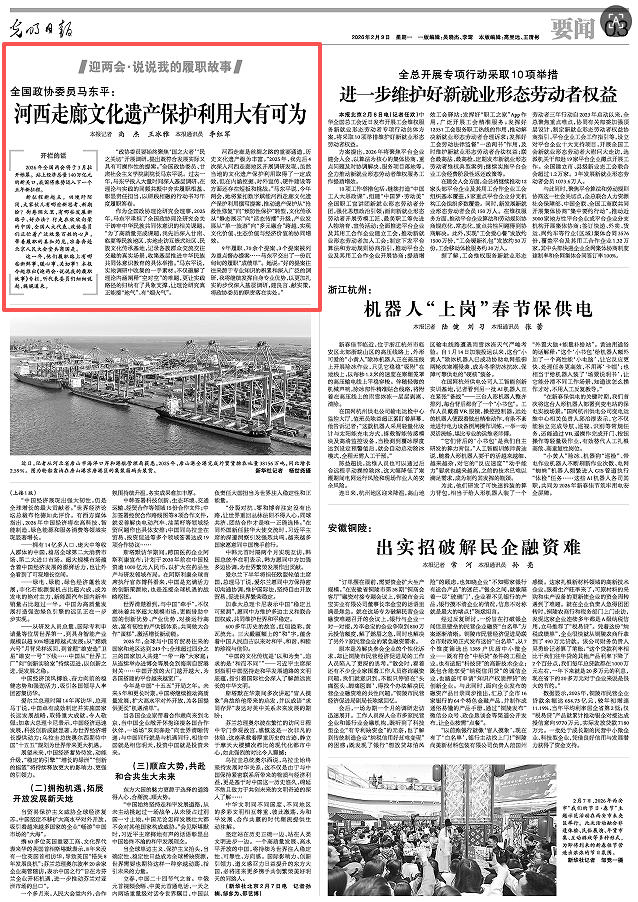
全国政协委员马东平:河西走廊文化遗产保护利用大有可为
Xin Lang Cai Jing· 2026-02-09 00:44
Group 1 - The upcoming National People's Congress (NPC) and Chinese People's Political Consultative Conference (CPPCC) will commence in March 2026, marking a new phase as China approaches an economic total of 140 trillion yuan [4] - The focus of NPC and CPPCC representatives is on gathering public opinions and proposing actionable suggestions that align with national development and public concerns [7][8] - A significant emphasis is placed on the protection and utilization of cultural heritage, particularly in the Hexi Corridor, where there are challenges in areas such as content exploration, external promotion, and infrastructure development [8] Group 2 - The proposal aims to shift cultural heritage protection from "rescue-based restoration" to "preventive protection," and to evolve cultural transmission from "static display" to "dynamic dissemination" [8] - The initiative also seeks to diversify the development of the cultural industry from "single tourism" to "multiple integrations," aiming for a synergistic enhancement of cultural, ecological, and economic values [8] - The track record of representatives includes over 70 proposals, with three being prioritized for supervision, highlighting the importance of professional knowledge and extensive research in formulating effective proposals [9]
让民族团结之花常开长盛
Xin Lang Cai Jing· 2026-02-08 19:33
Core Viewpoint - The article highlights the successful implementation of the "Rongju Station" initiative in the Ke'erqin District, which promotes ethnic unity and community integration through various cultural and social activities [1][2][3] Group 1: Community Integration Efforts - The "Rongju Station" initiative has been established to enhance community services and promote ethnic integration, focusing on five dimensions: theoretical promotion, assistance for difficulties, co-construction of studios, governance team formation, and living circle development [1] - The North Garden Community has successfully integrated the "Rongju Station" concept, providing a spacious rehearsal space for the Aduqin Art Troupe, which fosters a sense of comfort and community among its members [1] - The initiative has led to the creation of a "Five-integration promotes Five-flower" work brand, aimed at providing more attentive and refined services to residents, enhancing their integration into the community [1] Group 2: Cultural and Educational Activities - The Democracy Bridge Community has introduced various educational programs, such as the "Nazhijin Clothing Public Welfare Classroom" and Douyin live streaming training courses, which enrich residents' cultural lives and provide new income-generating opportunities [2] - The focus on community-based ethnic work emphasizes the importance of creating a harmonious community environment where diverse ethnic groups can coexist and thrive together [2] Group 3: Service Efficiency and Conflict Resolution - The "Rongju Station" has established an efficient working mechanism that provides 15 equalized public services, including employment, social security, and healthcare, significantly improving service accessibility for residents [2] - The initiative has successfully resolved over 600 conflicts through the appointment of 21 mediators, achieving a 100% success rate in mediation, thereby ensuring that community issues are addressed locally [3] - Future plans include the widespread promotion of the "Rongju Station" model to further enhance community structures and provide high-quality services to all ethnic groups [3]
切实推进中华民族共同体建设
Xin Lang Cai Jing· 2026-02-08 18:30
Group 1 - The core viewpoint emphasizes the importance of enhancing the cohesion of the Chinese nation and the influence of Chinese culture as a primary goal for economic and social development during the 14th Five-Year Plan period [1] - The construction of a Chinese national community is seen as a strategic guide for promoting high-quality development in ethnic regions, reflecting a deep understanding of the laws governing ethnic work [1] Group 2 - The article highlights the need to raise political awareness and enhance the self-consciousness of building a Chinese national community, emphasizing the importance of unity in thought, politics, and action [2] - It discusses the historical achievements in ethnic work under the leadership of Xi Jinping, stressing the necessity of aligning political principles with the entire process of ethnic work [2] Group 3 - The promotion of common prosperity is identified as a fundamental characteristic of Chinese-style modernization, with a focus on ensuring that all people benefit from economic growth [3] - The article outlines the intrinsic connection between common prosperity and the Chinese national community, advocating for shared benefits and a spirit of mutual dependence [3] Group 4 - The transmission of excellent traditional Chinese culture is presented as a spiritual bond for building the Chinese national community, emphasizing the importance of cultural heritage in fostering national unity [4] - It calls for a systematic understanding of the cultural contributions of various ethnic groups and the promotion of cultural exchange to enhance cohesion [4] Group 5 - The establishment of a sound institutional framework is crucial for constructing a long-term mechanism for building the Chinese national community, highlighting the need for a robust policy and legal system [5] - The article stresses the importance of improving the system of regional ethnic autonomy and revising relevant laws to ensure effective governance [5][6]